Spotted Gully Shark (Triakis megalopterus): Built for the Reef, Not Your Convenience
The Spotted Gully Shark puts a useful dent in the idea that serious shark fishing requires a boat and a distant horizon. This stocky coastal predator works the reefs, gullies, and broken ground that surf anglers can actually reach. FishyAF’s mature-target size range is roughly 1.4–1.7 metres and 10–20 kilograms: plenty of shark when there is rock between you and open water. The attraction is not sheer size. It is the combination of accessible habitat, substantial fish, and tackle-testing surroundings.
What Makes the Spotted Gully Shark Unique?
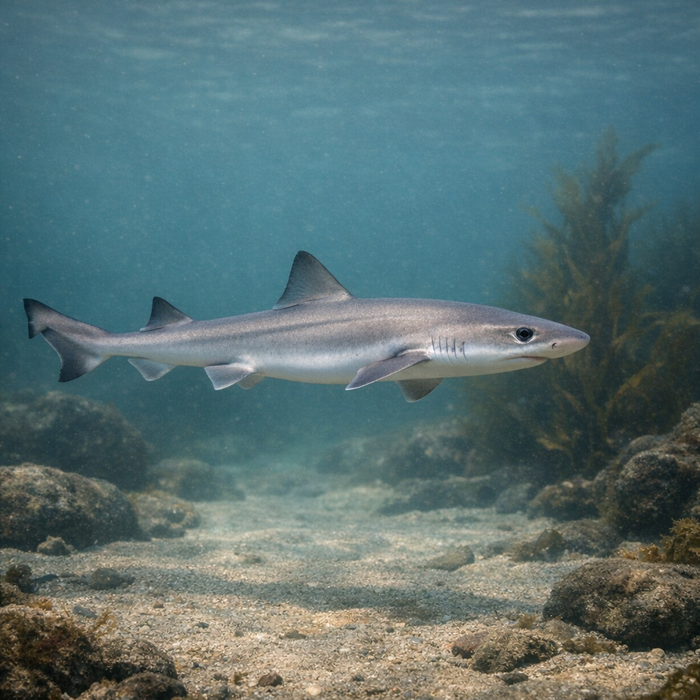
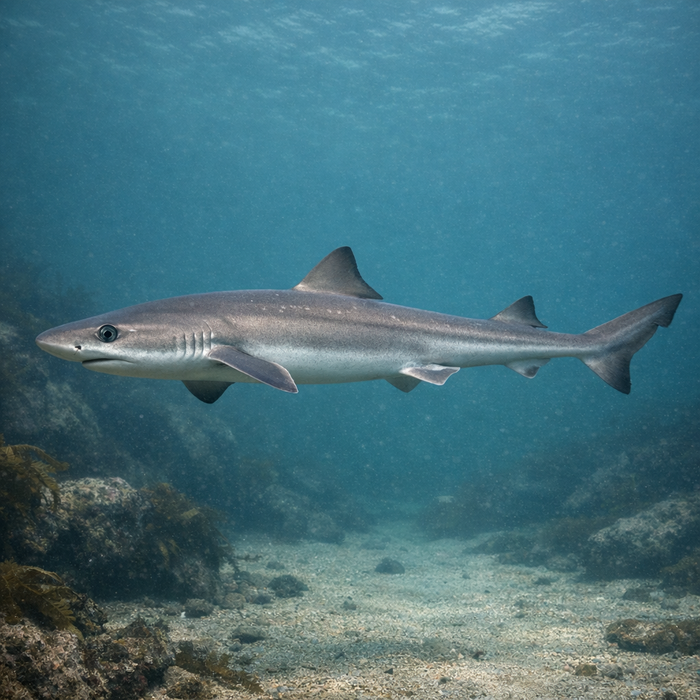
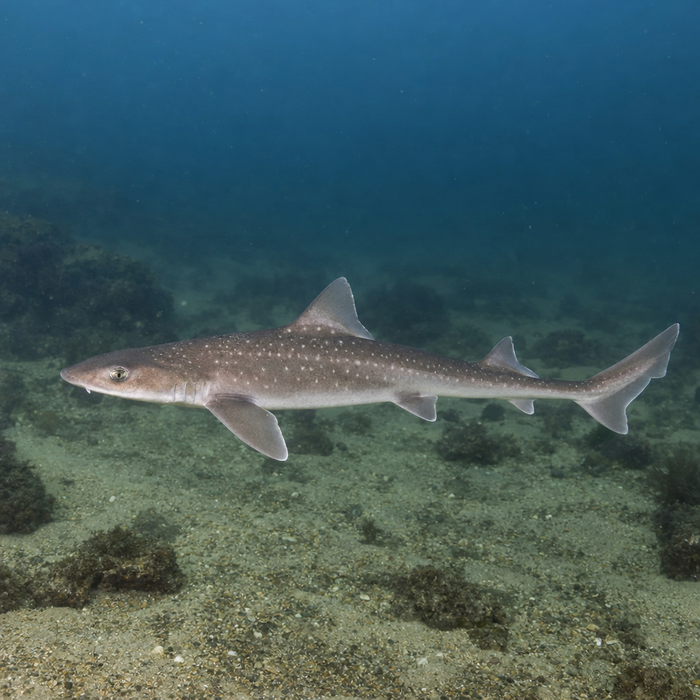
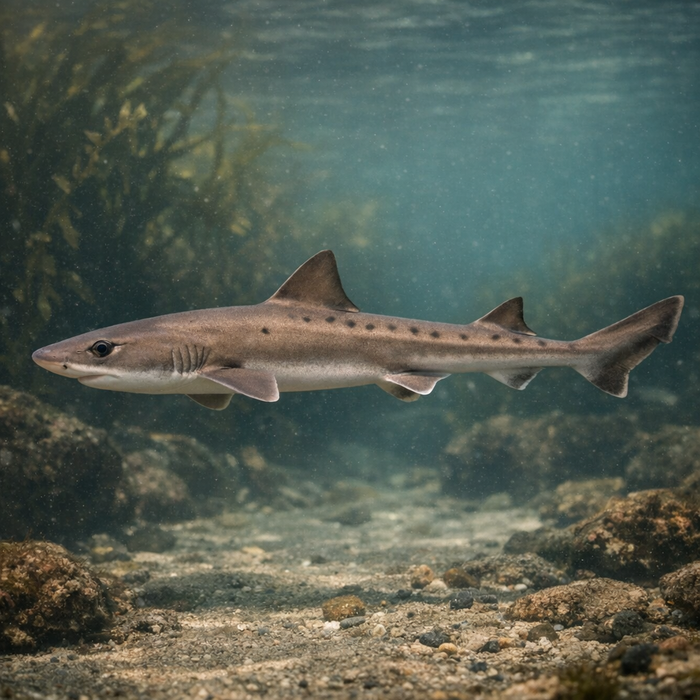
Start with the fins. The first and second dorsal fins are unusually similar in size, giving this shark a distinctive profile. Its stout body, blunt snout, and irregular dark spotting complete the picture. Spots generally become more prominent with growth, although some adults remain surprisingly plain. Identification takes more than counting freckles.
Then look inside the mouth. Closely packed teeth combine crushing surfaces with pointed cusps, useful equipment for dealing with hard-shelled prey without abandoning fish and other softer meals. The reproductive timetable is equally distinctive: pregnancy lasts approximately 19–21 months, and young develop internally on yolk rather than through a placental connection. These Spotted Gully Shark facts explain considerably more than the nickname “spotty” ever could.
Habitat & Global Range
This is a southern African specialist, not a shark scattered around every temperate coastline. Its range extends from southern Angola and Namibia around South Africa’s Cape coast into the Eastern Cape. For anglers, the Western and Eastern Cape are especially relevant. Strand reefs, False Bay, and the coastal ground around the Kariega River mouth are the focal fisheries in FishyAF’s species profile.
Spotted Gully Shark habitat includes shallow rocky reefs, sandy patches, crevices, and coastal gullies. The species occurs down to about 50 metres, but much of its familiar activity happens considerably shallower. That makes reading nearby structure more useful than automatically chasing maximum casting distance. A fishable channel beside reef can deserve more attention than featureless water beyond it.
Behavior & Temperament
The Spotted Gully Shark is an active bottom-associated hunter, often working close to the seabed. Night fishing has a biological basis: research links its feeding to nocturnally active crustaceans and notes more frequent angler catches after dark. Daylight encounters still happen; “mainly nocturnal” is not a strict appointment system.
Its movements are more complicated than either “resident” or “migratory” suggests. Tagging research found strong local attachment in many individuals, particularly juveniles, while some adults travelled substantial distances. Researchers found no evidence of a regular seasonal migration to mating or pupping grounds. For anglers, the practical lesson is straightforward: learn productive stretches properly rather than assuming every summer catch belongs to a passing procession.
Ecological Importance
This predator connects several parts of the coastal food web. Smaller individuals rely heavily on crabs, while larger sharks broaden their feeding to include more fish and other prey. That changing menu means juveniles and adults do not necessarily exert identical pressure on the same animals. Calling the species simply a “crab eater” misses much of its ecological range.
The Spotted Gully Shark is also a reminder that coastal predators need functioning coastal habitat. Reef, adjacent sand, prey availability, and safe nursery conditions belong to the same picture. Protecting a shark while treating the surrounding fishing ground as disposable is a fairly hollow conservation strategy.
Conservation & Environmental Pressures
The species is classified as Least Concern, matching FishyAF’s current conservation status. That is encouraging, but it does not make the animal biologically disposable. Slow growth and delayed maturity leave limited room for sustained losses, and a long pregnancy cannot be hurried along because a local population needs replacements.
South Africa restricts the species to recreational rather than commercial exploitation, and existing controls help protect it. Accidental capture, misidentification, and poor release practices remain relevant concerns. Its tendency toward local residency also strengthens the case for protected areas containing suitable habitat: protection can benefit sharks that repeatedly use the same coastal neighbourhood.
The FishyAF Take
The Spotted Gully Shark deserves better than being treated as the consolation prize beneath somebody’s dream catch. It offers a proper shore-based challenge without needing exaggerated danger or an invented record attached to it. Fresh bait, sensible surf tackle, and a working understanding of reef edges are enough to make the pursuit interesting.
Bring equipment that can finish the job, choose a safe landing area before casting, and keep the release brief. Support the body instead of hauling the fish around for photographs. The strongest version of this fishery is not the one with the longest beach session or the most dramatic handling. It is the one where the shark swims away and your leader looks like it had a difficult conversation.