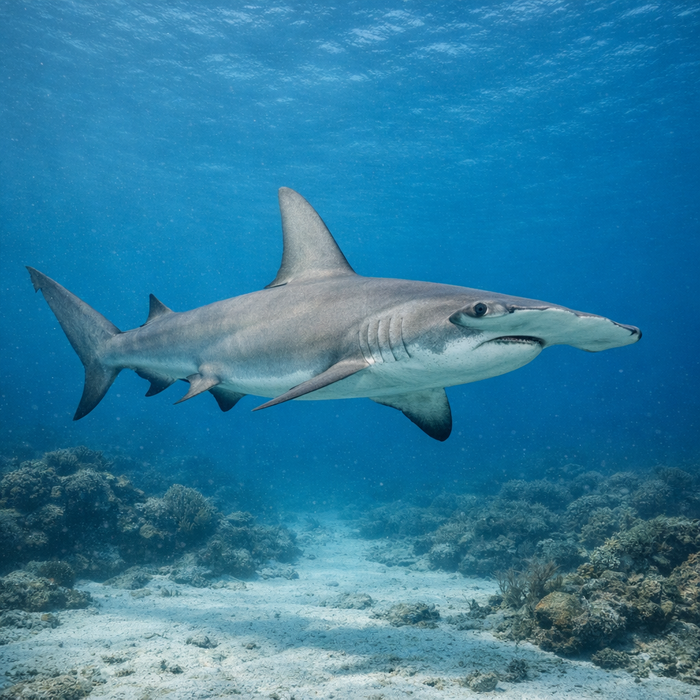
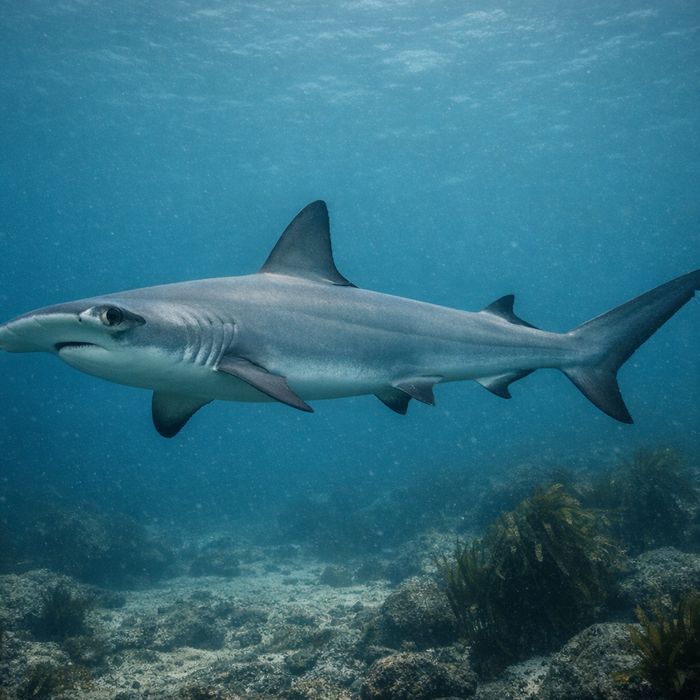
Carolina hammerhead (Sphyrna gilberti): A Bold, Memorable Hook LineIntroductionMeet the shark that fooled scientists, anglers, and textbooks for decades. The Carolina hammerhead is the cryptic twin hiding inside our hammerhead mental picture, only unmasked in 2013 when genetics and vertebrae counts said, hey, that's not the scalloped hammerhead you thought it was. If you love a good mystery with salt on it, this is your shark. It's real, it's rare, and it quietly rewrote parts of the coastal shark story along the U.S. Southeast.What Makes the Carolina hammerhead Unique?First, it's a lookalike with a twist. Externally, it mimics a scalloped hammerhead so well that dockside IDs are basically coin flips. The secret is inside: it typically carries about 10 fewer vertebrae. Second, the species was outed in modern times, which means Carolina hammerhead facts are still evolving as researchers fill in blanks. Third, its nursery grounds in murky estuaries near the Carolinas helped expose the ruse, turning casual summer shark surveys into a species-level plot twist.Habitat & Global RangeHere's the short version of Carolina hammerhead habitat: estuaries, tidal rivers, and nearshore coastal waters of the U.S. Southeast, with evidence reaching into the Gulf of Mexico. The species leans into brackish nurseries where young sharks ride tides, turbidity, and prey pulses. Adults likely roam broader nearshore corridors, but this is a fish defined by estuarine life stages. Don't expect a pelagic safari. Expect current lines, muddy mixing zones, and bait-thick shallows that feel more river than reef.Behavior & TemperamentLike other hammerheads, this shark is a deliberate hunter with a head designed like a sensor array. The wide cephalofoil amps up electroreception and turns effortlessly, so buried or skittery prey get bad news fast. Schooling behavior may occur around juveniles and certain seasonal movements, but big adults are more roam-and-hunt operators. They aren't topwater showboats; most of the action lives midwater to bottom, especially where currents buffet bait along channel edges and shallow flats adjacent to deeper runs.Ecological ImportanceStrip away the name drama and you still have an apex predator shaping estuarine and nearshore food webs. By culling weak or unwary fish, rays, and invertebrates, the Carolina hammerhead helps regulate prey communities and nutrient cycling. Discovering a cryptic species in this role is more than a taxonomic footnote. It rebalances population estimates that used to count two species as one, which affects bycatch management, habitat protections, and long-term recovery goals for regional shark assemblages.Conservation & Environmental PressuresBecause it was recognized so recently, formal global listings lag behind on the Carolina hammerhead. But that doesn't mean it's carefree. It deals with the same headwinds as other coastal sharks: bycatch in commercial gear, habitat loss in estuaries, water-quality swings, and heavy recreational pressure on coastal bait species. The mis-ID problem is real too. If your data files every lookalike as one species, protections may miss the mark. Better genetics in fishery monitoring is closing that gap, one tissue sample at a time.The FishyAF TakeThe Carolina hammerhead is the quiet legend of the Southeast: a shark almost nobody knew they were seeing. For anglers, it's a humbling reminder that the ocean still keeps secrets even in home waters. If you tangle with one, you won't confirm it on the beach with a selfie. You'll confirm it in a lab. That alone makes the species feel a bit mythical. We're here for it. Keep those Carolina hammerhead facts flowing, respect the rules, and treat this fish like the rare, high-caliber predator it is.