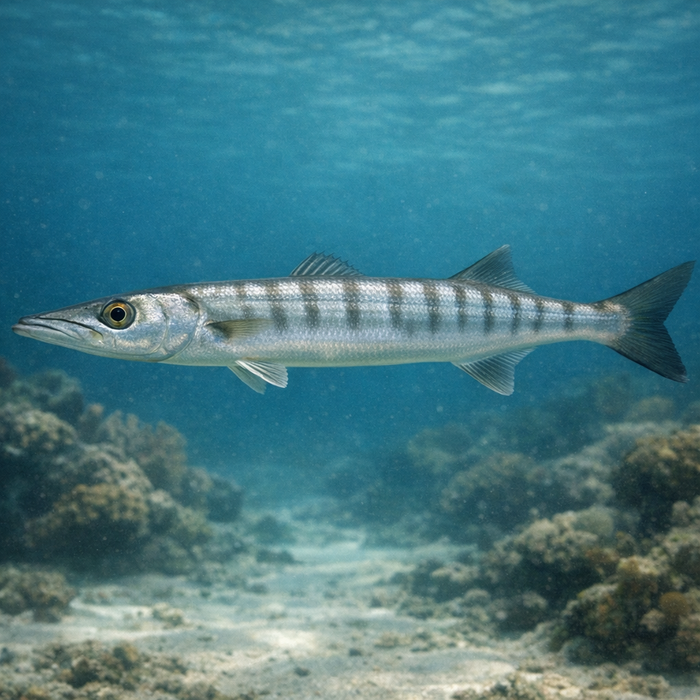
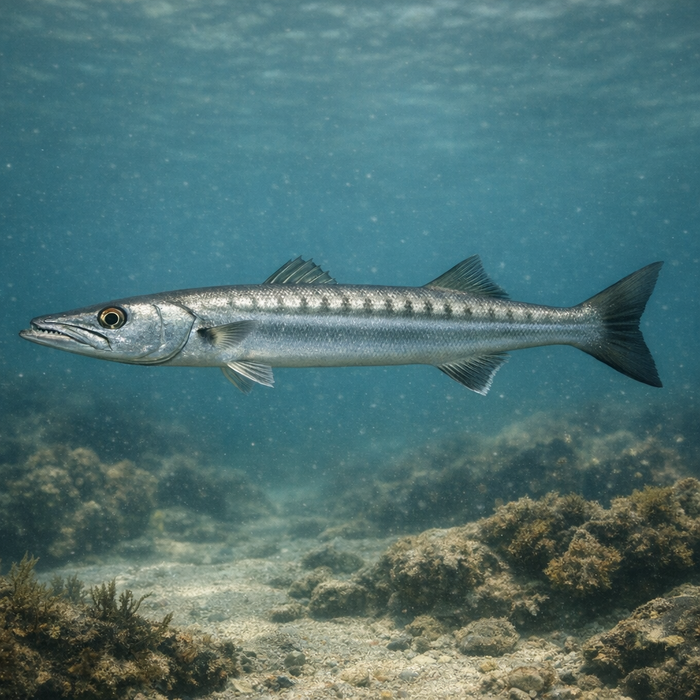
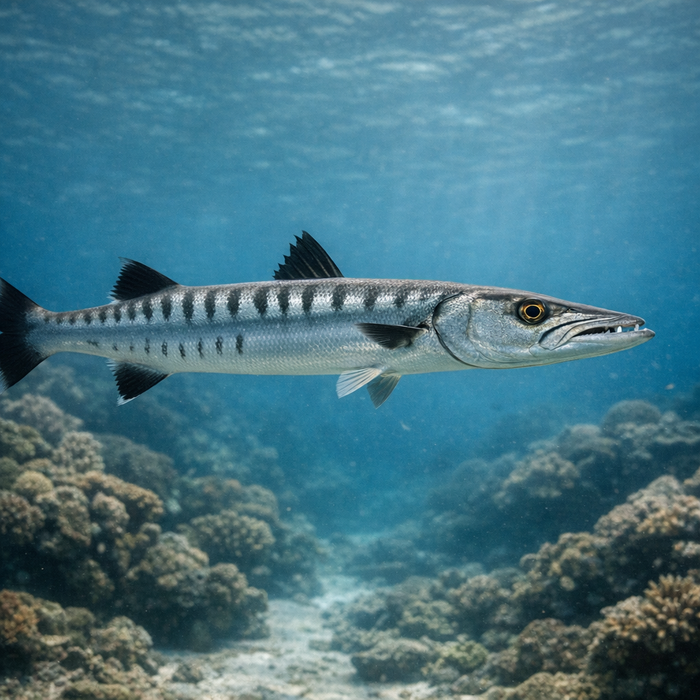
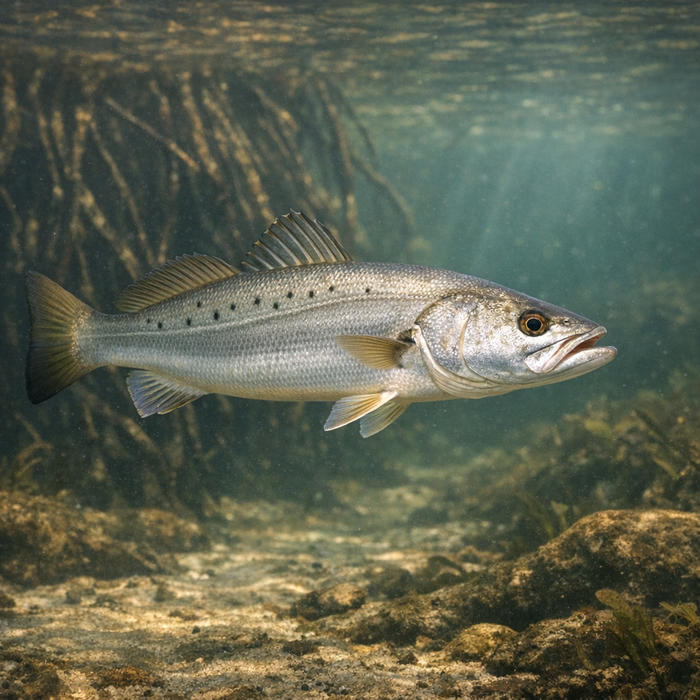
Guachanche Barracuda (Sphyraena guachancho): Lean, striped missile of the murky coastIntroductionIf the great barracuda is the flashy headliner, the Guachanche barracuda is the gritty opener that steals the show in dirty water. It's slim, it's fast, and it's built for ambush along seawalls, ship channels, and wind-scuffed reefs where baitfish get pushed and pinned. For anglers prowling harbors and nearshore structure across the tropical Atlantic, the Guachanche barracuda is a dependable chaos engine.What Makes the Guachanche barracuda Unique?Start with the look: a streamlined torpedo etched with faint, oblique bars that darken under stress. Unlike its celebrity cousin, the tail lacks those dark tips, and the second dorsal and anal fins line up like mirror twins to steady high-speed rushes. The Guachanche barracuda isn't the biggest cuda in town, but it is purpose-built for midwater ambush inside stained or mixed water where quick hits beat long chases. It often slides through harbors in loose packs, pin-balling bait against hard edges. Those short, savage eats are pure adrenaline and a core part of Guachanche barracuda facts worth knowing.Habitat & Global RangeThis species thrives where current, structure, and bait collide. Think estuary mouths that breathe with the tide, dredged channels, jetty tips, and nearshore reefs with a little color in the water. The Guachanche barracuda ranges widely through the Caribbean and Gulf of Mexico, up and down the tropical and subtropical Atlantic, and along swaths of West Africa. If the bait's piled, visibility is imperfect, and there's a hard edge to trap prey, you're in Guachanche barracuda habitat.Behavior & TemperamentGuachanche don't waste energy. They cruise midwater lanes, slide into ambush angles, and hit like switchblades. Schools may form, especially around feeding opportunities, but even solo fish work the same playbook: corral, burst, and vanish. They'll rise to the surface when bait is tight, yet rarely loiter topside without a reason. They're quick learners too. Two or three sloppy casts can push them off a seawall bite window, especially in clear water or heavy pressure. Wire or heavy fluoro is standard because those canine teeth are unforgiving.Ecological ImportanceAs mid-tier predators, Guachanche barracuda keep small pelagics honest. Their ambush style clips slow or injured baitfish and redistributes pressure away from the most agile schools. Inlets and bays naturally funnel life; Guachanche amplify that sorting process. Their presence is a signal that forage is moving and oxygen-rich water is cycling through an area. They're also prey when small, bridging energy from plankton-fueled baitfish to larger coastal hunters.Conservation & Environmental PressuresOverall, the Guachanche barracuda sits safer than many glamour species, but it still rides the same roller coaster as coastal ecosystems. Water quality matters: silt, runoff, and chronic pollution can smother bait supply and choke ambush zones. Habitat modification reshapes current seams and removes the hard edges Guachanche use to trap prey. Local overharvest, net pressure on bait, and the ongoing drumbeat of warming seas juggle seasonal patterns. While the species is generally considered stable, localized declines can happen fast when urban coastlines take a hit.The FishyAF TakeIf you love tactical fishing, the Guachanche barracuda is your huckleberry. It rewards movement, angle selection, and pace control more than brute force. Cast metals or slim plugs along current-facing hard edges, crank fast, and be ready to clear the deck. The bite window is often short and rude, then gone. That's the charm. You're not babysitting spreader bars 20 miles out; you're knife-fighting in a hallway. For quick-hit sessions, travel-light missions, or teaching newer anglers about teeth, speed, and leader choices, the Guachanche barracuda delivers high drama with low logistics. Log these Guachanche barracuda facts: they like a little stain, they love a funnel, and they punish hesitation.