Gummy Shark (Mustelus antarcticus): Built to Crush Crabs, Not Win a Dental Contest
The Gummy Shark has a name that sounds harmless and a fight that suggests somebody misfiled the paperwork. This bottom-working Australian shark is a serious bait-fishing target, equally capable of rewarding a carefully positioned boat or a patient surf angler. Its appeal is straightforward: accessible coastal water, practical tackle, and enough pulling power to make the landing net suddenly look undersized.
Typical guide-sized fish measure about 43–55 inches and weigh 11–22 pounds. That puts them comfortably beyond casual light-tackle territory without demanding a big-game outfit. Western Port, Port Phillip Bay, and Corner Inlet are standout Victorian fisheries. The challenge is not doing something spectacular. It is getting the ordinary things right, then leaving a good bait where a shark can find it.
What Makes the Gummy Shark Unique?
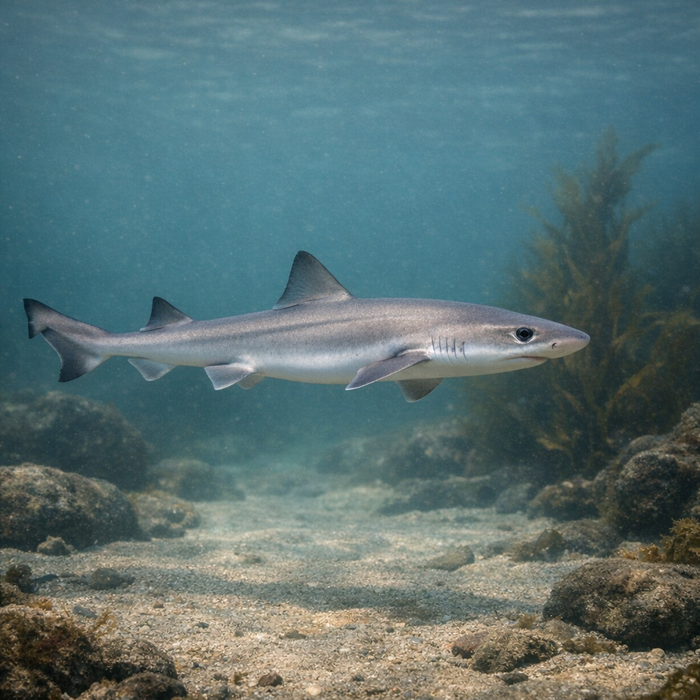
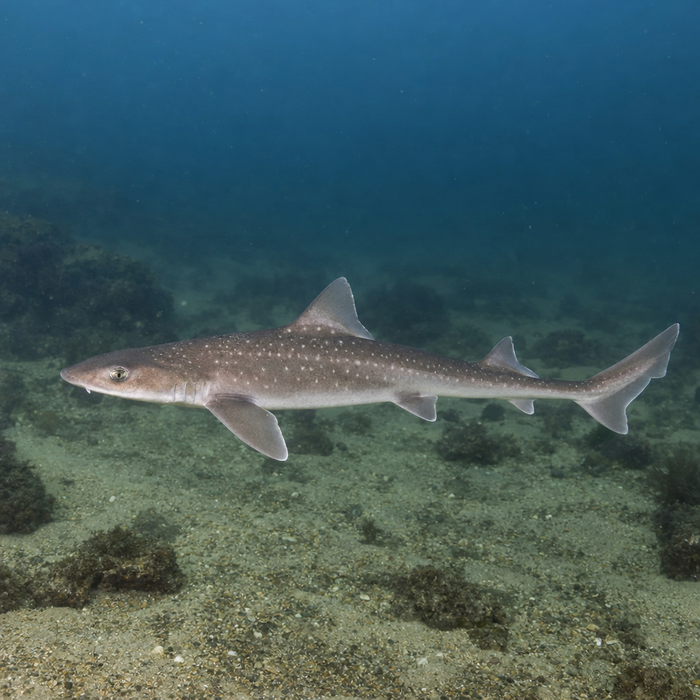
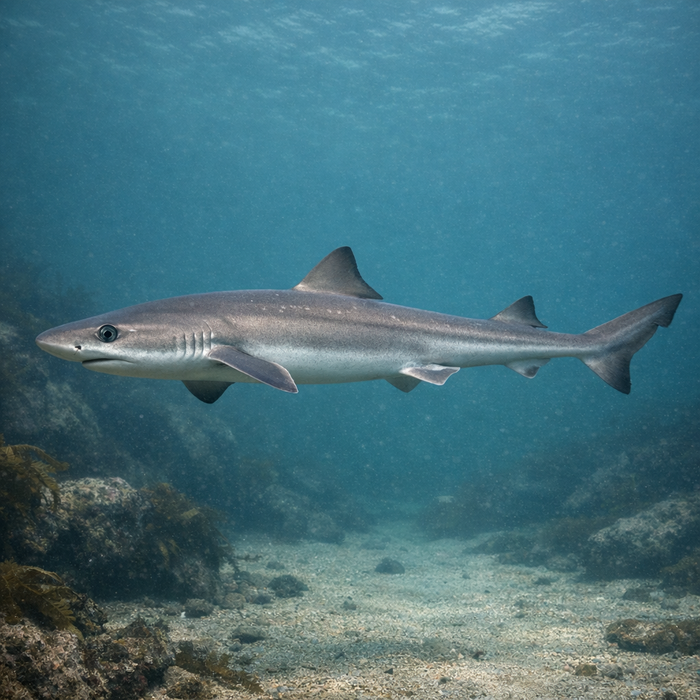
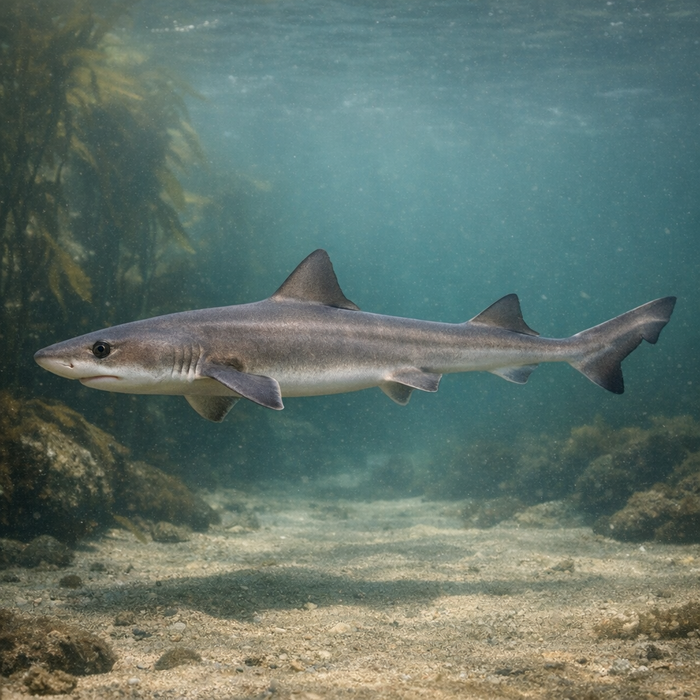
Start with the mouth. Despite the nickname, the Gummy Shark is not toothless. Its small, flattened teeth form a pavement-like crushing surface rather than the obvious cutting blades people associate with sharks. That equipment suits hard-bodied prey, particularly crustaceans. White spots scattered across a grey or grey-brown back provide another useful feature, although identification should never rest on markings alone.
Reproduction is equally interesting. Females give birth to live young without a placental connection, following roughly 11–12 months of gestation. Litters commonly contain about 14 pups, but exceptionally large females have carried as many as 57. Females also grow larger than males. This is a species where the biggest fish can carry an outsized share of future recruitment, not merely an impressive photograph.
Habitat & Global Range
Gummy Shark habitat centres on Australian coastal and continental-shelf waters, including sandy bays, estuaries, and offshore bottom. The broader distribution reaches around southern Australia and up the eastern coast into Queensland. Most practical recreational fishing happens much shallower than the species’ full depth range, which extends onto the upper continental slope. This is an Australian species, not a worldwide smoothhound with interchangeable local names.
For anglers, bottom shape matters more than an enormous search area. Channel edges, gutters, drop-offs, and sand near reef give you sensible places to begin. In southern Port Phillip, tidal channels are particularly relevant. Shore anglers can intercept fish moving into shallow water on high tides after dark. You do not need to cast toward Tasmania; you need your bait in a useful piece of water.
Behavior & Temperament
The Gummy Shark spends much of its time on or near the seabed. Individuals can gather by sex and size, and movement patterns change with age: older females generally travel farther than younger fish. Calling every bay a permanently resident population would therefore miss an important part of the story. A productive location is somewhere sharks use, not somewhere they have signed a lease.
Once hooked, expect powerful runs rather than a fish that politely follows the leader. Close quarters deserve attention, too. Gummies can roll and thrash around landing, which makes a large, sturdy net more useful than optimistic handwork. Their understated teeth do not make their entire body harmless. Keep the deck clear before the fish arrives, not while it is rearranging your tackle.
Ecological Importance
Among the more useful Gummy Shark facts is its position on both sides of the predator-prey relationship. It eats crustaceans, cephalopods, and some fish, while juveniles are known prey for broadnose sevengill sharks. That makes it part of a connected coastal food web rather than an untouchable apex predator cruising above the consequences.
Its commercial importance adds another layer. Along with school shark, this species supplies much of the flake familiar from southern Australian fish-and-chip shops. Anglers and seafood customers can therefore encounter the same animal in very different settings. Recognising the species behind the menu name makes conversations about harvest considerably more meaningful.
Conservation & Environmental Pressures
The Gummy Shark is classified as Least Concern globally, but that is not permission to stop paying attention. Commercial harvest is substantial enough to require active management. Quotas, stock assessments, and spatial protection are central parts of that picture. Published Australian assessments also distinguish the better-understood southern stock from the less-resolved eastern stock; a global category cannot describe every local population equally well.
For recreational anglers, the practical responsibilities are clear: identify the fish correctly, check local rules, and avoid unnecessary harm to unwanted catches. Measurement methods, combined shark limits, and processing restrictions can matter as much as the headline bag limit. Legal retention starts with knowing which water you are fishing, not remembering what somebody kept last summer.
The FishyAF Take
This is honest fishing with very little room for pretending. Fresh squid or salmon, a bottom rig, sensible tackle, and attention to current beat a mountain of decorative hardware. The species rewards preparation, but it does not owe you a bite because you bought a bigger reel.
Get the bait right. Get the position right. Have the net ready. Then let the Gummy Shark explain why a modest name and a crushing mouth should never be mistaken for a soft opponent.