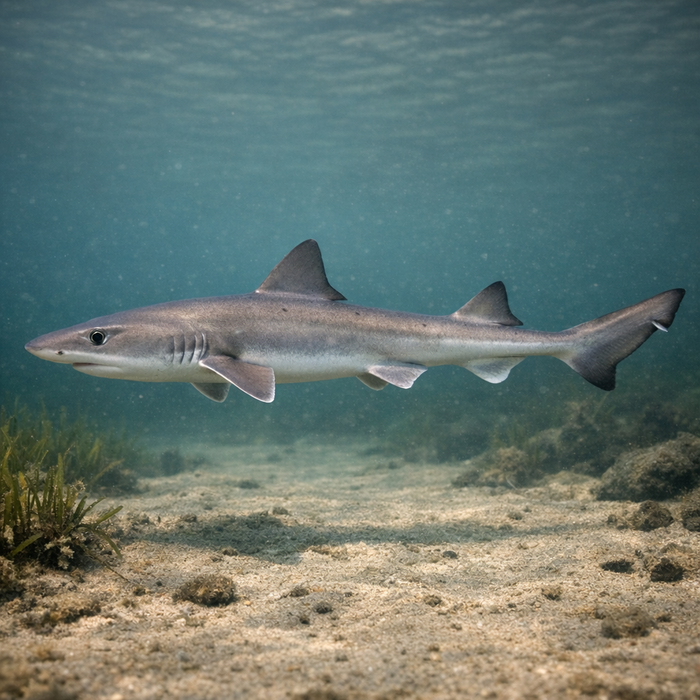
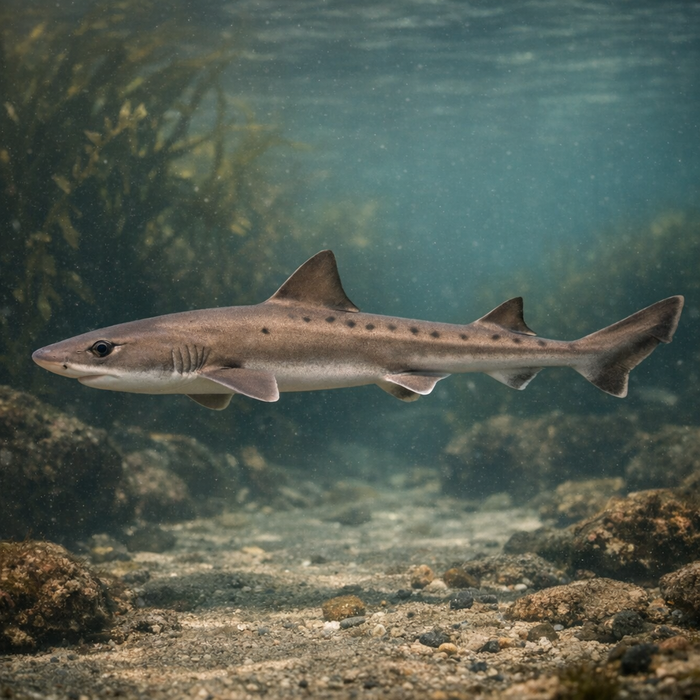
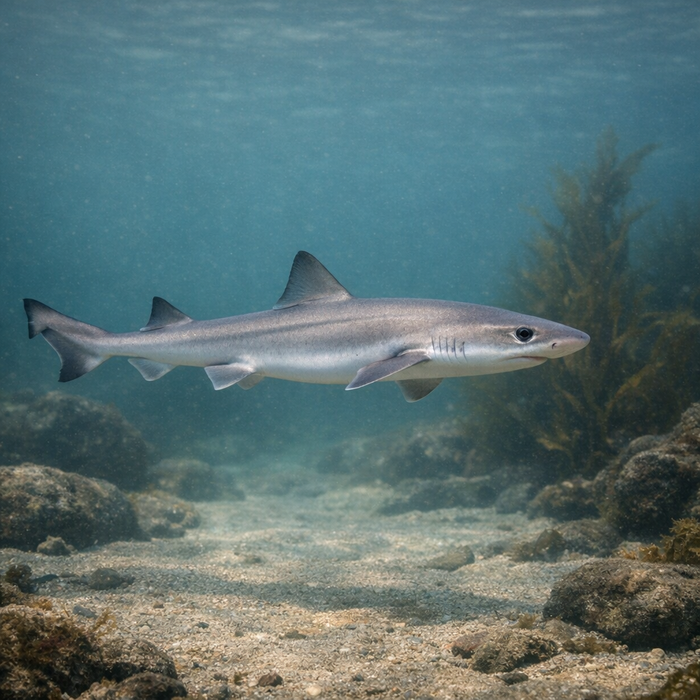
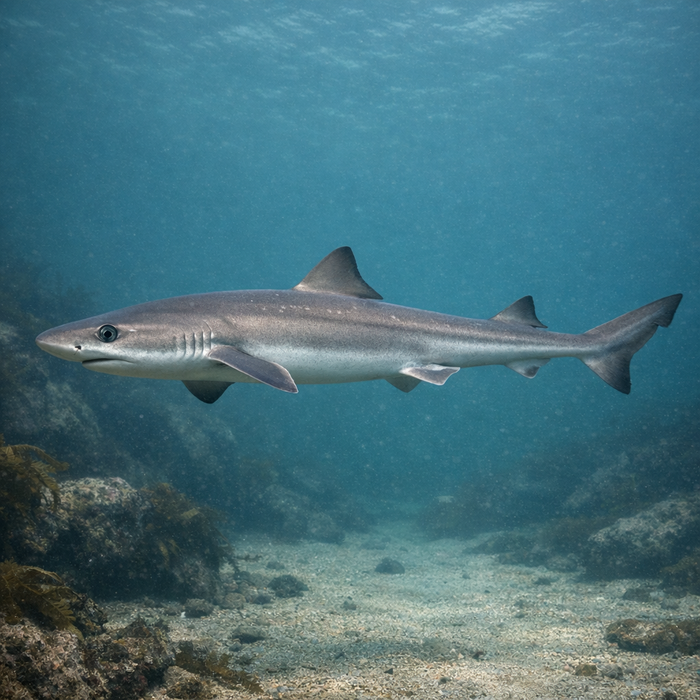
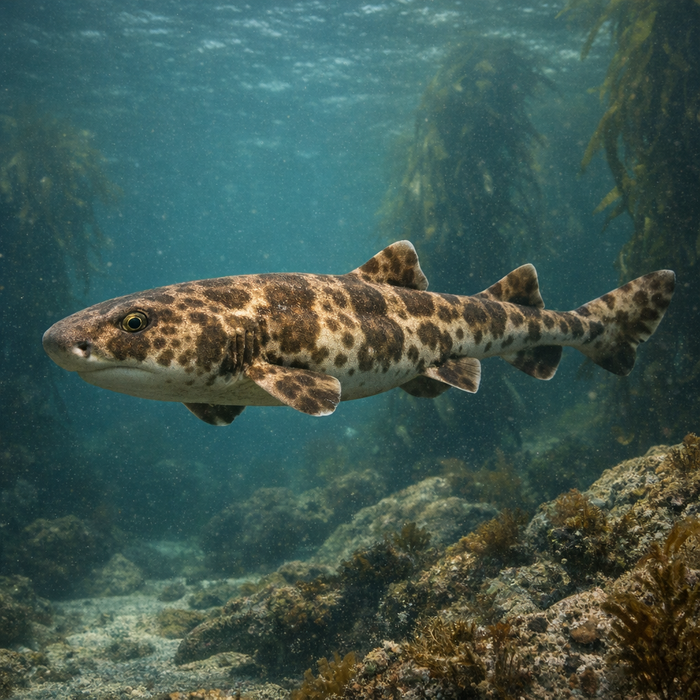
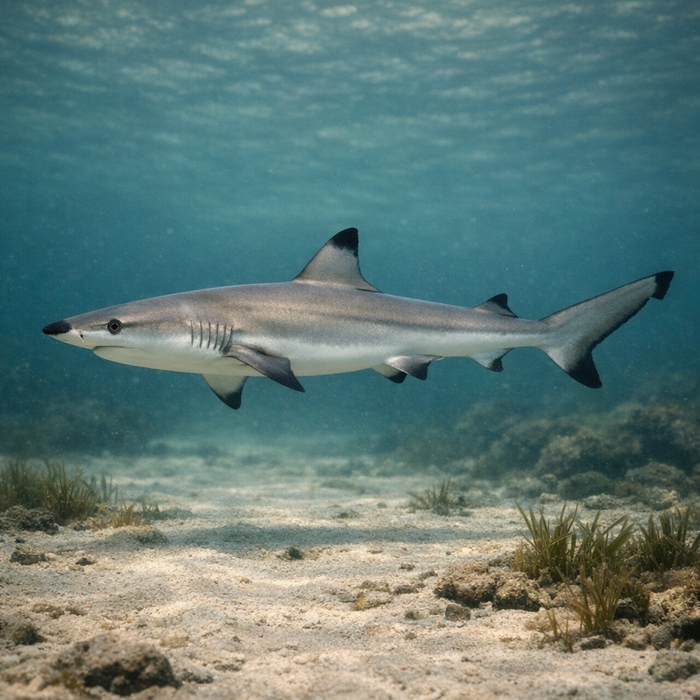
Gray Smoothhound (Mustelus californicus): The West Coast's most polite shark with a serious crustacean habitIntroductionThe gray smoothhound is the shark you introduce to nervous friends. It's slim, mild-mannered, and happiest rooting along sand and mud for crabs and clams instead of trying to amputate anyone's leg. For pier rats, surfcasters, and bay boaters, this species is a confidence-builder that still keeps things interesting. If you're after approachable shark vibes with steady action and light-tackle fun, the gray smoothhound checks every box.What Makes the Gray smoothhound Unique?Start with the dental work. Instead of pointy tearing tools, this shark rocks a pavement of crushing plates built for pulverizing hard shells. It's a beautiful adaptation that turns crustaceans and mollusks into easy calories. Then there's the reproduction. Like many Mustelus, gray smoothhound females carry pups with a yolk-sac placenta, a surprisingly mammal-esque twist in the shark world. Top it off with its social life: schools commonly sort by size and sex, so you'll hit stretches where every fish is a near-clone of the last.Habitat & Global RangeWhen anglers search for Gray smoothhound habitat, they're basically describing prime West Coast real estate: California's bays, estuaries, nearshore flats, and mellow surf zones. This shark thrives over sand and mud, cruises channel edges, and pushes into brackish water on stronger tides. From Northern California to Baja California, it's a familiar face in places like San Francisco Bay, Tomales Bay, Monterey Bay, and the sandy troughs of SoCal beaches. Depth-wise, think knee-deep to a few dozen feet. They ride the tides, slide over gentle contours, and keep their snouts buried in the buffet line.Behavior & TemperamentThe gray smoothhound is a working-class cruiser. It patrols the bottom, often in schools, and does most of its best feeding when the tide is moving. Dusk and nighttime see a bump in activity, which lines up well with crab and shrimp traffic. Despite being a shark, it's not a drama queen. Hook one and expect steady bulldogging rather than blistering runs. It's also less structure-bound than reef fish; you'll encounter them in open, feature-light water where being in the right lane of the tide matters more than casting precision.Ecological ImportanceForget the hype around apex predators for a second. The gray smoothhound is a middleweight regulator of estuary life, trimming crustacean and mollusk populations and redistributing nutrients as it roams. In big California bays, it's part of the seasonal machinery that turns plankton blooms into forage, forage into sharks, and sharks into nutrients again. Pups use shallow, warmer water nurseries, benefiting from the seasonal abundance created by spring and summer productivity. That bottom-of-the-food-web energy funnels upward, and smoothhounds are excellent couriers.Conservation & Environmental PressuresBy shark standards, the gray smoothhound is doing fine. It's commonly rated Least Concern and supports small commercial and recreational harvest. But "fine" can turn quickly if nursery habitats degrade. Estuaries and bays soak up pollution, heavy freshwater pulses, and shoreline development. Because smoothhounds rely on those shallow nurseries and tidal movements, any disruption to water quality, prey availability, or access can ripple through cohorts. The species is also occasionally misidentified, which complicates monitoring and management. Keeping an eye on bycatch, local water conditions, and nursery protection will keep these sharks thick for the long haul.The FishyAF TakeThis is the shark you take when you actually want to catch a shark. Realistic expectations, good odds, and just enough attitude to make your drag say hello. If you're collecting Gray smoothhound facts for your first shark outing, here's the distilled version: tide matters, low light helps, and the bottom is where the story happens. The gray smoothhound isn't a trophy fish in the Instagram sense, but it's a trophy of consistency. Catch a few on light gear and you'll get it. They're a legit fishery, a forgiving target, and a solid reminder that not every great day needs 100 pounds and fireworks.