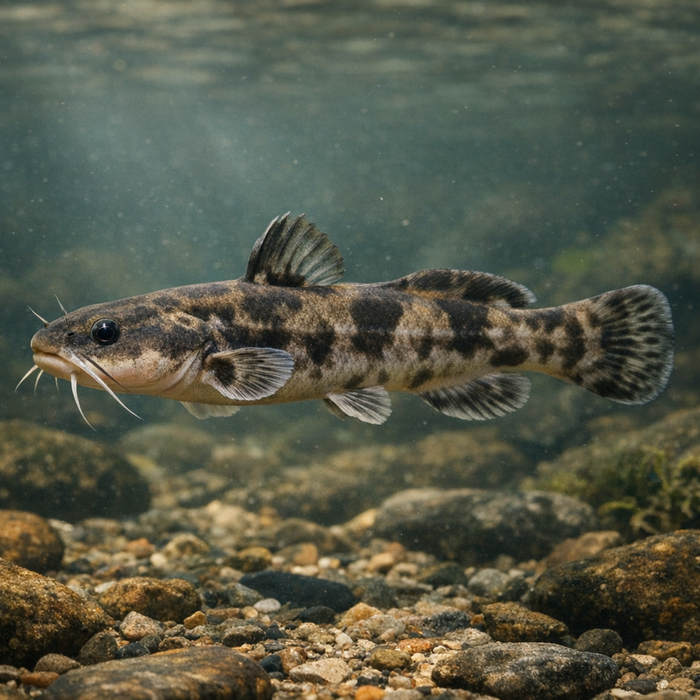
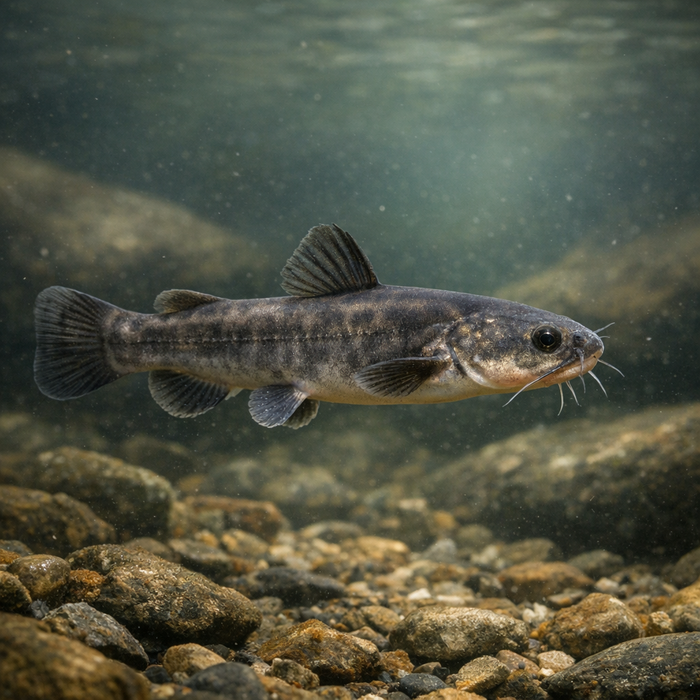
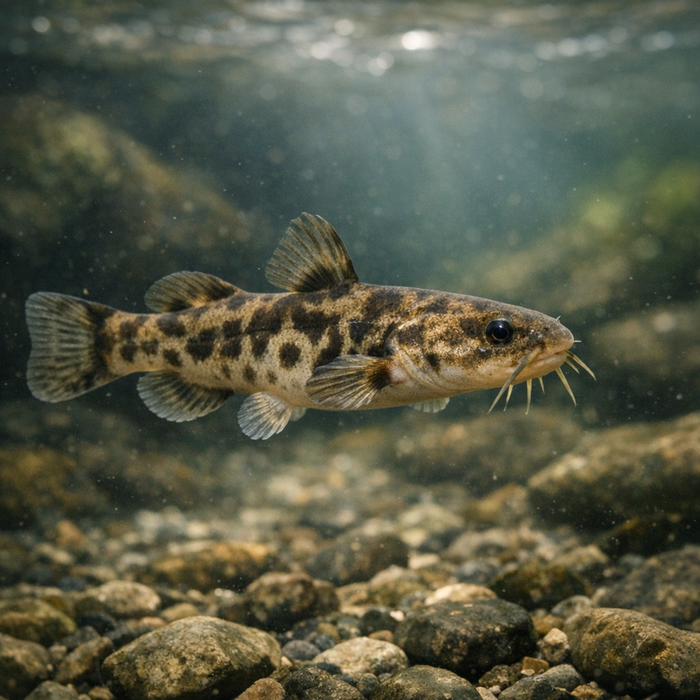
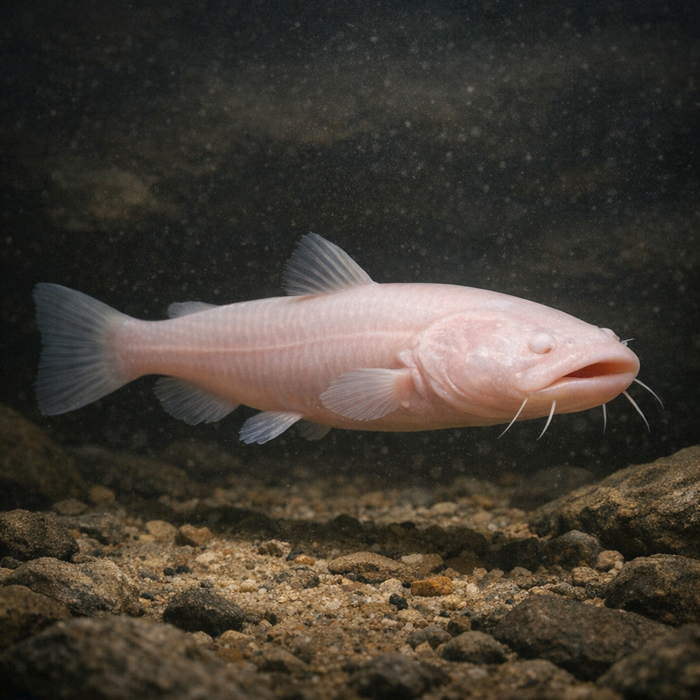
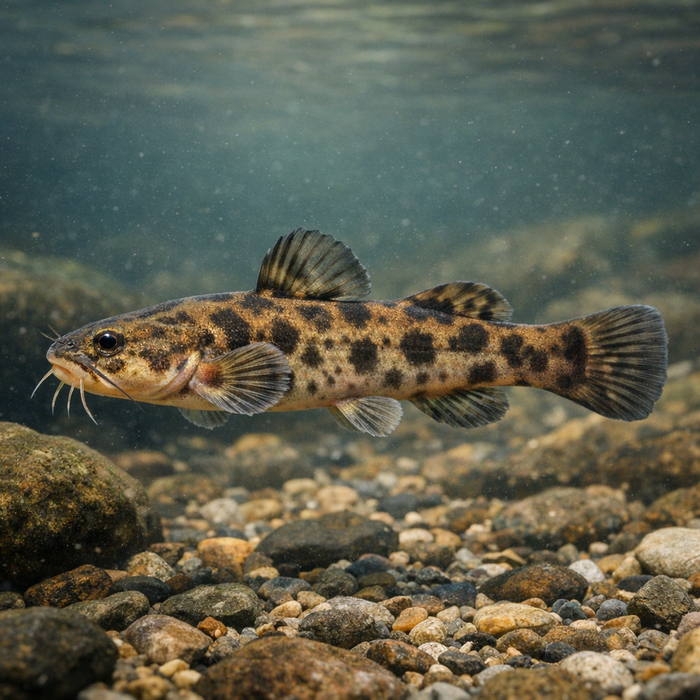
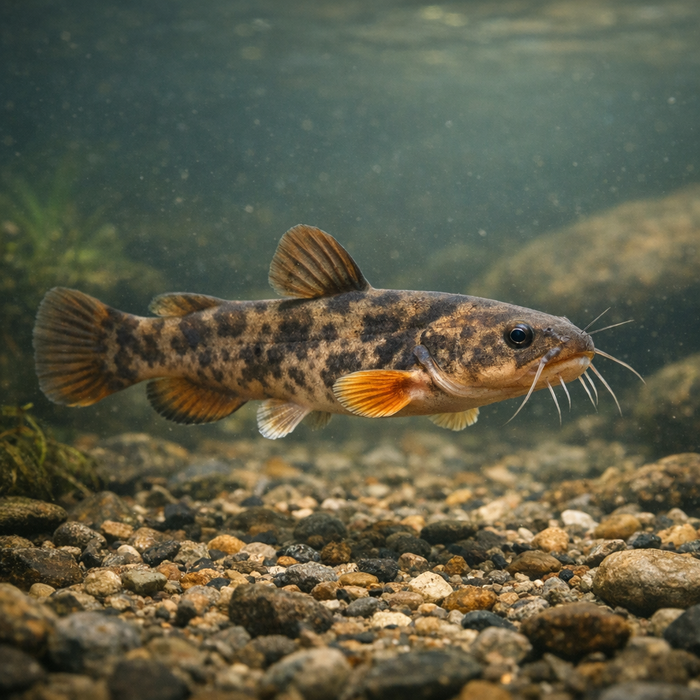
Pygmy madtom (Noturus stanauli): The catfish that fits in a thimble but owns the current.IntroductionIf you think catfish are only bruisers with whiskers and bellies full of shad, the pygmy madtom will happily wreck that stereotype. This is the micro version: a two-inch ninja that lives where the rocks chatter and the current hums. It's wild, rare, and ridiculously well-adapted. For anglers, it's more legend than target, but that doesn't make it any less fascinating.What Makes the Pygmy madtom Unique?Two things stand out. First, size. The pygmy madtom is among North America's smallest catfish, topping out at about the length of your pinky knuckle. Second, attitude. Despite its toy profile, it carries the classic madtom toolkit: venom-tipped spines, stealthy camouflage, and a body built for gripping fast riffles. The adipose fin merges into the tail, creating a single continuous edge that helps it track micro-currents like a drift racer. If you collect weird fish trivia, this one's a gem for Pygmy madtom facts.Habitat & Global RangeWe're talking hyper-specific real estate. Picture shallow, clean, oxygen-rich riffles over gravel and small cobble, with pockets and rock lips that break the flow. That's prime pygmy madtom habitat. The fish hugs bottom, slides under edges, and uses its barbels like night-vision sensors. Its known range is tiny, tied to select streams in the interior Southeast, which is a big reason it's so vulnerable. Even subtle changes in silt, flow, or water chemistry can gut its neighborhood overnight.Behavior & TemperamentThis species lives life on stealth mode. It's mostly nocturnal, foraging when the sun drops and the riffles soften. It doesn't cruise the surface or school in drama-queen clusters. Instead, it makes short, decisive darts between pebbles, then freezes so perfectly you'd swear it disappeared. The spines discourage curious mouths, but this isn't a fighter; it's a survivor. You don't outmuscle current at this size. You outthink it.Ecological ImportanceMicro predators drive macro outcomes. The pygmy madtom vacuums up small invertebrates, tightening the screws on insect populations and, by extension, on nutrient and energy flows. Its demand for clear, well-oxygenated riffles makes it a sentinel species. When pygmy madtoms wink out, it's not a single-fish problem; it's a watershed alarm. Protect the riffles and you stabilize a web that includes popular sportfish upstream and downstream.Conservation & Environmental PressuresThe risks are the usual villains, but the stakes are amplified by scale. Siltation gums up gravel pores and smothers eggs. Dams and altered flows erase riffle rhythm. Pollution sneaks into the seams where this fish feeds. Because populations are small and isolated, a single bad spill or a season of heavy runoff can erase decades of gains. It's listed and protected for a reason. Any real recovery hinges on water quality, intact riparian buffers, and smart flow management.The FishyAF TakeThe pygmy madtom is proof that "trophy" isn't a length number; it's a story. As anglers, we love oddities, and this fish is catnip for fish nerds. But the right move here is respect, not pursuit. If you want to sharpen your micro game, practice on abundant, unlisted species, learn to read riffles, and keep your footprints light. Celebrate this one with a headlamp, a camera, and a clean release of curiosity. When the riffles are healthy enough for a fish this picky, everything else you care about fishes better too. That's the real win.