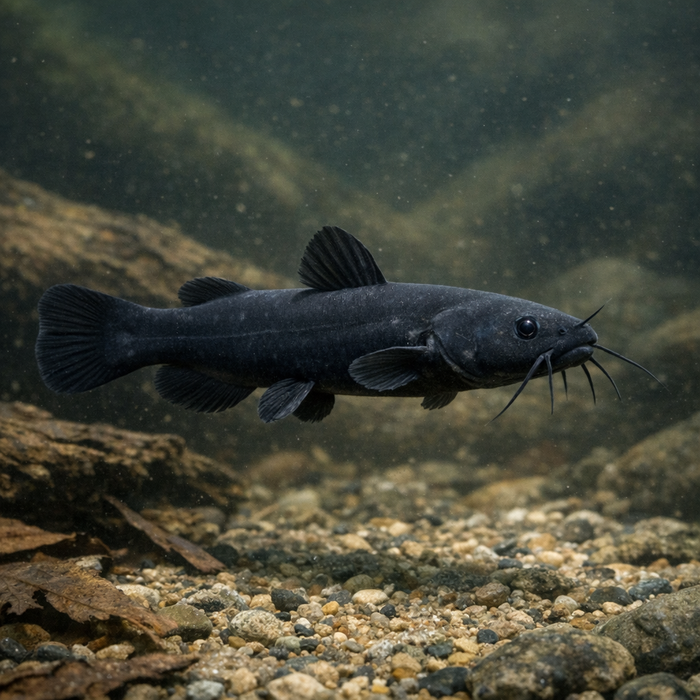
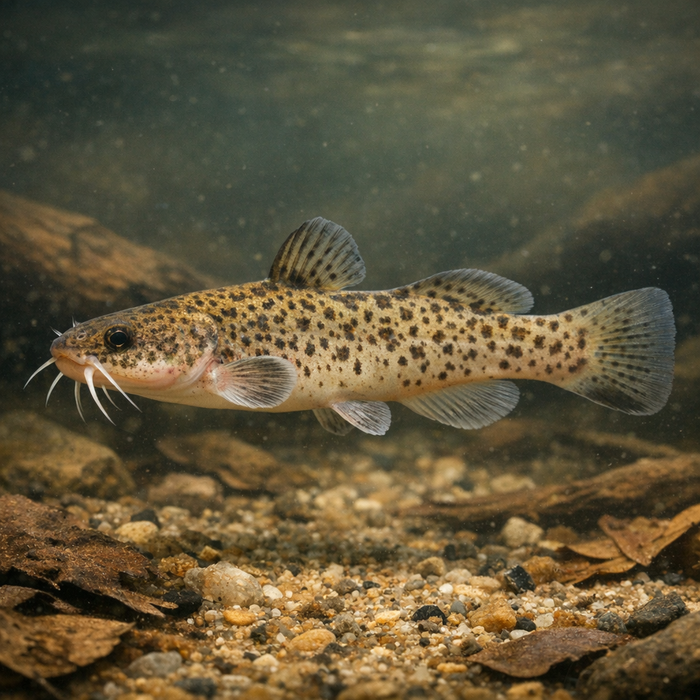
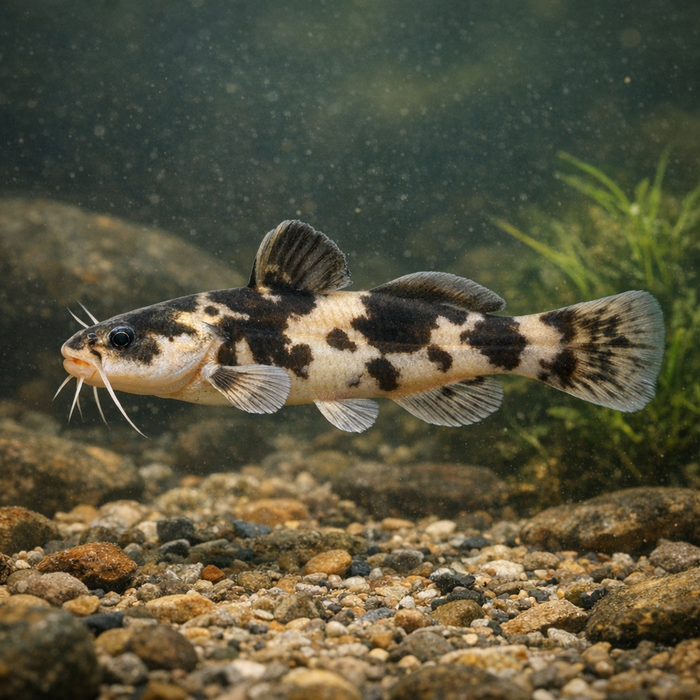
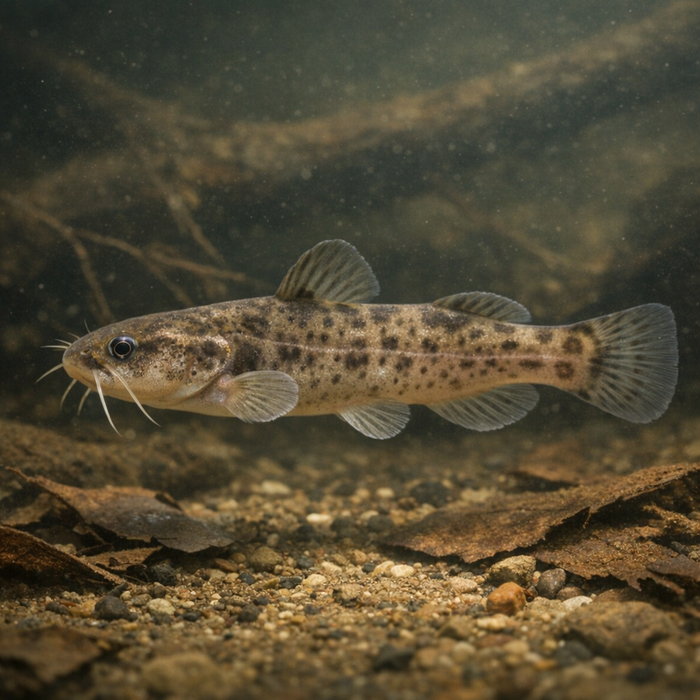
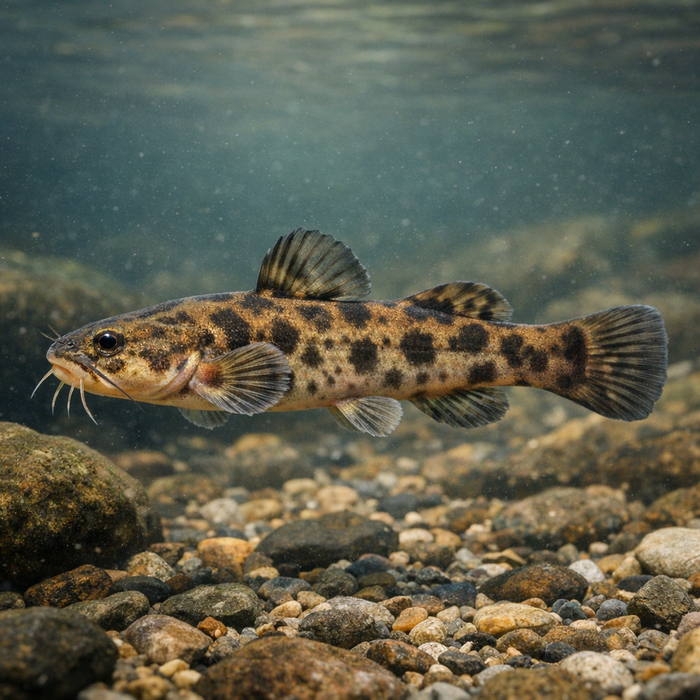
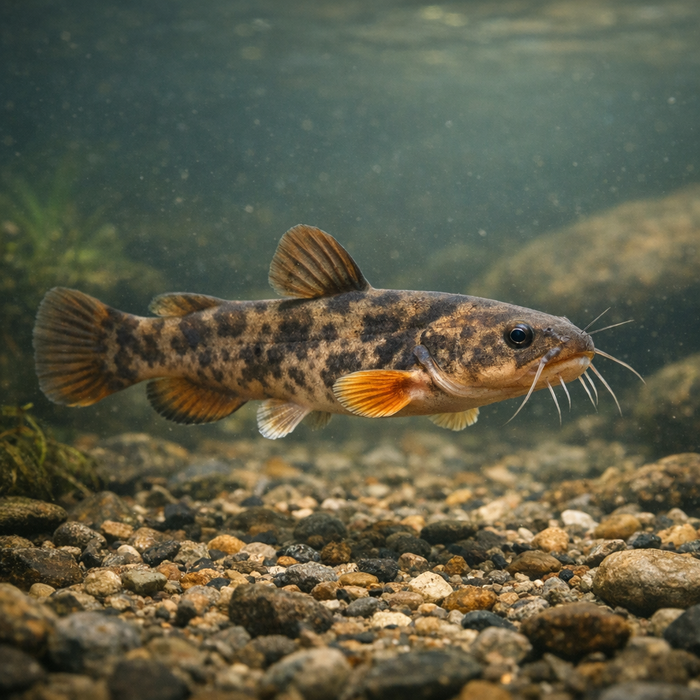
Elegant Madtom (Noturus elegans): Small, spiny, and way classier than a fish this tiny should beIntroductionThe elegant madtom is the pocket rocket of catfish: a two-to-four-inch nightcrawler thief with venom-tipped spines and serious stream swagger. Most anglers never notice it until something tiny taps their bait in the riffles and vanishes. That mystery bite? Probably this species doing elegant madtom things: hugging rocks, prowling at night, and punching well above its weight. If you're into microfishing or just love clean-water stream life, this is your little apex of attitude.What Makes the Elegant madtom Unique?First, the gear. Not for you, for the fish. The elegant madtom comes factory-loaded with locking dorsal and pectoral spines that carry mild venom, useful for discouraging predators and clumsy hands. Second, the look. Its dark saddles and nearly continuous adipose fin give it a sleek, ribboned profile that actually earns the name "elegans." Third, the lifestyle. This catfish is a specialist of clear, oxygen-rich riffles where most fish struggle to hold. It wedges into cracks by day, then ghosts out at dusk to taste the streambed with barbels and skin packed with sensory cells. Want elegant madtom facts? Start with this: it's tiny, tough, and surprisingly stylish.Habitat & Global RangeElegant madtom habitat reads like a love letter to healthy streams. Think cool to warm, high-clarity water, gravel to cobble bottoms, and steady current. It favors small to midsize creeks where riffles intertwine with runs, plus undercut banks and slab rocks it can tuck beneath. Its range is regional rather than coast-to-coast, centered in select drainages of the interior Southeast and lower Midwest. If the water's muddy, sluggish, or choked with silt, odds drop fast. If it's clean, moving, and stacked with rock, your chances climb. Translation: this fish is a living indicator that the stream's still got its act together.Behavior & TemperamentBy day, the elegant madtom is a pro-level hider, wedging into the bottom architecture and letting current wash overhead. At night it becomes a methodical cruiser, nosing through pockets for insect larvae and small critters. It won't blitz a lure like a smallmouth, but it will hammer a well-placed micro offering and then bulldog for cover. The spines aren't for show; when pinned, they lock and make handling tricky. Spawning is a cavity act: eggs stuck to the roof, males on guard duty like whiskered sentries. You'll catch more after dusk, during overcast stretches, or when flow bumps and insects tumble.Ecological ImportanceThe elegant madtom is stream quality made flesh and fins. It needs oxygen, clean substrates, and stable flows, so its presence signals a functioning riffle-run system. In turn, it helps control benthic invertebrates and feeds up the chain to larger predators. It's also part of a tight guild of riffle dwellers that includes darters and sculpin, each with a niche in the rocky neighborhood. Lose the clean gravel, you lose the guild. Lose the guild, and the stream's character gets hollowed out fast.Conservation & Environmental PressuresSilt is the enemy. Sediment blankets eggs, fills in crevices, and reduces oxygen. Add nutrient surges, low summer flows, and poorly timed dredging or gravel mining and you've got a problem. The elegant madtom doesn't need wilderness, but it does need competence: intact riparian buffers, thoughtful road crossings, and stormwater managed so spawning sites don't turn into pudding. Because its distribution is limited, local hits can ripple through the whole picture. Conservation boils down to keeping riffles crisp and the water cold enough to breathe.The FishyAF TakeWe like overachievers, and the elegant madtom is exactly that. It's small, stingy, and absolutely dialed to rock-and-current living. If you chase micro species, put this one on your short list; landing a clean, verified fish from textbook Elegant madtom habitat feels like unlocking a secret level. Handle with care, mind the spines, and keep the stream as you found it. Catching one won't make headlines, but among riffle nerds it's pure gold. Elegant madtom facts don't get louder than this: in the right water, tiny fish can speak volumes about wild places.