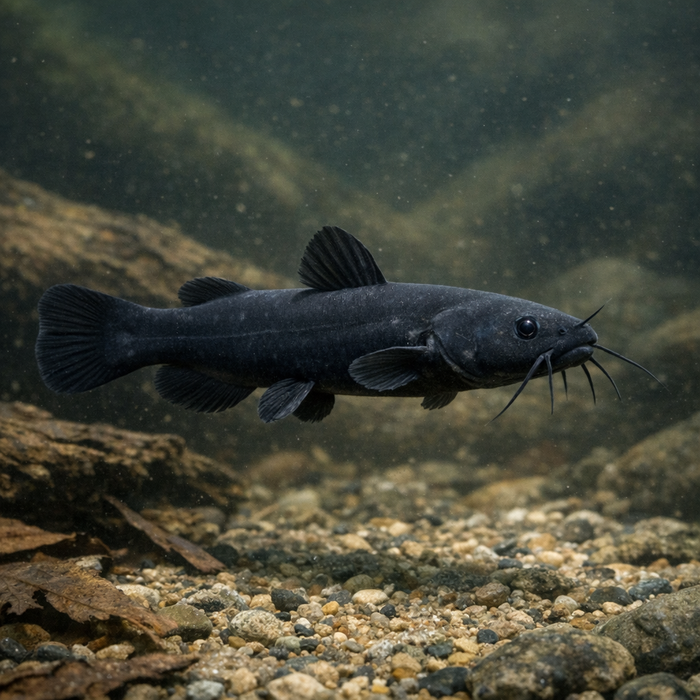
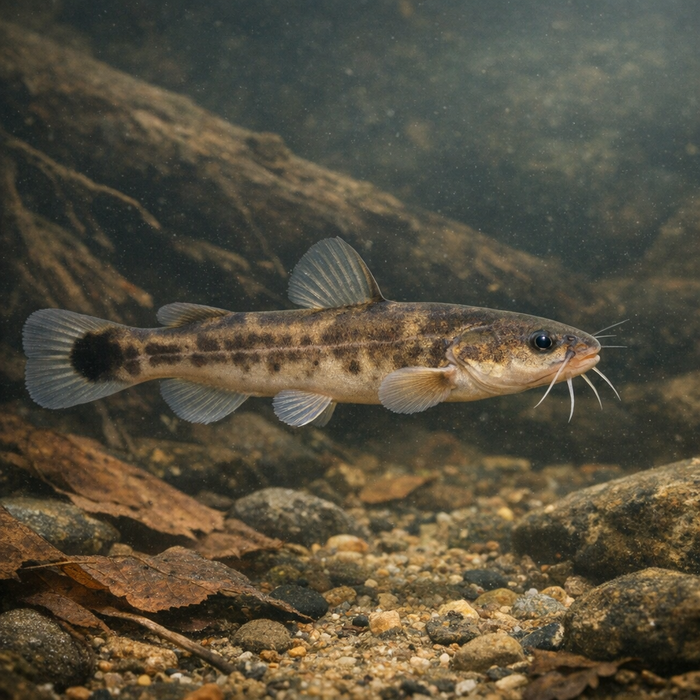
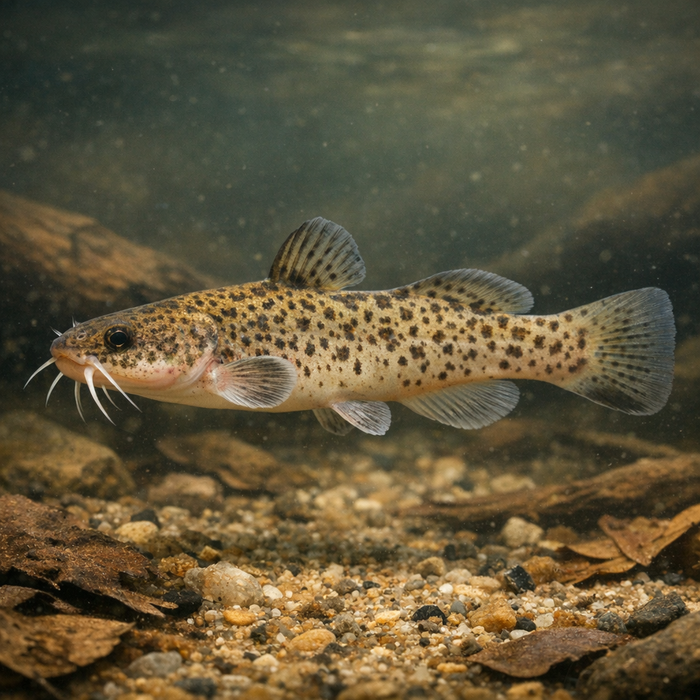
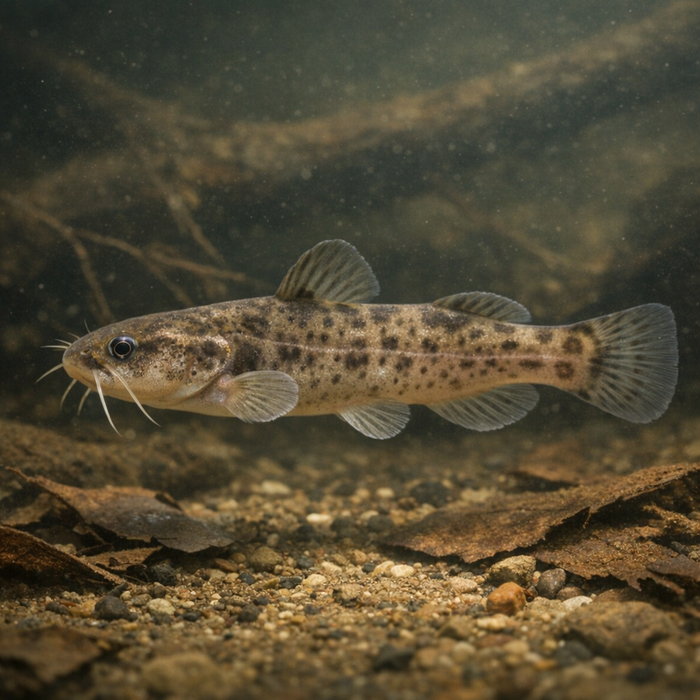
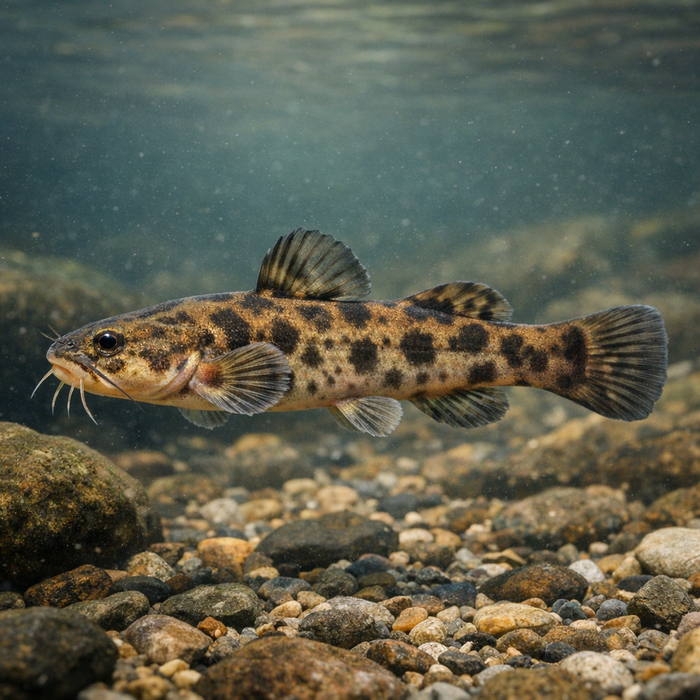
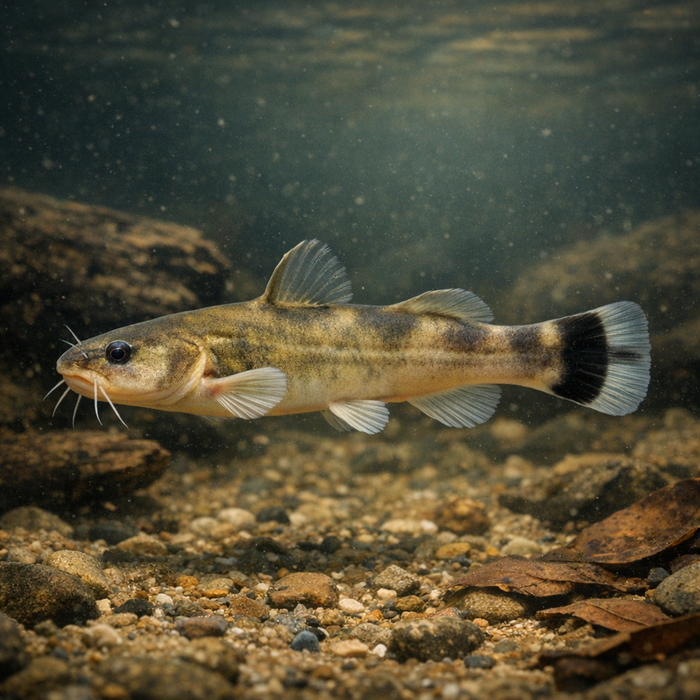
Orangefin Madtom (Noturus gilberti): Little Catfish, Loud AttitudeIntroductionThe orangefin madtom is proof that size doesn't equal swagger. This pocket-sized catfish haunts clean riffles after dark, slipping between cobbles like a whiskered ninja with a neon trim package. If you're chasing Orangefin madtom facts or trying to decipher Orangefin madtom habitat, you're already in the right headspace: think small water, sharp current, and stealth mode.What Makes the Orangefin madtom Unique?Two things jump off the page. First, breeding adults light up their dorsal and caudal fins with rich orange edges, a bold signal that looks almost electric in clear flow. Second, those pectoral spines aren't for show. Like other madtoms, this species carries mild venom associated with the serrated spines, which means ham-fisted handling can feel like grabbing a prickly cactus with opinions. Add the continuous adipose fin running to the tail and you've got a streamlined insect-hunter built for life in the riffles.Habitat & Global RangeThe orangefin madtom is tied to small and midsized streams with clean gravel and cobble, moderate to swift current, and decent oxygen. Picture shallow riffles cascading into knee-deep runs, with just enough pocket water to hide under a flat rock. Silt is the enemy, cover is king, and steady flow keeps the pantry stocked with drifting invertebrates. Movement is mostly local, tracking current and cover more than miles. If your mental image of Orangefin madtom habitat includes bright riffles and gritty, algae-dusted stonework, you're dialed.Behavior & TemperamentNight is go-time. The fish loafs under stones by day and turns into a stealth feeder after sunset, using sensitive barbels to scout drifts for nymphs and larvae. It won't chase far or fast, preferring short bursts and ambush lanes along the bottom. Spawning happens as water warms late spring into early summer. Males commandeer cavities under flat rocks, guard the egg mass, and fan like overtime dads until hatching. Individuals act solitary or in loose, small aggregations at best. Translation for anglers: tiny presentations, dead-neat drifts, and patience.Ecological ImportanceDon't underestimate a 3-inch cat. Orangefin madtoms are specialized invertebrate predators that help balance benthic insect communities. They turn aquatic bugs into fish protein, and then pass that energy upslope to larger predators like bass and herons. Because they demand clean substrates and good oxygen, their presence hints at a healthy, well-oxygenated stream. Lose the riffles to sediment, and you lose the orangefin madtom's niche.Conservation & Environmental PressuresThis species lives where clean rock and moving water rule, so it's sensitive to siltation, stormwater pulses, and low-flow drought periods. Channelization, bank erosion, and poorly managed construction can bury cobble beds in a heartbeat. Add in localized rarity, and you've got a fish that benefits hugely from habitat protection and careful handling. Many madtoms have patchy ranges and sometimes extra legal protections; read your local regs before you go poking around with a micro rig.The FishyAF TakeCatching an orangefin madtom isn't about hero shots. It's about solving a tiny puzzle in a low, clear riffle and appreciating a micro predator with big-catfish swagger. Bring needle hooks, small natural baits, and a light touch. If you get one, take a quick photo for the life list and slide it back. Stream health wins, the fish wins, and you get a story about the catfish with the traffic-cone fins that lives where the water sings.