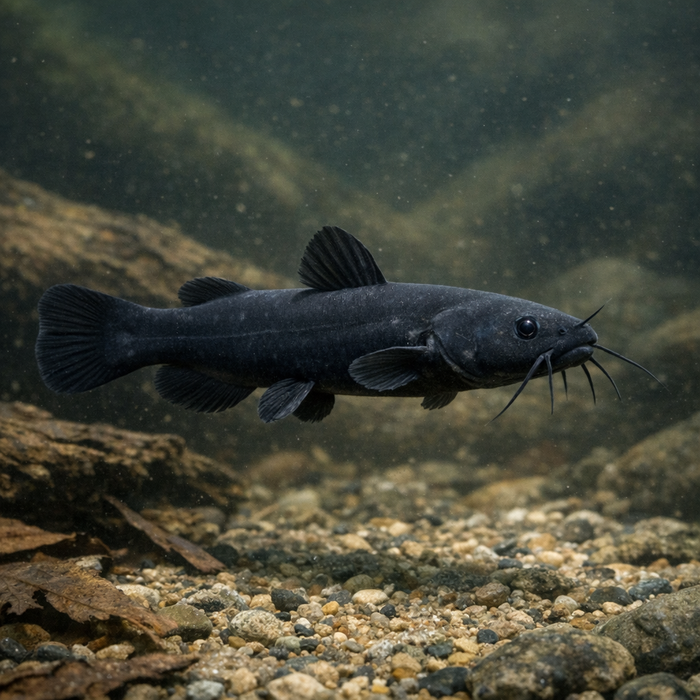
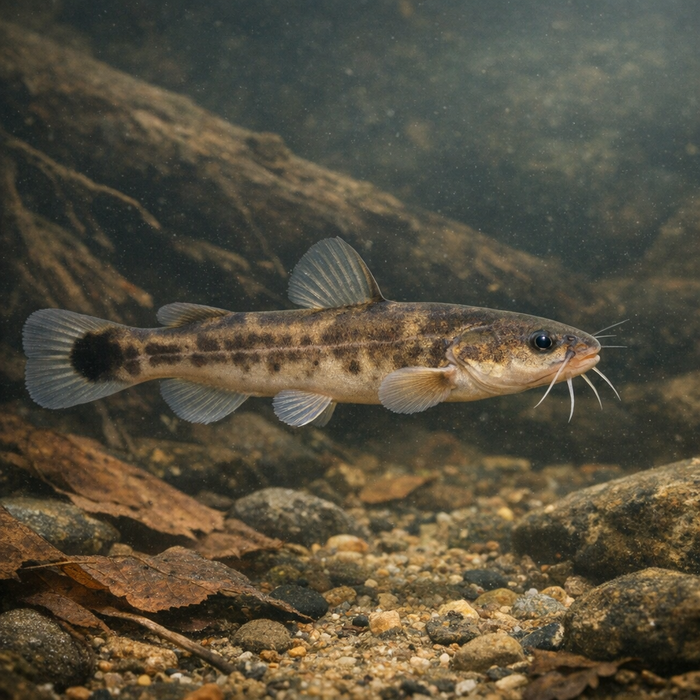
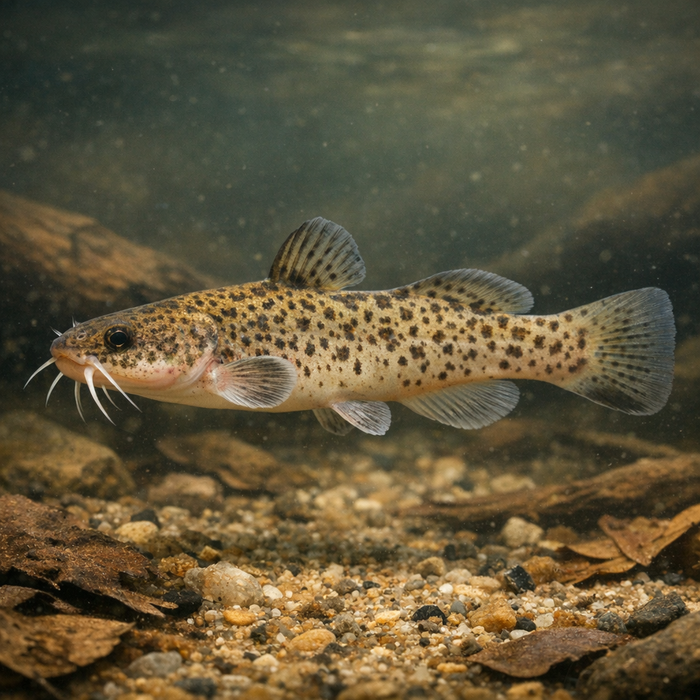
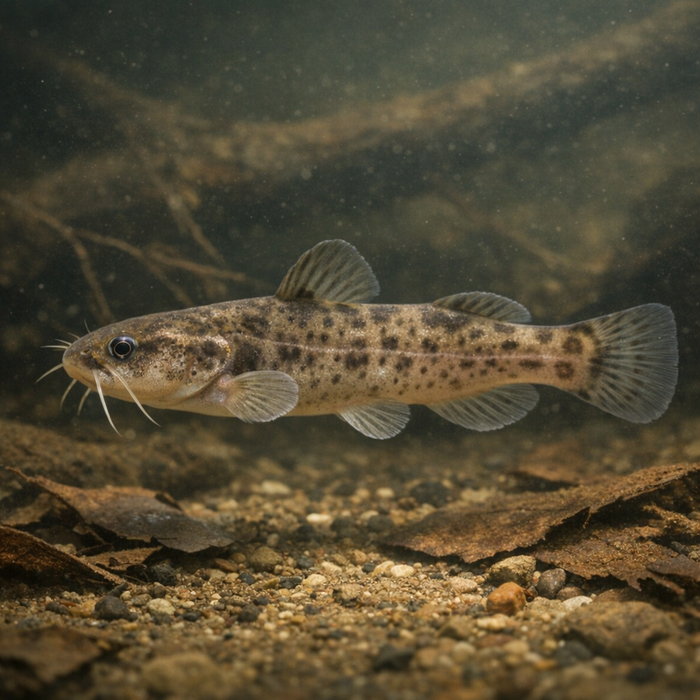
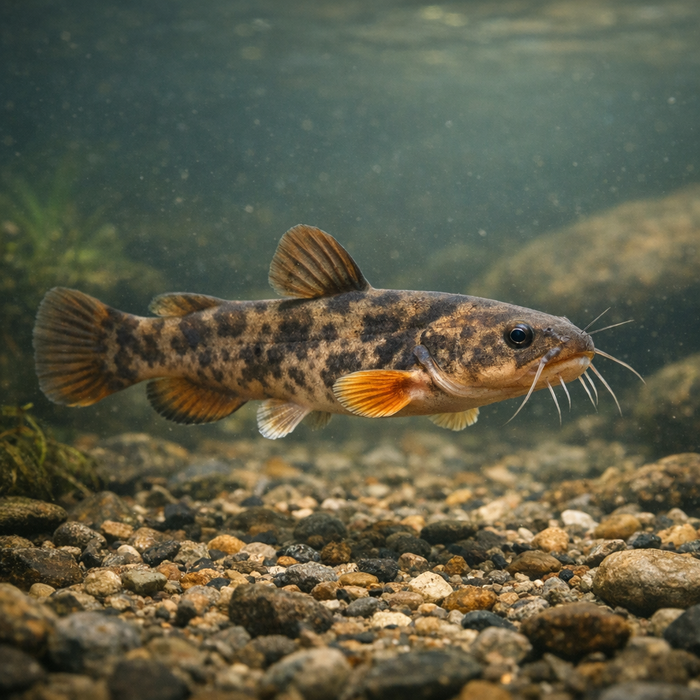
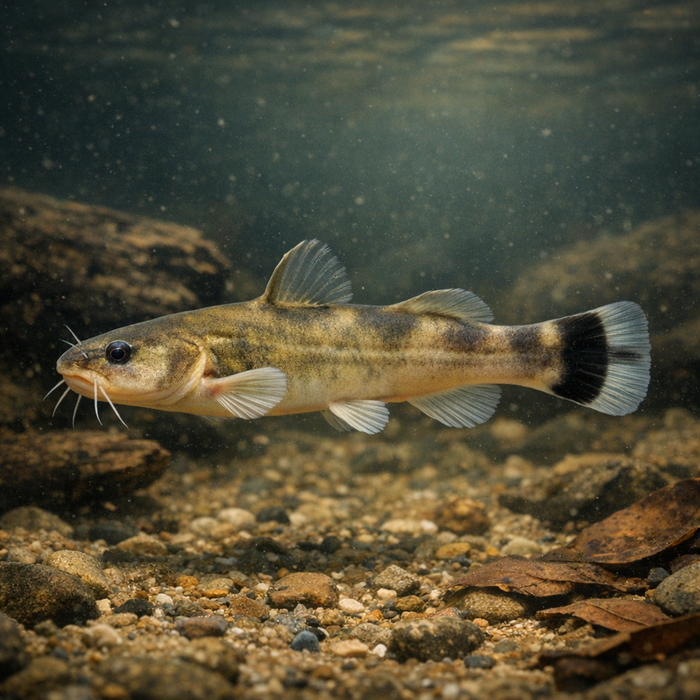
Mountain Madtom (Noturus eleutherus): Small Catfish, Big AttitudeIntroductionThe mountain madtom is proof that size doesn't decide swagger. This pocket-sized catfish rules the riffles after dark, slipping between cobbles like a whiskered ninja and jabbing back with venom-tipped spines when handled wrong. For anglers who chase oddball species, it's a quirky grail: tiny, feisty, and way more technical than it looks. If you're digging for legit Mountain madtom facts or trying to decipher Mountain madtom habitat, welcome to the current.What Makes the Mountain madtom Unique?First, those spines. Like other madtoms, the mountain madtom has serrated dorsal and pectoral spines that deliver a bee-sting burn if you get casual. Second, it's a specialist. This fish keys in on clean, fast riffles with chunky rock and tight hidey-holes, and it doesn't tolerate silty, sluggish water. Third, its life happens at night. While you're stumbling with a headlamp, it's cruising the bottom, picking off insect larvae and other micro-prey with taste buds that cover its skin and barbels. Small fish, big toolkit.Habitat & Global RangeThe mountain madtom lives in cool, clear rivers and medium creeks with honest current and a rocky backbone. Picture cobble, gravel, and flat slabs with spaces underneath, then add steady flow and oxygen. That's its lane. Geographically, it's a fish of the interior highlands and foothill drainages, especially the Ohio, Cumberland, and Tennessee river systems, with local strongholds where habitat stays clean and connected. Within a stream, it's a neighborhood resident more than a traveler, settling into riffles and runs that offer both cover and conveyor-belt food delivery.Behavior & TemperamentDaylight is bunker time. The mountain madtom wedges under rocks so snugly you'll meet the spines before the fish. When current softens at dusk, it turns on, making short, jetty moves between stones. They don't chase far; think ambush micro-predator rather than sprinter. During spawning, males claim a slab-roofed nook, glue the family under it, and fan the eggs like OCD dads. They'll defend that nest with remarkable intensity for a fish that weighs less than a chicken nugget.Ecological ImportanceCall it the riffle health inspector. Mountain madtoms are touchy about silt and pollution, so if they're present, your stream's in respectable shape. They sit neatly in the middle of the food web: vacuuming up aquatic insects and becoming snacks for larger fish and herps. Their nest-guarding also concentrates nutrients and energy under specific rocks, creating micro-hotspots that other invertebrates and fish quietly leverage. When they disappear, it's usually a red flag for sedimentation or water-quality backsliding.Conservation & Environmental PressuresThe species is broadly listed as Least Concern, but that label hides a fine-print reality: local populations wink out when streams get smothered in silt, straightened, or laced with runoff. Dams that flatten flow and block clean gravel inputs are a long-term headache. So is careless rock-flipping. You want mountain madtoms? You need intact riffles, connected flow, and stable banks. Protect the rocks, protect the fish.The FishyAF TakeChasing a mountain madtom is like ordering the secret menu of freshwater fishing. There's no grip-and-grin hero shot, no screaming drag. There's a knee-deep riffle, a tiny hook, and a fish that makes you rethink precision. If you can pattern this catfish, you've leveled up your current-reading and stealth game, period. The mountain madtom is the anti-trophy: humble, technical, and absolutely addictive once you crack the code.