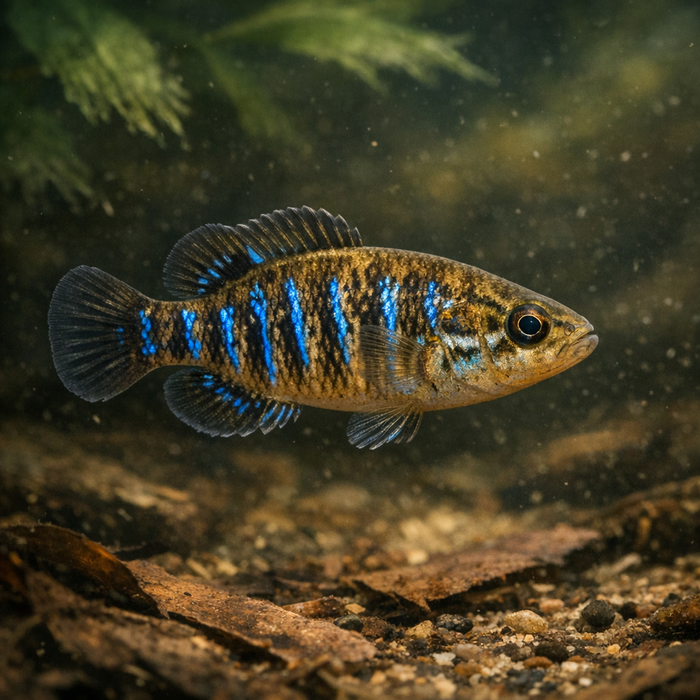
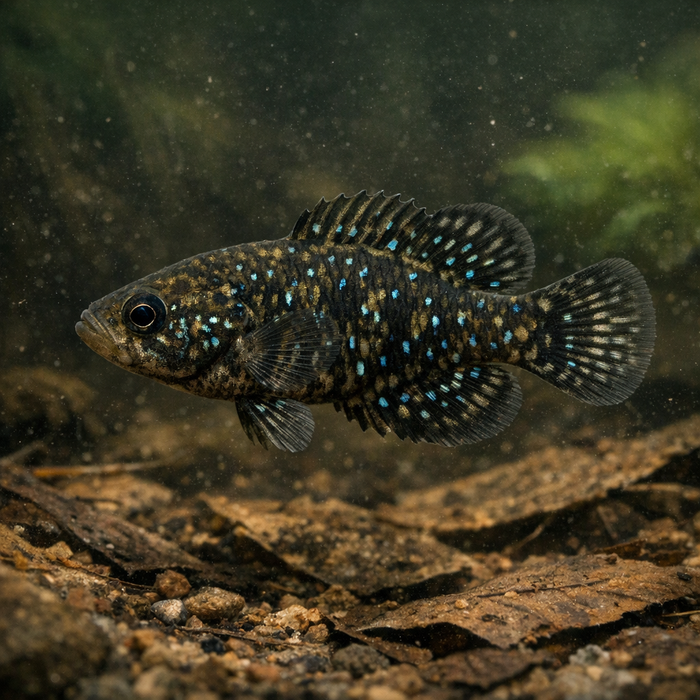
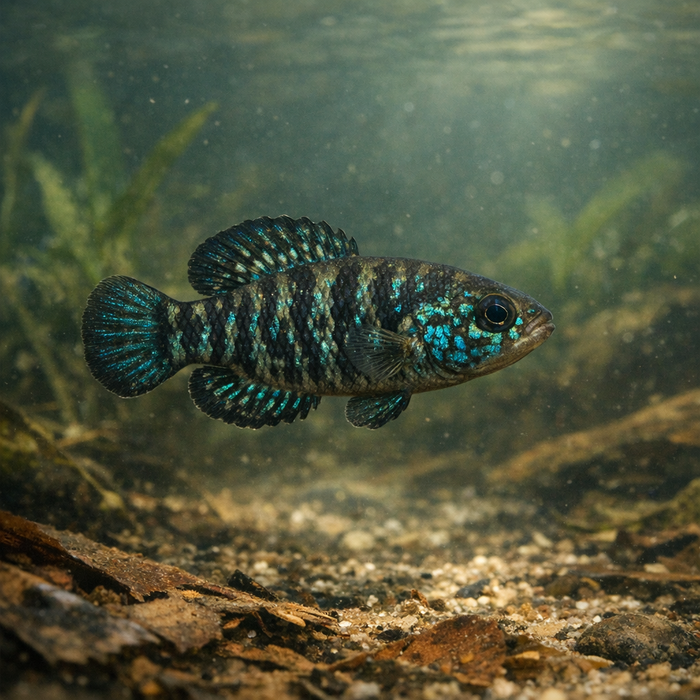
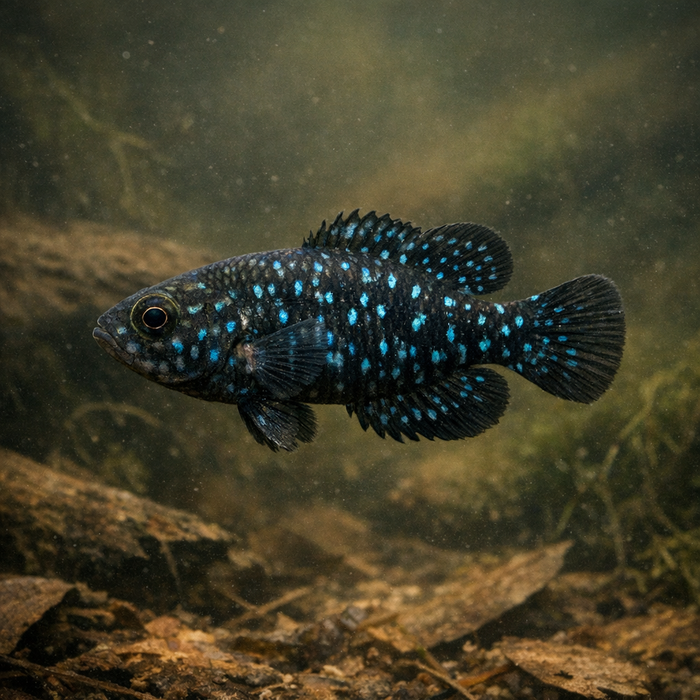
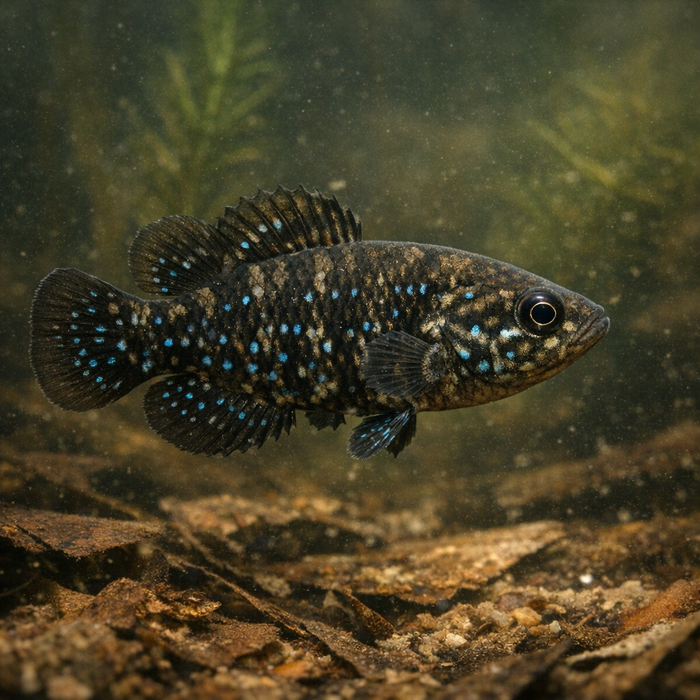
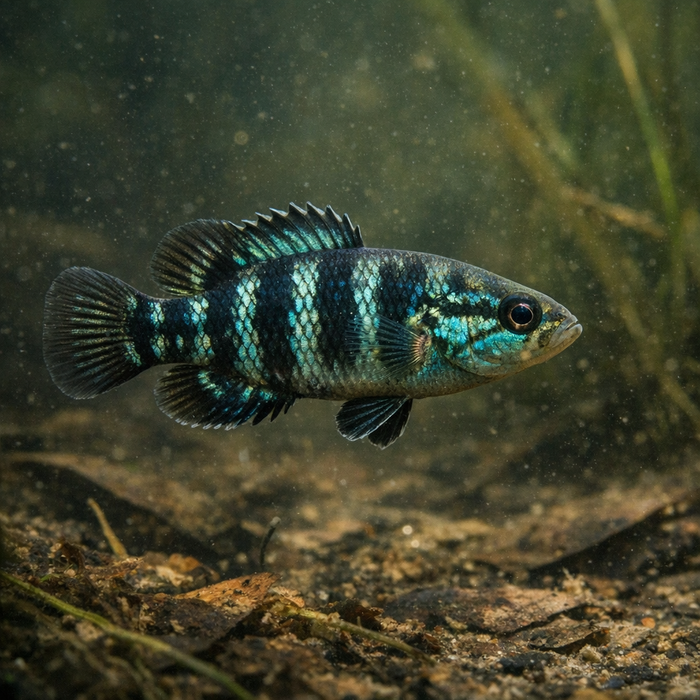
Carolina pygmy sunfish (Elassoma boehlkei): A Bold, Memorable Hook LineIntroductionMeet the fish that rewrites what "trophy" means. The Carolina pygmy sunfish is all finesse and no bulk, a slips-of-shadow specialist that haunts tannic backwaters and turns coal-black with neon spangles when it's in the mood for love. If you think bass are subtle, try convincing a one-inch predator to eat your microscopic offering without spooking. That's the Carolina pygmy sunfish experience in a nutshell.What Makes the Carolina pygmy sunfish Unique?Start with scale. Full-grown adults often measure around an inch, so every inch counts. Then there's the male's costume change: courtship turns drab fish into velvet-black, blue-specked fireworks. Finally, the Carolina pygmy sunfish operates with helicopter precision. Instead of sprinting like shiners, it hovers and darts in tight cover, ambushing micro-prey at point-blank range. It's a predator in miniature, and that contradiction is exactly why anglers and naturalists obsess over it.Habitat & Global RangeIf you're digging into Carolina pygmy sunfish habitat, think dark tea and dense weeds. They occupy slow, plant-choked blackwater on the Carolina coastal plain: floodplain creeks, swamps, oxbows, rice-field ditches, and quiet margins of streams. Cypress knees, leaf litter, maidencane, and watermilfoil turn the world into a maze, and that maze is home. The range is tight compared to widespread sportfish, which keeps encounters special. You're not covering endless reservoirs here; you're sneaking along narrow runs where a shadow or ripple gives away a fish.Behavior & TemperamentFor a fish this small, the attitude is large. Males carve out little territories inside vegetation, flashing and shimmying to impress females and warn rivals. They don't sprint around in open water; they hover, pivot, and pounce. In clear pockets they'll eyeball a speck of bait with sniper-level scrutiny, then inhale or refuse it in a blink. Spawning isn't a one-and-done event. As water warms, they can cycle multiple times, gluing eggs to plants while the male plays tiny bouncer. Skittish by nature, they will explode backward into cover at the slightest overhead twitch.Ecological ImportanceThe Carolina pygmy sunfish is a compact cog that keeps blackwater systems humming. It trims down clouds of midge larvae and small crustaceans, then passes that energy up the chain to larger predators. Because it thrives in acidic, low-visibility water other fish avoid, it helps diversify those ecosystems and indicates that the slow-water plant jungle is still intact. Studying it yields sneaky-good Carolina pygmy sunfish facts about how flood pulses, vegetation, and tannins shape coastal plain food webs.Conservation & Environmental PressuresNarrow range plus niche habitat equals vulnerability. Drainage ditches get "cleaned," swamps get filled, and vegetated margins get nuked by herbicides. Even small drawdowns or persistent sediment can simplify that necessary weed jungle. Blackwater streams also ride a razor's edge with stormwater inputs and development. While paperwork might say Not Evaluated, common sense says respect the fish and its thin slice of geography. If you're microfishing, handle with a wet hand, keep the fish submerged for measurements when possible, and release it into the same cover.The FishyAF TakeThe Carolina pygmy sunfish is proof that fishing isn't about pounds, it's about precision. You're threading 1-2 lb line through vegetation, presenting on a literal pinhead, and reading body language the size of a grain of rice. It's stealth, patience, and control, all condensed. Want humility? This fish will serve it, bite-sized. Want a story worth telling? Land one cleanly, snap a quick pic on a micro board, then watch that ember of iridescence vanish into the weeds. That moment lingers. If you're chasing Carolina pygmy sunfish facts or just scouting a new challenge, this is the connoisseur's panfish, cut for anglers who love the quiet game.