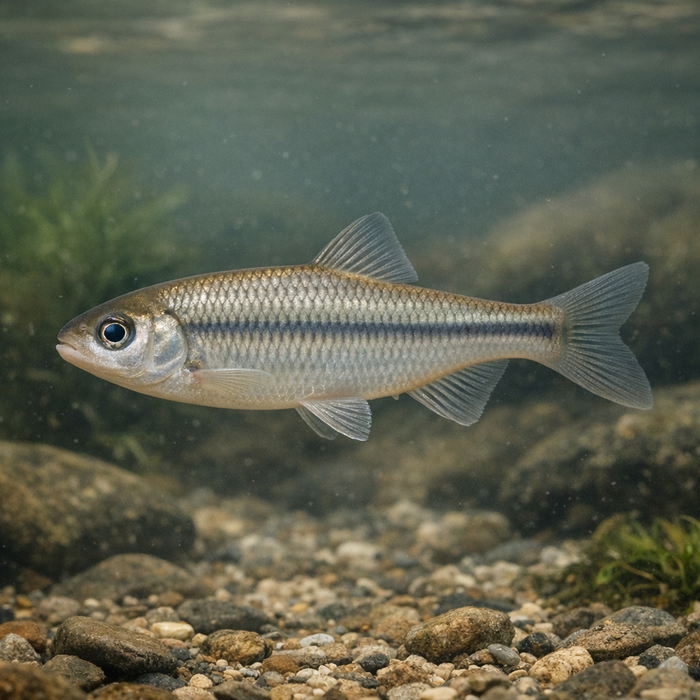
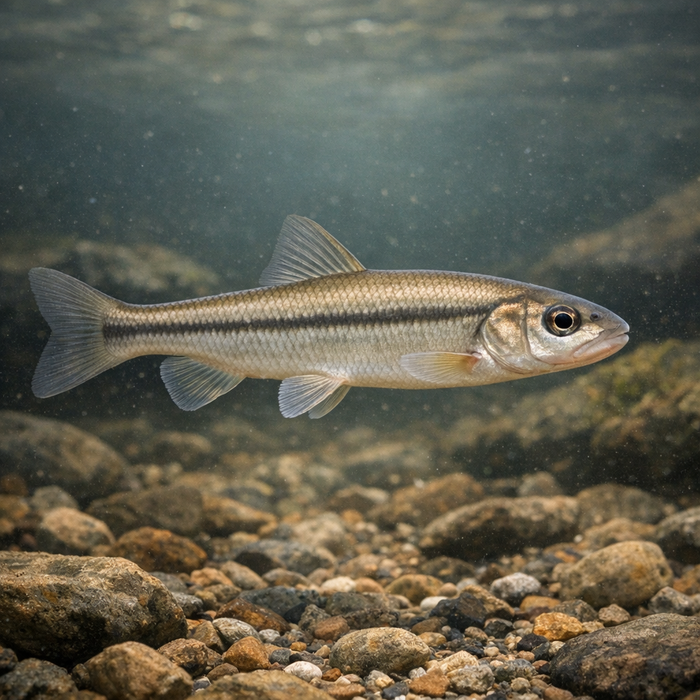
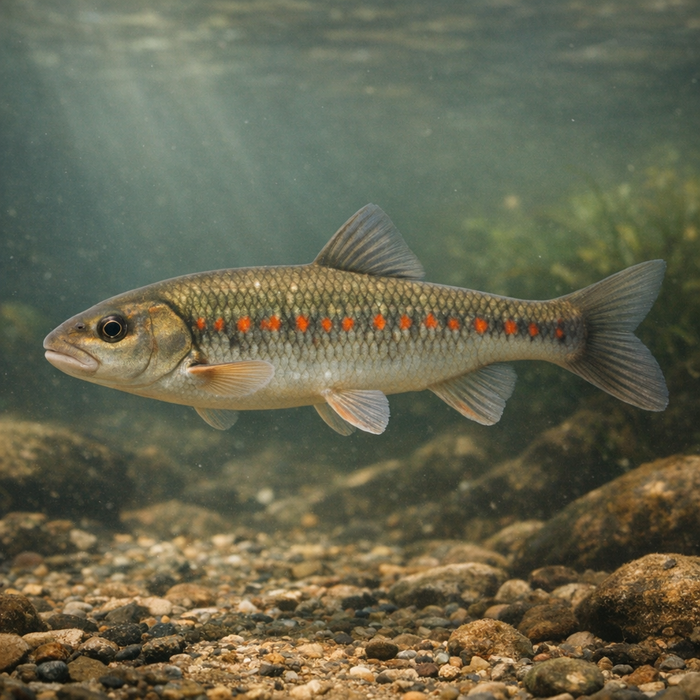
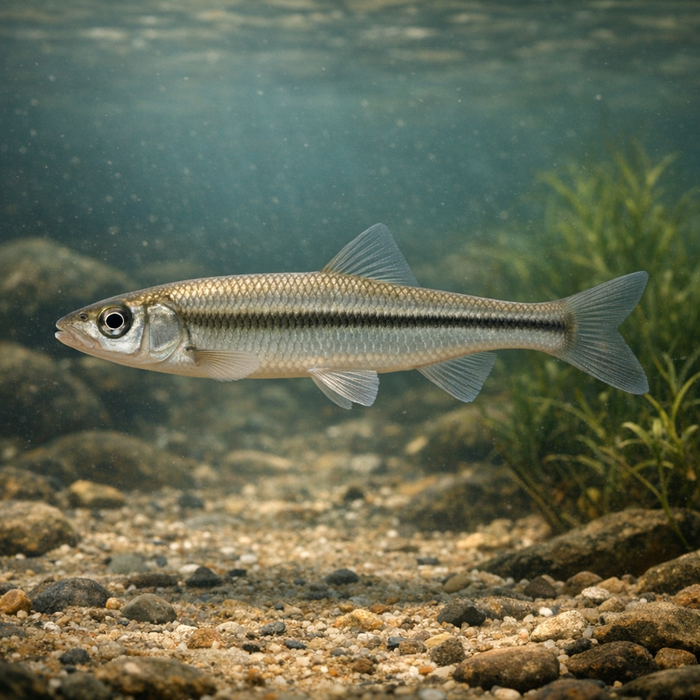
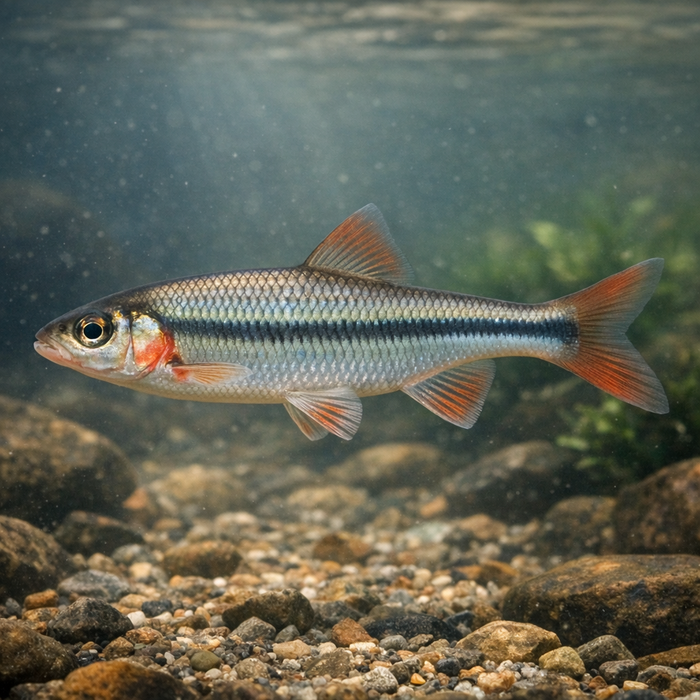
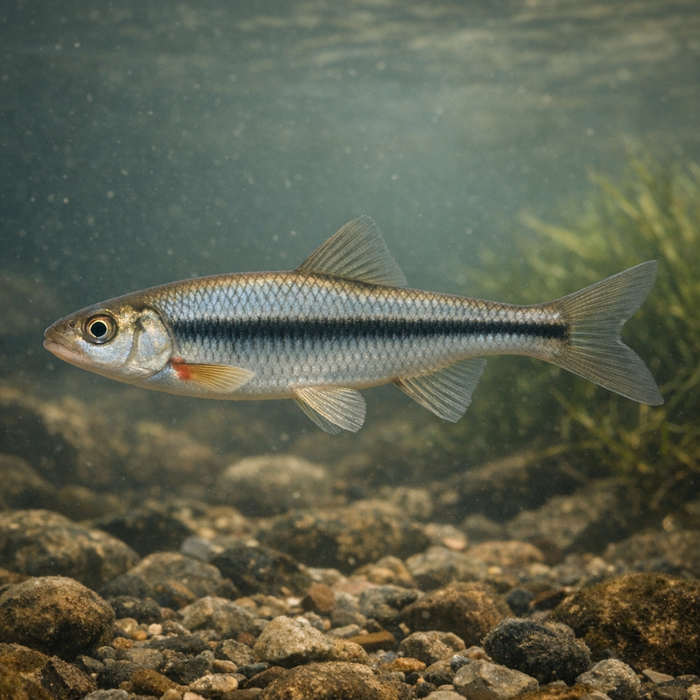
Duskystripe Shiner (Luxilus pilsbryi): Small fish, loud stripe, pure riffle swagger.IntroductionMeet the duskystripe shiner, the high-octane sparkle that makes Ozark riffles look alive. It's tiny, quick, and entirely unapologetic about it. While bass steal the headlines, this micro torpedo zips through clear current like a chrome bullet with a racing stripe. If you're into microfishing or just appreciate how crisp a healthy stream can look, the duskystripe shiner is your spirit animal. Blink and it's gone. Squint and a whole school appears, flickering like a broken mirror.What Makes the Duskystripe shiner Unique?Two things jump out: the bold, dusky midlateral stripe and those oversized Luxilus scales that flash like sequins every time it turns. Breeding males crank the style to eleven, darkening the stripe and sprouting tiny tubercles across the head for a head-butting, fin-flaring courtship brawl. This isn't your drab baitfish. The duskystripe shiner looks tuned for speed and shows it, surging in short bursts to nail drifting morsels mid-column. Add in the habit of spawning over gravel mounds built by nest-building minnows and you've got a clever collaborator that saves its energy for what matters.Habitat & Global RangeIf your mental map says Ozarks, you're warm. The duskystripe shiner is a hallmark of clear, cool-to-warm creeks and small rivers with gravel and bedrock substrate, especially across the Missouri and Arkansas highlands. Think swift runs, lively riffles, and glassy glides. The water is usually transparent enough to see details on the bottom, which is part of the fun. When flows chill in winter, they slide into calmer pools; when spring hits, they shift toward riffles and clean gravel. If you're searching "Duskystripe shiner habitat" for a fishable clue, target that crease where a riffle spills into a run and the current softens just enough for a small fish to hold.Behavior & TemperamentThey're schoolers with a plan: hold tight, flash hard, strike fast. The duskystripe shiner feeds mostly midwater, plucking drifting insects and tiny critters before they tumble past. In clear creeks, they're wary of sloppy presentations and heavy footprints, so stealth matters. During hatches, schools lift a foot or two off bottom and hover like silver popcorn. Come spawning season, males get punchy, defend micro-territories, and hustle females onto clean gravel, often over pre-built nests. They're not bulldogs on the line, but their speed and precision make them microfishing catnip.Ecological ImportanceThis little speedster punches above its weight. The duskystripe shiner helps move energy from aquatic insects into the mouths of larger fish, birds, and the occasional opportunistic predator. Schools sift the drift like living conveyor belts, and their love of clean gravel quietly advertises stream health. Where duskystripe shiner numbers are strong, you usually have solid water quality, intact riparian cover, and flow stability. That makes them a useful, low-drama indicator species for anyone who actually watches water instead of just staring at nav apps.Conservation & Environmental PressuresThe duskystripe shiner is generally secure, but it's tightly tied to water clarity and substrate quality. Heavy sediment from bad land use, low flows from over-withdrawal, or prolonged turbidity from storm-blasted watersheds can push them out of prime habitat. Stream fragmentation doesn't help either. While you'll still see healthy populations in many Ozark systems, the species does best where gravel stays clean, banks are shaded, and flows aren't whipsawed by every rain event. If you care about duskystripe shiner facts that matter, this is the big one: protect riffles and the fish take care of themselves.The FishyAF TakeThe duskystripe shiner is proof that charisma doesn't require pounds. It's a micro badge of honor for anglers who appreciate precision. If you can trick a school of these clear-water skeptics with a sliver of worm or a size-20 midge, you're playing the finesse game correctly. They won't rip drag, but they will tell you if your approach is clean, quiet, and dialed to the current. Call it the Ozark litmus test: if you can fool a duskystripe shiner, you're ready for anything in that creek.