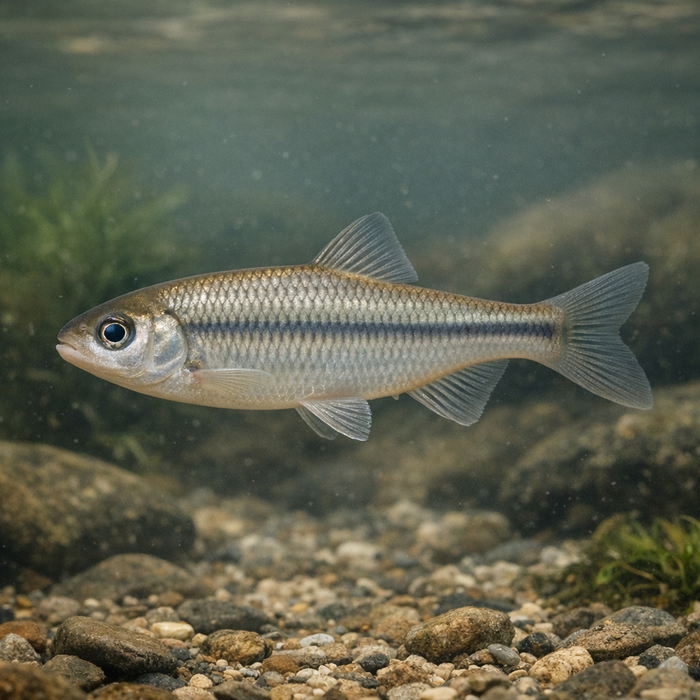
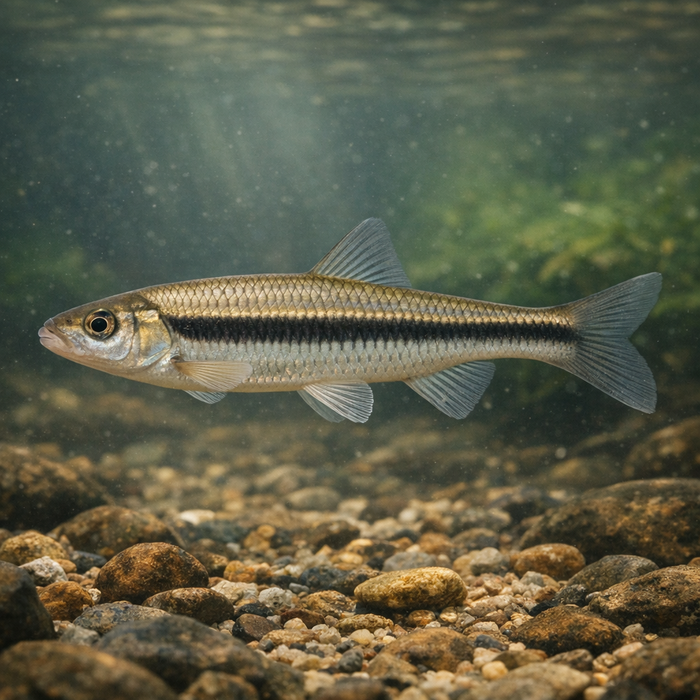
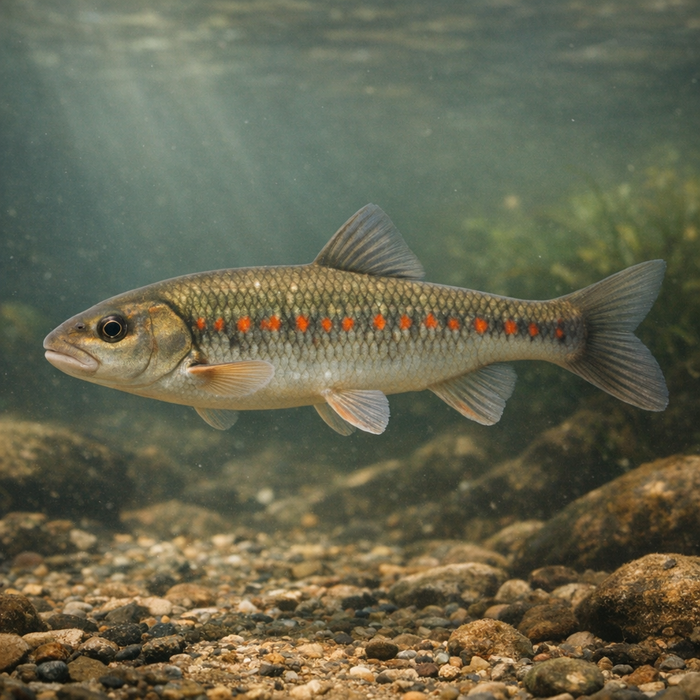
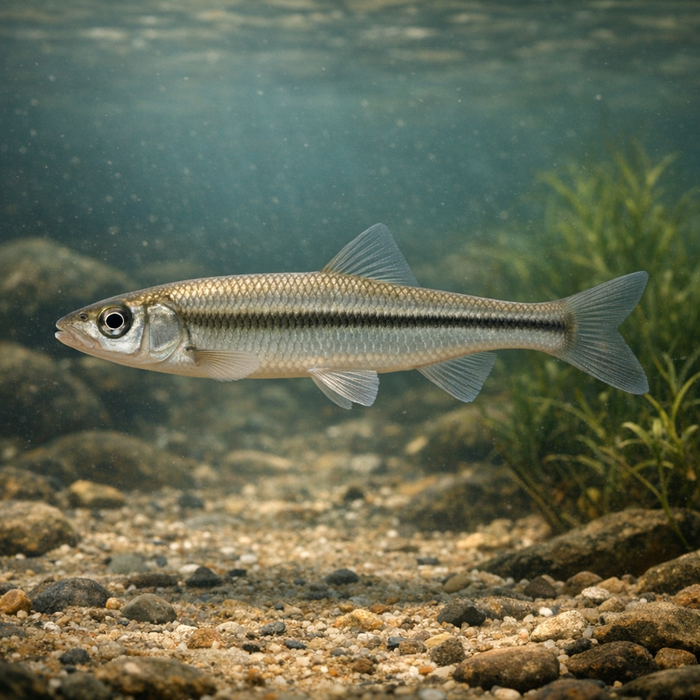
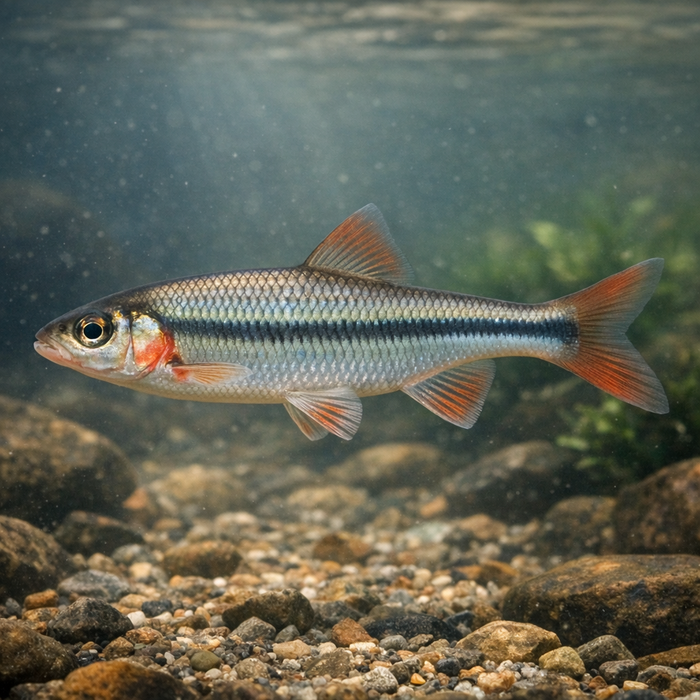
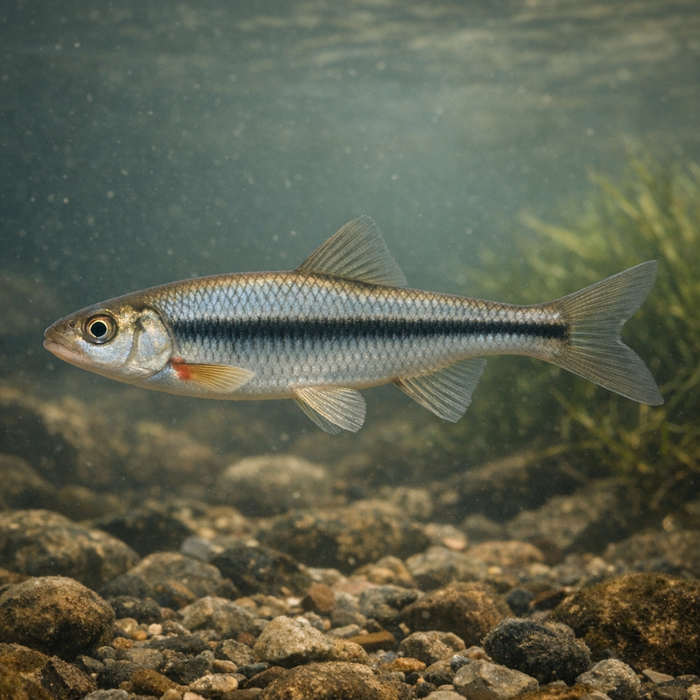
Ozark Chub (Erimystax harryi): The riffle rocket of the Ozarks that keeps micro anglers humble and grinning.IntroductionTiny fish, big attitude. The Ozark chub is a sleek, gravel-loving missile that turns knee-deep current into its personal racetrack. You won't troll for it, brag-board it, or pay a guide for it. But if you want to sharpen your stealth game and read water like a pro, this little native will teach you fast. The Ozark chub is small, selective, and laser-tuned to clean current. Get sloppy with your drift and it vanishes. Stick the presentation and it rewards you with that satisfying tick only micro anglers truly appreciate.What Makes the Ozark chub Unique?Two things jump out: hydrodynamic design and refined spawning armor. The Ozark chub wears a pointed snout and subterminal mouth like a custom toolset for prying nymphs from the spaces between stones. When it's time to make more chubs, males sprout gritty breeding tubercles across the head, a sandpaper helmet that screams business. It's also one of the better stream-health truth tellers. Where Ozark chub show up consistently, water is typically clear, cool, and moving.Habitat & Global RangeLet's keep it straight: this is a regional specialist. The Ozark chub thrives in riffles and swift runs over clean gravel and cobble in Ozark Highland streams. This isn't a backwater cruiser. It wants current with defined seams, knee-deep velocity, and oxygen-rich flow. Silt is its arch-nemesis, and that's the headline for most Ozark chub habitat discussions. If you're scouting new water, think clean pea gravel, broken pocket water, and a little shade. For anglers searching Ozark chub habitat or just browsing Ozark chub facts, remember that clarity and substrate quality rule everything for this species.Behavior & TemperamentSkittish but predictable. The Ozark chub lines up behind micro-eddies, noses into the low-pressure zones around rocks, and sips drifting invertebrates with quiet confidence. It rarely rockets to the surface and it doesn't roam far; instead, it lives by conveyor belt. Present your offering so it drops naturally through its lane and it'll commit. Stomp around, flash a thick leader, or drag bottom like a plow, and the school shifts downstream in a blink. They'll cluster loosely in small groups and re-form after disruptions, returning to the same feeding slots when flow normalizes.Ecological ImportanceThe Ozark chub is a hardworking middleman. It converts riffle invertebrates into calories for everything above it in the food web. Smallmouth bass, stream darters, kingfishers, and water snakes all appreciate a school of chubs operating on schedule. Because it's sensitive to silt and turbidity, its presence acts like a quality-control sticker on a stream. Lose the chubs, and you may be watching a system slide toward warmer, dirtier water with fewer mayflies and caddis.Conservation & Environmental PressuresEven without a dramatic headline status, the Ozark chub lives close to the edge because its world is small. Channelization, gravel mining, bank erosion, and unchecked runoff sabotage the exact habitat this species needs. One big flood over freshly disturbed banks can bury spawning gravel in silt, suffocating eggs. Low summer flows stack fish into shrinking riffles, leaving them exposed. Anglers can help by stepping lightly, keeping boots and nets wet, and releasing fish quickly. Habitat work that stabilizes banks and reduces fine sediment makes an outsized difference for a fish built on clean stone.The FishyAF TakeThe Ozark chub won't strip line or fill a cooler, but it might be the most honest teacher in the Ozarks. It punishes sloppy presentations, rewards thoughtful drifts, and tells you instantly whether your rig is dialed. On a hot day with shin-deep water and a micro hook, it turns a "nothing to fish for" afternoon into a skills clinic. If your idea of fun is reading seams, sneaking into position, and feeling that whisper-light take in clear current, the Ozark chub is your pint-sized professor. Show up with respect, keep it delicate, and this native will make you a better angler everywhere else.