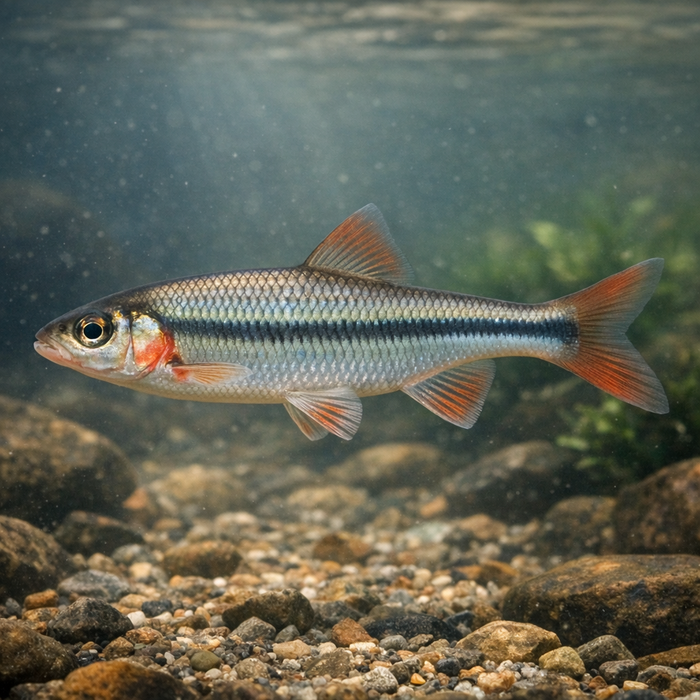
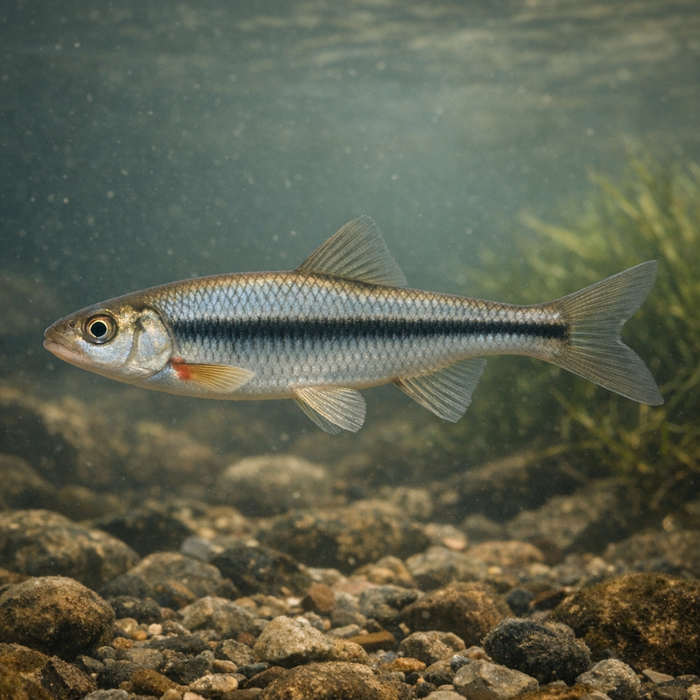
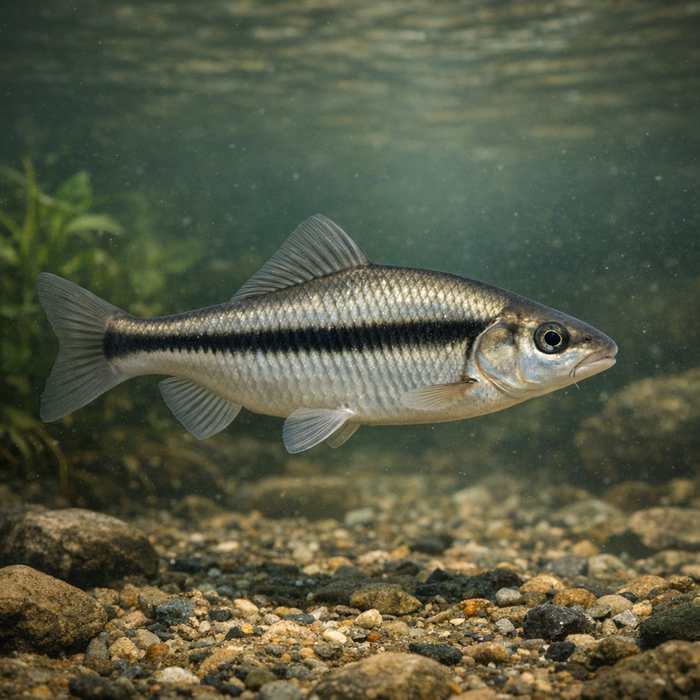
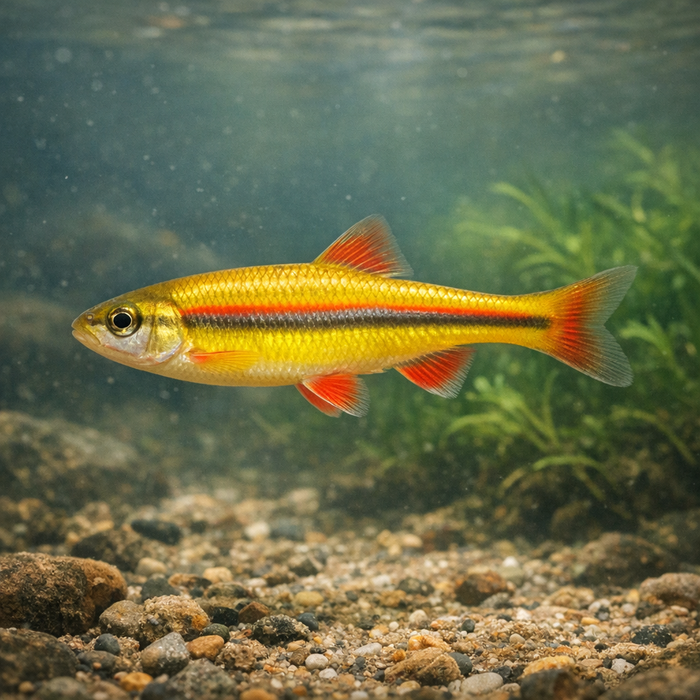
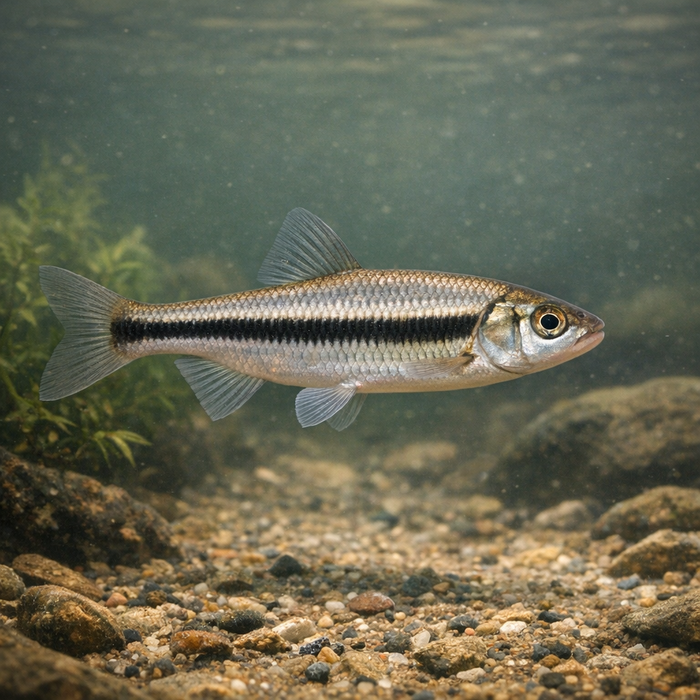
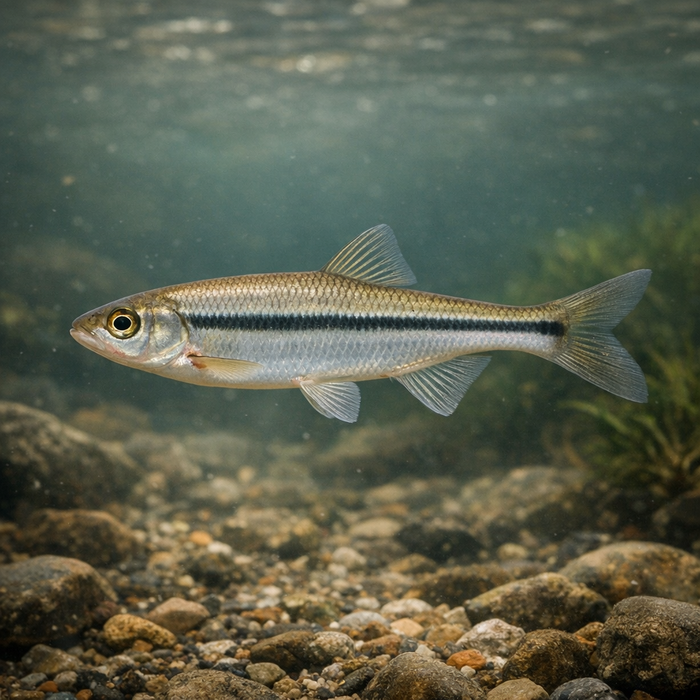
Kanawha Minnow (Phenacobius teretulus): Streamlined riffle specialist with a sucker's smile and a need for speedIntroductionThe Kanawha minnow is the stream geek's secret handshake: small, fast, and glued to the river's turbo lane. Blink and it disappears in fizzing gravel. Look closer and you'll spot that tough, sucker-like lip mowing insect larvae off the bottom. For micro-anglers and naturalists hunting clean-water clues, the Kanawha minnow delivers big character in a tiny, torpedo body. Consider this your field-ready download of Kanawha minnow facts without the textbook nap.What Makes the Kanawha minnow Unique?First, the hardware. That stiff, crescent-shaped lower lip is built for scraping. While plenty of minnows peck at bugs, Phenacobius teretulus is a purpose-built riffle grazer, vacuuming nymphs from rough gravel where lesser mouths bounce off. Second, the shape. The body stays surprisingly cylindrical, trimmed for low drag so the fish can hold in fast seams with minimal effort. Third, the vibe. The Kanawha minnow combines loose schooling with sudden solo foraging runs, drift-hopping from pocket to pocket like a speed-reading insectivore.Habitat & Global RangeLet's talk Kanawha minnow habitat. Think clear, cool, well-oxygenated streams with stable flow and honest-to-goodness gravel. The headline waters sit in the New and Kanawha River system across parts of Virginia, West Virginia, and North Carolina. You'll find them where the current actually works: riffles, runs, and the tails of shoals, often in ankle- to knee-deep water. Heavy silt is a deal-breaker, and sluggish pools don't cut it. When the river's right, they'll patrol gravel tongues, edge seams, and micro-eddies tight to cobble. That tight habitat focus is also why they make solid indicators of watershed health.Behavior & TemperamentDespite the name "minnow," this is no timid pushover. The Kanawha minnow locks into current like a rock climber on good holds, using its lips and downturned mouth to root out mayfly and caddis larvae. It will mingle in loose groups but often breaks off for solo raids along the bottom. The fish spawns in late spring over clean gravel, relying on swift water to keep eggs oxygenated and silt-free. A dusky side streak can darken during courtship or when things get spicy. Spook factor is moderate: fast shadows, heavy steps, and overhead shapes will send them packing, but relaxed, slow movement often brings them back to the same productive seam.Ecological ImportanceTiny fish, big job. The Kanawha minnow converts stream-bottom insect protein into mid-level forage, passing energy up the chain to bass, darters, and herons. More importantly, it practically advertises clean water. When you see healthy numbers of Kanawha minnows in a riffle, you're looking at a stream with decent oxygen, clean gravel, and stable flow. When they fade, expect silt, nutrient overload, flow disruption, or all three. It's a bite-sized barometer that tells river managers where to focus restoration.Conservation & Environmental PressuresGood news first: the Kanawha minnow isn't collapsing. But it does play life on hard mode. Its whole program depends on intact riffles, which are the first casualties of sedimentation, poorly planned development, and impoundments that flatten flow and starve downstream gravel. Channelization, excess nutrient runoff, and low summer baseflows can also gut its neighborhood. Keeping forests and riparian buffers intact, controlling stormwater, and maintaining natural flow regimes protect both the fish and the invertebrate buffet it needs.The FishyAF TakeThe Kanawha minnow is a specialist with style: a tiny, cylindrical rocket with a scraper's grin and a taste for fast food. Anglers who appreciate nuance love this fish because it rewards stealth, precision, and an eye for micro-structure. If you're into healthy rivers, the Kanawha minnow is more than a target; it's a litmus test flashing green when habitat is dialed. Pocket a few Kanawha minnow habitat cues and you'll read a riffle like a pro. Small fish, sharp lessons, high satisfaction.