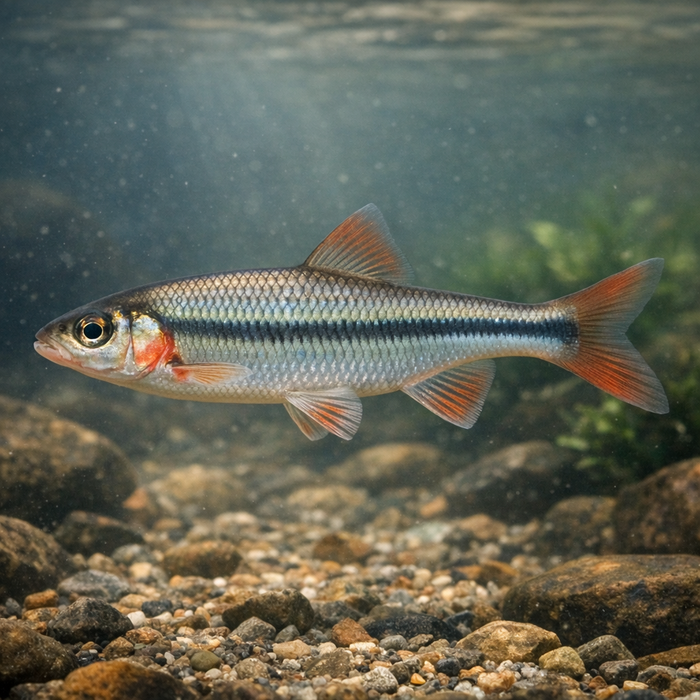
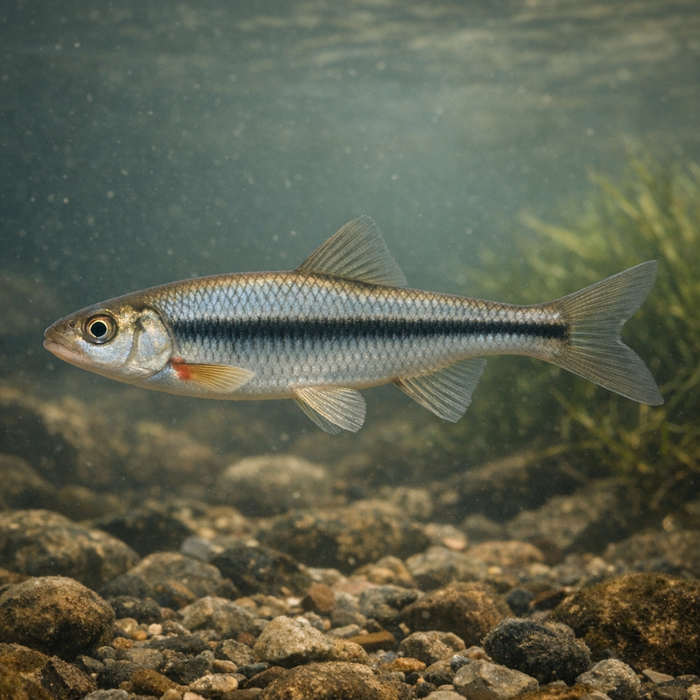
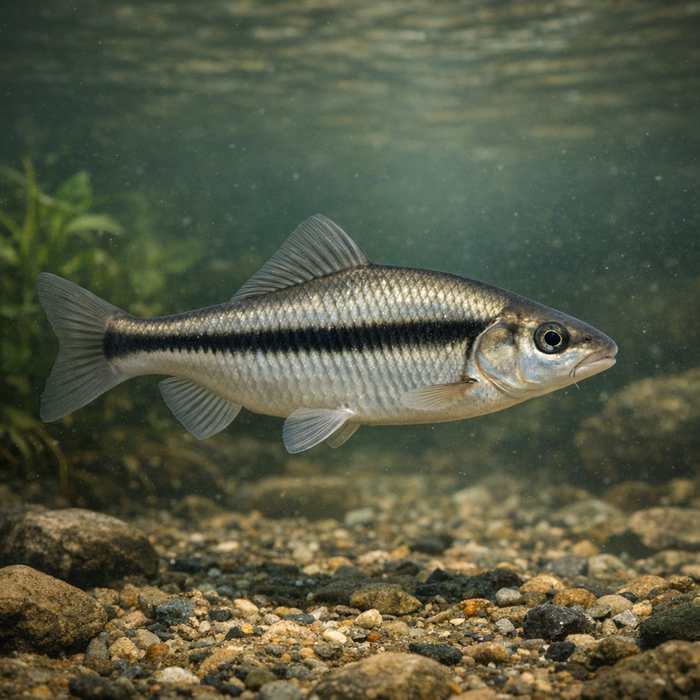
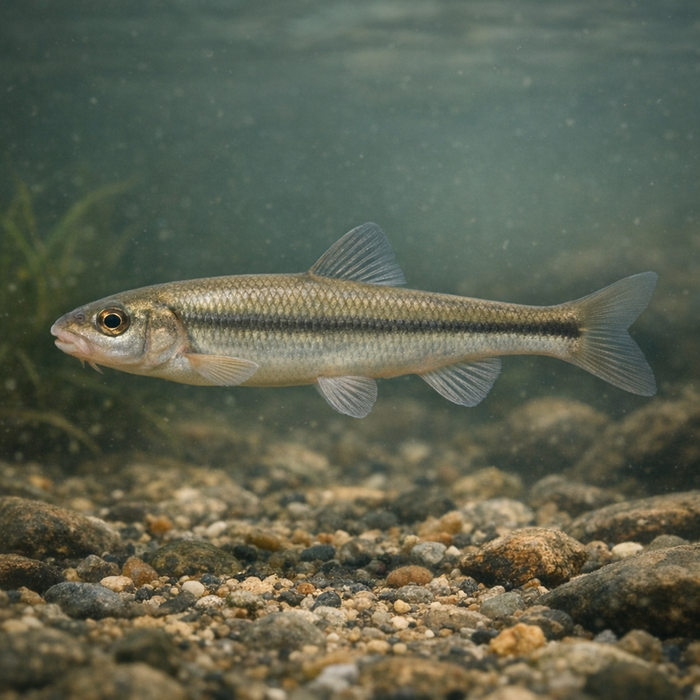
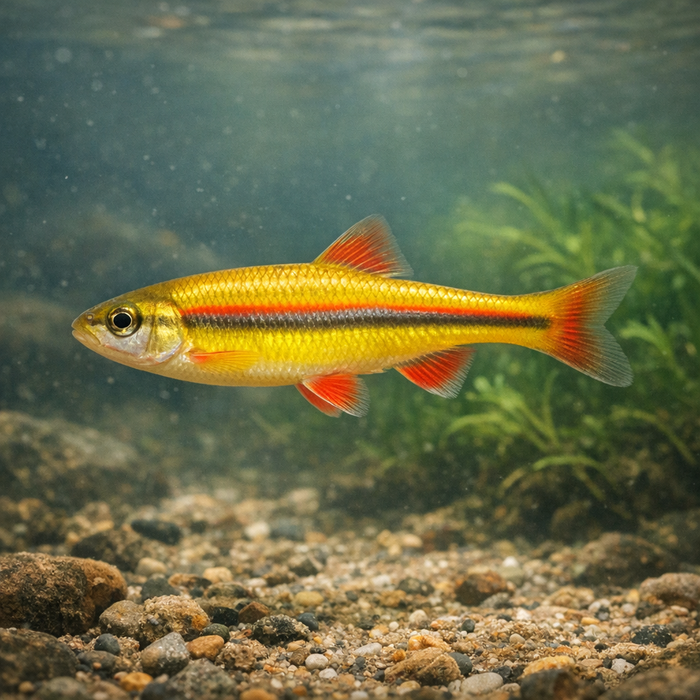
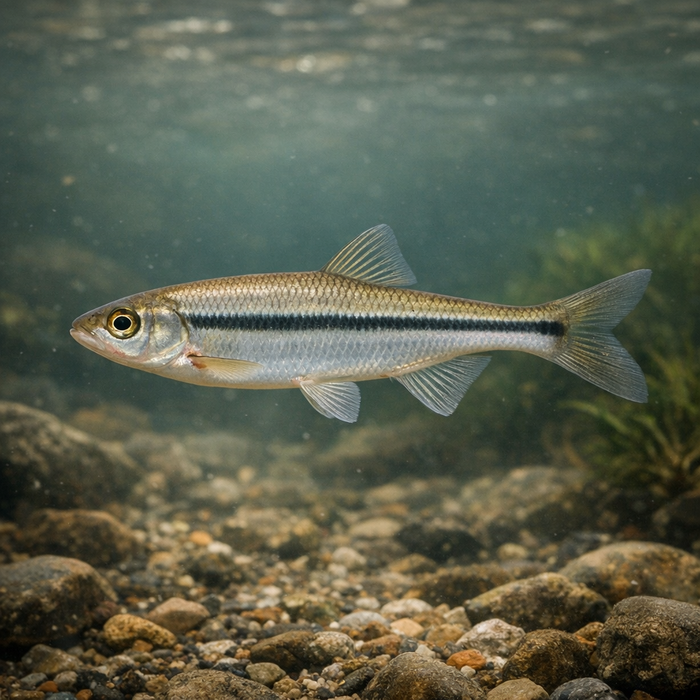
Santee Chub (Cyprinella zanema): Pocket-Rocket Shiner With Riffle AttitudeIntroductionThe Santee chub is a micro rocket that lives where water hisses over gravel and cobble. Blink and the school zips three feet upstream, then hangs motionless in the current like it pays rent there. For anglers who appreciate light tackle, precise drifts, and the satisfaction of a finicky eat on tiny hooks, this little shiner punches way above its size. Consider this your fast tour through true Santee chub facts without the textbook yawn factor.What Makes the Santee chub Unique?Two things jump off the water: speed and swagger. The Santee chub is built like a silver torpedo with quick-twitch reflexes and a terminal mouth made for snapping drifting insects. During spawning, males light up with a subtle steel-blue sheen and pearl-tipped fins, then trade paint in the riffles while clicking audibly. They're classic crevice spawners, jamming eggs into tight rock seams where current bathes them clean. For such a small fish, the behavior is big-league.Habitat & Global RangeIf you're hunting Santee chub habitat, think clear Piedmont streams with steady flow, pea gravel to chunk cobble, and a mix of riffles, runs, and pocket water. These shiners stick close to current breaks where food funnels naturally: downstream edges of riffles, the heads of pools, and seams near boulders. Distribution is Southeastern and drainage-specific, so you won't trip over them everywhere; dialing in the right watershed matters more than covering miles. Depth is usually shin-deep to a couple feet, with the best action where light, flow, and oxygen align.Behavior & TemperamentThe Santee chub schools tight. They will ghost up to an offering, then bolt as a unit if you clank a rock or cast a shadow. In stable flows they hover in midwater, flaring just enough to hold position. Feed drifts through the strike zone and you'll see sharp, surgical takes. They're visual feeders with a strong lateral line assist, exploiting every micro eddy. Warm months bring more surface snatching; colder snaps push them lower and slower. During the spawn, the pecking order turns rowdy as males defend prime crevices with tubercle-bristled snouts.Ecological ImportanceThis is a gateway species in the food web. The Santee chub converts drifting insects, tiny crustaceans, and biofilm into calories that power larger predators. Eggs tucked into rock cracks resist silt suffocation, and successful hatches ripple outward as forage for darters, sunfish, and bass. Healthy riffle chubs signal clean water and stable flow, so if you see active schools working a seam, you're probably looking at a stream that's doing something right.Conservation & Environmental PressuresSmall fish, big problems when the water turns murky. The Santee chub depends on clean, well-oxygenated flow and coarse substrate. Sedimentation from poor land use, storm surge silt, and bank trampling can plug the crevices they need for spawning. Low summer flows and high temperatures shrink usable habitat. Add in barrier effects from culverts and small dams and these chubs can get boxed into subpar water. While not a headline species, they benefit hugely from riparian buffers, wise stormwater management, and thoughtful access points that keep anglers' boots out of sensitive riffles.The FishyAF TakeThe Santee chub is proof that finesse fishing can be loud fun in quiet water. A micro-sized hook, a bread crumb or fleck of worm, and a stealthy drift will tell you everything about your presentation discipline. It's honest fishing: no drag-screaming runs, just tight schools, sharp eats, and the satisfaction of doing everything exactly right. Learn these fish and you learn how current really moves. For anglers curious about Santee chub habitat and behavior, this is the species that makes streamcraft addictive. Small fish, big skills. We're in.