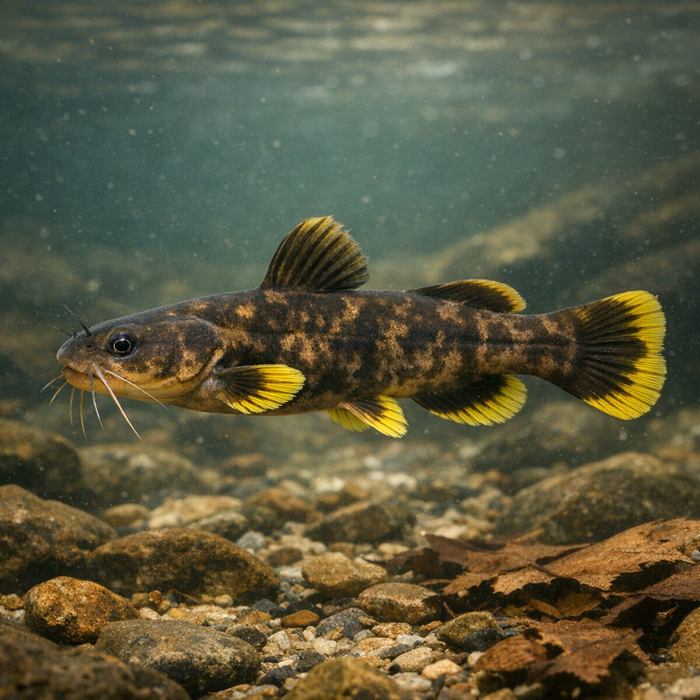
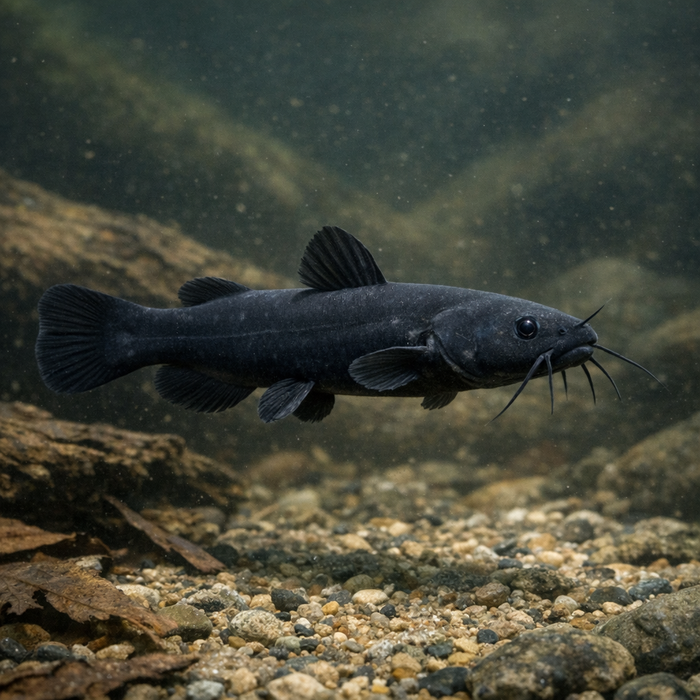
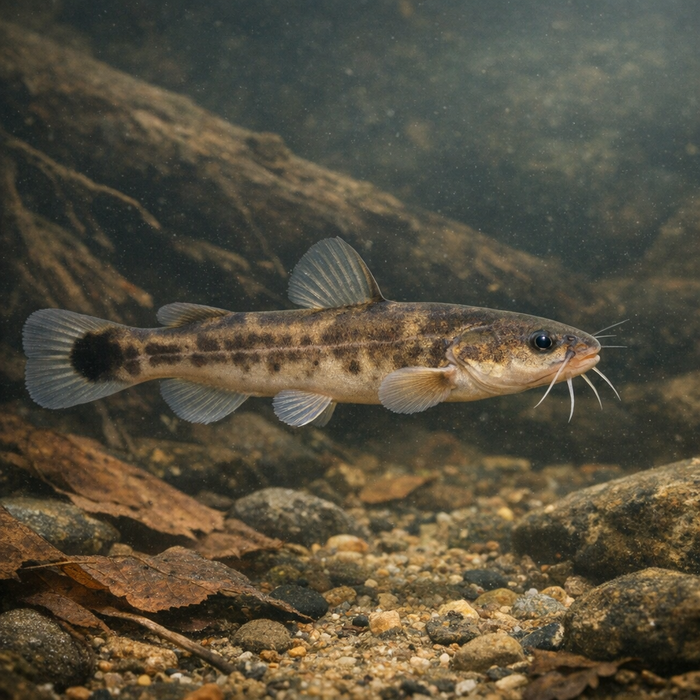
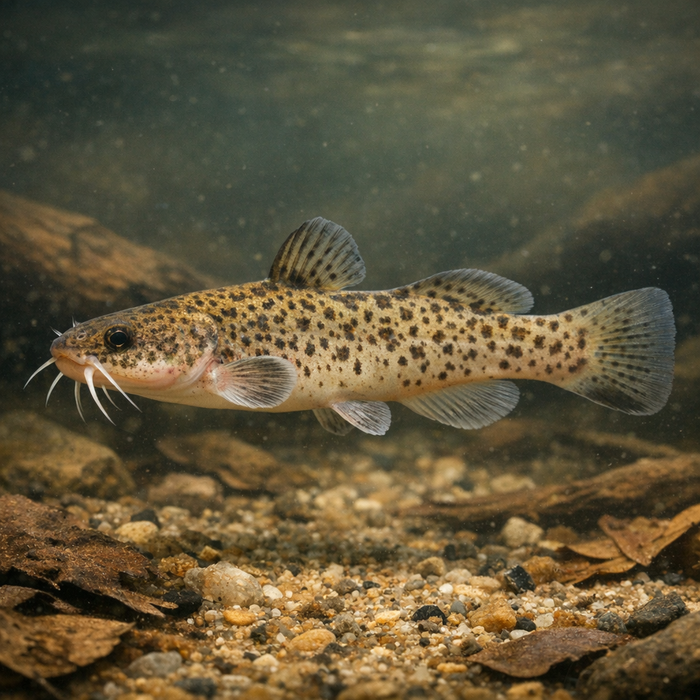
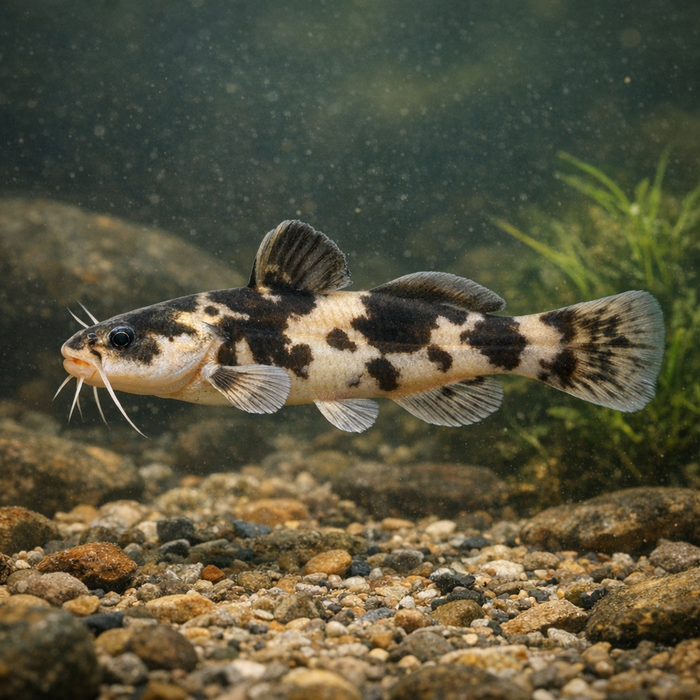
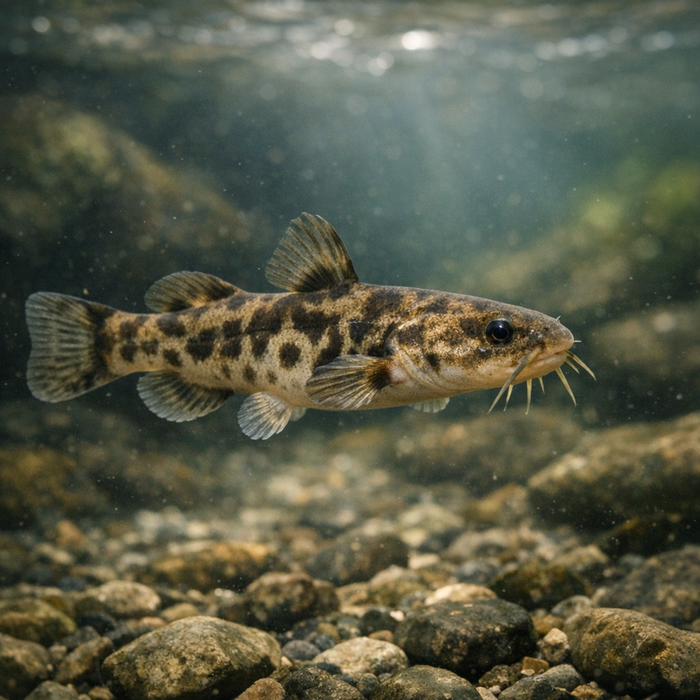
Neosho Madtom (Noturus placidus): Tiny catfish with big attitude and a serious riffle addiction.IntroductionThe Neosho madtom is proof that small fish can have huge personality. This palm-sized catfish haunts fast, shallow riffles and gravel bars, sneaking through pebbles like a camo-clad ninja. Anglers almost never target it, which only adds to its mystique. If you are chasing Neosho madtom facts or trying to understand Neosho madtom habitat, this is the crash course you actually need.What Makes the Neosho madtom Unique?Three things. First, size. Adults typically top out at 2 to 3 inches, making it one of North America's smallest catfish. Second, hardware. Like other madtoms, it packs mildly venomous pectoral spines that demand respect even at micro scale. Third, specialization. The Neosho madtom is a riffle junkie, clinging to clean, fast water over small gravel where most fish struggle to hold. That habitat obsession shapes everything about its life, from feeding to spawning.Habitat & Global RangeForget lakes and deep holes. The Neosho madtom keys on shallow, swift runs with clean chert or gravel and very little silt. It is native to the Neosho and Spring River systems of the central United States, primarily in Kansas, Missouri, and Oklahoma. These fish tuck under flat rocks and within pebble pockets during the day, then push out at night to pick off drifting insect larvae. Change the flow, dump silt, or dam a riffle, and you have instantly messed with Neosho madtom habitat.Behavior & TemperamentThis species is a nocturnal ambush feeder that plays the margins. It uses sensitive barbels to taste and feel prey in roiling current and rarely strays far from bottom contact. Daytime behavior is all about hiding in micro-structure: under stones, among cobble gaps, and along the upstream edges of riffle tongues. Spawning happens in warm months under flat rocks or within small cavities, with males guarding and fanning the eggs. Aggression is low, wariness is high, and feeding windows are tight, usually after dark when insect drift peaks.Ecological ImportanceDespite its size, the Neosho madtom punches above its weight. It converts aquatic insects into catfish biomass that then feeds larger predators. Its dependence on clean, well-oxygenated gravel riffles makes it a living sensor for stream health. When madtoms vanish, it often means silt, polluted runoff, or altered flows have wrecked delicate riffle habitat. Keeping these fish on the map is about keeping rivers honest: moving, clear, and connected.Conservation & Environmental PressuresThis species is formally protected in much of its range and assessed as vulnerable due to habitat loss and fragmentation. The threats are straightforward and brutal: sediment from poor land practices smothers eggs and fills the tiny refuges madtoms need; dams and diversions flatten riffles and isolate populations; nutrient pollution and low oxygen stress the survivors. Because local populations can be small and patchy, a single bad flood year or silt pulse can crash a reach. The species can rebound when flows stabilize and gravel cleans up, but that recovery hinges on watershed-level fixes, not luck.The FishyAF TakeYou do not chase the Neosho madtom for bragging rights. You appreciate it because it is the soul of a healthy riffle. If you micro-fish and encounter one, the game is stealth, tiny gear, and fast, gentle release. Better yet, bring a trash bag, plant riparian grass, or back a flow-friendly project. The rivers that grow Neosho madtom also grow everything else you actually fish for. Protect the riffles and you are protecting the whole playbook. That is the smartest, most hard-nosed angling move you can make.