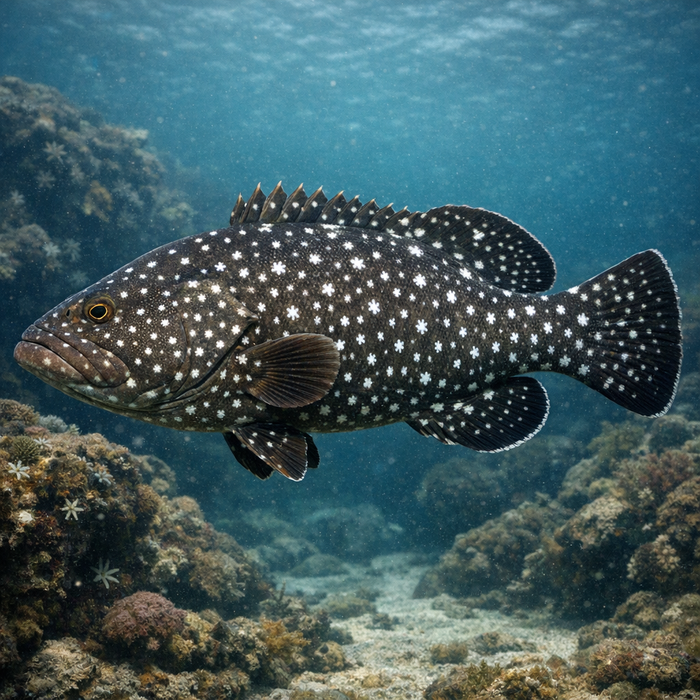
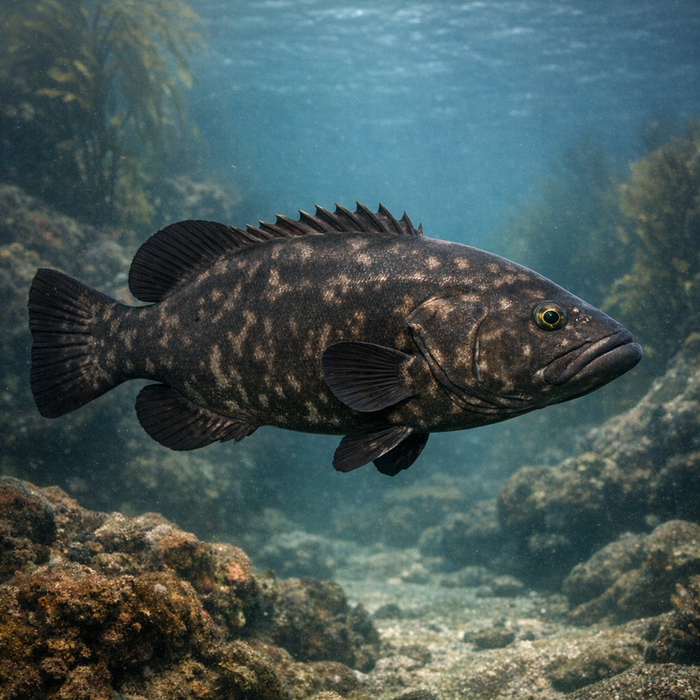
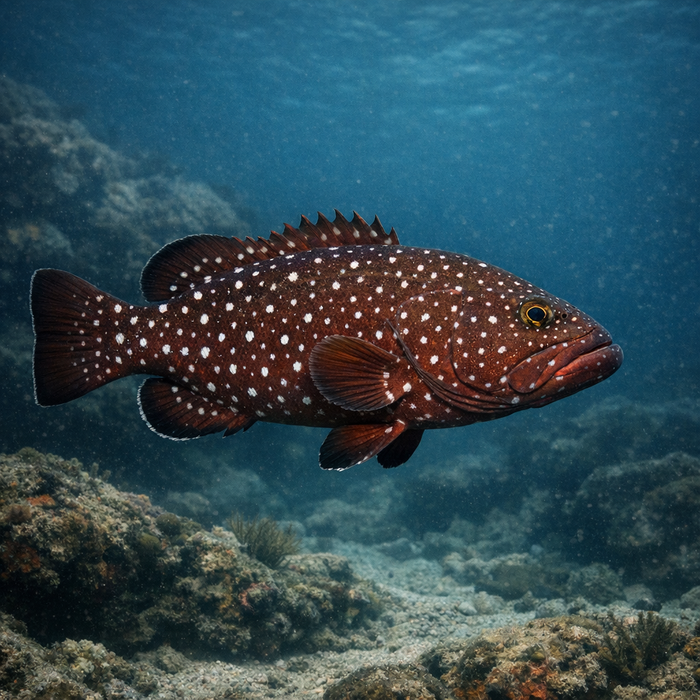
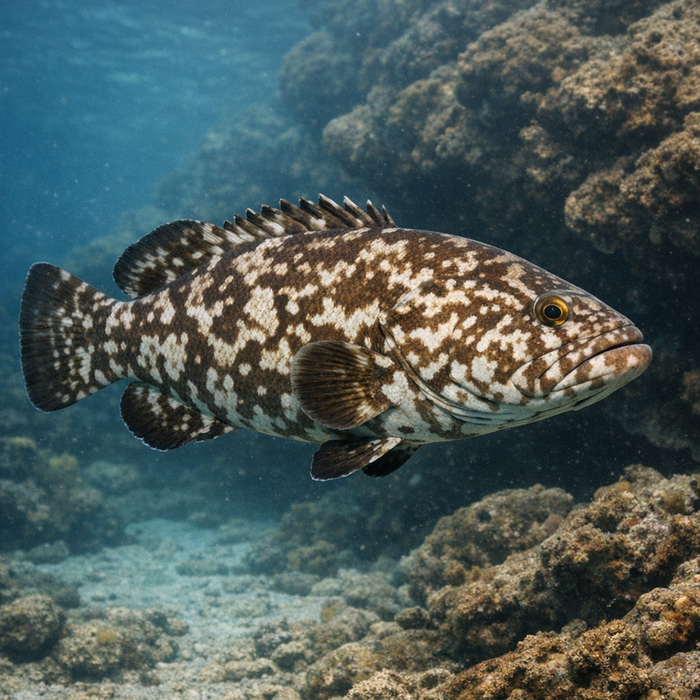
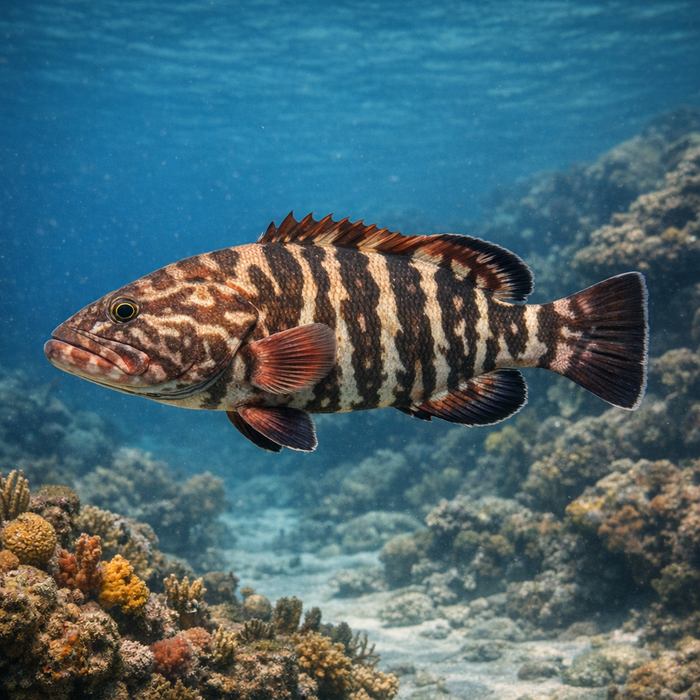
Olive Grouper (Hyporthodus cifuentesi): A deep-reef bruiser with big-shoulder power and stealthy ambush movesIntroductionThe olive grouper is the hushed rumor at the edge of dropoffs: heavy, moody, and flat-out mean when it hits. If you like your fish with volcanic scenery, hard current, and a real chance of losing, this one's your brand of chaos. It's a classic bottom bully that rewards patience, stout tackle, and the nerve to stand your ground when it digs for home. Consider this your crash course in Olive grouper facts, without the fluff.What Makes the Olive grouper Unique?Two things stand out. First, shape-shifting camouflage. The olive grouper can dial its look from muted green to slate and throw pale bars when it's hyped up or courting. Second, leverage. Hyporthodus cifuentesi fights dirty, flaring gill plates to wedge into cracks and using the first 10 feet of the battle to break hearts. Toss in serious jaw power from those pharyngeal crushers, and you've got a fish built to end fights quickly.Habitat & Global RangeThe olive grouper is an Eastern Pacific specialist that haunts volcanic reefs, lava ledges, pinnacles, and wrecky junk along steep island slopes and coastal dropoffs. Think current-swept structure where bait stacks in the lee, plus bits of deep rubble and ledge edges where ambush angles are perfect. If you're building an Olive grouper habitat checklist, it's simple: hard bottom, relief, and moving water. Depth varies from relatively accessible reef breaks to proper deep-reef lines where daylight thins and pressure climbs.Behavior & TemperamentThis fish is a patient predator that uses current, shadow, and terrain to trap meals. The olive grouper doesn't waste energy cruising high; it sets up near relief, drifts a touch, then detonates when the angle is right. Dawn, dusk, and tide changes often trigger movement. It may stage solo or in loose company with other reef thugs like jacks and snappers, especially where eddies concentrate life. Hook one and you'll learn the prime directive: turn its head immediately or it will write your obituary on the nearest rock.Ecological ImportanceAs a mid-to-upper reef predator, the olive grouper helps set the tone on deep slope communities. It pressures skittish bait schools and keeps nocturnal invertebrates from overreaching. Groupers like Hyporthodus cifuentesi shape when, where, and how smaller fish feed, which cascades through reef structure and even algae dynamics. Healthy populations signal balanced, current-rich reef systems capable of supporting big, slow-growing residents.Conservation & Environmental PressuresDeep-reef ambush predators often live slow and heavy, so overharvest can bite hard. Add habitat loss from destructive practices, incidental catch by heavy gear, and sporadic illegal take in lightly patrolled waters, and you get pressure points that don't show up until they do. Some hotspots restrict harvest or ban it outright, which helps. Still, data on the olive grouper's full stock picture is thin in places, so a conservative approach to keeping fish is just good manners.The FishyAF TakeIf you're hunting an olive grouper, come correct. You need a reel with a temper, drag you trust, and zero hesitation when it eats. This fish isn't mystical, but it is unforgiving. Drop something alive or a fast-falling jig where current kisses structure, and be ready. The first seconds decide everything. Respect the place, respect the fish, and you'll join the tiny club of anglers who know exactly how heavy the bottom can pull back. That's the Olive grouper in a sentence: gorgeous, sneaky, and savage at the bite.