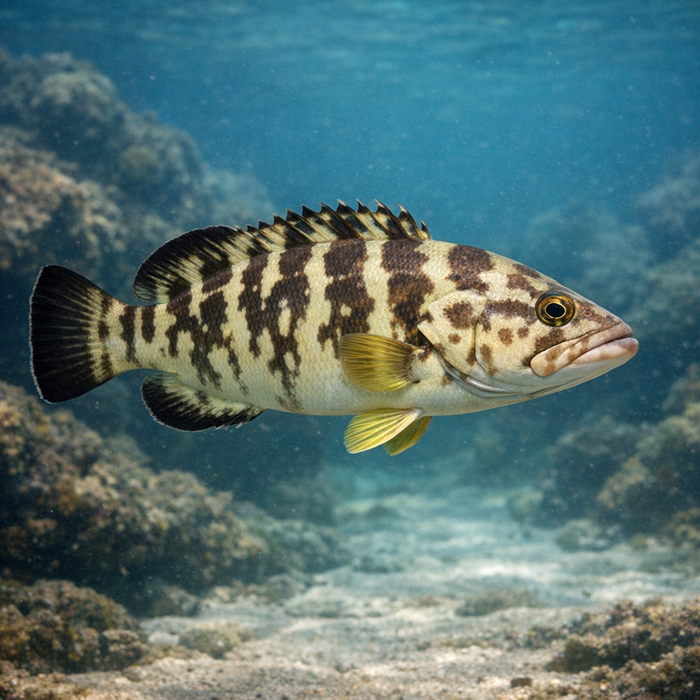
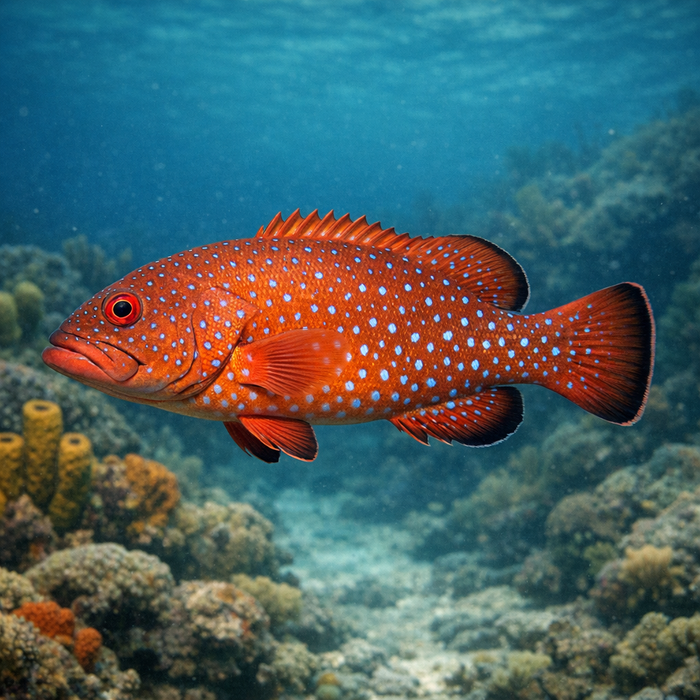
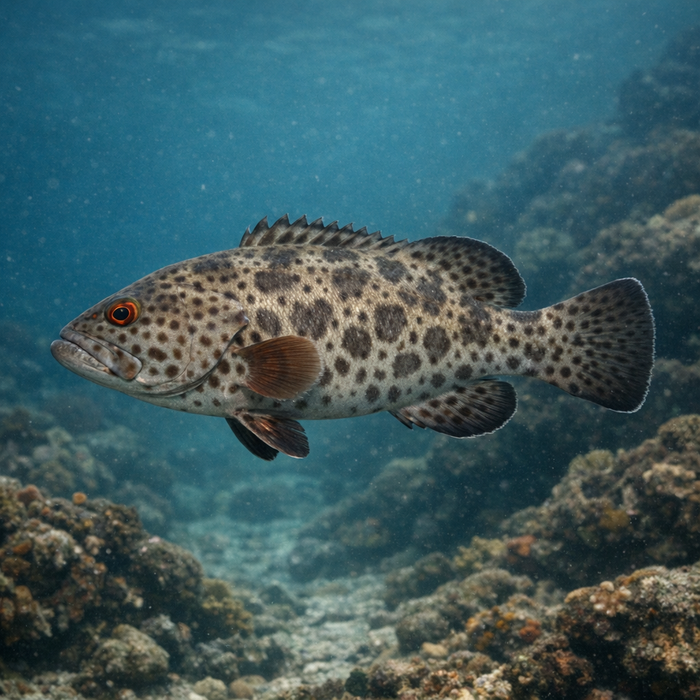
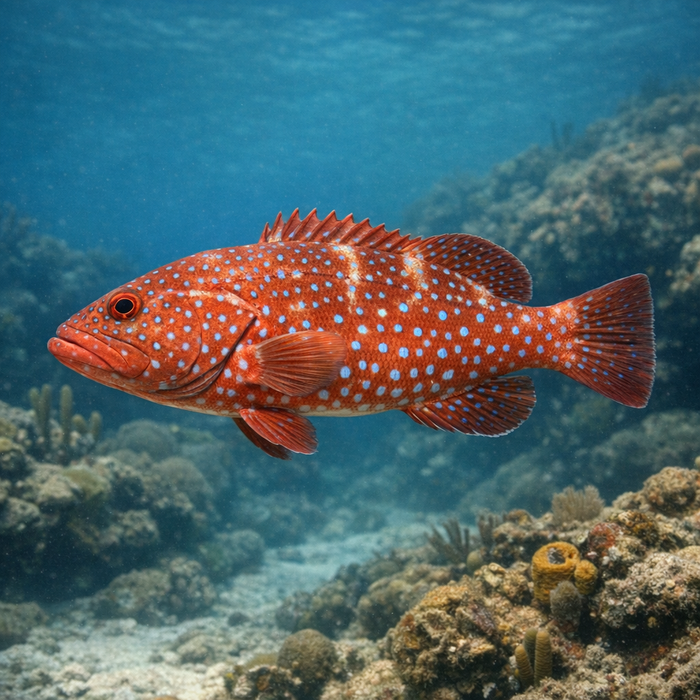
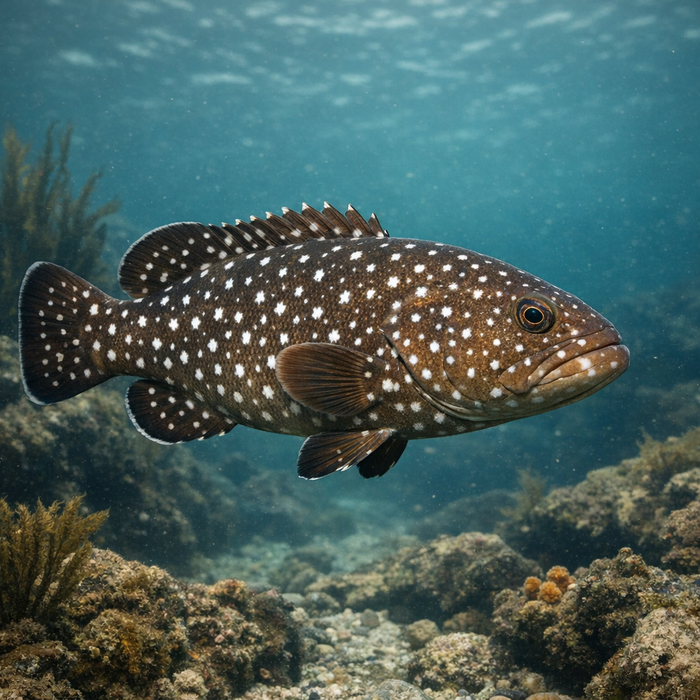
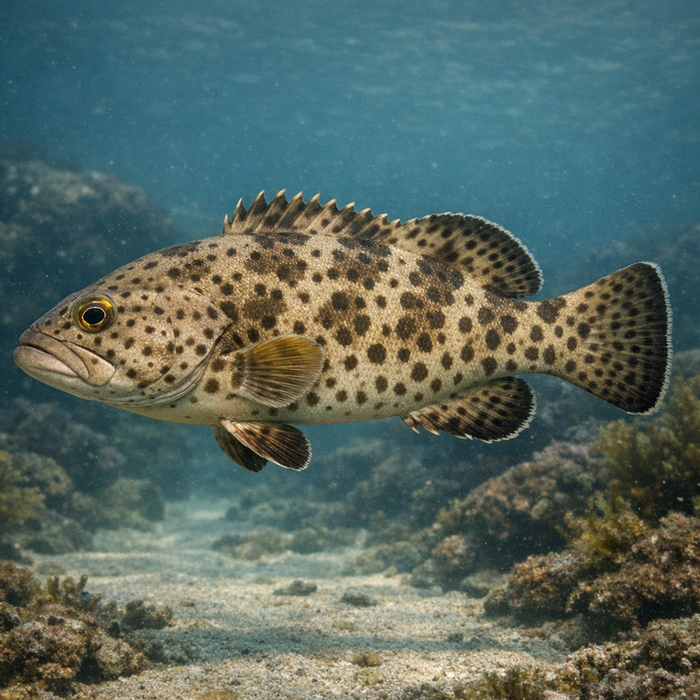
Nassau grouper (Epinephelus striatus): A Bold, Memorable Hook LineIntroductionThe Nassau grouper is the reef's bouncer in a pinstripe suit. Thick-bodied, blocky-headed, and armed with suction-cup jaws, it dominates ledges and caves like it pays rent. For generations across the Caribbean, this fish fed communities and filled legends. Today it's a conservation icon, a reminder that even tough fish can be fragile when people pointer-boat the same spot every winter. If you're digging for Nassau grouper facts, you'll find a story equal parts muscle and caution.What Makes the Nassau grouper Unique?Two things: a wardrobe change and a road trip. Few fish flip colors as fast or as dramatically. One second it's tan with tidy bars, the next it's stark bicolor, jetting signals to other groupers during courtship. And when winter full moons hit, they migrate miles to the exact same corners and promontories to spawn in massive aggregations. That precision made them legendary and, unfortunately, easy to wipe out when fishers learned the schedule.Habitat & Global RangeThink classic Nassau grouper habitat: warm Caribbean reefs, limestone ledges, spur-and-groove coral, and the drop-offs where shallow paradise leans over into dark blue. They haunt walls, channel mouths, and wrecks, slipping between caves and buttresses. Depths range from snorkel-territory shallows to beyond recreational diving limits, but anglers connect most between 20 and 150 feet, especially near current-swept structure. Historically they were common from Bermuda and the Bahamas through the Greater and Lesser Antilles and into the Mesoamerican Barrier Reef.Behavior & TemperamentThe Nassau grouper is an ambush artist. It waits, angles forward, then detonates a vacuum that erases the space between mouth and meal. Around structure it's surprisingly approachable, almost curious. Hook one and the first move is the same every time: bolt into the nearest coral hole and try to make you donate a whole spool. Solitary much of the year, they become social meteors in winter, stacking up by the hundreds or thousands on specific ledges for a brief, moon-timed spree.Ecological ImportanceThis fish is a keystone predator for patch reefs, keeping mid-sized prey honest and shaping the reef's balance. Healthy Nassau grouper numbers signal a reef that still has its top-middle predators, not just the little guys and the true apex hunters. Their spawning aggregations move nutrients and energy across the seascape, and their long lifespans mean they anchor reef communities over decades. Lose them and you don't just lose a fillet; you rewrite the food web.Conservation & Environmental PressuresThe same traits that make Nassau grouper special also make them vulnerable. Predictable aggregations plus dense crowds plus winter holidays once equaled commercial free-for-all. Overfishing crashed many sites. Layer on coral decline, habitat loss, and ciguatera concerns, and you've got a fish in trouble. Most jurisdictions now close spawning seasons, restrict take, or fully protect the species. Populations respond when left alone, but rebuilding long-lived fish takes time and discipline.The FishyAF TakeThe Nassau grouper is reef royalty that got too famous for its own good. If you spot one, count yourself lucky, enjoy the show, and keep that camera rolling. Anglers who still encounter them where legal should fish heavy, release heavy, and brag lighter. Want Nassau grouper facts that matter? This is the one: supporting protected seasons and intact aggregations is how we keep that striped bulldog patrolling the ledges for future trips.