Orange Spotted Grouper (Epinephelus coioides): Orange Spots, Dirty Water, and Absolutely No Free Line
The Orange Spotted Grouper does not need postcard water to make an impression. Give it a silty reef, an estuary ledge, or a wreck with somewhere to disappear, and it has the essentials covered. Known across Australia as estuary cod or goldspotted rockcod, this bottom-oriented predator combines distinctive markings with a very practical attachment to cover. Its reputation with anglers rests partly on that combination: finding one is only the opening argument. Keeping it away from the furniture is the next.
This is a species worth understanding beyond the usual bait-and-brag treatment. Its reproductive biology is surprisingly flexible, its nursery habitats matter, and its global conservation label tells only part of the story.
What Makes the Orange Spotted Grouper Unique?
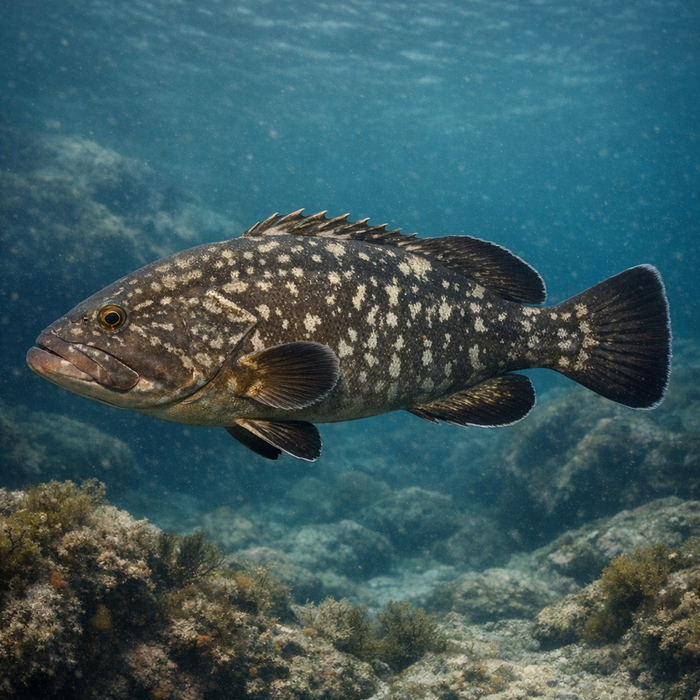
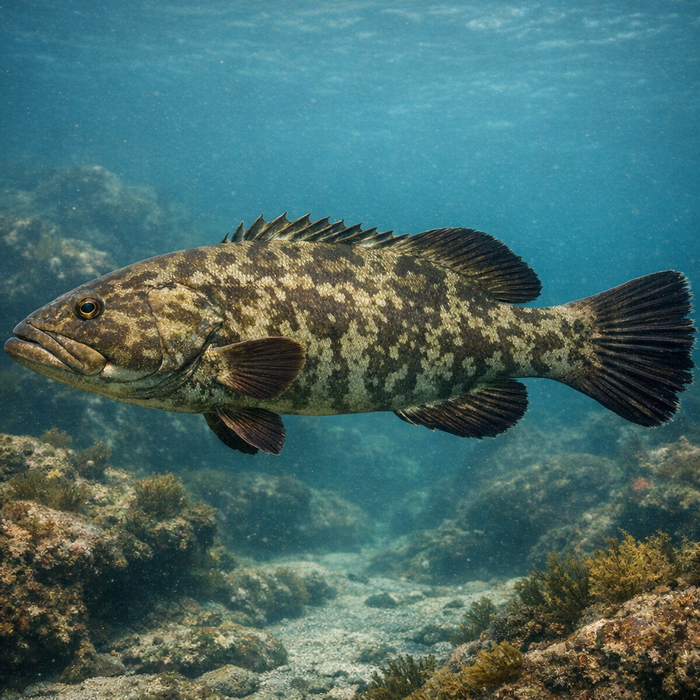
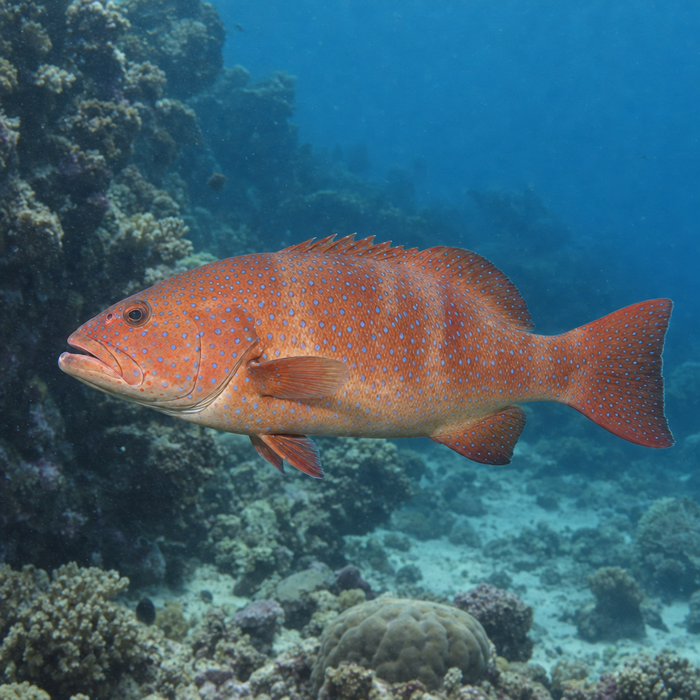
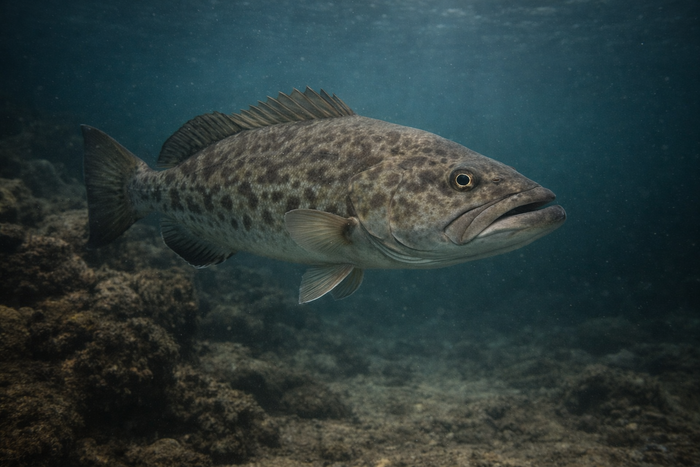
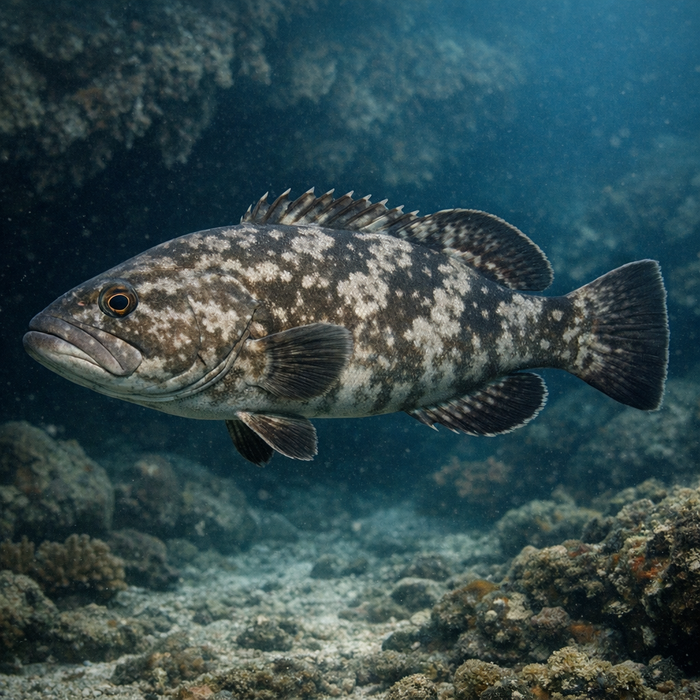
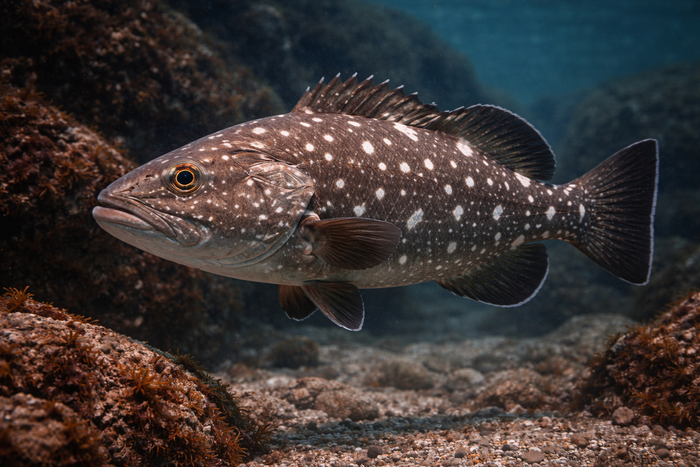
Start with the spots. Small orange-brown to reddish-brown markings cover the head, body, and fins, sitting over a pale brown or greyish background with indistinct darker bars. Juveniles have relatively large spots; as fish grow, those markings become more numerous and proportionally smaller. Identification is not entirely foolproof, however, because similar-looking groupers share parts of its range.
Then there is its reproductive flexibility. Some individuals reproduce first as females and later become males, while others mature directly as males. That makes the Orange Spotted Grouper more complicated than the familiar claim that every grouper simply starts female. Researchers have even induced males to become female through social isolation under experimental conditions. That is laboratory evidence, not permission to assume every wild fish follows the same script.
Among Orange Spotted Grouper facts, that combination of changing appearance and flexible sexual development deserves more attention than another photograph beside a cooler.
Habitat & Global Range
Orange Spotted Grouper habitat is strongly associated with coastal waters rather than exclusively clear offshore reefs. Its broad Indo-West Pacific distribution includes the Indian Ocean, Southeast Asia, northern Australia, and parts of the western Pacific. It occurs in marine and brackish environments, with records extending from shallow coastal water to around 100 metres deep. That is a substantial address book for a fish so closely associated with the bottom.
Juveniles use shallow estuaries, including mangrove areas and sandy, muddy, or gravel bottoms. Larger fish occupy inshore reefs and substantial shelter. Caves, small drop-offs, and wrecks can provide adult habitat. Clear water is not an entry requirement; protected, silty environments are very much part of the picture.
For anglers, the useful lesson is to read the structure before judging the scenery. Brown water is not automatically bad water, and a modest-looking edge can deserve more attention than an impressive stretch of featureless bottom.
Behavior & Temperament
The Orange Spotted Grouper can occur alone or in small groups, and adults may maintain restricted home ranges. That makes its relationship with particular shelter important. Its prey includes fishes, crustaceans, and cephalopods, placing it firmly in the predator category without making it a nonstop open-water hunter.
Its angling personality is correspondingly direct. Bait fishing and jigging both take fish, and a hooked specimen near cover demands an organized response rather than leisurely admiration. The tactical problem is short-distance control: tackle, line angle, and early pressure need to suit the obstruction beside the fish. There is little value in discovering your leader is too light after it has already met the reef.
Ecological Importance
The Orange Spotted Grouper links coastal nursery habitats with adult reef environments through its life cycle. Its feeding connects populations of smaller fishes and bottom-associated invertebrates with a larger predatory fish. Protecting the species therefore involves more than protecting an isolated patch of adult reef; juvenile habitat belongs in the same conversation.
It also has substantial commercial importance, supplying food fisheries and aquaculture. That economic value helps explain why its biology receives serious research attention. It also means recreational catches occur within a much bigger picture of harvest, cultivation, and demand.
Conservation & Environmental Pressures
The species is classified globally as Least Concern, but that does not translate into unlimited local abundance. Assessments have documented overexploitation in parts of the Arabian region, and research demonstrates meaningful regional differences in growth and reproductive biology. Management needs to account for those differences rather than treating the entire range as one interchangeable fishery.
Legal protection can also be much stricter than the global category suggests. In New South Wales, estuary cod are protected, and taking or possessing them is prohibited. A familiar common name and an apparently healthy fish are not substitutes for checking the rules.
The FishyAF Take
This is our kind of grouper: handsome without looking delicate, interesting without needing mythology, and closely enough tied to cover to punish sloppy preparation. Respect the habitat, identify the fish properly, and decide how you will handle it before the bite happens.
The best encounter is not necessarily the heaviest fish on the dock. It is the one you were equipped to control, legally allowed to target, and prepared to release well when required. Orange spots are memorable. Good judgment should be, too.