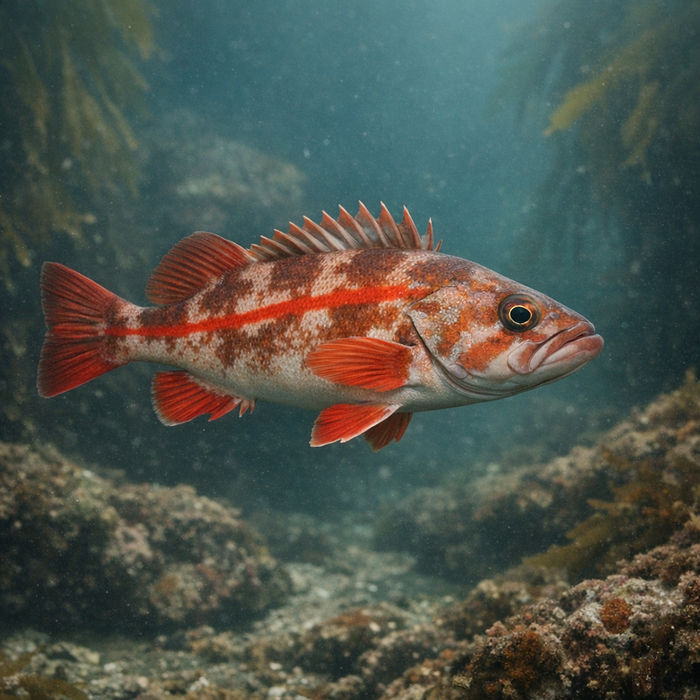
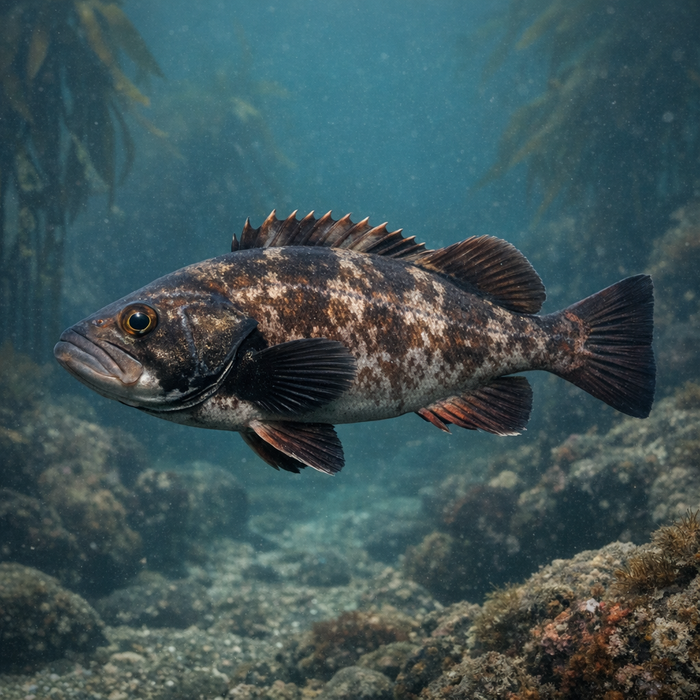
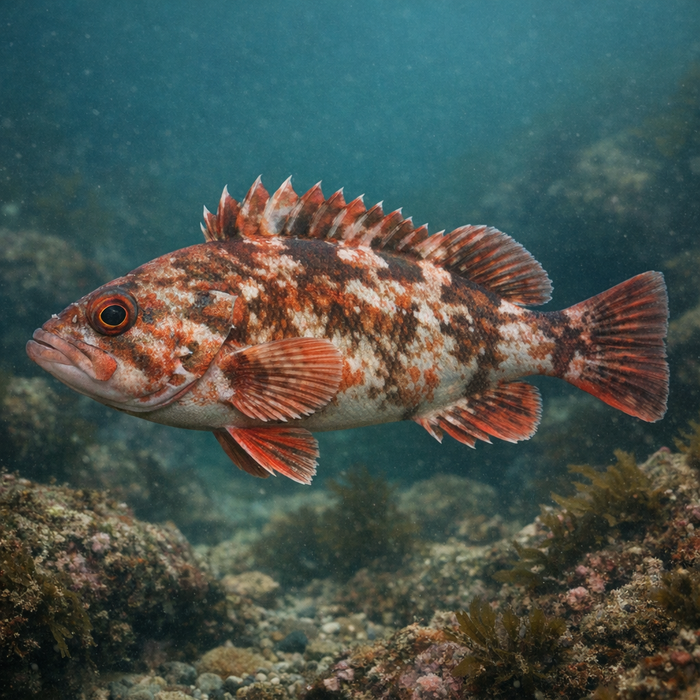
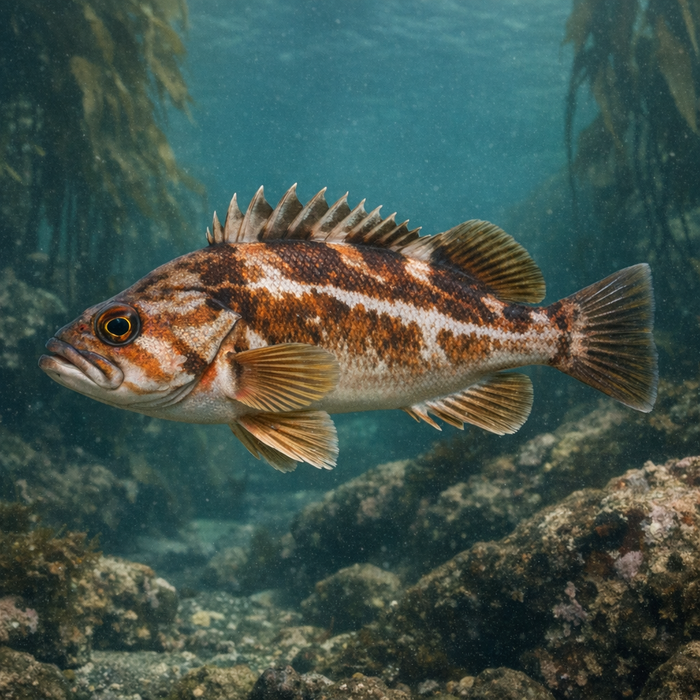
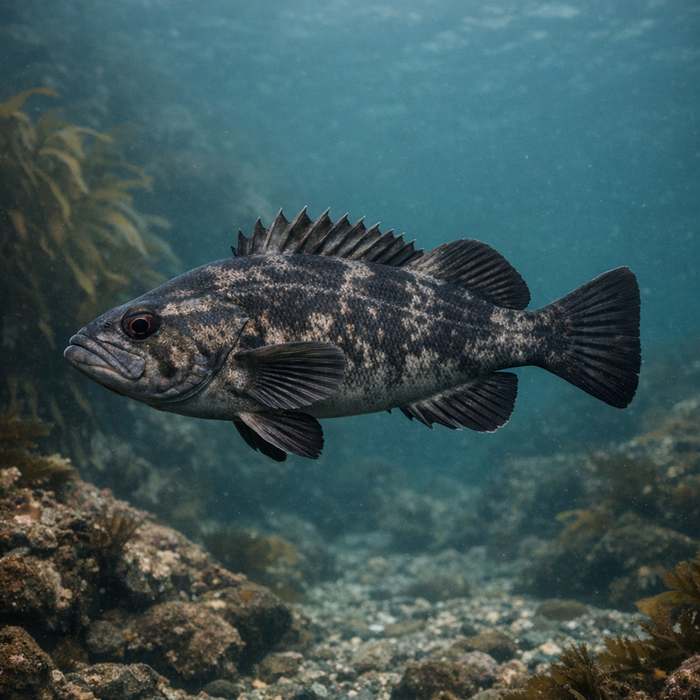
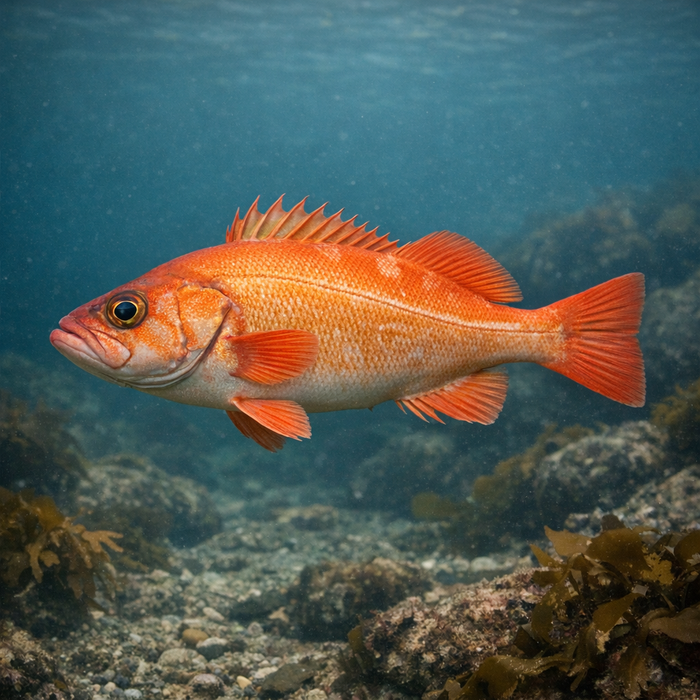
Sharpchin Rockfish (Sebastes zacentrus): A Bold, Memorable Hook LineIntroductionThe sharpchin rockfish is the slope reef specialist that shows up when you drop into the darker half of the water column. It's not the peacock of the nearshore. It's the quiet operator on the outer shelf, the one with the needle spines and a habit of turning up where current hits rock and the sonar turns into modern art. If you're hunting rockfish variety beyond the headline species, this one puts some deepwater cred on your punch card.What Makes the Sharpchin rockfish Unique?Start with the hardware. Those cheek and dorsal spines are like biological X-Acto blades, a trait that earns the sharpchin rockfish its name and demands respectful handling. Then there's the profile: a crisp, pointed chin and a compact, deep-bodied frame that's built for life in energy-swept breaks. Finally, reproduction. Like many Sebastes, the sharpchin rockfish is viviparous, releasing live larvae after internal fertilization, a slow-and-steady life strategy that prizes survival over speed.Habitat & Global RangeTalk sharpchin rockfish habitat and you're talking the continental shelf edge and upper slope of the North Pacific. Think Alaska down the West Coast into deeper Washington, British Columbia, and parts of Northern California, with a bias for rocky structure on steep contours. They hold where current concentrates forage, over boulder piles, pinnacles, and broken reefs from mid to deep depths. You won't cast to them from the jetty; this is a boat show, often a long run to offshore structure and a focused vertical game. If you're after Sharpchin rockfish facts for trip planning, remember access and weather windows often drive opportunity more than raw fish abundance.Behavior & TemperamentThe sharpchin rockfish isn't a sprinter, but it's no pushover. Expect firm headshakes, a corkscrewing rise, and a tendency to pin close to the bottom when pressured. They'll school loosely at times, stacking along drops and edges, then scatter across rubble when the current softens. Color can shift quickly at the surface, with bronze-pink mottling washing out to gray once the fish is on deck. Their big, reflective eyes are tuned for dim light, and they feed opportunistically on small fishes and crustaceans swept along the bottom and midwater.Ecological ImportanceAs a midlevel predator on the outer shelf, the sharpchin rockfish links deep reefs with the open slope food web. Adults help keep shrimp and small fish populations in check, while their own young serve as planktonic snacks for larger predators. Slow growth and live-bearing reproduction make stability matter; year classes can be lumpy, and recruitment pulses echo through the fishery for years. That's part of why they anchor the so-called slope rockfish assemblage in stock assessments and ecosystem models.Conservation & Environmental PressuresDeepwater rockfishes have stories written in decades, not seasons. The sharpchin rockfish is no exception. Harvest pressure is usually managed within groundfish complexes, with area closures, depth restrictions, descending device requirements, and conservative quotas where needed. Environmental shifts that tweak currents, temperature, and prey availability can move the needle on distribution and catch rates. Barotrauma is a real concern. If you're releasing fish, a descending device isn't a fancy add-on. It's mandatory good practice.The FishyAF TakeThe sharpchin rockfish is blue-collar deepwater. No glory shots on kelp beds. No shoreline heroics. You go where the weather lets you, drop iron or bait into gnarly structure, and see who steps up. They're not giants, but they bring legit slope cred and excellent fillets. For anglers chasing variety, a sharpchin in the mix proves you did more than hug the beach. Add it to your list, keep a descending rig ready, and respect the spines. You'll look smarter than the average jig-dropper, and you'll fish better too. That's the point of knowing the deeper Sharpchin rockfish habitat story.