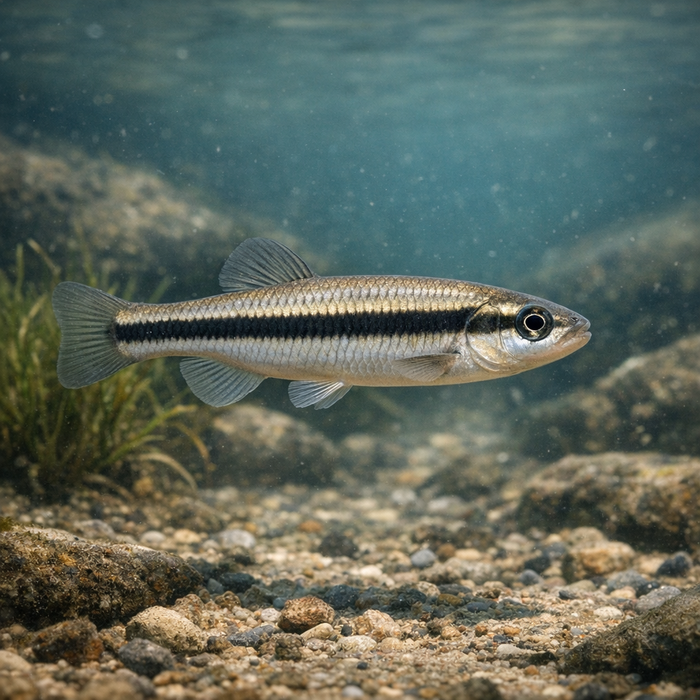
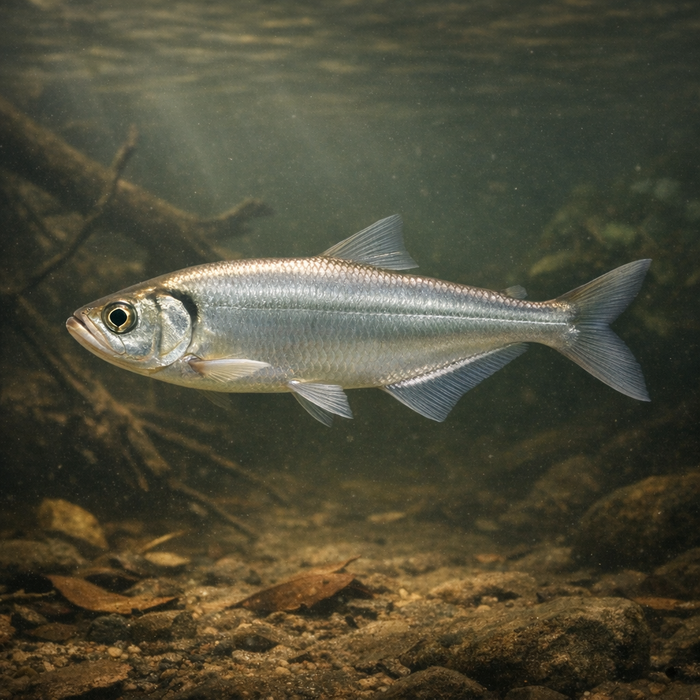
Silver Hatchetfish (Gasteropelecus levis): A Pocket-Sized Predator With an Emergency Exit Above the Water
Forget drag screaming off a reel. The Silver Hatchetfish makes its impression with a body that looks like someone attached a fish’s head to a miniature axe blade. Small, bright, and remarkably specialized, this freshwater species belongs to the family Gasteropelecidae. Its appeal is not brute strength. It is the sheer improbability of its construction.
The typical size is just 1.1–1.4 inches, placing this fish firmly in the observation-and-microfishing conversation rather than conventional trophy fishing. Even there, an important boundary applies: species-specific hook-and-line techniques are not well established. Treat it as an intriguing little predator to understand, not a guaranteed exotic catch waiting behind every Amazonian branch.
What Makes the Silver Hatchetfish Unique?
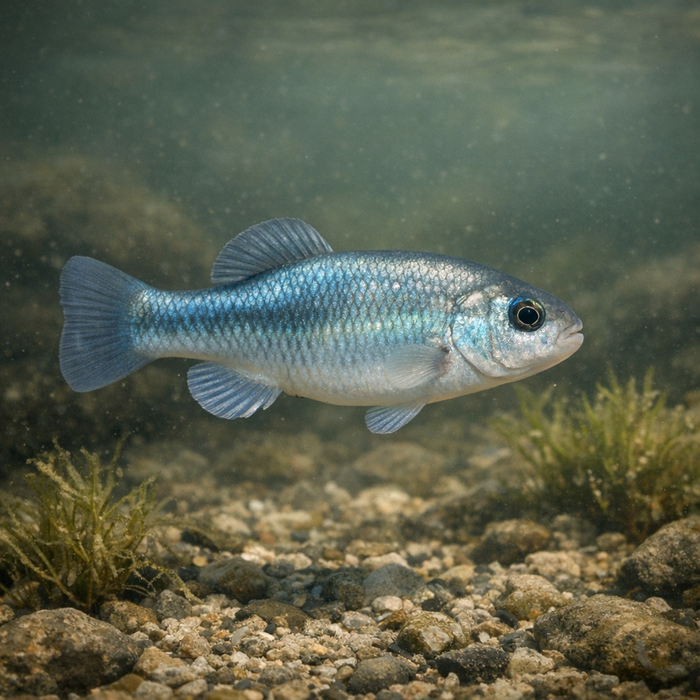
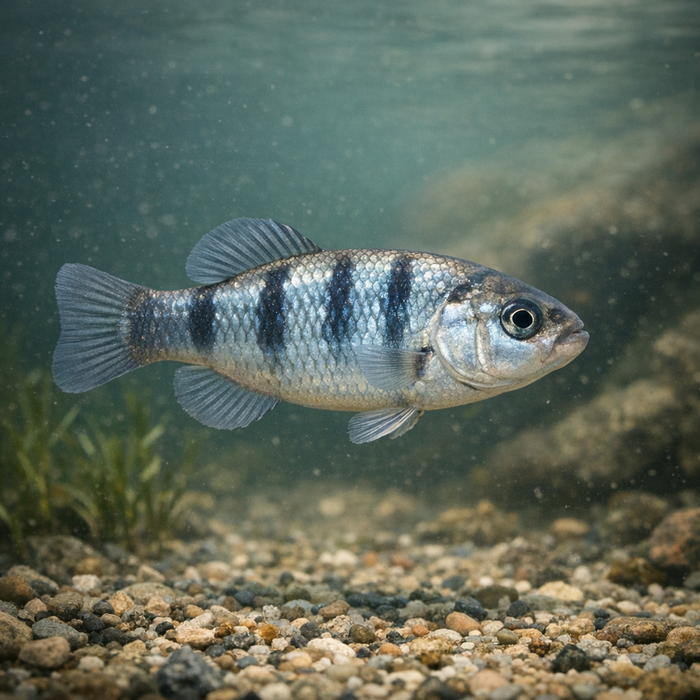
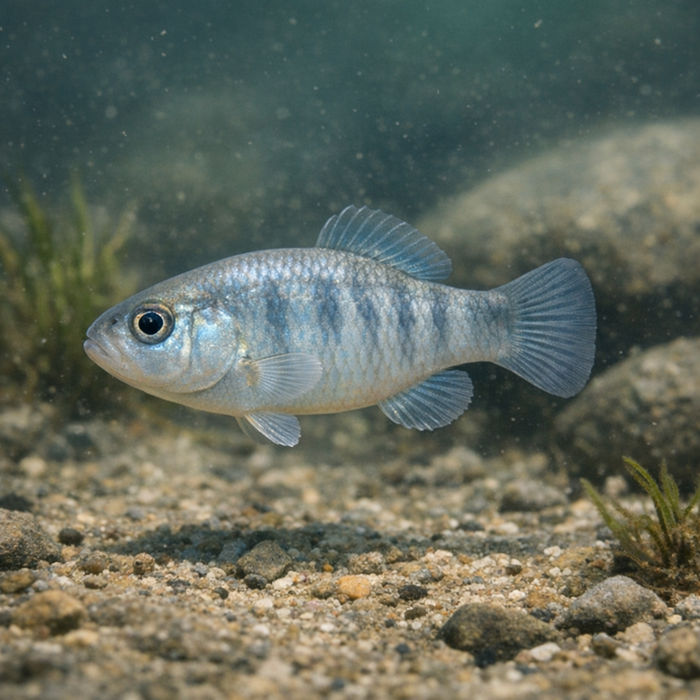
The defining feature is the dramatically deep, keeled underside. That hatchet shape accommodates an enlarged, muscular pectoral girdle associated with the freshwater hatchetfishes’ jumping ability. Long pectoral fins complete an arrangement very different from the streamlined bodies anglers usually associate with speed. This fish wears its specialization underneath.
The Silver Hatchetfish also has a less obvious distinction: its maxillary bone lacks teeth. That does not mean its entire mouth is toothless. The absence helps distinguish it from the common hatchetfish, Gasteropelecus sternicla, alongside other anatomical differences. Identification gets considerably more interesting when two similar silver fish stop being interchangeable aquarium-shop labels.
Finally, the body is laterally compressed, with dark and gold-toned longitudinal markings across the silver sides. Viewed broadside, it looks substantial; viewed from another angle, the apparent bulk changes sharply. Shape, not size, is the headline.
Habitat & Global Range
Silver Hatchetfish habitat centers on tropical South American freshwater. The lower Amazon basin in Brazil is a well-established part of its distribution, with published accounts highlighting Pará and the lower Tocantins and Guamá systems. A current museum catalog also includes Peru, so older Brazil-only summaries should not be treated as the final word on its entire range.
Habitats include open water in larger forest streams and floodplain lakes. This is not simply a fish of tiny, stagnant puddles under dense weeds. Its surface-oriented behavior matters more than assuming every suitable-looking margin holds it. No verified species-specific recreational fishery supports naming a particular lake, lodge, or access point as a reliable destination.
For anglers, the useful geographic lesson is restraint: an Amazon-basin itinerary is not automatically a silver-hatchetfish itinerary.
Behavior & Temperament
The Silver Hatchetfish spends much of its time at or immediately below the surface, sometimes retreating into midwater. Aquarium observations describe a peaceful, social fish, which fits poorly with the usual image of a predator as an aggressive territorial bruiser. Here, predation operates at invertebrate scale.
Its recorded foods include insects, worms, and crustaceans. That supports considering extremely small natural offerings, but a food item in a biological account is not proof of a successful angling bait.
Jumping is another reason to keep expectations sensible. Freshwater hatchetfishes possess the equipment for sudden aerial escape, but that does not establish how this particular species fights on a hook. There is no need to turn an unusual adaptation into an invented miniature tarpon story.
Ecological Importance
As a small predator of invertebrates, the Silver Hatchetfish participates in the food web at a scale anglers often overlook. Its significance is not measured in pounds landed. A fish taking insects and small aquatic animals is participating in the same transfer of energy that supports much larger freshwater communities. The specific strength of those relationships has not been quantified here.
It is also represented in the ornamental-fish trade. That creates a human connection very different from a harvest fishery: people value the living animal’s shape and behavior rather than a fillet. Ecological appreciation should extend beyond whatever happens to bend a rod.
Conservation & Environmental Pressures
The species is classified as Least Concern, consistent with the species profile and authoritative conservation listings. That category is not a guarantee that every local population is abundant, nor permission to collect without checking applicable rules. Conservation status and legal access answer different questions.
Published conservation summaries identify vegetation removal and river impoundment as concerns for freshwater hatchetfishes generally, while not identifying significant established threats to this species in the assessment discussed. Keep that distinction intact: plausible family-level vulnerability is not evidence of a documented species-wide decline.
The practical response is modest. Avoid damaging shoreline vegetation, disturbing habitat for a photograph, or moving live fish between waters. Responsible curiosity should leave fewer footprints than enthusiasm.
The FishyAF Take
The Silver Hatchetfish is a useful antidote to the idea that interesting fishing begins at ten pounds. Its oddball anatomy deserves attention whether or not a hook ever enters the picture.
Our take: appreciate the fish before trying to manufacture a conquest. Observation, careful identification, and a good photograph are worthwhile outcomes. Any legal microfishing attempt should remain explicitly experimental, with fish welfare taking priority over adding a species to a list.
Among Silver Hatchetfish facts, the best lesson is not a tackle trick. It is that freshwater evolution can produce something this distinctive without producing anything remotely resembling a conventional sport fish. Leave the heavyweight gear and heavyweight claims at home.