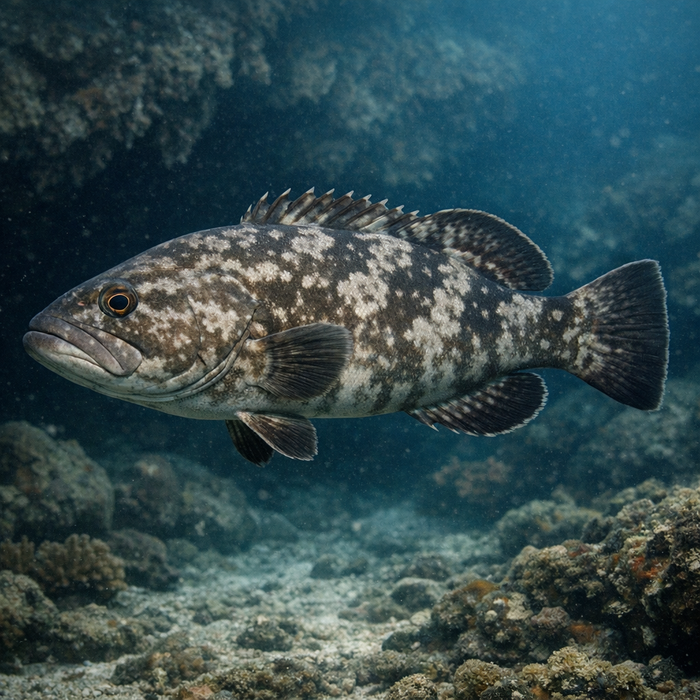
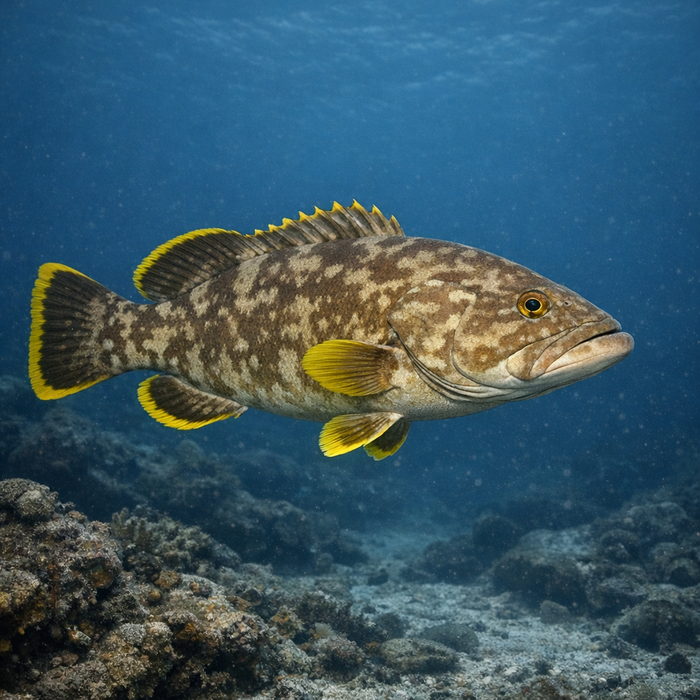
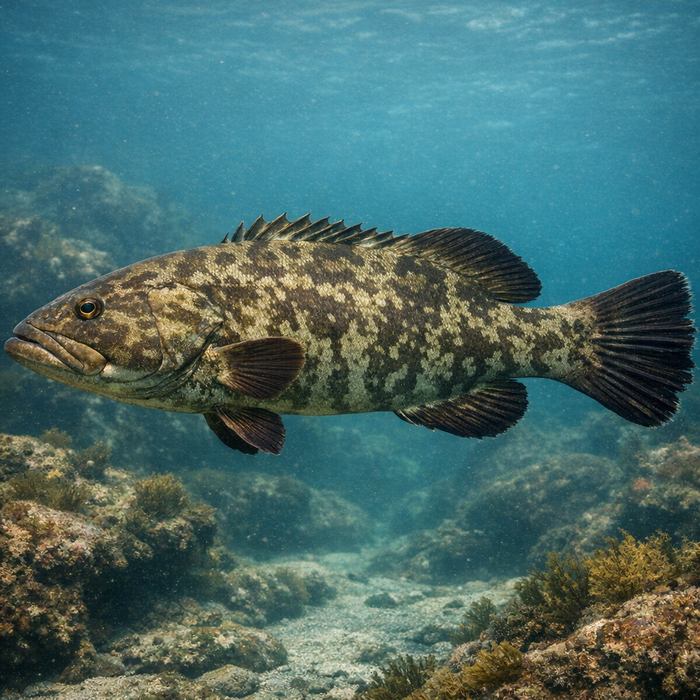
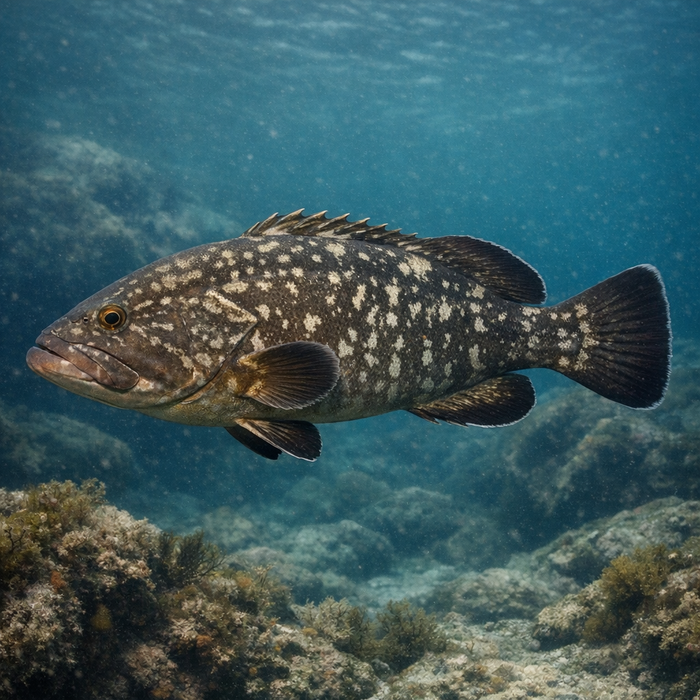
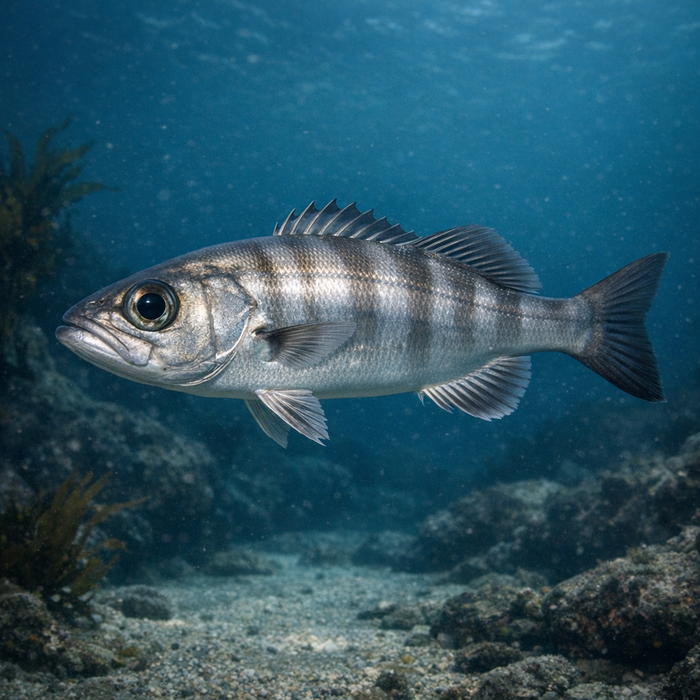
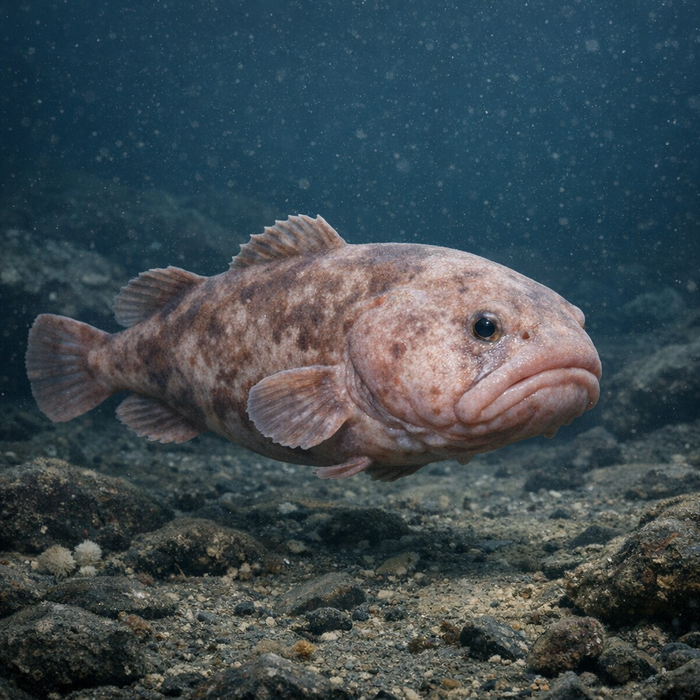
Warsaw Grouper (Hyporthodus nigritus): The deep-reef heavyweight that turns tackle into kindling if you blink.IntroductionIf your idea of a grouper is a chunky reef fish in 80 feet, the Warsaw grouper politely disagrees. This is the abyssal cousin, the one lurking on ledges and pinnacles hundreds to more than a thousand feet down, built like a refrigerator with fins and a mean streak. Anglers chase Warsaw grouper for the sheer audacity of it: heavy drops, bruising battles, and a shot at a fish that can weigh more than a linebacker plus his gear.What Makes the Warsaw grouper Unique?First, the size. A mature Warsaw grouper is unapologetically huge, with the IGFA record tipping the scale at 436 pounds. Second, the look. That elongated second dorsal spine stands up like a radio antenna, a dead giveaway even in silhouette. Third, the lifestyle. This fish lives deeper than most casual anglers venture, haunting steep breaks, sinkholes, and busted wrecks far off the beach. Those three things combine to make the Warsaw grouper a bucket-list species and a masterclass in heavy-gear problem solving.Habitat & Global RangeTalking Warsaw grouper habitat is talking edges. Think outer shelf breaks, canyon walls, and jagged ledges where current rips and bait concentrates. The species ranges across the Western Atlantic from the Southeast U.S. and Gulf of Mexico into the Caribbean and parts of northern South America. They favor serious depth, which means weather windows, current, and boat range dictate the game. You won't stumble into a Warsaw grouper while chumming the pier. This is a deep-reef mission with precision drops and the patience to grind on intimidating structure.Behavior & TemperamentBig Warsaw grouper don't waste energy. They hold tight to structure, ambushing prey with one vacuum gulp from a cavernous mouth. Hook one and you'll learn real quick why experienced crews say stop the first dive or lose the fish. They bulldog straight to rock and wreck, using sheer mass and angle to part line. They're not schooling fish; large adults run solitary or in loose company on the best pieces. Feeding isn't a classic dawn-dusk surface window. At these depths, current, pressure changes, and bait movement flip the switch.Ecological ImportanceThe Warsaw grouper sits high on the deep-reef food web, shaping who lives on and near these ledges. As a long-lived, slow-growing predator, it acts like an ecological governor. Remove too many big fish and everything downstream tilts. That's part of why Warsaw grouper facts often circle back to longevity and low productivity. It takes years to make a trophy and seconds to lose one.Conservation & Environmental PressuresWarsaw grouper are hammered by two classic problems: slow life history and deep capture. They mature late, live for decades, and can't crank out replacement generations fast. Add barotrauma from extreme depth and release survival gets tricky without proper tools. Many regions impose strict limits, seasonal closures, or even one-fish vessel rules to protect what's left. Habitat impacts from trawling and lost gear don't help. The short version: if you value future shots at true giants, treat this species with care.The FishyAF TakeThe Warsaw grouper is the final exam of bottom fish. It lives where electronics matter, where knots and crimps get judged, and where indecision costs gear and glory. You don't hunt these fish for easy action; you do it to measure your system against a brutal habitat and a smarter, stronger opponent than most anglers ever meet. Respect the fish, respect the depth, and only keep what regulations allow and your conscience can explain. If you want one line to remember, here it is: the Warsaw grouper lives at the intersection of punishment and payoff, and that's exactly why we love it. For more nerdy goodness, search out solid Warsaw grouper facts and dig into credible notes on Warsaw grouper habitat before you drop.