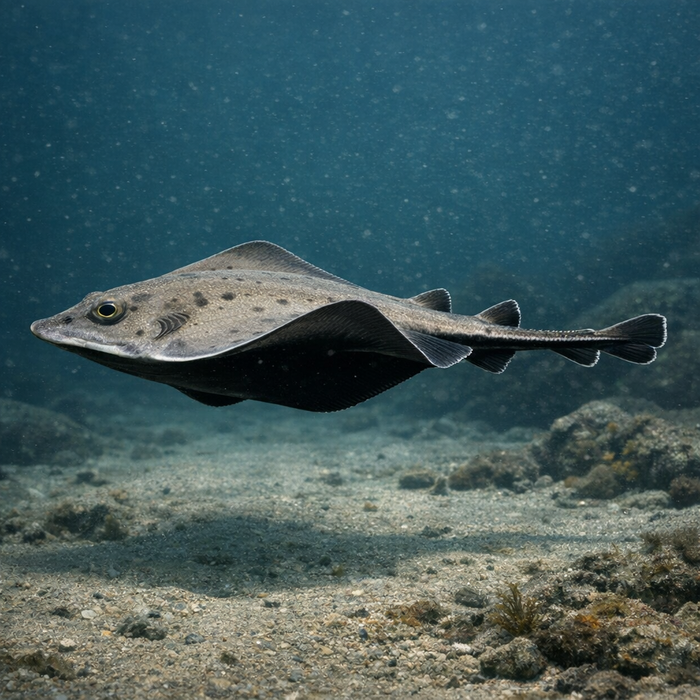
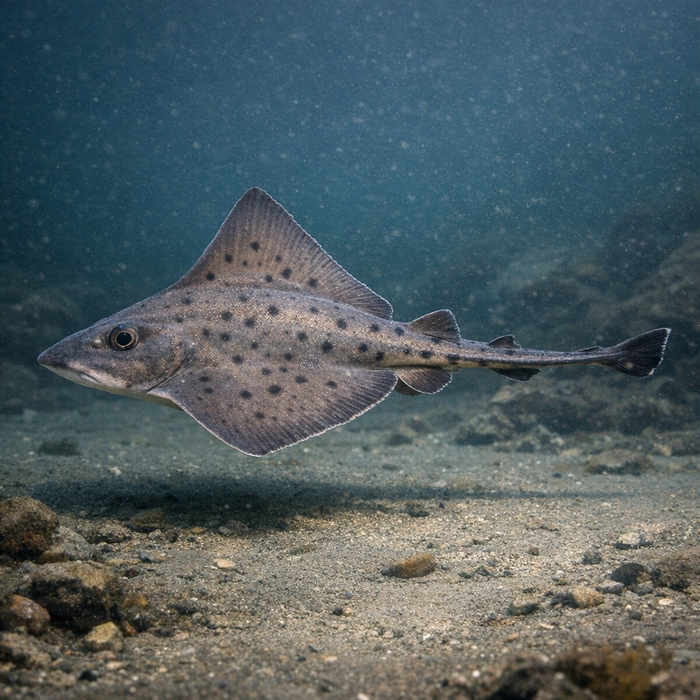
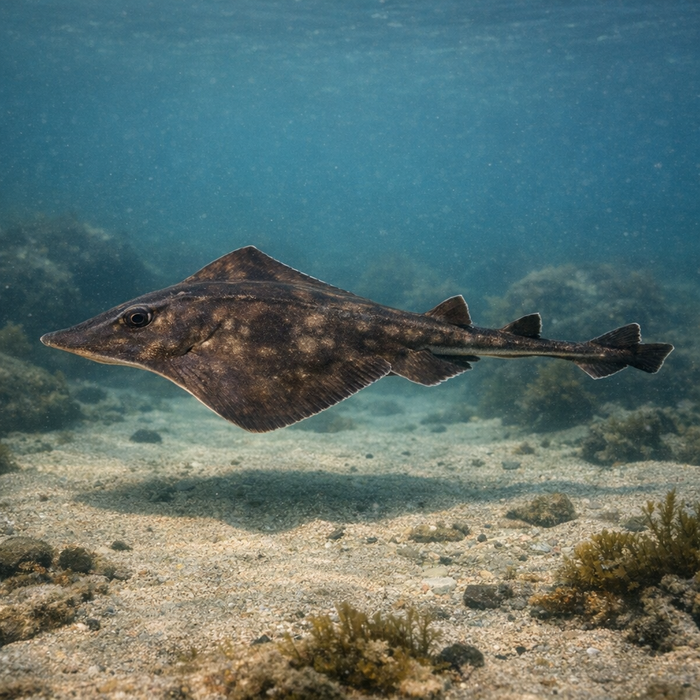
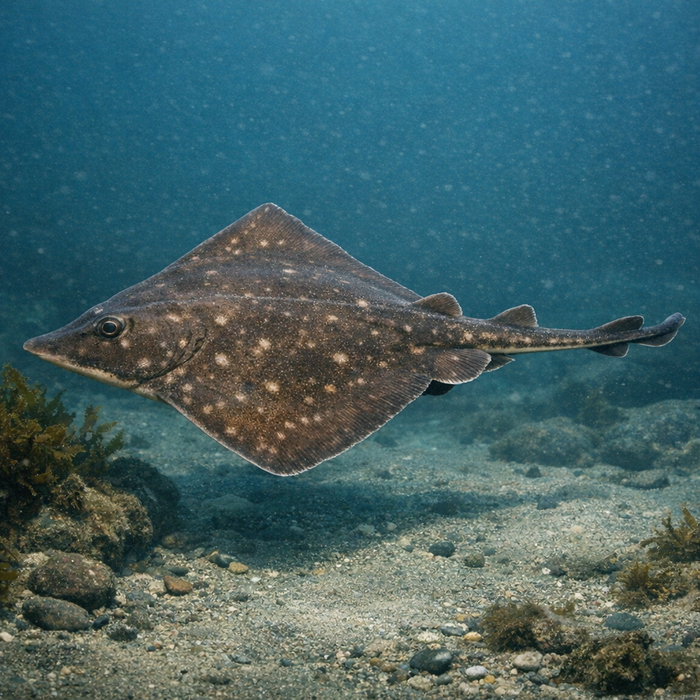
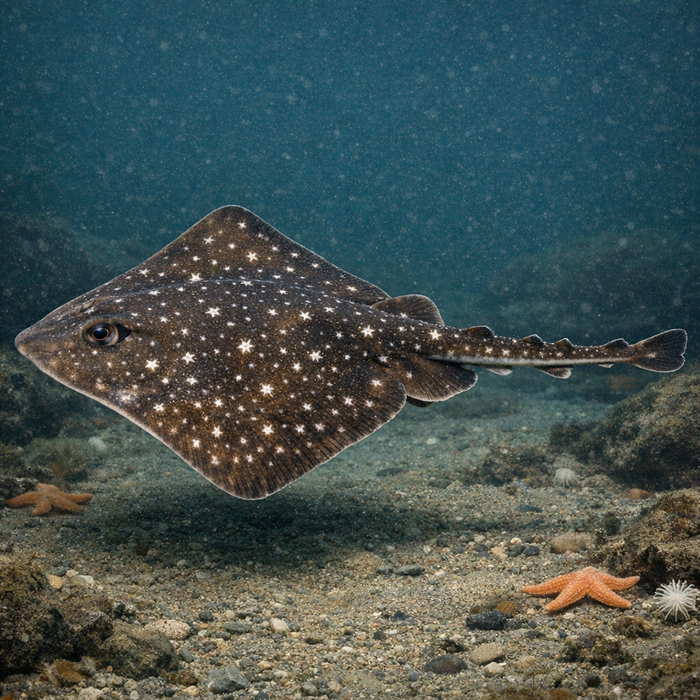
Arctic Skate (Amblyraja hyperborea): Subzero wings built for the abyssIntroductionThe Arctic skate is the deep-sea ninja you didn't know you wanted to meet. It's a broad, thorny ray that slow-rolls over the seafloor in water cold enough to bite steel and deep enough to make your ears ring just thinking about it. Most anglers will never see one, which somehow makes the Arctic skate even cooler. You're chasing a fish that lives in the pressure cooker at the edge of the world.What Makes the Arctic skate Unique?Two big things. First, it's a pressure-proof specialist. The Arctic skate lives where sunlight is a rumor, calmly tolerating thousands of feet of water stacked above its head. Second, it's a master of the slow life. Eggs can take more than a year to hatch, growth is glacial, and maturity doesn't come quickly. That deep-sea patience shapes everything about how this fish looks and behaves. It's nearly barotrauma-proof because it lacks a swim bladder, and its body chemistry is tuned with compounds like TMAO to keep proteins humming under pressure.Habitat & Global RangeThink high-latitude, deep, and quiet. The classic Arctic skate habitat is the continental slope and deep basins across the Arctic and subarctic North Atlantic. Picture the Barents Sea edges, Davis Strait, Icelandic and Norwegian slopes, and other cold-water trenches. Bottom types trend soft: mud, sand, and silt. If you're wondering about "Arctic skate habitat," it's not a cove or a kelp patch. It's a vast, dim plain where currents carry meals to anything with patience. Depths commonly run several hundred to a few thousand meters. Weather and logistics, not the fish, are the real limiter.Behavior & TemperamentThis is not a sprinter. The Arctic skate glides close to bottom, flapping wings in unhurried pulses. It hunts by ambush and vibe check, locking onto prey with electrosensory pores that pick up tiny signals. Aggression is low, but resolve is high. Hooked fish are all leverage and stubbornness, tilting and pinning to the mud like a living manhole cover. They won't spool you with blistering runs, but they'll grind your patience and tackle if you underestimate the depth and current.Ecological ImportanceThe Arctic skate is a mesopredator in a tough neighborhood. It recycles energy from benthic prey into bigger food webs while carrying that slow-life torch: long-lived, late to mature, and sensitive to big environmental swings. Egg cases get deposited on bottom and occasionally wash ashore, seeding beaches with those spooky "mermaid's purses." Everything about the species screams stability over flash, a good reminder that oceans aren't just about the fast and the shiny.Conservation & Environmental PressuresLabel this one "Least Concern" for now, but keep your head on a swivel. Deep-sea fisheries, climate-driven shifts in currents and ice, and mixed-species trawl pressure can trip up even a rugged ray. The problem isn't weekend anglers. It's broad-scale changes and bycatch. Identification issues muddy data quality too; many skates are recorded simply as "skate," which blurs stock trends and can hide trouble.The FishyAF TakeArctic skate facts all point to one theme: this fish is built for patience, and it demands the same from you. If you're game to send baits to the basement, don't expect pyrotechnics. Expect a slow, sledgehammer bend and a long winch job through cold, moving water. It's a niche pursuit, but bragging rights are real. You didn't just catch a fish. You connected with the quiet part of the ocean most people only read about. Respect the pace, bring the heavy gear, and enjoy the weird flex that is landing a ray from the Arctic's shadow zone.