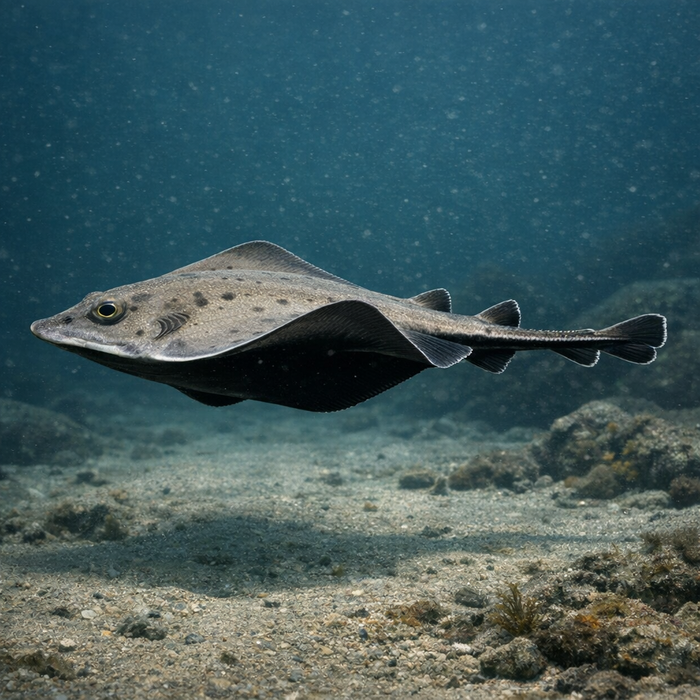
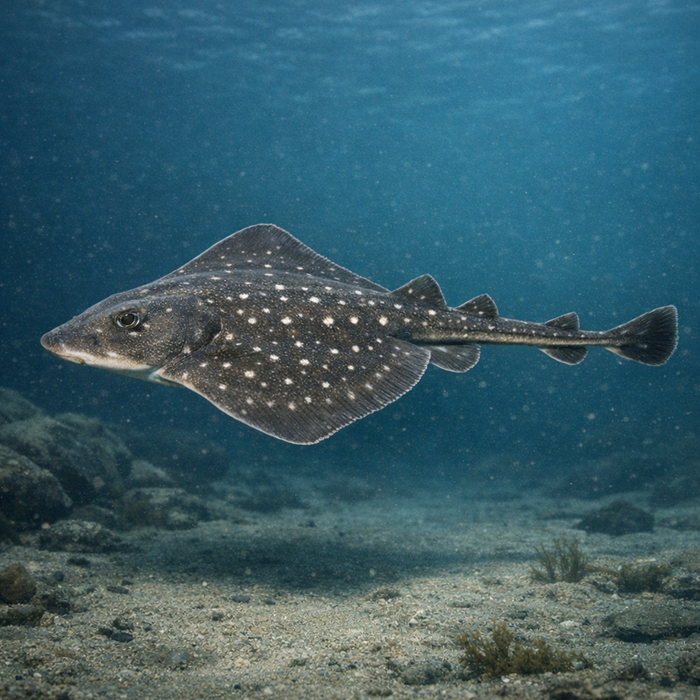
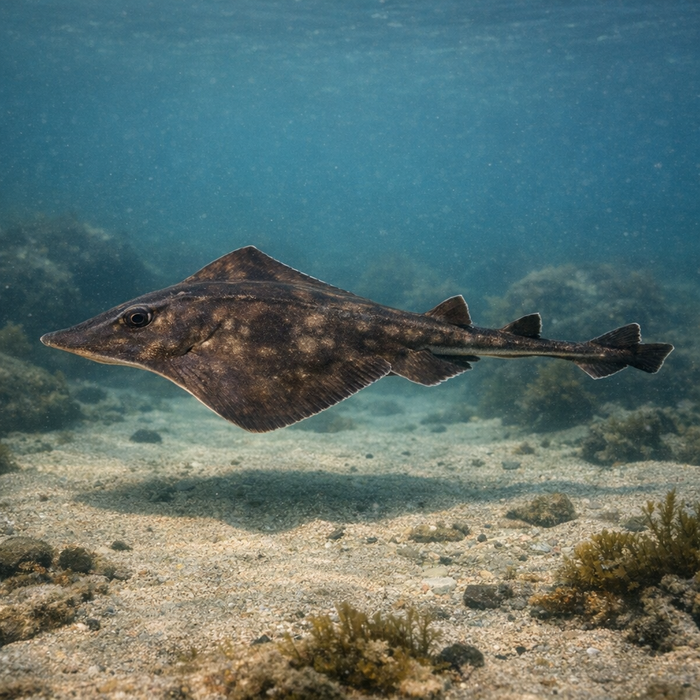
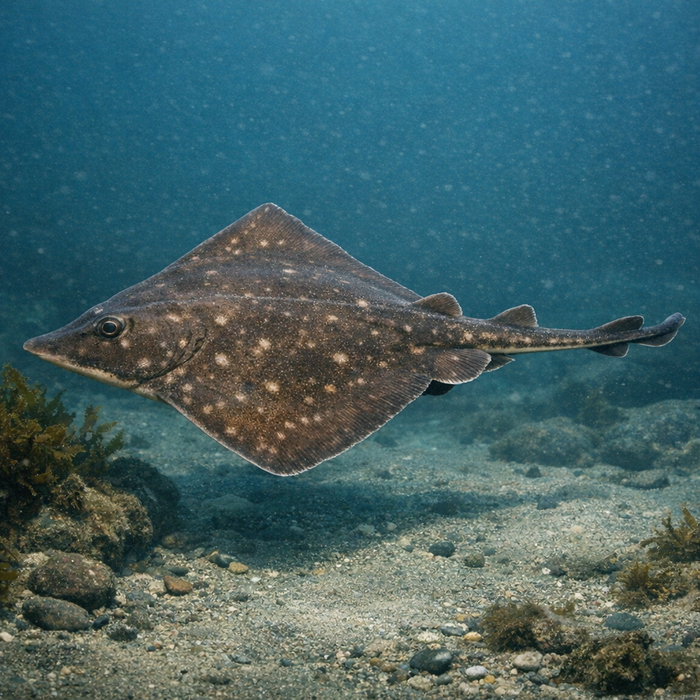
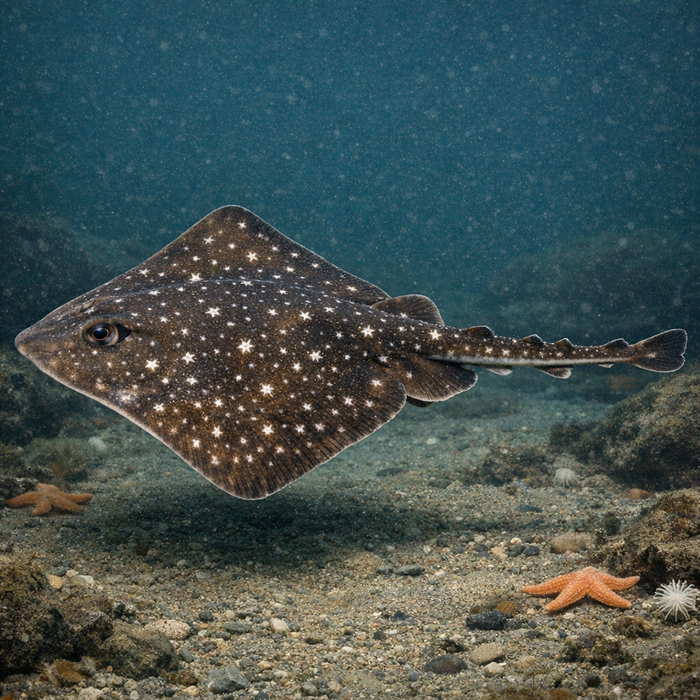
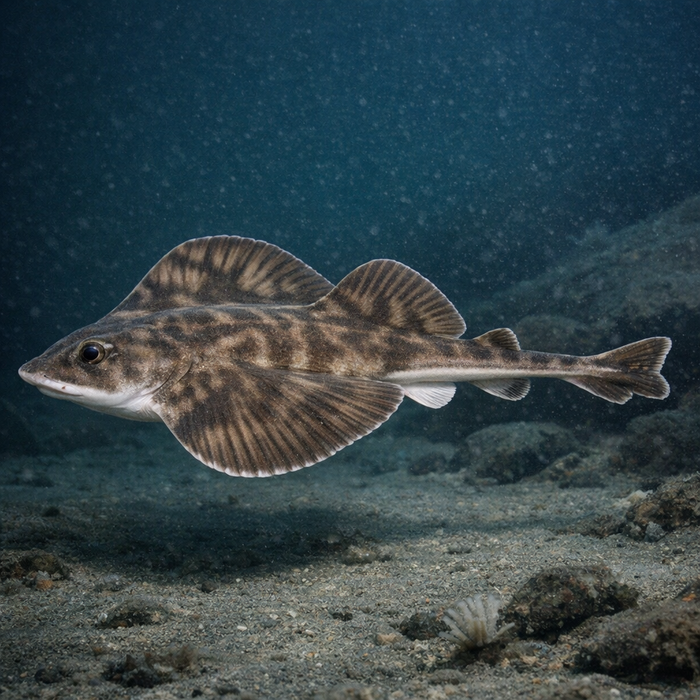
Sailray (Rajella lintea): A Bold, Memorable Hook LineIntroductionIf you're into the weird and wonderful, the Sailray is your kind of fish. This deepwater skate lurks where daylight quits, riding the seafloor like a silent kite and ambushing anything careless enough to crawl past. It's not flashy and it won't blitz a surface plug, but it's tough, spiky, and surprisingly satisfying to tangle with if you like your fishing steep, dark, and technical. Consider this your quick hit of Sailray facts without the textbook yawn.What Makes the Sailray Unique?Two things: armor and attitude. The Sailray wears a row of thorny bucklers along its back and tail, giving it a medieval vibe and a solid defense against anything with teeth. And when hooked, it fights in maddening bursts. You'll get a few strong wingbeats, then it glues itself to the bottom like it owns the place. Pry it loose and it'll surge again. Pair that with a diamond-shaped disc and a small, crushing mouth built for hard-shelled prey, and you've got a deepwater specialist that's all business.Habitat & Global RangeStart with this: you're dealing with depth. Sailray habitat is the continental slope and deep basins, often hundreds to thousands of feet down. That means cold, steady water, low light, and soft sediments punctuated by rocky patches and the occasional canyon edge. Its broader distribution is anchored in cold-temperate North Atlantic waters, but anglers should think in terms of depth and bottom type more than lines on a map. If your sonar shows a muddy plateau with life marks and a steady current on the slope, you're in the neighborhood.Behavior & TemperamentThe Sailray is not a social butterfly. It's mostly solitary, cruising low and slow and using electroreception to home in on prey. Aggression is measured. It's a pick-and-plant feeder more than a runner, happy to test your patience. Hook one and you'll feel a couple determined pumps, then dead weight. That's the classic "manhole cover" move. Once lifted from bottom, they'll often come quietly, but beware the last-minute flail near the surface. Handling requires real care. The skin's like sandpaper and those thorns are no joke.Ecological ImportanceSkates like the Sailray stitch the deep slope food web together. They turn crustaceans, worms, and small fishes into biomass for bigger predators, and they churn the seafloor as they feed, mixing nutrients and shaping benthic communities. Slow growth and late maturity make them especially vulnerable to overexploitation. When deep trawls sweep the slope, skates are frequent bycatch. Knowing where and when they aggregate, and how often juveniles appear, is vital for ecosystem-based management.Conservation & Environmental PressuresDeepwater species tend to share the same pressures: bycatch in bottom trawls and longlines, habitat scarring from heavy gear, and limited population data. The Sailray checks those boxes. Even without a flashy commercial target on its back, it's not immune to collateral damage. Data gaps mean managers often make coarse calls that may not fit each species. Anglers can help by documenting catches with clear photos and releasing them in solid condition. Slow to mature means slow to rebound.The FishyAF TakeThe Sailray isn't for everyone, and that's exactly why it's cool. You earn this fish. It demands heavy sinkers, tidy rigs, and patience. No blistering topwater explosions, no aerial shows. Instead, you get the chess match of deep dropping, the satisfaction of solving a quiet bite, and the braggy weirdness of a spiky, diamond-shaped skate from the abyss. If your idea of a good time involves sonar lines, slope contours, and bait that glows on the sounder, the Sailray belongs on your list. And if you're just collecting strange trophies for your mental tacklebox, here's one more to quietly flex about at the dock.