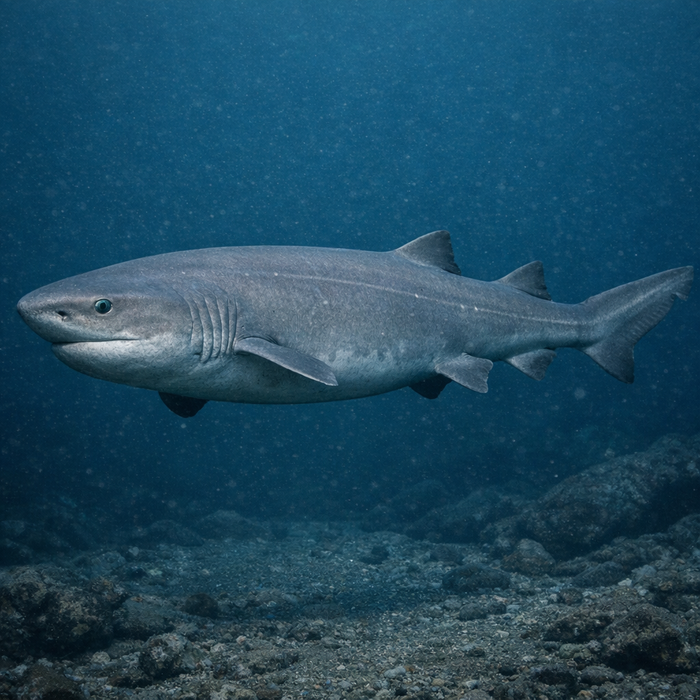
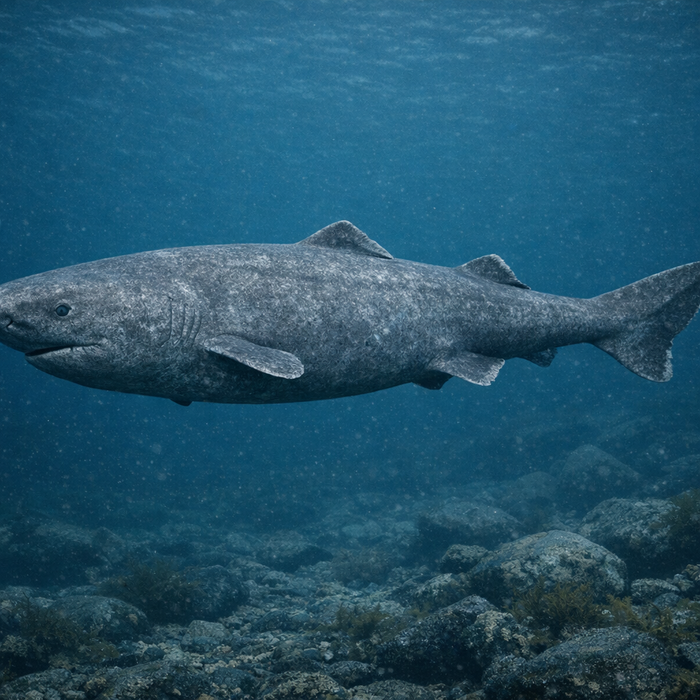
Basking Shark (Cetorhinus maximus): The ocean's gentle freight train with a hangar-door smileIntroductionIf you've ever watched a dorsal fin carve through a calm sea like a slow-motion shark missile, odds are you were staring at a basking shark. It's the world's second-largest fish, a plankton-sipping leviathan that turns tide lines into floating buffets. Anglers don't so much catch basking sharks as they stumble into awe. This is the shark that makes you put the rod down, pull the hat brim up, and just watch.What Makes the Basking shark Unique?Two things: the mouth and the method. When a basking shark feeds, it opens a mouth the size of a card table and hoovers plankton-rich water through thousands of gill rakers like a living sieve. It's also a heavyweight endurance traveler, migrating jaw-dropping distances to track blooms. Despite looking like a floating barn, it sometimes breaches like a launched sedan. Basking shark facts always read like tall tales, but the biology keeps delivering.Habitat & Global RangeBasking shark habitat revolves around cool, temperate waters and the ocean's conveyor belts of food. Picture strong tidal fronts, convergences, and shelf edges where plankton stacks up. You'll hear about hotspots across the British Isles, Ireland, the Bay of Fundy, and patchy encounters along both sides of the North Atlantic and parts of the North Pacific. They cruise coastal zones and open shelf waters, rising to skim the surface when food concentrates. Calm, sunny days help you spot that trademark dorsal and tail scything along a mile-wide slick.Behavior & TemperamentThey look intimidating and behave like zen masters. Basking sharks are slow, deliberate filter feeders with little interest in boats or brawls. They'll tolerate a quiet drift but can sound and vanish if harassed. Expect small, loose groups when blooms are thick, often milling along tide lines. In winter, they dive deep and likely fast from feeding, even shedding gill rakers before the next season's buffet. They're famous for that bask-at-the-surface cruise, but they're equally comfortable roaming midwater and dropping down over the shelf.Ecological ImportanceCall them plankton plumbers. By processing colossal volumes of water, basking sharks help cycle nutrients and transfer energy up the food web. Their presence flags healthy, productive systems and the seasonal pulses that drive entire fisheries. Remove a giant filter-feeder and you don't just lose a spectacle, you tug on the fabric that holds coastal productivity together.Conservation & Environmental PressuresThis species got hammered historically for its oil-rich liver. Add bycatch, ship strikes, entanglement, and changing plankton dynamics, and you've got a shark that needed a break. Today, protections are widespread, but recovery isn't a light switch. Climate shifts can scramble where and when plankton blooms form, moving the goalposts on a species that lives by the buffet line. Wherever you boat, the rules are usually simple: don't target, don't harass, keep your distance, and report sightings to researchers.The FishyAF TakeThe basking shark is the rare fish that flips the angler script. There's no secret lure, no late-night rigging session, no victory grip-and-grin. You win by finding it, then throttling back your ego and your outboard. If you want hero points, bring sharp eyes, a good pair of polarized glasses, and a working camera. Help science, share clean intel, and let the ocean keep a few mysteries. For pure goosebumps-per-second, a basking shark drifting down a sunlit tide line might be the best show in saltwater. If you came looking for Basking shark facts or to understand Basking shark habitat, here's the headline: find the plankton and keep it respectful. The ocean will take care of the rest.