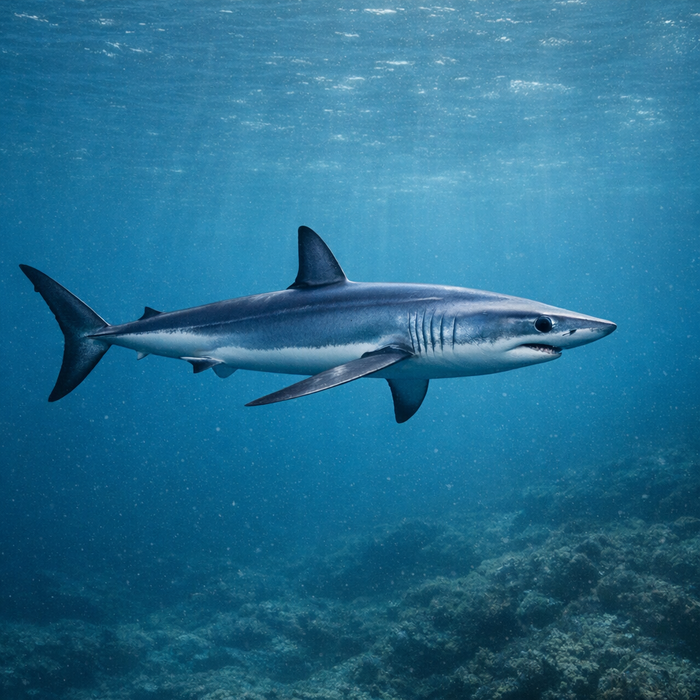
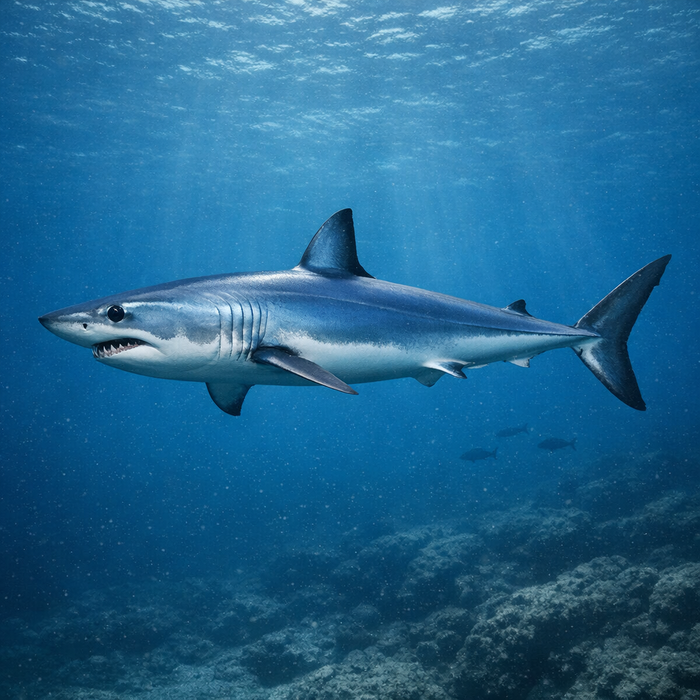
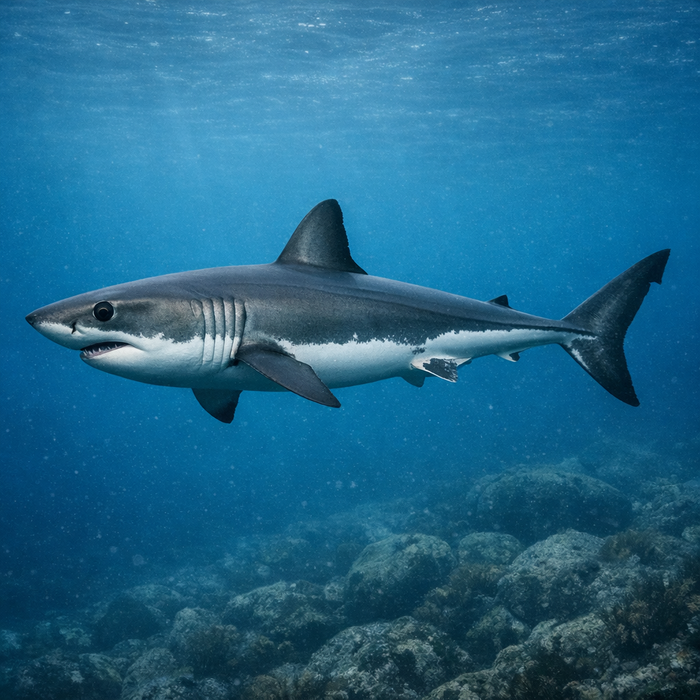
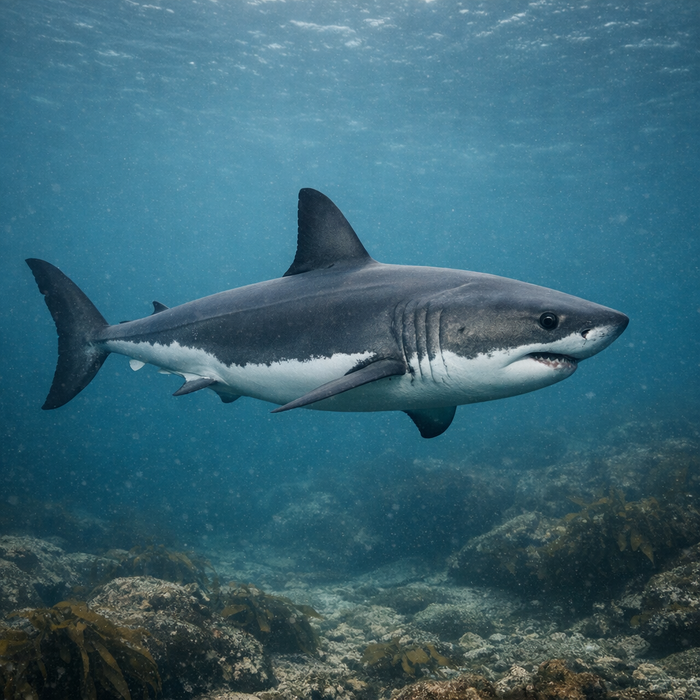
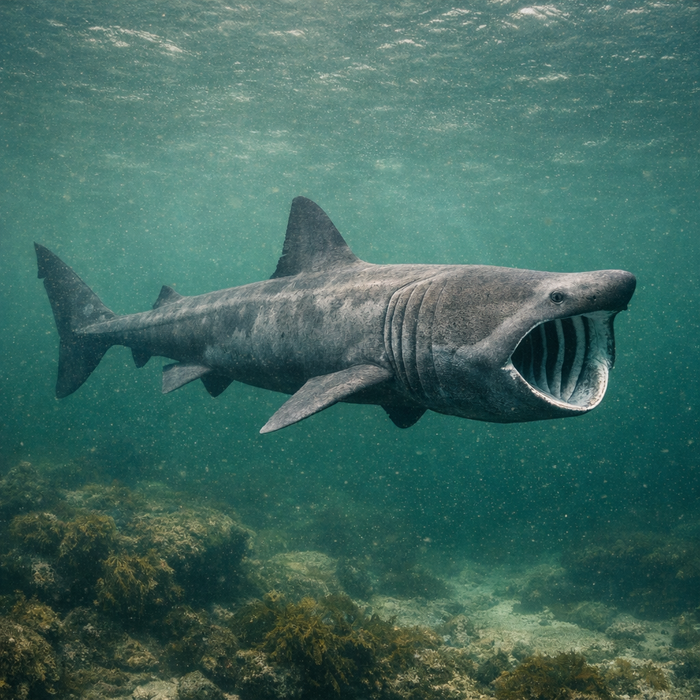
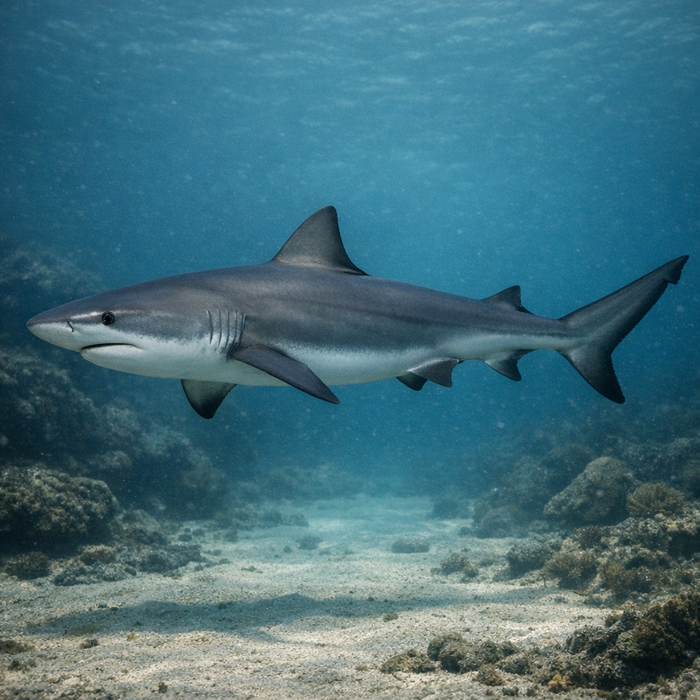
Great White Shark (Carcharodon carcharias): The Apex That Rewrote "Top Of The Food Chain"IntroductionIf there's a fish that doesn't need hype, it's the great white shark. Half ghost, half missile, it shows up like a rumor and leaves like a torpedo, and most ocean creatures simply do not make the mistake of being in front of it twice. For anglers, it's the ultimate off-limits celebrity: famous, powerful, and heavily protected. Still, great white shark facts and great white shark habitat both matter, because understanding the boss of the blue adds context to everything else we chase.What Makes the Great White Shark Unique?Start with heat. Unlike typical fish, great whites have a built-in thermal cheat code called regional endothermy, letting them keep muscles and core warmer than the water. Warm engines make for violent acceleration and long-range stamina. Next, weaponry: broad, serrated, triangular teeth designed not to poke holes but to rip and saw through heavy hide, bone, and blubber. Finally, tactics. They deliver vertical ambushes that can launch them clear of the surface, a shock-and-awe move that turns pinnipeds into confetti.Habitat & Global RangeThe great white shark spans temperate to cool seas worldwide, past rocky headlands, island drop-offs, and rookeries of fat, careless seals. They'll cruise along productive current edges, work canyons, and then vanish offshore into the mid-ocean desert for months. In the Eastern Pacific, many commute between California's coast and a mid-ocean hangout charmingly nicknamed the White Shark Café. Great white shark habitat is less a single address and more a whole neighborhood: coastal shelves for hunting, open ocean for travel, and deep pelagic zones for mysterious business we're still decoding.Behavior & TemperamentBig, calculating, and way more cautious than the movie poster, great whites mix boldness with spooky intelligence. They test baits, circle boats, and often refuse sketchy offerings. When they commit, it's violent efficiency: a crushing bite followed by a deliberate wait for the target to weaken. Tagged whites dive thousands of feet, yo-yo the water column, and loiter at thermoclines like pros scouting a tournament lake. They're not mindless biters; they're selective predators with a risk-reward spreadsheet wired into their skulls.Ecological ImportanceThe great white shark is the ocean's quality control. By preying on sick or unwary animals, they shape behavior of everything from seals to other sharks, keeping ecosystems balanced and honest. Remove apex predators and you don't get a friendlier ocean; you get cascading chaos. Their presence even changes how prey species use habitat, which ripples down to forage fish, kelp, and invertebrates. Every clean release and every data tag matters because these fish are the scaffolding of temperate marine food webs.Conservation & Environmental PressuresGlobal protections have helped, but local threats stack up fast: bycatch, illegal take, depleted prey bases, and gear entanglements. Add warming oceans that shift where and when pinnipeds congregate, and you have a moving target for management. Whites are listed as Vulnerable in many assessments, and protected status means anglers mostly meet them accidentally. If that happens, heavy tackle, circle hooks, and calm heads shorten the fight and improve survival. Respect distances, respect laws, and keep the hero shot in your memory, not on a dock.The FishyAF TakeThe great white shark is proof the ocean still keeps secrets. You won't "dial them in" like tuna and you shouldn't try to. Learn their habits so you can avoid mishandling them, or, under permitted science programs, handle them right. Fish where food is, work clean, and let apex predators be apex. The trophy here isn't jaws on a wall; it's that charged moment when a blue shadow materializes, looks through you, and reminds you who really owns the water.