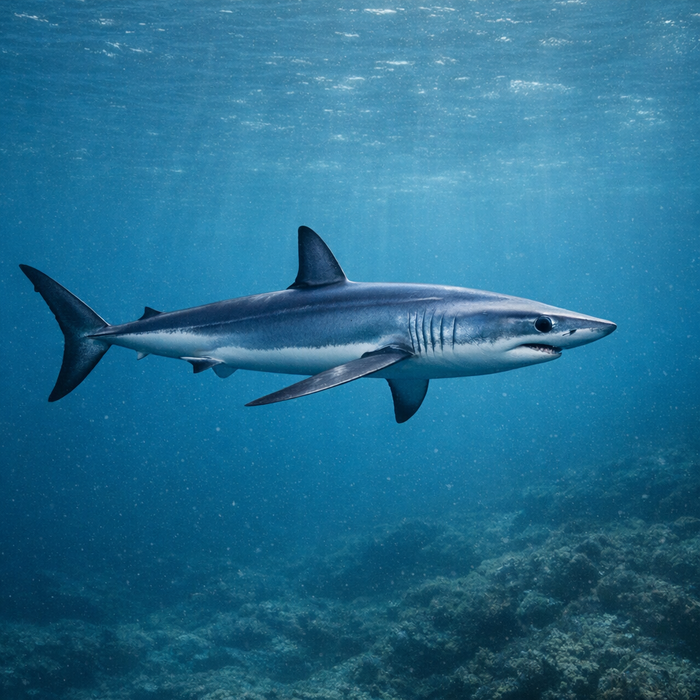
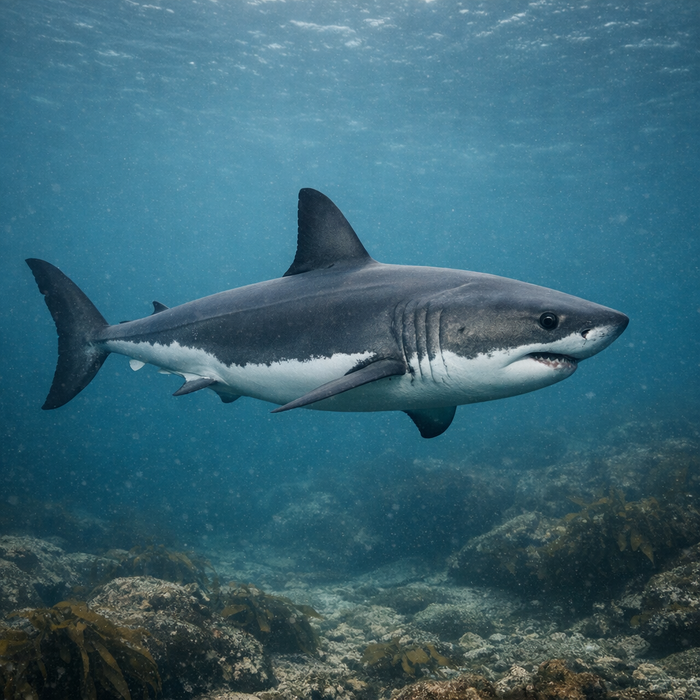
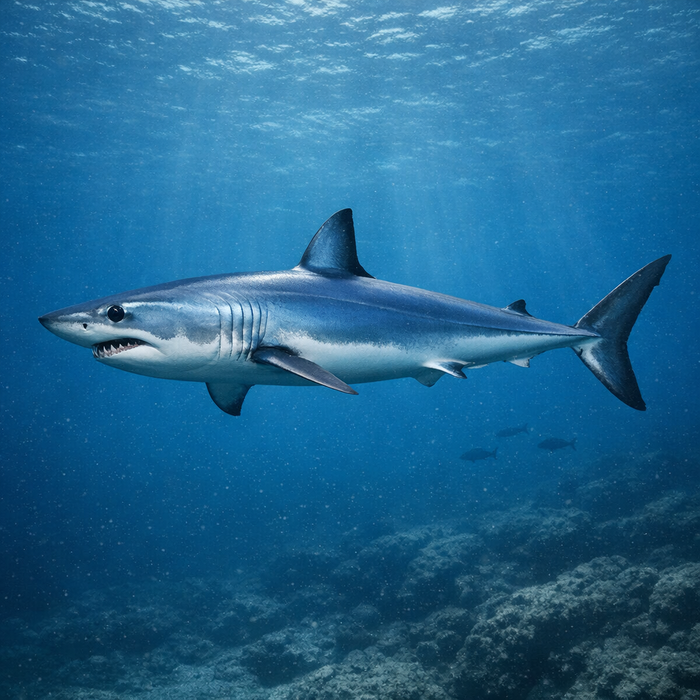
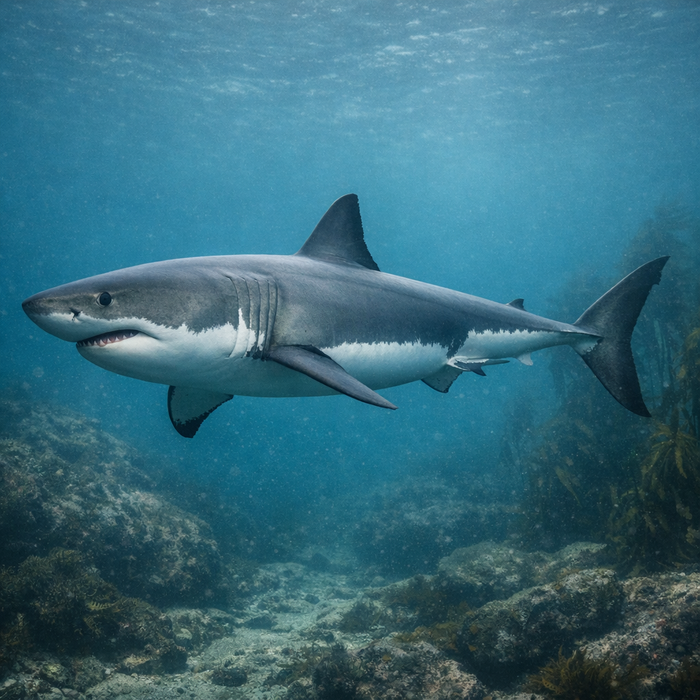
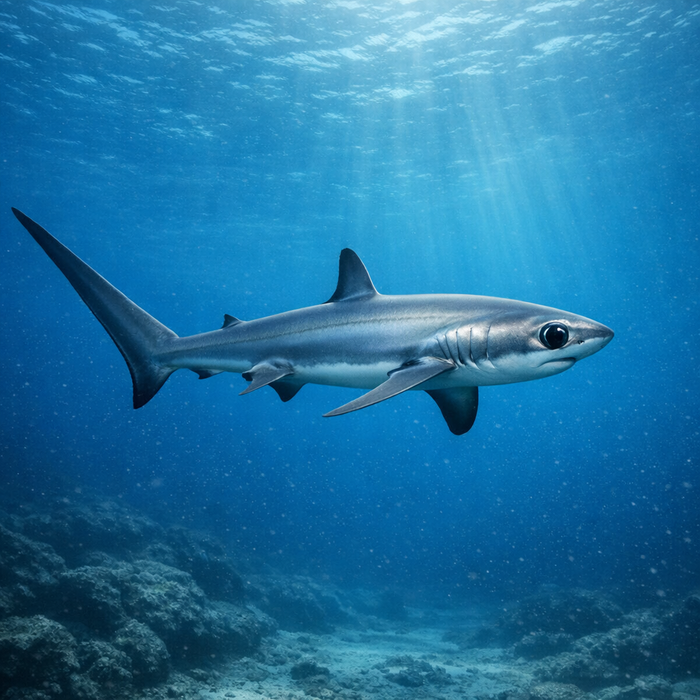
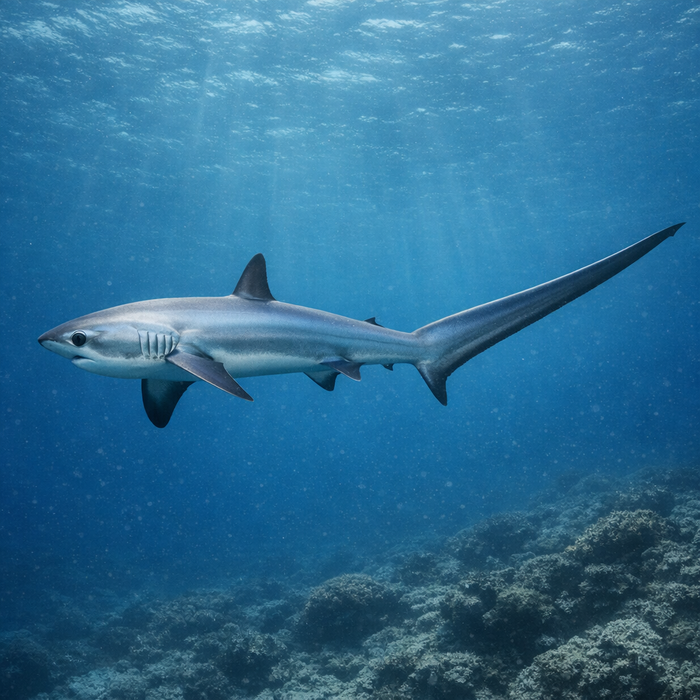
Porbeagle (Lamna nasus): Cold-Water Muscle With Racecar GearingIntroductionIf a mako wore a puffer jacket and loved frigid water, you'd get the porbeagle. This is a cold-temperate lamnid built like a torpedo and wired for speed. Anglers who meet one don't forget the deep circles and brutal runs. The porbeagle lives on the edge: offshore banks, rips, and cobalt-blue currents where bait packs tight and the water bites back.What Makes the Porbeagle Unique?First, it's warm-bodied. Like its lamnid cousins, the porbeagle can elevate core muscle temperature above ambient water using specialized vascular heat exchangers. That hot-rod physiology powers sudden bursts even in near-freezing seas. Second, it's unmistakably stylish: a dark slate back, pale flanks, and a crisp white patch at the rear base of the first dorsal fin. Third, it's a heavyweight that fights dirty in the best way. Hook one and you'll feel long, grinding dives, pinwheeling turns, and a stubborn vertical tug-of-war that tests every connection.Habitat & Global RangePorbeagle habitat centers on cool, food-rich offshore structure: continental shelf edges, submarine banks, and current-swept slopes. The species spans the North Atlantic on both sides, with additional populations across the southern hemisphere's temperate belts. Think Bay of Fundy tides, Celtic Sea banks, chilly Patagonia, and New Zealand canyons. It's a pelagic roamer but not aimless, tracking lines of temperature and bait. If you're digging for Porbeagle habitat nuggets, focus on places where herring, mackerel, or similar forage stack over depth changes and hard bottom.Behavior & TemperamentThe porbeagle is a methodical hunter that bursts into violence when it counts. It cruises midwater, turns suddenly on bait schools, and will work a slick patiently before detonating. Unlike surface show-offs, it finishes many fights deep, carving circles beneath the boat. Its warm muscles and double-keeled tail give it torque to spare. Tagging studies show big seasonal movements and occasional trans-ocean hops, but behavior day-to-day hinges on prey density, temperature layers, and current strength.Ecological ImportanceAs an apex predator, the porbeagle prunes midwater food webs. It pressures forage fish, shapes distribution of schooling species, and influences when and where those baitballs feel safe. That top-down force isn't just theater. It keeps ecosystems honest, and in cold-temperate oceans, few hunters perform this role with more precision. The species' slow growth and low fecundity mean every mature fish does outsized ecological work, especially females.Conservation & Environmental PressuresThis shark wears the scars of popularity. Decades of targeted commercial fishing for meat and fins hammered stocks, especially in the North Atlantic. Recovery is slower than anyone likes because porbeagle biology doesn't sprint: small litters sustained through oophagy, long maturation, and big migratory ranges. Today, regulations are tighter, and many regions prohibit recreational retention outright. Climate shifts shuffle temperature fronts and prey corridors, likely rejiggering where and when porbeagle show. If you're skimming for Porbeagle facts, put this one high: smart management matters, or we all lose the chance to meet this fish.The FishyAF TakeThe porbeagle is the shark world's sleeper classic. It doesn't jump like a Hollywood mako, but it will drag your ego into the thermocline and park it there. It's an offshore chess match: build the slick, mind the temperature breaks, and respect the hardware. If you're lucky enough to connect, treat it like the rare, high-octane athlete it is. Snap the photo, watch that white dorsal patch fade into deep blue, and remember you just traded punches with cold water's toughest gentleman. That's a win worth the run.