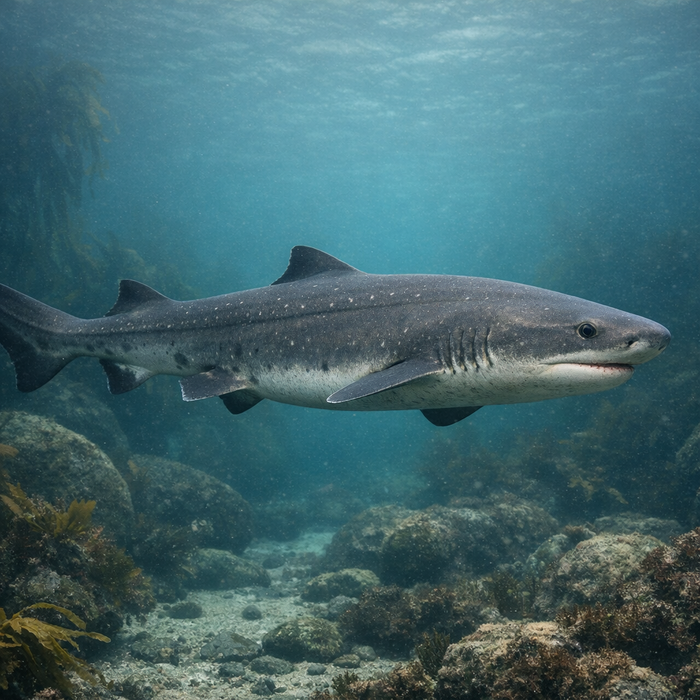
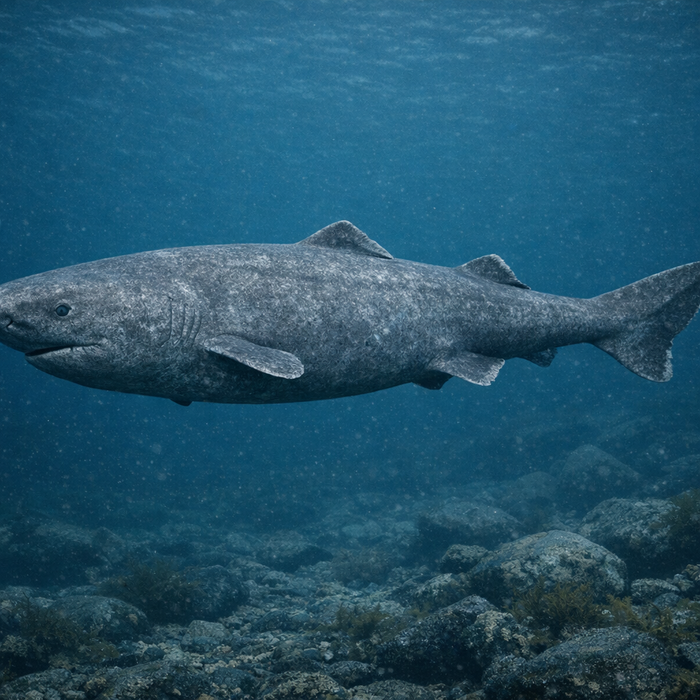
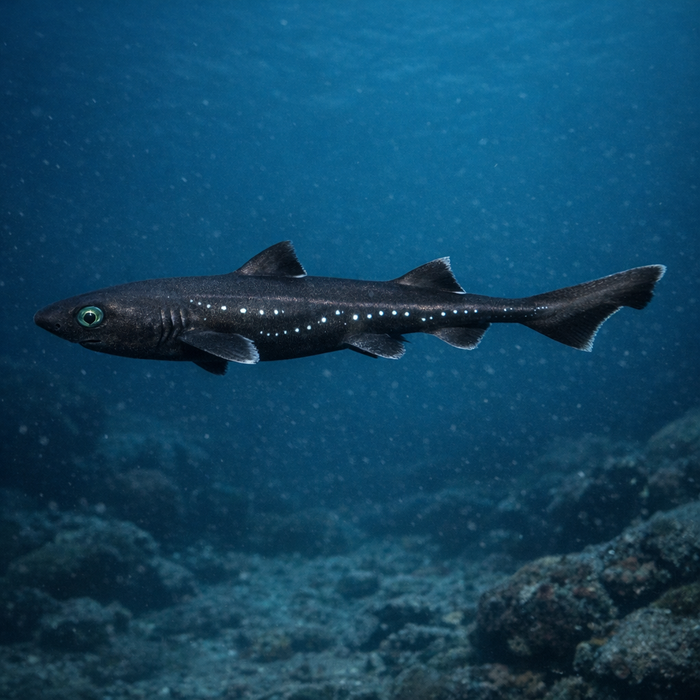
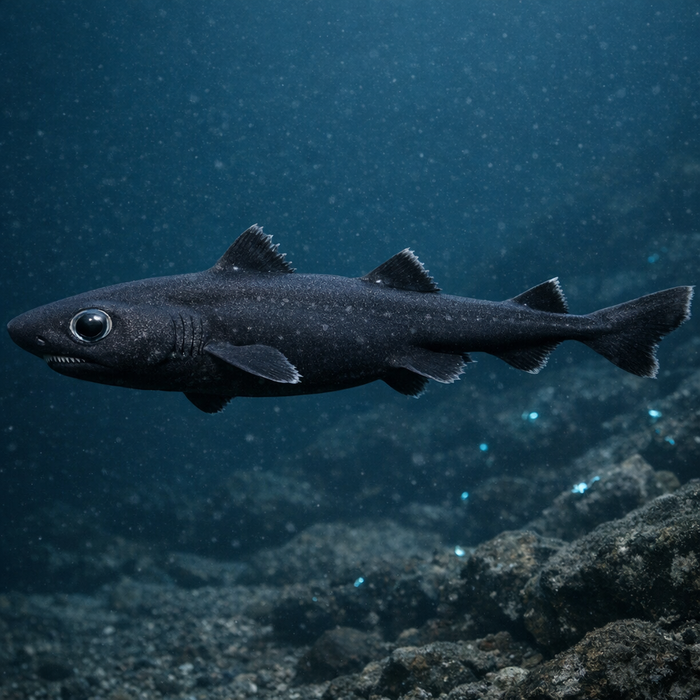
Bluntnose Sixgill Shark (Hexanchus griseus): A prehistoric bruiser that drifts the deep like a silent subway car.IntroductionThe bluntnose sixgill shark is the ocean's midnight bouncer. Big, blunt, and built for the slope, this deep-living heavyweight cruises canyons while most boats sleep. When one eats your bait, it's not fireworks; it's leverage, patience, and suddenly realizing your tackle is woefully mortal. If you came for bluntnose sixgill shark facts, start with this: it's one of the few sharks with six gill slits and a single dorsal fin set way back near the tail. Ancient design, modern attitude.What Makes the Bluntnose sixgill shark Unique?Three features define the bluntnose sixgill shark. First, the six gill slits. Nearly all sharks run the five-gill template; this one didn't get the memo. Second, that solitary dorsal fin planted near the caudal peduncle, leaving a big, bare back and a silhouette straight out of the fossil record. Third, absurd potential size. A mature bluntnose sixgill shark commonly pushes 8 to 14 feet, with giants stretching much bigger. Add in saw-edged lower teeth and eerie green eye-shine, and you've got a deepwater unit that looks part dinosaur, part battering ram.Habitat & Global RangeIf you're mapping bluntnose sixgill shark habitat, draw a line along continental slopes, submarine canyons, and seamount flanks from temperate to tropical seas worldwide. They favor cold, dark water hundreds to thousands of feet deep, cruising near bottom but riding midwater layers when the menu says so. At night, they sometimes slide up the slope and nose around shallower ledges, even sniffing into bays when conditions line up. The species shows up from the Northeast Pacific to the Azores, New Zealand, and beyond. Think deep structure within striking distance of real ocean.Behavior & TemperamentThe bluntnose sixgill shark is a stealthy opportunist. It ambushes, scavenges, and simply overpowers, using a low-gear cruise that conserves energy until the moment matters. Tagging work suggests vertical movements tied to darkness, temperature gradients, and prey layers. It isn't a manic surface runner; the fight is trench warfare straight below you. Heavy, determined, surprisingly tactical. Hook one and you'll feel slow, ceaseless headshakes and those long, patient runs that make your drag sound expensive.Ecological ImportanceThis shark is an apex predator and a clean-up crew rolled into one, an important role in deep ecosystems where energy is scarce and events like whale falls drive community booms. A bluntnose sixgill shark clears carcasses, trims the weak, and keeps the neighborhood honest. Slow growth, late maturity, and huge litters reflect a strategy tuned for survival in big, dark country, where opportunity arrives in bursts and mistakes are costly.Conservation & Environmental PressuresDespite its broad distribution, the bluntnose sixgill shark is vulnerable to deep-set longlines, trawls, and entanglement. Add in painfully slow maturity for females and you've got limited resilience. Many regions restrict retention or heavily regulate deepwater shark catch. Stock trends vary by ocean basin, but the caution light is blinking. If you're lucky enough to meet one, assume the fish is older than you and treat it like a rare, valuable neighbor.The FishyAF TakeWe love the bluntnose sixgill shark because it's pure ocean attitude with zero showmanship. No aerials. No frothy chaos. Just weight and will. For anglers hunting a career story, it's a bucket-list encounter that forces respect: stout gear, disciplined lifts, and a clean release. If you're chasing bluntnose sixgill shark facts, here's the kicker: you don't conquer this fish. You negotiate with it, then you let it slide back into the dark where it belongs. That's deepwater fishing at its most honest.