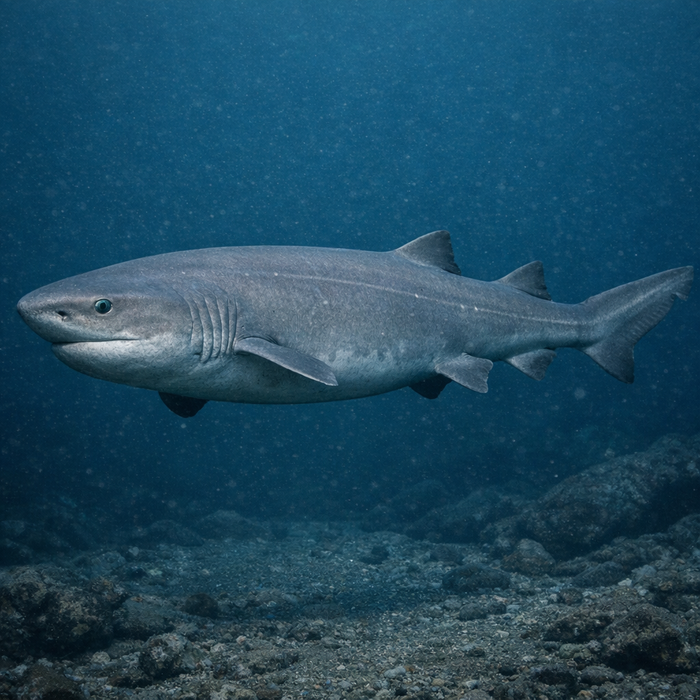
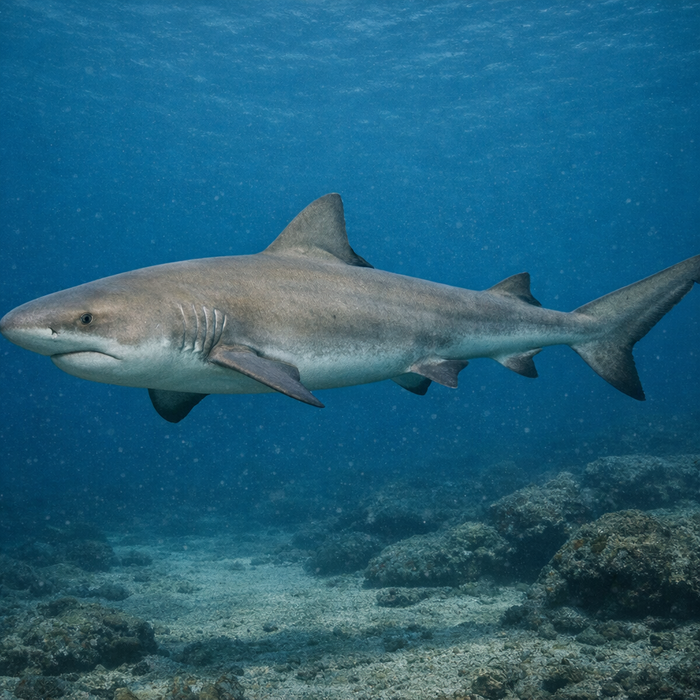
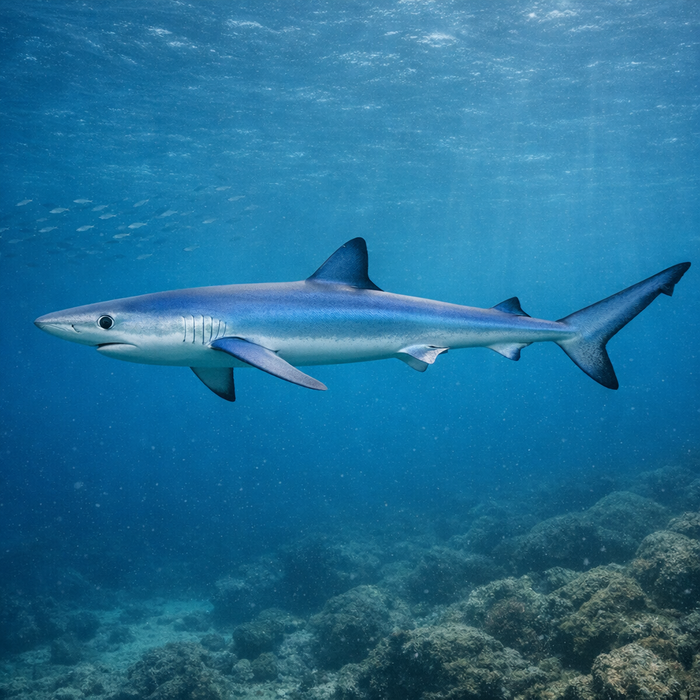
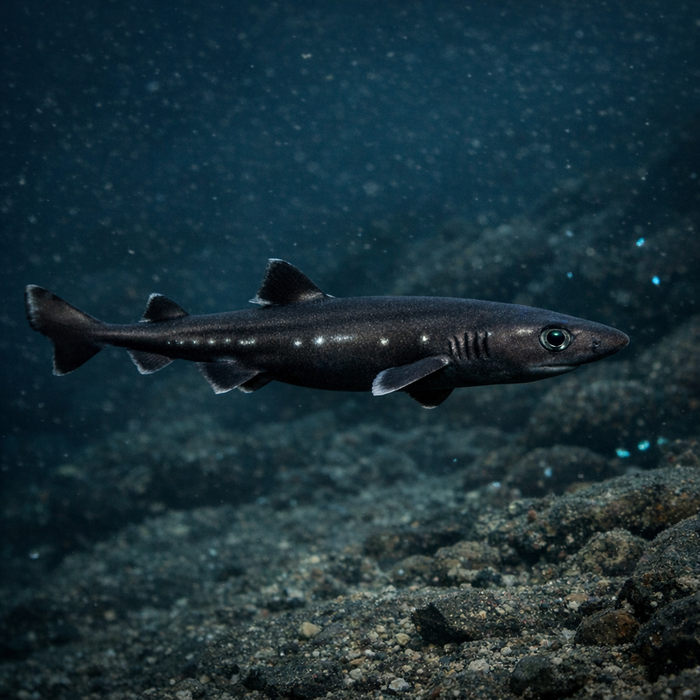
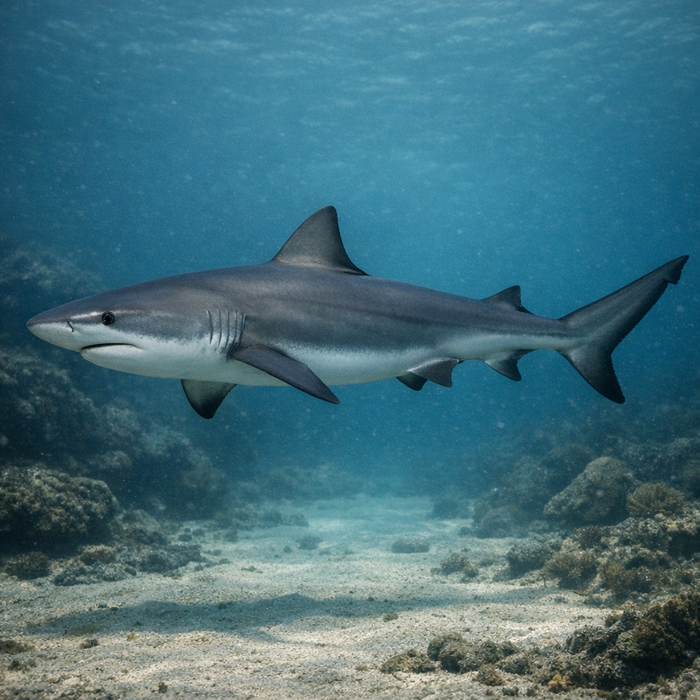
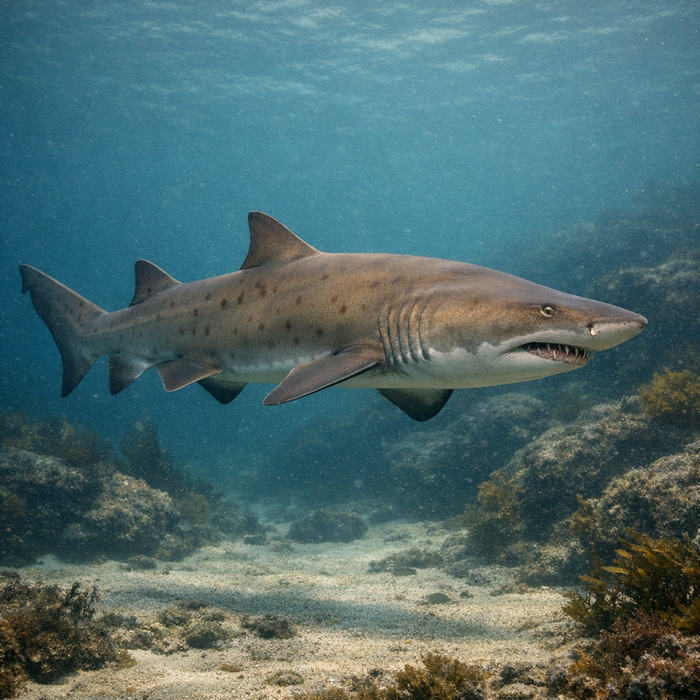
Broadnose Sevengill Shark (Notorynchus cepedianus): The Kelp-Forest Bouncer With Way Too Many GillsIntroductionIf you want an unapologetically coastal apex that patrols bays like a night-shift security guard, meet the broadnose sevengill shark. It shows up where people actually fish, grows to backyard-canoe size, and carries a prehistoric look that makes even seasoned anglers double-check their knots. Consider this your quick hit of broadnose sevengill shark facts, without the classroom nap.What Makes the Broadnose sevengill shark Unique?Start with the obvious: seven gill slits. Most sharks roll with five. Add one dorsal fin instead of two and a set of lower teeth built like a serrated saw, and you have a design that screams business. The broadnose sevengill shark is also one of the few sharks documented hunting cooperatively. Packs of these bruisers will crowd and hammer big prey, including other sharks, in coordinated bursts. Finally, it is the lone surviving member of its genus, which makes every encounter feel like bumping into a time traveler.Habitat & Global RangeWant a reliable snapshot of broadnose sevengill shark habitat? Picture temperate coasts with kelp beds, rocky reefs, channel edges, and urbanized bays. They cruise shallow flats and estuaries at night, then slide deeper by day. They are widely distributed in temperate waters worldwide, with strong fisheries in South Africa, New Zealand, Australia, Chile, and the U.S. West Coast. You do not need bluewater to find them; you need structure, tidal flow, and groceries. They follow seasonal cues and bait pulses, riding cool, oxygen-rich water into bays when conditions line up.Behavior & TemperamentThe broadnose sevengill shark is a cruising opportunist. It moves deliberately, then unleashes short, violent sprints when it commits. At night, they become bold, pushing shockingly shallow where smooth dogfish would blush. They are curious around divers and anglers, often inspecting lights and baits. Hook one and you will learn new respect for leverage; they use their mass and the current like a tugboat. Long glides, sudden head shakes, and broadside angles are the norm. They are not fussy, but they are not dumb either. Slack tides dull the bite, and heavy pressure can push them off the obvious lanes.Ecological ImportanceThis is a top dog in nearshore temperate ecosystems. The broadnose sevengill shark trims seal pups, rays, and rival sharks, redistributing who-feeds-where in the kelp and bay network. That top-down control shapes the behavior of mid-level predators and even grazers, which ultimately affects kelp cover and invertebrate communities. If you are into balanced food webs, the broadnose sevengill shark is not a villain. It is the reason the stage show does not collapse.Conservation & Environmental PressuresDespite the tough look, the species is vulnerable to a modern cocktail: bycatch, targeted shore-based fisheries, habitat loss in estuaries, and slow life history. Females mature late and can carry very large litters, but they do not crank them out yearly like anchovies. Pollution and dredging in bays also shrink reliable nursery areas. Management is a patchwork. Some regions restrict retention or gear, while others allow limited harvest. The data picture is still foggy in places, which is why many agencies label the species Data Deficient. Practical translation for anglers: treat them like the neighborhood heavyweight you want around forever.The FishyAF TakeThe broadnose sevengill shark is chaos wrapped in calm. Most of the time it cruises like a Buick. Then your rod folds in half, your heavy drag suddenly sounds fragile, and the fish uses every inch of tide and reef to try to end your day. It is accessible without being common, sophisticated without being picky, and ancient without feeling delicate. If you want bragging rights from the beach or a short boat ride, this is your shark. Fish stout gear, plan the photo before the bite, and keep the release smooth. The memory will be all teeth, freckles, and that do-not-fall-in feeling you secretly love.