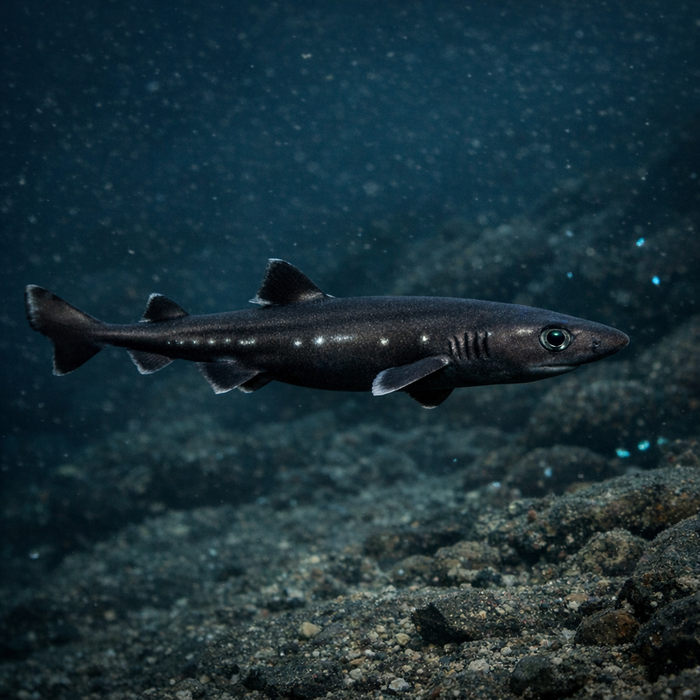
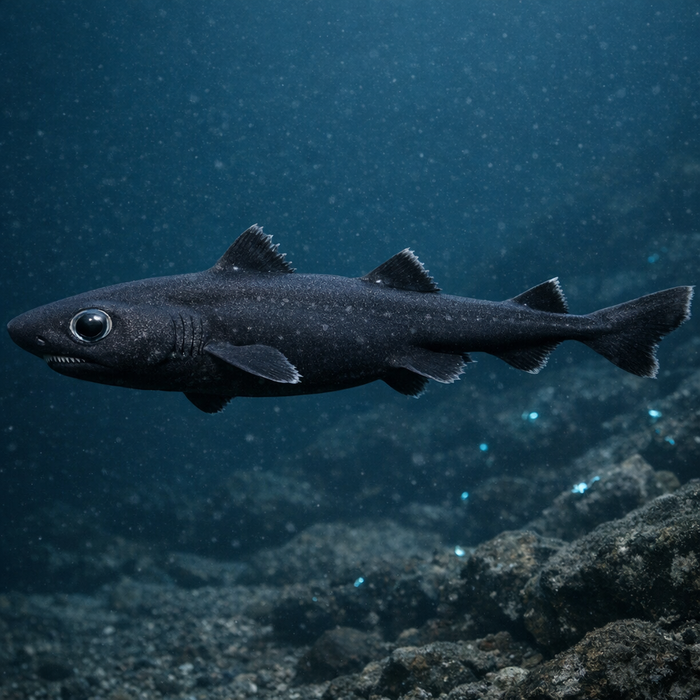
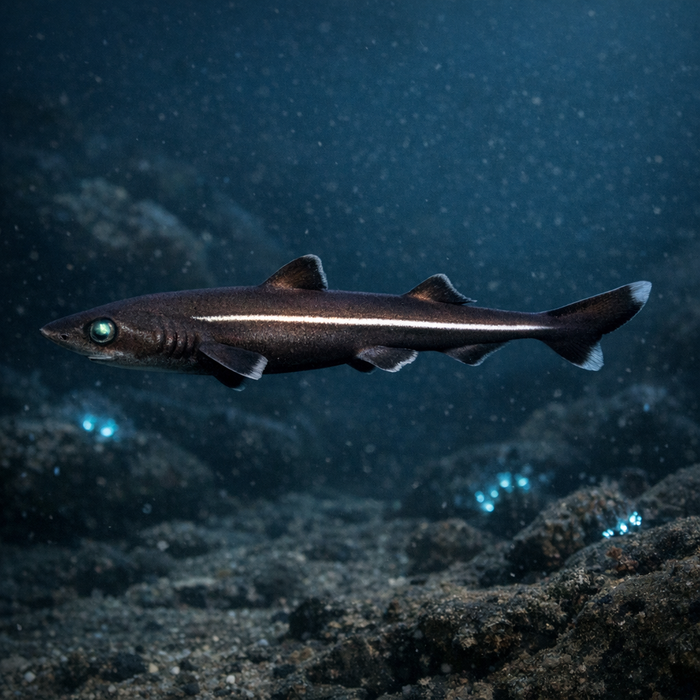
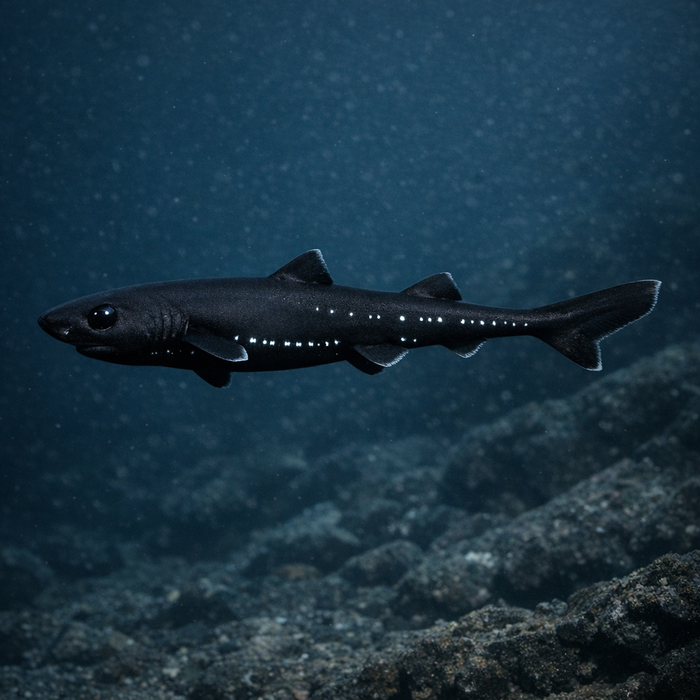
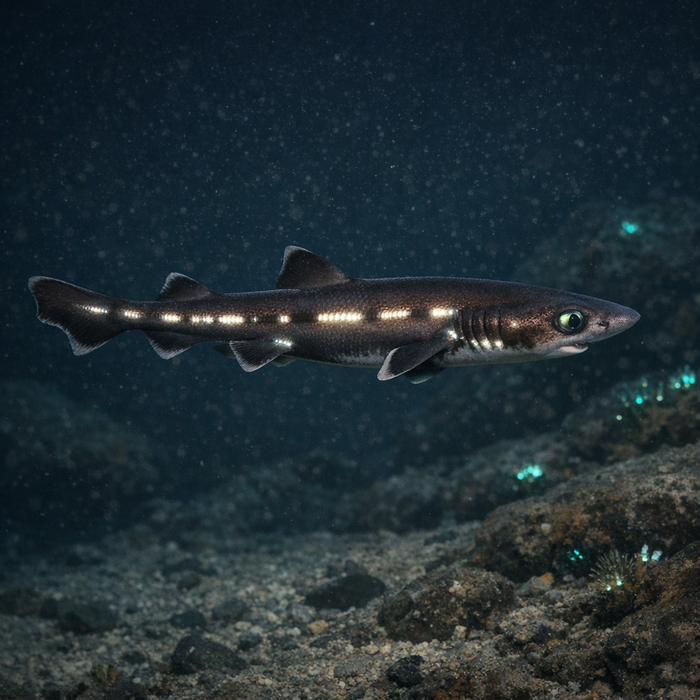
Caribbean Lanternshark (Etmopterus hillianus): The glow-in-the-dark slope ninja that sneaks into your deep-drop spread.IntroductionYou don't expect a shark to fit in your hand and sparkle like a night sky, but the Caribbean lanternshark does both. This is the tiny, big-eyed, bioluminescent predator that cruises the continental slope while you're bouncing squid down in the dark. It's not a headline species for charters, yet every deep-drop angler has a story about a weird glowing shark that turned up at 1,500 feet. That's your guy.What Makes the Caribbean lanternshark Unique?First, the light show. The Caribbean lanternshark carries photophores along its belly and flanks, using counterillumination to erase its silhouette from anything peeking up from the abyss. Those same lights trace species-specific patterns that probably double as a private handshake among lanternsharks. Second, it's bite-sized. Adults top out around 50 cm, making this one of the few sharks you might cradle in one hand. Third, it sports two small dorsal spines, a detail that says "shark" even when the rest of the fish looks more like a glowing minnow.Habitat & Global RangeThis shark works the deep edge: think continental slopes, submarine canyons, and basins throughout the Caribbean Sea, the Gulf of Mexico, and along the tropical to subtropical western Atlantic. The classic Caribbean lanternshark habitat is that 200 to 900 meter band where light dies and pressure builds. Hard bottom, soft mud, current seams dropping off ledges - it's a deepwater buffet line for anyone running squid baits or cut fish on multi-hook rigs. You won't see it cruising reefs or beaches. This is slope country, and it wears the terrain like a local. If you're chasing Caribbean lanternshark facts, start by studying bathymetry charts and the shelf break.Behavior & TemperamentLanternsharks are opportunists. They pick off small fishes and invertebrates with a saw-row of lower jaw teeth that act like mini shears. They aren't brawlers on rod and reel, but they're efficient hunters built for long darkness and low calories. Expect schooling or loose aggregations where the groceries are stacked. Their glow is hormone-tuned, likely brightening during foraging or social interactions, and dimming when stealth is smarter. They probably ride subtle nightly movements upslope, then drift back down when the buffet closes.Ecological ImportanceThe Caribbean lanternshark may be small, but it fills a key mid-level predator slot on the slope. It transfers energy from cephalopods and mesopelagic fishes up the food web and becomes prey itself for larger deepwater sharks and teleosts. That makes it an important connector between the true abyss and fisheries we actually target. When you deep-drop a canyon edge, the lanternshark is part of the unseen scaffolding that keeps that ecosystem humming.Conservation & Environmental PressuresData is thin. Deepwater species are famously under-sampled, and the Caribbean lanternshark is no exception. It isn't a directed target, but it does show up as bycatch in longlines and trawls. Slow growth and low reproductive output mean the margin for error is small, even if current pressure feels light. Add in warming oceans shifting deep currents and oxygen layers, and the slope community will change whether we like it or not. For now, most jurisdictions don't write species-specific rules for this shark, but general shark protections often apply.The FishyAF TakeThe Caribbean lanternshark is the deep-drop curveball: small, sneaky, and neon-lit. You won't plan a trip around it, but when it shows, it's a science lesson on your de-hooker. Respect it. Snap photos of the spines and flank glow, then let it slip back to the night shift if regulations say so. If you're hoovering up Caribbean lanternshark habitat intel, you're basically learning to read the slope - which pays off for swordfish, queens, and tilefish too. Tiny shark, big clues. That's a win in our book.