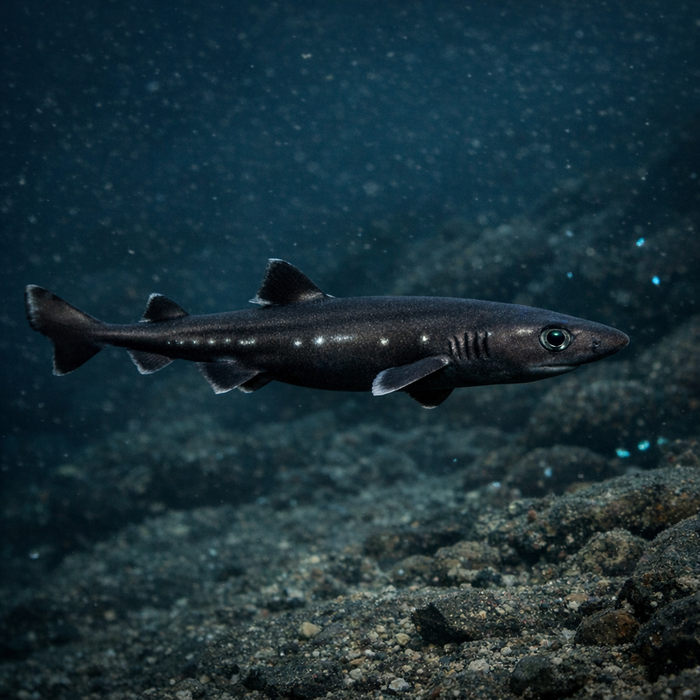
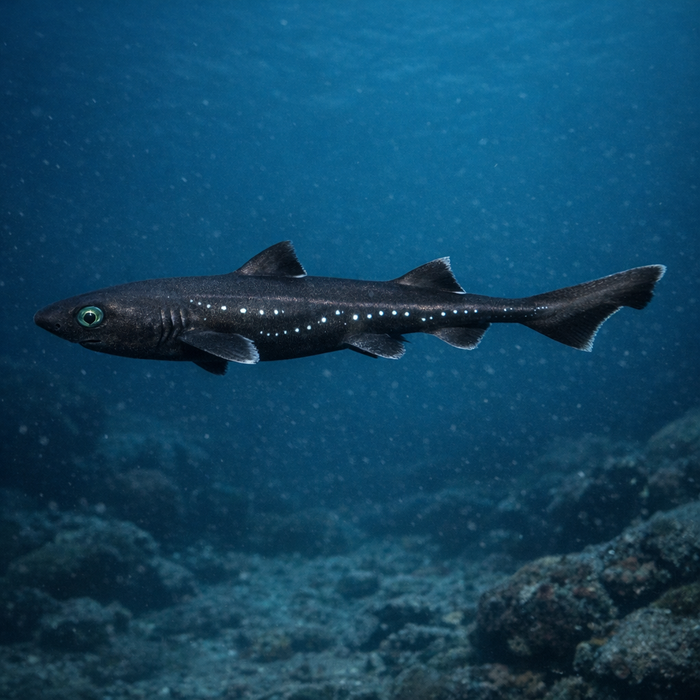
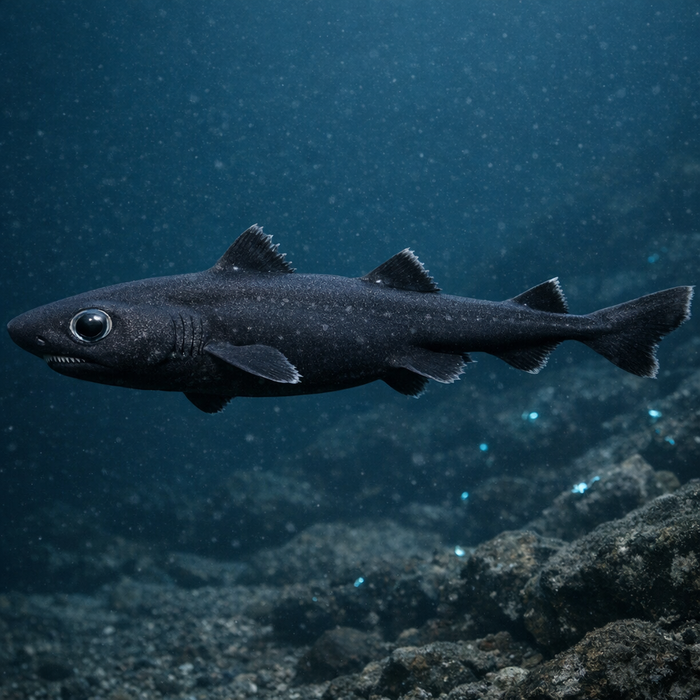
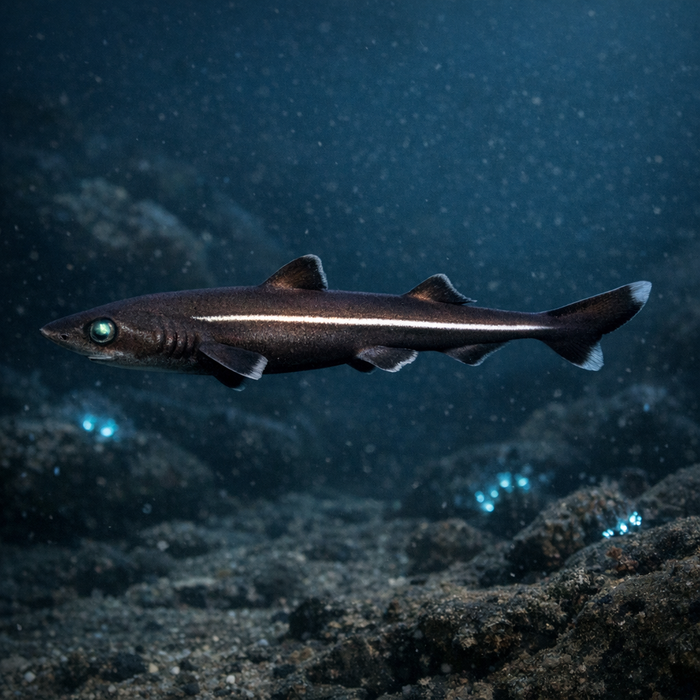
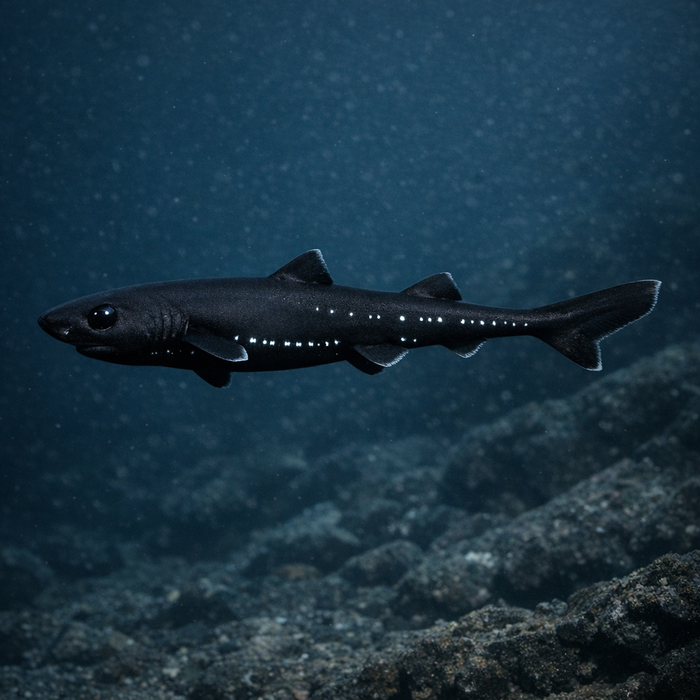
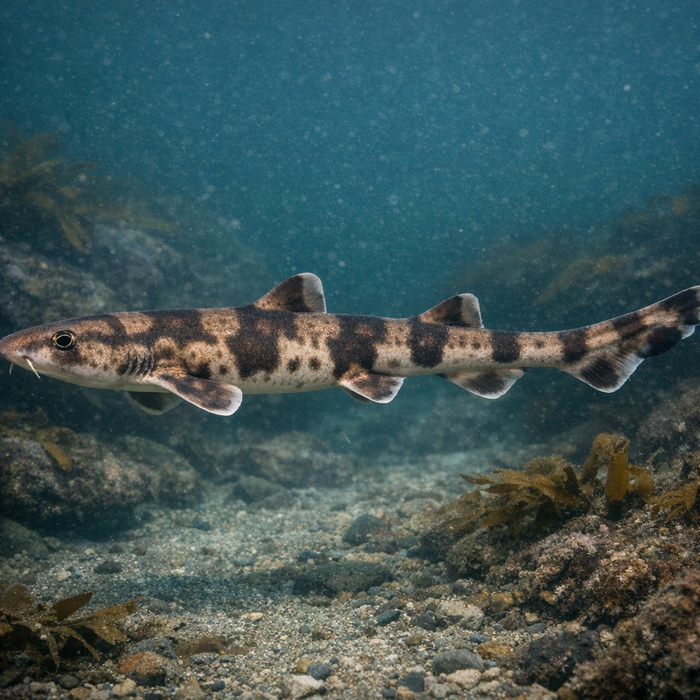
Broadbanded lanternshark (etmopterus gracilispinis): The little glowstick shark that lives where sunlight taps out.IntroductionMeet the broadbanded lanternshark, a small deep-sea operator armed with light-producing organs, stealthy colors, and classic shark hardware in a compact package. This isn't a toothy torpedo coursing the surf; it's a slope-dweller from the dark, a fish most anglers only encounter while deep dropping with heavy leads and squid strips. If you want broadbanded lanternshark facts that punch above their weight, start here: it glows, it's spined, and it keeps things subtle at 300 to 900 meters.What Makes the Broadbanded lanternshark Unique?First, bioluminescence. Rows of photophores along the belly and flanks create a controlled glow designed to cancel shadows from overhead light. It's camouflage by subtraction. Second, the "broadbanded" look. This species shows bold flank bands and contrasty markings that make it stand out from other lanternsharks, especially fresh from the deep. Third, small but fully shark. Two dorsal spines, interlocking lower teeth that act like a micro-saw, and dermal denticles that give the skin a fine-grit feel all add up to a legit predator, just scaled for the midnight zone. The broadbanded lanternshark may be petite, but it's thoroughly weaponized for its neighborhood.Habitat & Global RangeIf you're searching for broadbanded lanternshark habitat, think continental slopes, canyons, and the shoulders of trenches. It lives well below recreational dive limits, favoring soft sediments mixed with rubble and the margins around rough structure. Currents matter, but this shark isn't a kite in ripping flow; it's a patient drifter and ambusher in the deep. Geographic details for Etmopterus species vary and are often under-documented, but the theme is consistent: far offshore, down the slope, usually beyond the everyday angler's playground.Behavior & TemperamentThis shark is a low-drama hunter. No blitzes, no surface acrobatics. It cruises slowly, using oversize eyes and that glow-canceling belly to stay invisible while closing on soft-bodied prey. It's often caught near bottom but may work slightly off it when current nudges food higher. Schooling is loose and local; think pockets rather than true shoals. Hooked fish don't peel line like a tuna. Expect a stubborn, rolling fight and the occasional bite-off if you skimp on leader.Ecological ImportanceLanternsharks play a quiet role in deep ecosystems. They transfer energy from small invertebrates and fishes into mid-level predators and, eventually, larger sharks. Their bioluminescent signaling likely helps minimize bycatch from bigger visual hunters below. That glow also keeps individuals of the same species synced-recognizing mates, coordinating, and avoiding the wrong crowd in the dark.Conservation & Environmental PressuresData for the broadbanded lanternshark specifically is thin, which is normal for deep fauna. Many lanternsharks are listed as Data Deficient because research at 500 meters isn't cheap or easy. Bycatch from deep-set longlines and trawls is the usual pressure. The species' small size and low commercial value mean targeted fisheries are rare, but low-value doesn't equal no impact if effort scales up. Seafloor mining and expanding deepwater effort are the wildcard threats worth watching.The FishyAF TakeThe broadbanded lanternshark is the anti-hero of shark fishing: small, secretive, and quietly glowing in the abyss. You don't chase it with poppers or kite baits; you meet it while doing serious deep-drop work with heavy leads and patient drifts. For anglers who collect strange stories and stranger species, this shark delivers. It won't smash a drag, but it will make you rethink what "stealth" looks like in the ocean. If you want broadbanded lanternshark facts that matter on deck: bring squid, bring lights, and bring curiosity. This fish is proof that even far below, where the sun bails and the cold bites, sharks still run the show-just on a smaller, glow-in-the-dark stage.