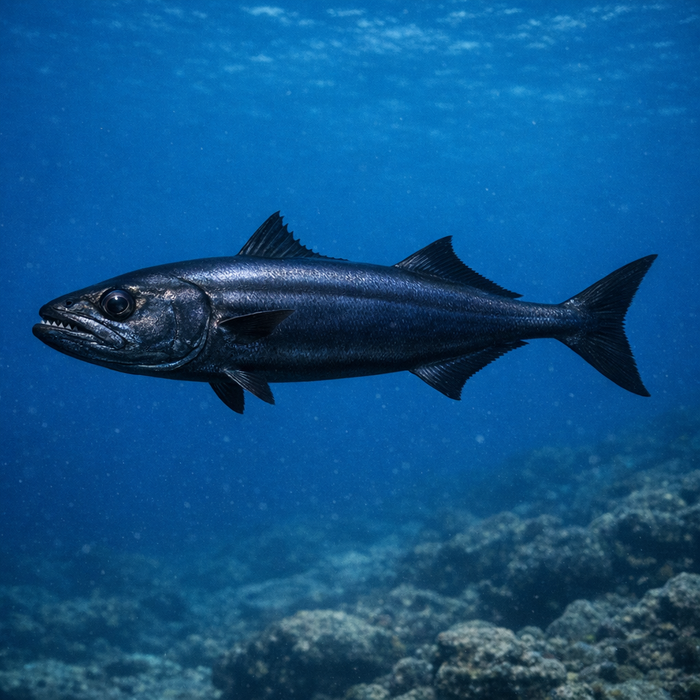
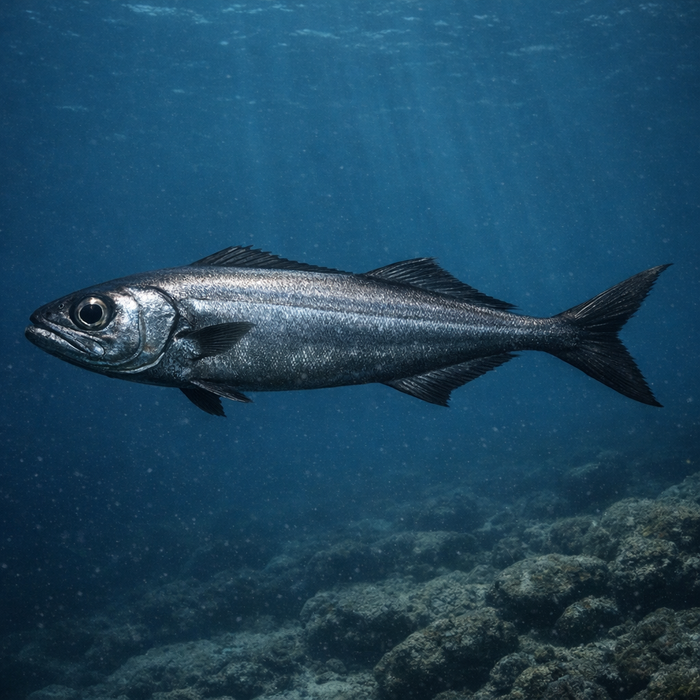
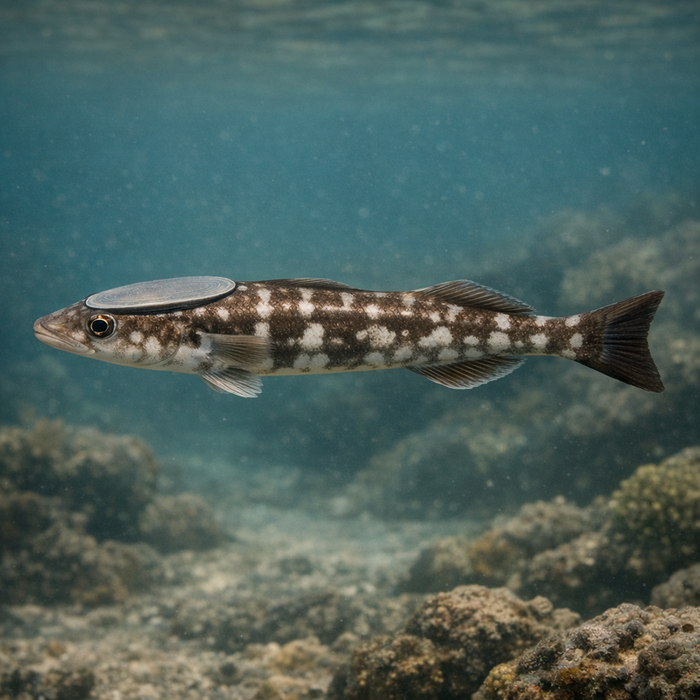
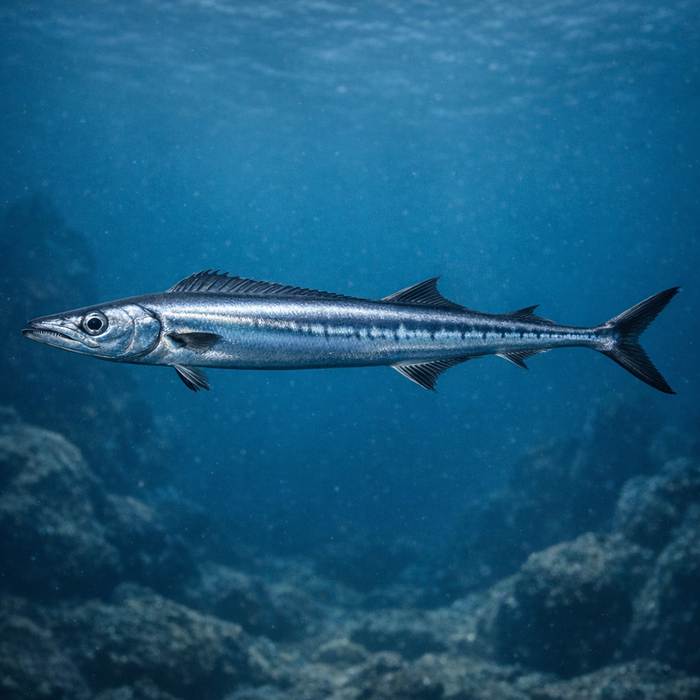
Bigeye Squaretail (Tetragonurus atlanticus): Midnight Muscle With A Square Tail And Sneaky HabitsIntroductionThe bigeye squaretail is the undercard fighter of the bluewater world. You rarely set out to catch one, yet when it crashes a glow jig in 1,000 feet, it gets everyone's attention. It's a denizen of the deep scattering layer, rides the night elevator toward the surface, and sports a tail so squared-off it looks engineered. If you like weird, tough pelagic fish with serious low-light hardware, the bigeye squaretail has your number.What Makes the Bigeye squaretail Unique?Start with those eyes. The bigeye squaretail carries oversized, light-gathering peepers that shine back like a cat when a headlamp hits them, perfect for life where daylight barely penetrates. Then there's the namesake tail: nearly straight-edged and blocky instead of forked, it's built for efficient midwater cruising rather than sudden sprints. Finally, this species shows a reliable nightly routine: rising with the deep scattering layer to feed, then dropping back into the dim for daylight. Put simply, it's a specialist for the perpetual twilight.Habitat & Global RangeFor anglers Googling Bigeye squaretail habitat, think deep, open-ocean country-bluewater edges, offshore banks, and seamount halos. The species works the midwater column far offshore, often between a couple hundred and about a thousand meters, with twilight and night bringing it higher. Around oceanic islands and submarine features, currents concentrate drifting prey and create vertical lanes these fish commute through. They are globally distributed in suitable deep pelagic waters and show up as bycatch on longlines, deep-drop rigs, and the occasional knife-jig ripped over a seamount. It's not a dockside staple, but it's out there, and it's consistent in the places that make the ocean feel big.Behavior & TemperamentThe bigeye squaretail is not a berserker. It's a steady cruiser that hunts methodically when the lights go down. Rather than ambushing from structure, it tracks the nightly rise of zooplankton, salps, and small fishes. The bite window often spikes in low light or full dark, and glow or phosphorescent cues can pull a reaction strike. Hooked fish fight with dogged, thumping torque and a stubborn spiral, more grind than fireworks. Schooling is variable-small packs are common near productive edges-but you can also pluck loners off the column when bait is scattered.Ecological ImportanceThis species is a mid-trophic conduit in the deep pelagic. The bigeye squaretail converts gelatinous plankton and small midwater fishes into calories for larger predators. Its nightly commute connects surface and depth, moving energy up and down the column in a way that keeps offshore food webs humming. You won't see it chasing flyingfish under birds, but it's part of the machine that makes those bird schools possible.Conservation & Environmental PressuresListed as Least Concern, the bigeye squaretail currently flies under the management radar, mostly because it isn't targeted directly. That said, what happens to the deep pelagic community hits it squarely. Broad-scale changes in ocean temperature, oxygen minimum zones, and current patterns can shift prey layers and compress habitats. Bycatch from tuna and swordfish operations is a reality, though not at a scale that raises alarms. Solid data are thinner than for headline species, which makes ongoing observer coverage and deep-pelagic research important.The FishyAF TakeYou won't book a charter just for bigeye squaretail. But if you're a tackle nerd with a taste for weird, it's a prize. It rewards anglers who respect the column: reading current over a seamount, timing that after-dusk window, sending a glow jig or squid strip down the elevator and actually reaching the zone. Bigeye squaretail facts are sparse, which is part of the charm. Catch one and you've got a story most offshore crews haven't told. It's not glamorous, but it's real bluewater-quiet, black, and very alive.