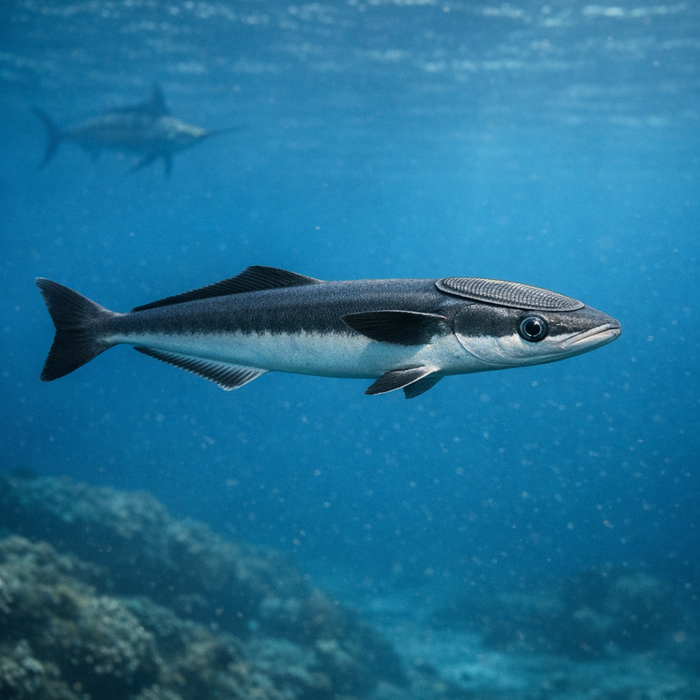
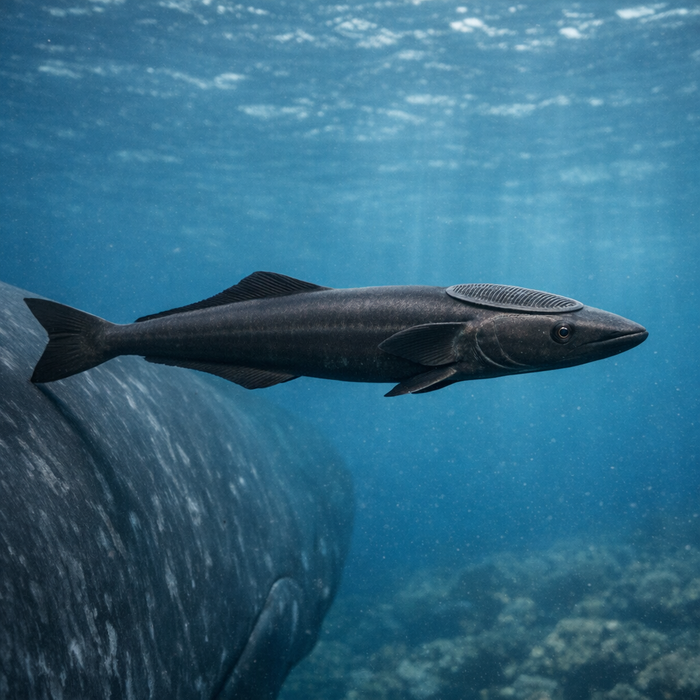
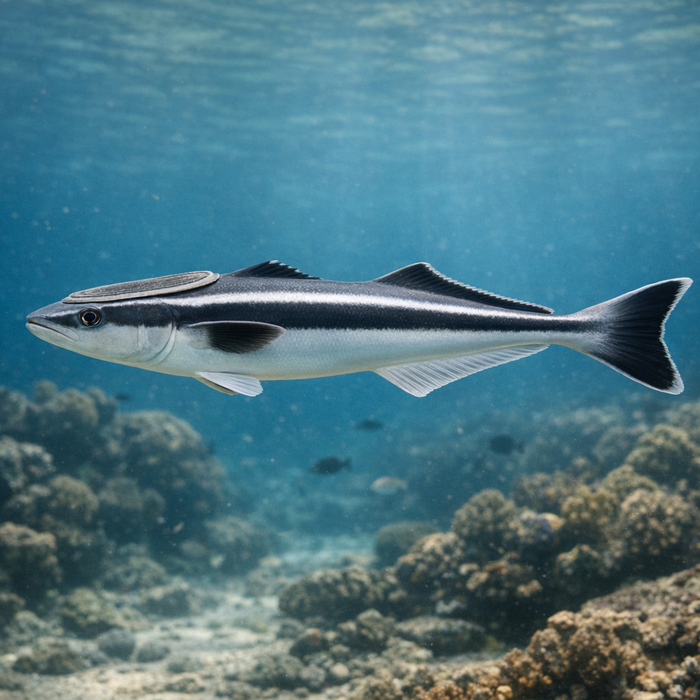
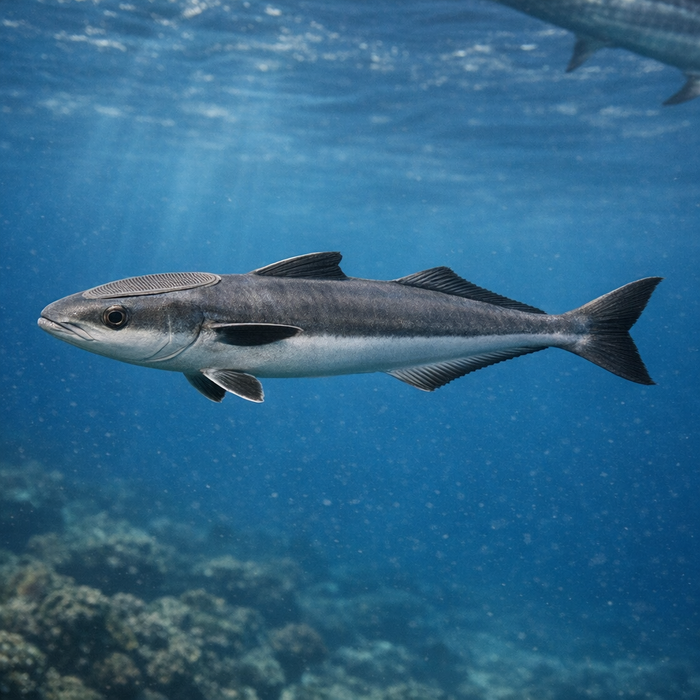
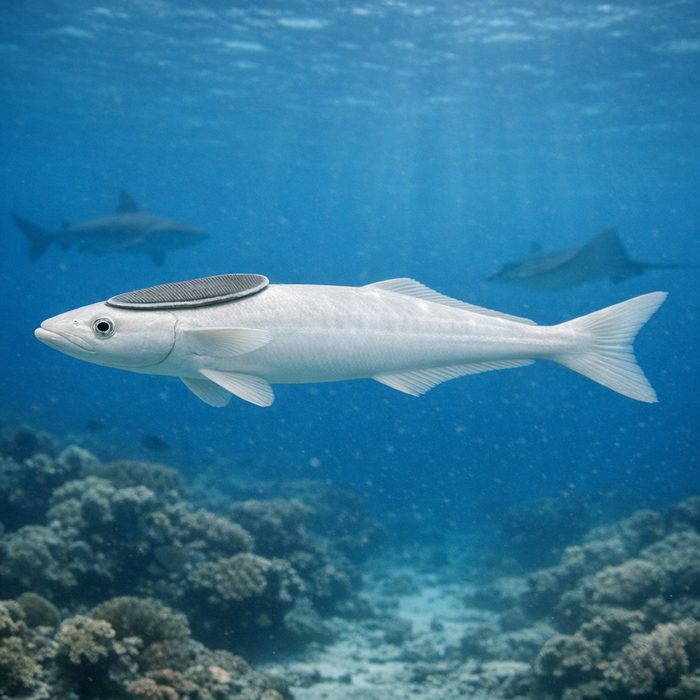
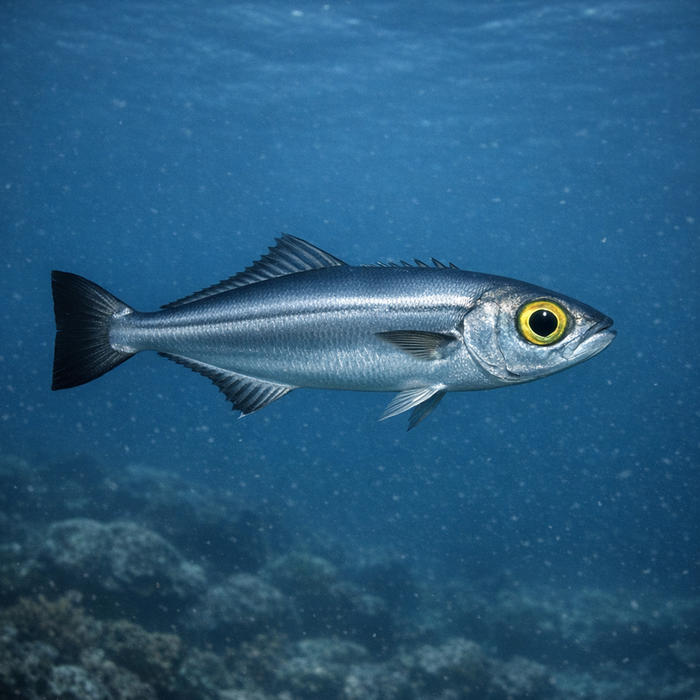
Slender Suckerfish (Phtheirichthys lineatus): The ultimate freeloading hitchhiker with a physics degree and a one-way ticket offshore.IntroductionThe slender suckerfish is that skinny stowaway glued to sharks, marlin, mantas, and anything else fast and famous. While you're paying for fuel and ice, it's drafting in ultimate comfort, skimming parasites and table scraps, barely kicking a fin. For anglers who spot them while trolling, this little remora becomes an oddball target: easy to see, tricky to pick off. If you're here for slender suckerfish facts or just curious about this aquatic grifter, welcome aboard.What Makes the Slender suckerfish Unique?Two things: the disk and the design. The head-mounted adhesion disk is a flipped, modified dorsal fin with parallel lamellae that generate serious holding power. It's like a custom plunger engineered for speed, letting the fish anchor to a living torpedo and ride all day. Then there's the body: long, pencil-thin, and tuned for minimal drag. The slender suckerfish doesn't waste energy chasing prey. It taps into a host's slipstream, scoots a few inches for snacks, then sticks back down. That economy is its entire strategy and it's executed with ridiculous finesse.Habitat & Global RangeCall it a world traveler. The slender suckerfish roams tropical and subtropical oceans worldwide, most common where pelagic life stacks up: current lines, offshore rips, FADs, floating weed, and reef edges that cough fish into blue water. It's a pelagic accessory, shadowing big movers in the upper few hundred feet. When hosts drift close to seamounts or outer reefs, the remora tag-alongs drift in too. You won't see many in harbors or surf zones. This is bluewater country, pure and simple, the classic slender suckerfish habitat.Behavior & TemperamentDespite the punk-rock look, the slender suckerfish is laid-back. It rarely sprints unless switching parking spots on a host. It's social enough to share a ride with other remoras but doesn't ball up in tight schools. Feeding is opportunistic: parasites, sloughed skin, loose scales, stray baitfish bits, and whatever edible junk a host shakes loose. Boat encounters are hilarious. One moment you're clearing a spread for a lit-up sailfish, the next you notice a slim, striped hanger-on surfing the commotion. Present a tiny bait just off the host's shoulder and the fish might peel off. Or not. They can be stubborn little suction cups.Ecological ImportanceThe slender suckerfish fills a weird but useful niche. It's a mobile cleaner and recycler, trimming parasite loads on megafauna and converting otherwise wasted scraps back into the food web. By shadowing apex predators and giants like manta rays, it also spreads nutrients far and wide. That ride-sharing life creates a moving micro-ecosystem: the host, the remoras, and whatever foragers trail behind waiting for leftovers. Small fish, big impact.Conservation & Environmental PressuresCurrent assessments consider the species stable. Still, its world is only as healthy as its hosts and highways. Overfishing of pelagics, reduced shark populations, and degraded reef corridors can thin the commute routes that slender suckerfish rely on. Floating debris is a double-edged sword: fish-aggregating devices can concentrate life, but plastic junk can trap or starve it. Climate-driven shifts in currents and temperature push hosts around, and the remoras shuffle with them. They're resilient hitchhikers, not drivers.The FishyAF TakeThe slender suckerfish is bluewater's most underrated sideshow. No, it won't smoke a 50-wide or dump your spool. But sight-casting a micro bait to a free-riding remora while a marlin tail-walks nearby is pure offshore chaos, and it makes for killer boat stories. Treat it as a curious bonus fish: quick release, fun photo, and a reminder that pelagic life isn't just apex missiles and screaming drags. Sometimes the smartest play is to ride for free.