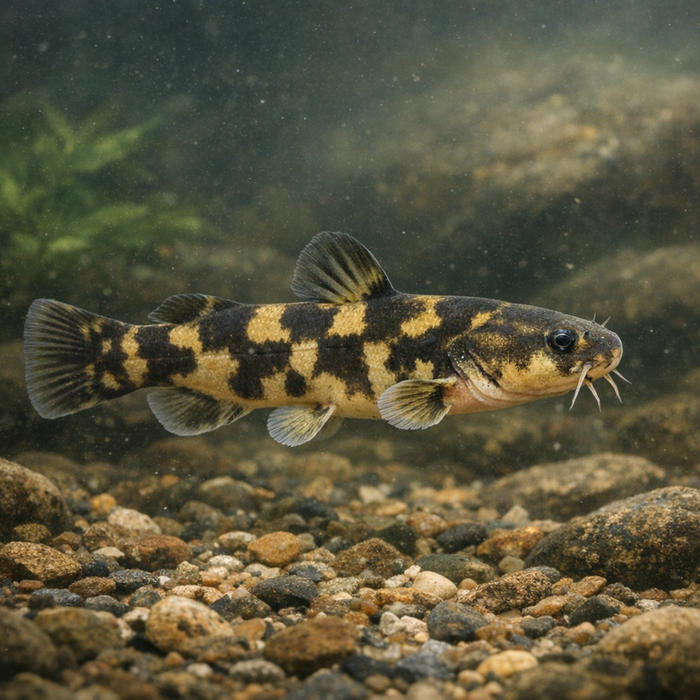
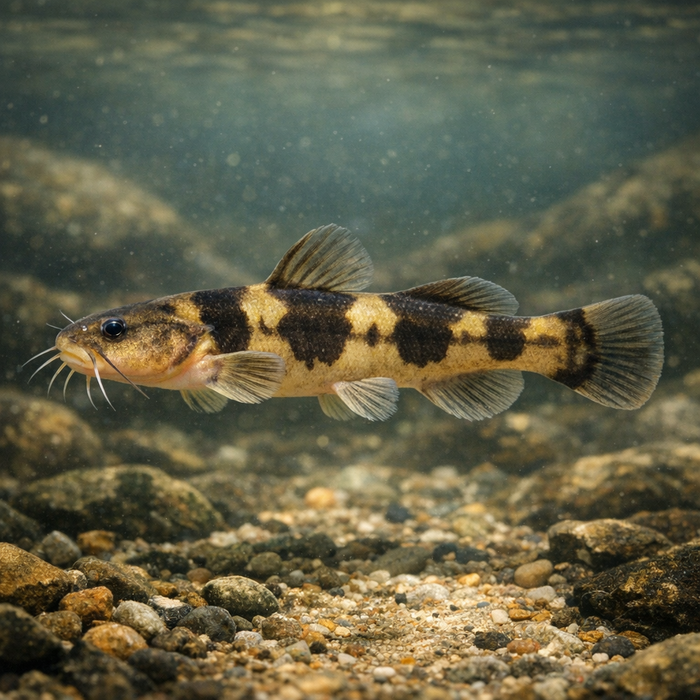
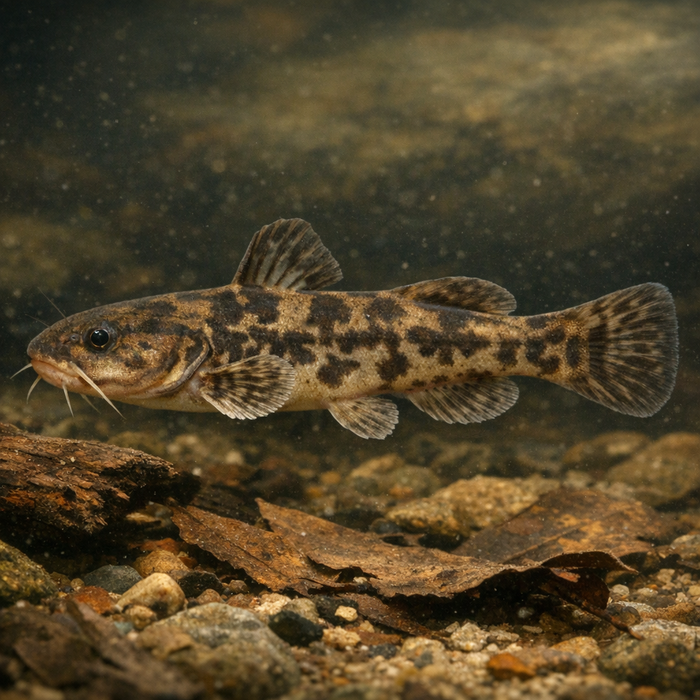
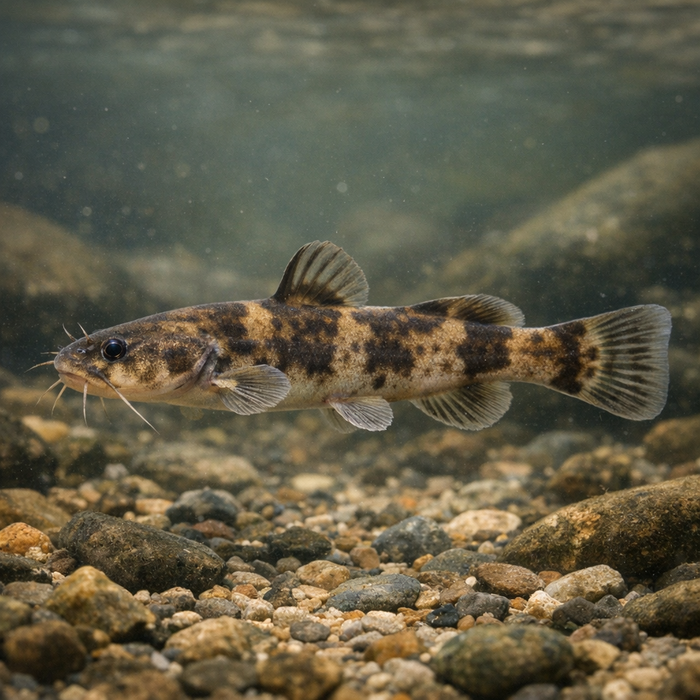
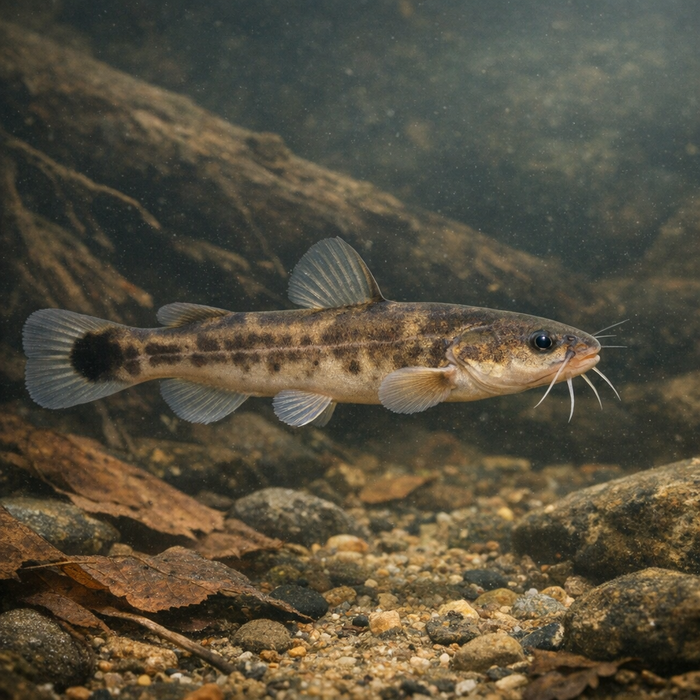
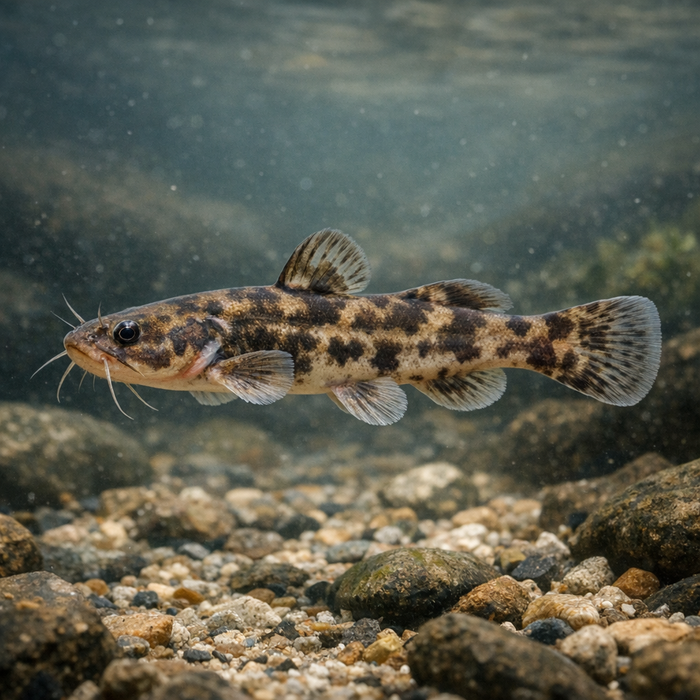
Black River Madtom (Noturus maydeni): Tiny Catfish, Big AttitudeIntroductionMeet the Black River madtom, a pocket-sized night crawler with the swagger of a bruiser bass. This is a micro catfish that thrives in the Ozarks' clean, fast water, slipping through gravel and cobble like a shadow. You probably won't catch one by accident, and if you do, you'll swear a bigger fish hit your tiny bait. For anglers hunting obscure gems and true bragging rights, this fish is stealthy gold. Consider this your crash course in Black River madtom facts and why this micro predator punches far above its size class.What Makes the Black River madtom Unique?First, it's an Ozark specialist with that classic madtom look: a long, near-continuous adipose fin, venomous pectoral spines, and dark saddle barring that melts into speckled gravel. Second, it's a nocturnal ambush artist, staying wedged under rocks by day and flipping a switch after sunset. Third, it carries a modern identity. The Black River madtom was clarified by recent taxonomic work, separating it from similar species and cementing its local-hero status among micro anglers and ichthyology nerds.Habitat & Global RangeHere's the short story: tight footprint, exacting tastes. The Black River madtom lives in the Black River system of the Ozarks, keying in on clear, cool, well-oxygenated streams with gravel and small cobble riffles. We're talking shin-deep to waist-deep runs, moderate current, and plenty of slab rock hideouts. This is premium Black River madtom habitat: clean riffles feeding into calm pockets where it can rest, feed, and set up ambushes. Think spring-fed clarity, not murky backwaters. If a stream whips foam lines over shining gravel, you're in the neighborhood.Behavior & TemperamentBy day, it's a ghost. The Black River madtom tucks up tight under rocks, in cracks, and along ledges. By night, it cruises close to bottom, prowling for insect larvae, tiny crayfish, and micro fish. It's not a sprinter; it's a sniper. Hits are sharp, often a quick thump followed by a stubborn, low-slung tug. They don't school in big packs, but you'll sometimes scratch up more than one from the same prime stretch if you move slow and fish surgically. Spawning likely centers on late spring into early summer, with males guarding sticky egg clusters in snug cavities. Handle with care; those fin spines can sting.Ecological ImportanceTiny catfish, big role. The Black River madtom keeps insect populations in check and recycles energy in riffle ecosystems. It's a great indicator species: when riffles run clean and the substrate isn't choked with silt, madtoms tend to persist. When land use ramps up sediment, fertilizers, or low oxygen, they fade. Their presence says a lot about watershed health. Protect the gravel, protect the flow, and you protect a long chain of life that starts in riffles and ends in bigger gamefish.Conservation & Environmental PressuresBecause the Black River madtom rides a narrow range and specific habitat needs, it's vulnerable to bad water days. Silt loads from poor erosion control, nutrient spikes, dewatering, or temperature bumps can squeeze available riffle space. Some jurisdictions restrict collection or possession of madtoms outright, and management often treats them as a species of concern. Translation for anglers: treat this one as a catch-photo-release target. Keep handling quick, wet, and gentle, and let it slip back under its rock condo like you were never there.The FishyAF TakeThe Black River madtom isn't a grip-and-grin heavyweight, but it's pure attitude in miniature. For micro anglers, it's a unicorn-rare, technical, and absurdly satisfying when the rod tip bounces on a fish the size of your thumb. It rewards stealth, clean presentations, and respect for fragile riffles. If you wanted a fish that forces you to slow down, read current like a book, and appreciate what pristine water does for a river, here it is. The Black River madtom doesn't just show you the Ozarks. It shows you how to fish them with care-and how to brag about an inch count without sounding ridiculous.