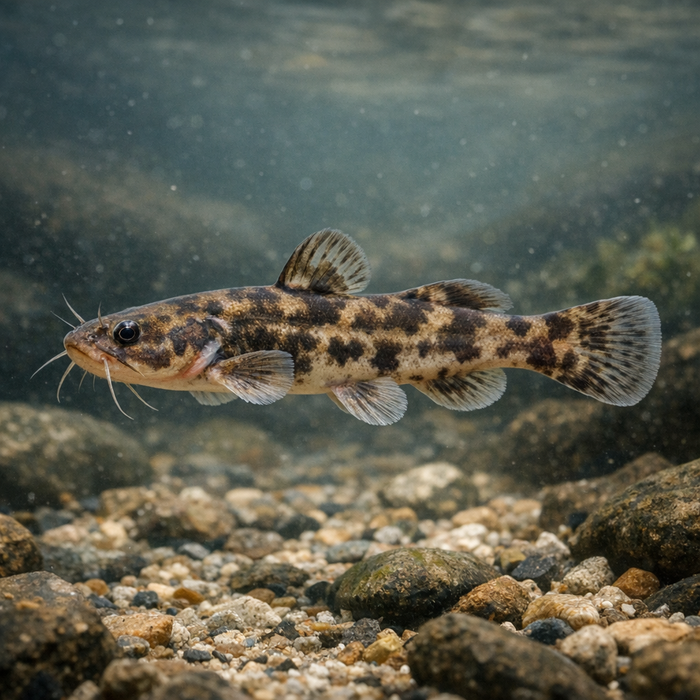
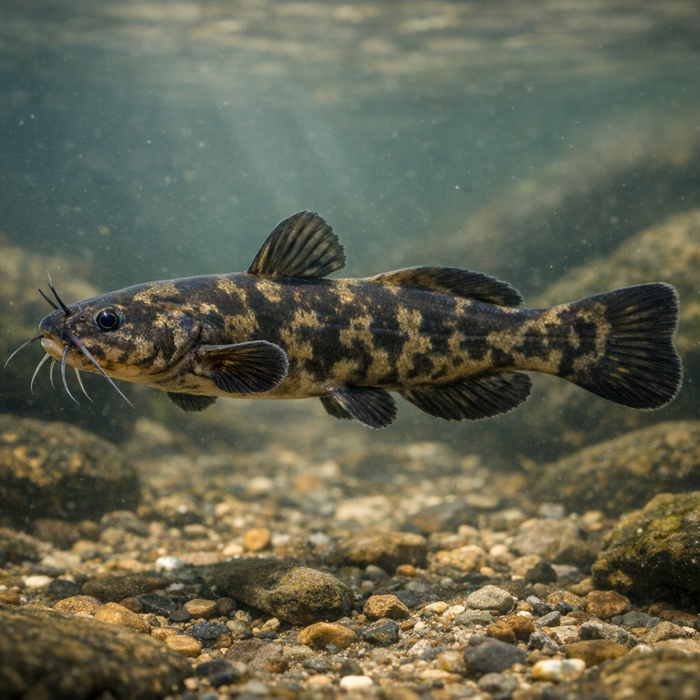
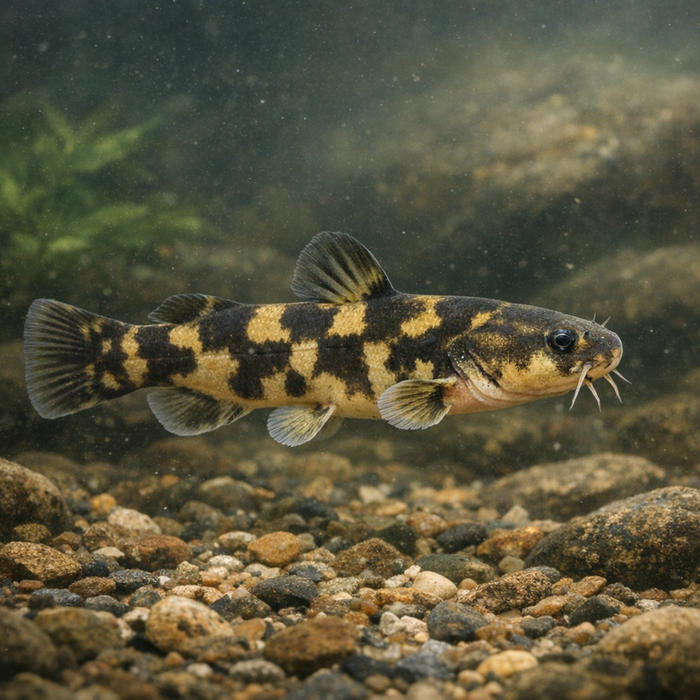
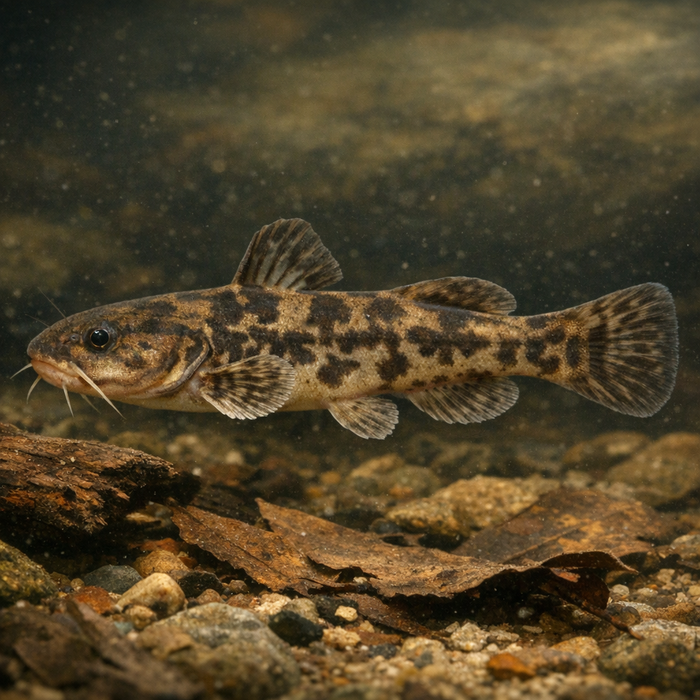
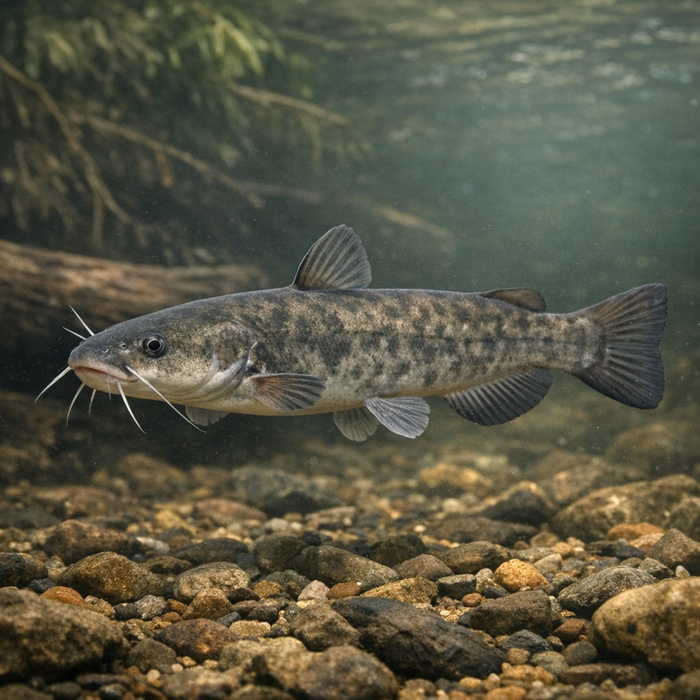
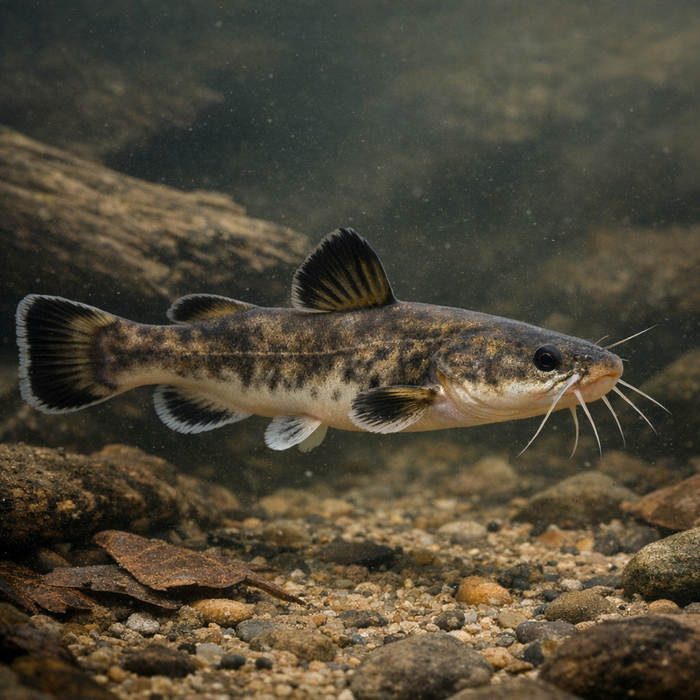
Saddled Madtom (Noturus fasciatus): Small Catfish, Big AttitudeIntroductionTiny, striped, and armed with sneaky spines, the saddled madtom is microfishing's gritty merit badge. You won't troll for it, you won't tail-walk it, and you definitely won't fillet it. But if you like cracking stream codes and spotting life in the riffles, the saddled madtom rewards patience with a flash of dark "saddles" and a quick, stubborn wriggle. This is the catfish that refuses to play big, yet somehow steals the show.What Makes the Saddled madtom Unique?Start with the pattern: bold, dark cross-bands draped over a tan body that actually look like tiny saddles. Then add the hardware: locking pectoral spines that can sting if you handle it carelessly. The saddled madtom is short on inches but long on personality, and it's nocturnal by design. Those whiskers aren't decoration; they're high-sensitivity taste organs steering it through the rocks after dark. For fans of oddball fish and true stream specialists, these little catfish are pure gold. Consider this your crash course in real-deal Saddled madtom facts.Habitat & Global RangeThe saddled madtom is a riffle-run specialist tied to clean, well-oxygenated creeks and small rivers with gravel, cobble, and scattered flat rocks. Think pocket water, gentle seams, and shallow edges with current. It tucks under stones by day and roams short distances at night. While its overall range is limited to certain waters of the southeastern United States, the fish's loyalty is to microhabitat, not miles. If the substrate gets silted, or the current goes dull, the saddled madtom loses home field advantage. If you're scouting Saddled madtom habitat, look for clear flow, stable gravel, and places where a palm-sized flat rock could hide a thumb-sized fish.Behavior & TemperamentThis fish is a stealth operator. Daytime behavior is all about cover: wedging into crevices, holding in calm pockets right beside moving water, and staying unfussy until evening. At night, it works the bottom like a vacuum, picking off invertebrates and tiny morsels. The fin spines lock when threatened, and the fish can squeak audibly, which is more intimidation than symphony but gets the point across. Spawning happens in cavities, often under rocks, with the male guarding eggs like a mini bouncer. Hook one and you'll feel a fast tap, then a stubborn pin on the bottom-no bulldozing run, just gritty resistance.Ecological ImportanceThe saddled madtom is proof that small fish do big jobs. It helps keep aquatic insect populations in check, converts riffle energy into biomass, and returns the favor by feeding larger predators like bass and larger catfish. When a stream supports micro-specialists like this, it's a good sign the water is clean, the flow is healthy, and the substrate isn't choked with silt. Lose the riffles or smother the gravel, and you don't just lose a fish-you lose a function in the food web.Conservation & Environmental PressuresThis species is tightly bound to habitat quality. Sedimentation from poor land use, gravel mining that destabilizes beds, low dissolved oxygen from warm, sluggish water, and fragmented flows all hit the saddled madtom where it hurts. Because its distribution is narrow, local problems can become range-wide threats fast. Regulations vary, and in many places the smartest move is simple: look, admire, release. For long-term security, the recipe is straightforward but not easy: protect clean water, maintain complex riffles, and keep development from turning streams into ditches.The FishyAF TakeThe saddled madtom is a tiny testament to why stream fishing never gets old. It's not a numbers hunt and it won't blister drags, but dialing in current seams, flipping presentations into rock slots, and feeling that tap is deeply satisfying. If you crave weird, precise, and deliberate, this fish is your jam. It's also the best reminder that good water makes good fishing. Keep a stream healthy enough for a saddled madtom, and everything else you care about-from smallmouth to crayfish-tends to thrive. That's a win worth chasing, one pocket at a time. If you wanted Saddled madtom facts, here's the biggest: small doesn't mean simple. Not by a long shot.