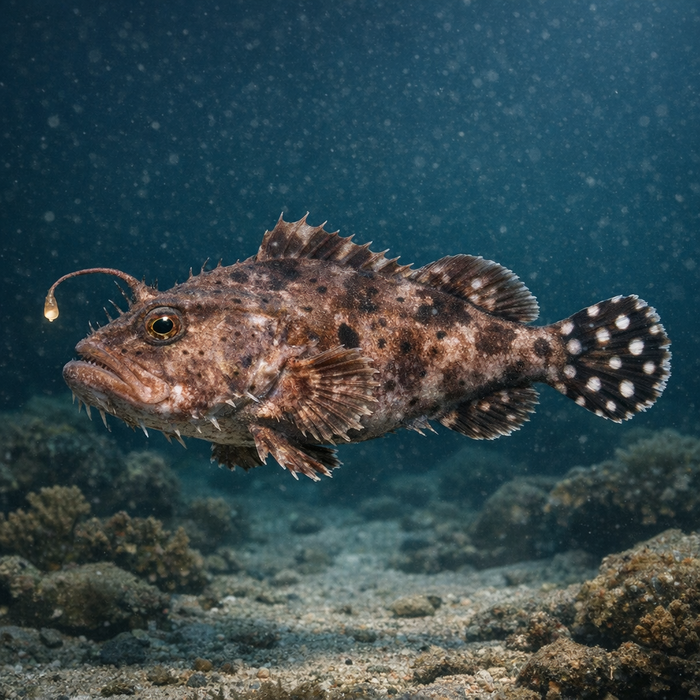
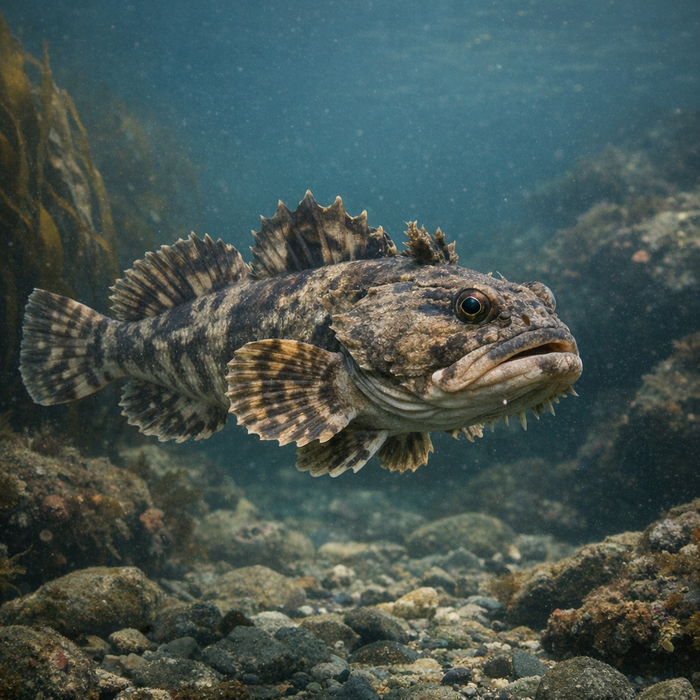
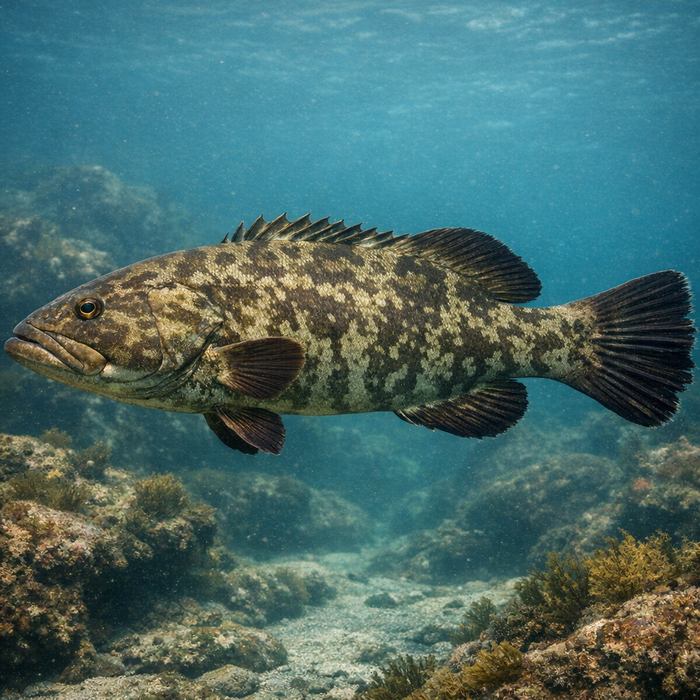
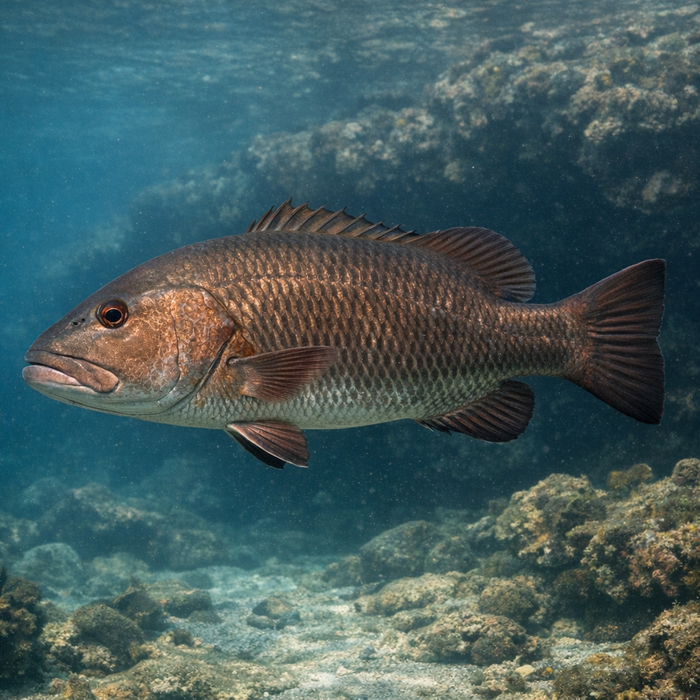
Blackfin Goosefish (Lophius gastrophysus): The ambush artist that turns dead bottom into a trapdoor.IntroductionThe blackfin goosefish is the deep-bottom boogeyman that looks like a rug until it swallows dinner whole. Anglers don't chase it for acrobatics or runs. They chase it because that tail is serious table fare and the fish's whole vibe is wonderfully weird. If you're collecting Blackfin goosefish facts, start with this: what you hook might feel like a rock… until the rock tries to inhale your sinker.What Makes the Blackfin goosefish Unique?Two things define this fish. First, it wears a built-in fishing pole. A fleshy lure on its head wiggles just above its cave of teeth, pulling in curious prey for a last look. Second, the body plan is all mouth and leverage. The head is broad, the mouth is massive, and the pectorals act like stubby hands that help it pivot and launch short, violent lunges. Black-tipped fins give the species name its punch and add stealth on darker bottom. It's not pretty, but it's purpose-built.Habitat & Global RangeThe blackfin goosefish is a Western Atlantic deep-bottom specialist, most common along the continental shelf and slope from the Caribbean into South America. Picture mud, sand, scattered shell, and the occasional low relief where currents sift food and traffic naturally concentrates. You won't glass them from a beach. Blackfin goosefish habitat means sounders, slope breaks, and long drops beyond typical reef lines. Currents matter less than proximity to forage routes; depth and bottom type matter a lot.Behavior & TemperamentThis is not a cruiser. It's a patient assassin that burns little energy, then detonates when bait enters the strike bubble. The illicium lure twitches; the mouth opens like a trapdoor; suction does the rest. It will shuffle on those odd pectorals, but roaming is limited. Hooked fish pull like heavy luggage with head shakes, not blistering sprints. If your line goes mushy and then stubborn, you might be in monkfish country.Ecological ImportanceBlackfin goosefish are apex-level ambushers on the shelf edge. They reset the food chain locally by picking off distracted mid-tier predators and energy-rich baitfish. That gulp-and-wait lifestyle funnels biomass from the water column to the bottom, where scavengers and parasites also benefit from leftovers. They, in turn, feed larger predators, so one goosefish kill echoes through the neighborhood. Strange as they look, they help balance traffic on the slope.Conservation & Environmental PressuresCommercial bottom trawls nick this species more often than hook-and-line anglers do. Habitat disturbance and bycatch mortality on deep soft bottoms are real concerns, even where blackfin goosefish aren't the target. Regulatory attention tends to focus on broader "monkfish" categories, and data for this particular species can be patchy. If you're building a playbook on Blackfin goosefish habitat, pair your fishing intel with local fishery bulletins to track closures and depth restrictions that protect shelf-edge communities.The FishyAF TakeThe blackfin goosefish is a specialist's souvenir: ugly-beautiful, ridiculously effective, and criminally underrated. It turns nothing bottom into something to obsess over. If you like solving puzzles at 300 meters with heavy lead and a sketchy bite, welcome aboard. Treat them with respect, document unusual catches, and keep that tail cold. The rest of the fish looks like a monster, but on a plate it's pure class. Weird fish, great story, better dinner. That's a win in our logbook.