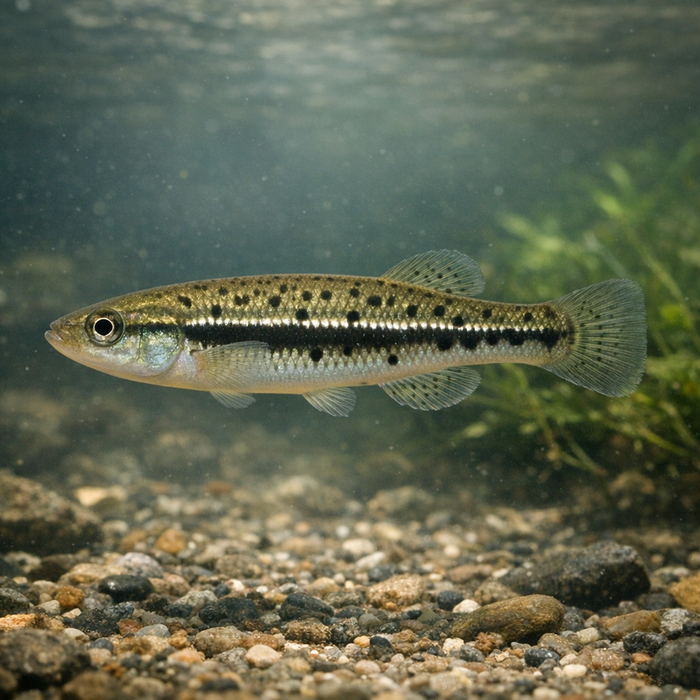
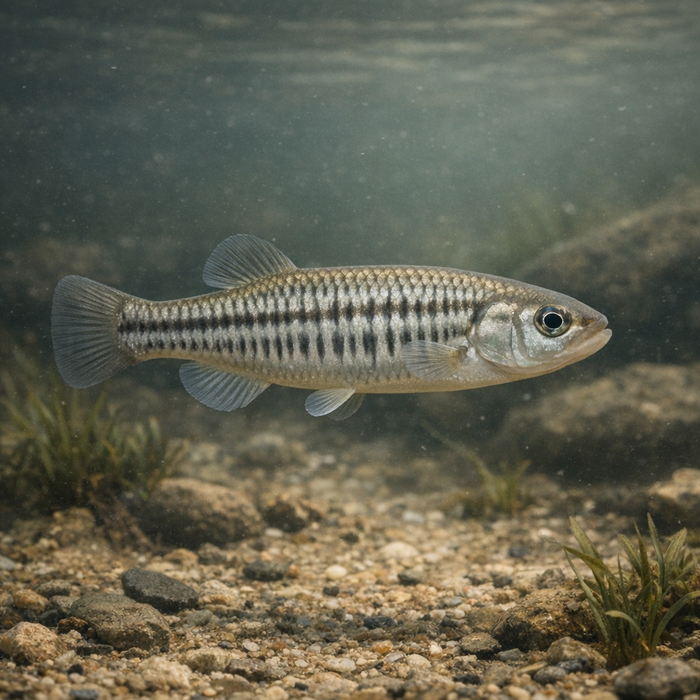
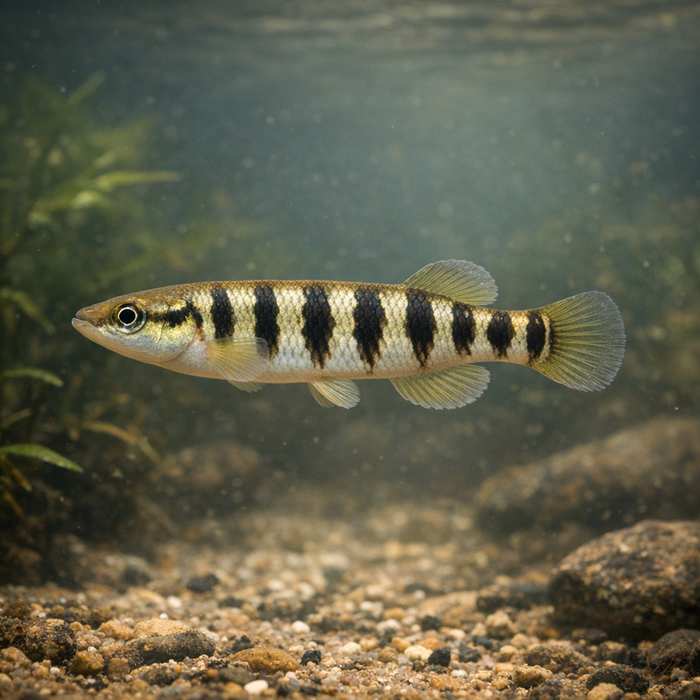
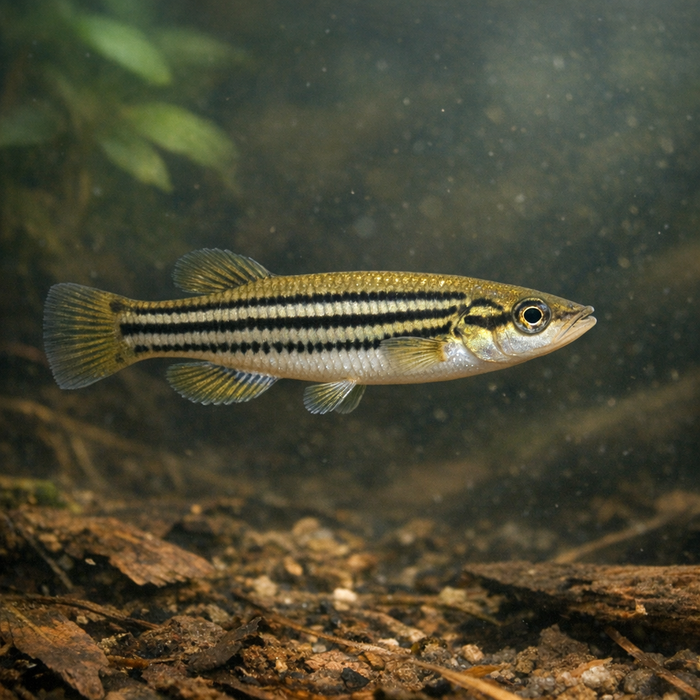
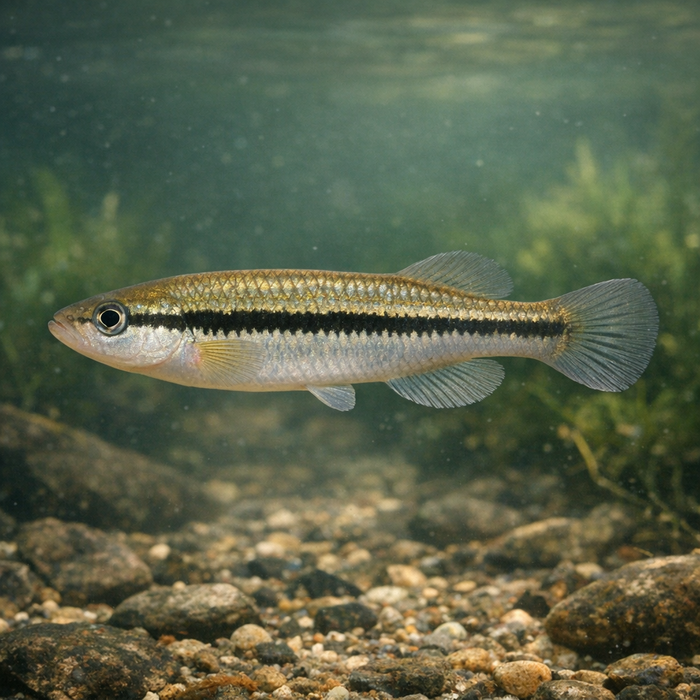
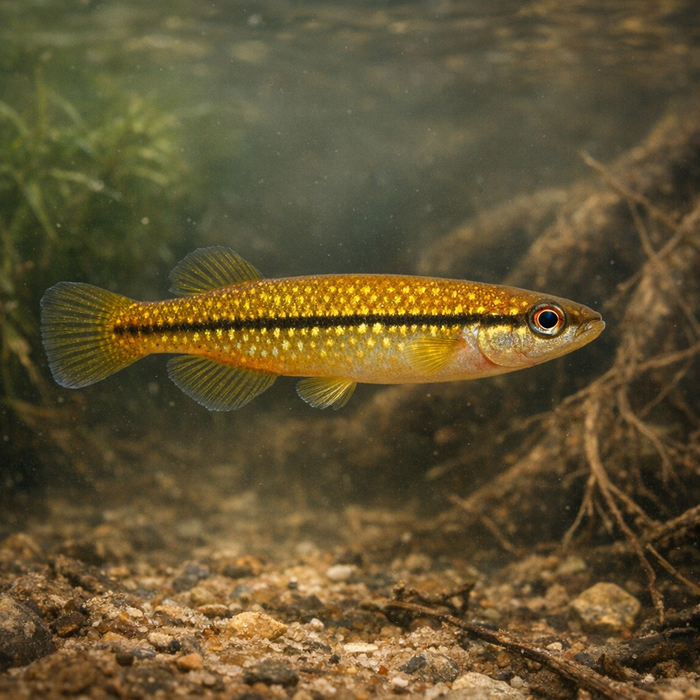
Blackstripe Topminnow (Fundulus notatus): A Bold, Memorable Hook LineIntroductionThe blackstripe topminnow is the micro torpedo patrolling your creek's skin, sipping bugs with sniper precision while wearing a racing stripe that belongs on a track car. It's small, common, and totally overlooked by big-rod anglers, but put a tiny hook in front of one and you'll discover how much fun finesse fishing can be. If you're here for Blackstripe topminnow facts, you're about to appreciate a fish that turns the surface film into its personal buffet line.What Makes the Blackstripe topminnow Unique?Start with the look. That crisp, inky line runs from the tail through the eye right onto the snout. It's not decoration; it's an ID billboard. The upturned mouth and high-set eyes are purpose-built for life at the meniscus, where drifting ants, spiders, and mayflies meet their match. During the spawn, pairs ram eggs into vegetation in abrupt side-by-side bursts. It's not graceful, but it's brutally effective. The Blackstripe topminnow is a masterclass in specialization, built to work the top inch of water with unflinching focus.Habitat & Global Range"Global" is generous here. This species is a North American native, broadly spread through the Mississippi River basin and neighboring drainages, with strongholds in small to midsize creeks, quiet river margins, oxbows, and pond edges. Think clear to lightly stained water, modest flow, and plenty of plant cover or overhanging grasses. If you're puzzling out Blackstripe topminnow habitat, start at the sunlit edge: root wads, grass mats, and undercut banks that gather drowned terrestrials. They cruise tight to structure, rarely venturing deep unless chased.Behavior & TemperamentThe blackstripe topminnow is part hunter, part opportunist. It's wary of shadows, wakes, and clumsy footsteps, but not shy about blasting a bug that hits the film. Active in warm light, they feed most predictably during calm mornings and evenings when the surface is glass. Winter cools them down; they drift lower and feed less. In summer heat, they'll tolerate soupy water by gulping air at the surface. Schooling is loose and situational: you'll see clusters along edges that split and reform as food and cover dictate.Ecological ImportanceThis fish is a small-batch insect control unit. By hoovering up terrestrial fallout, it shuttles energy from the land straight into the water. Juvenile sportfish and wading birds return the favor by eating topminnows. That unbroken energy loop is why healthy edge habitat matters. Plant beds, grass overhangs, and intact banks create a conveyor belt of food that keeps the system moving and the Blackstripe topminnow thriving. When you protect clean, shallow margins, you protect the foundation of the food web.Conservation & Environmental PressuresOverall, the species sits comfortably as Least Concern, but local populations can blink out when creeks turn to storm ditches. Silted banks, herbicide-treated shorelines, and poorly managed livestock access erase the structure this fish needs. Low oxygen isn't a deal-breaker, but chronic pollution is. Road runoff and nutrient spikes can flatten the insect buffet and coat the film where topminnows feed. The good news: restore the edge-replant grasses, stabilize banks, limit chemical blowback-and the fish bounce back fast.The FishyAF TakeYou don't need a boat, guide, or ego to enjoy this fish. You need stealth, a size-20 hook, and the patience to read ripples. The Blackstripe topminnow is proof that precision beats horsepower. Follow the shade line, keep your shadow off the water, and drift something tiny right under a nose. If you want to teach a kid finesse or scratch the microfishing itch, this is your low-cost, high-smile species. And for the search-engine crowd, you just bagged both Blackstripe topminnow habitat and Blackstripe topminnow facts without wading through a lecture. Now go hunt the film and mind your footsteps.