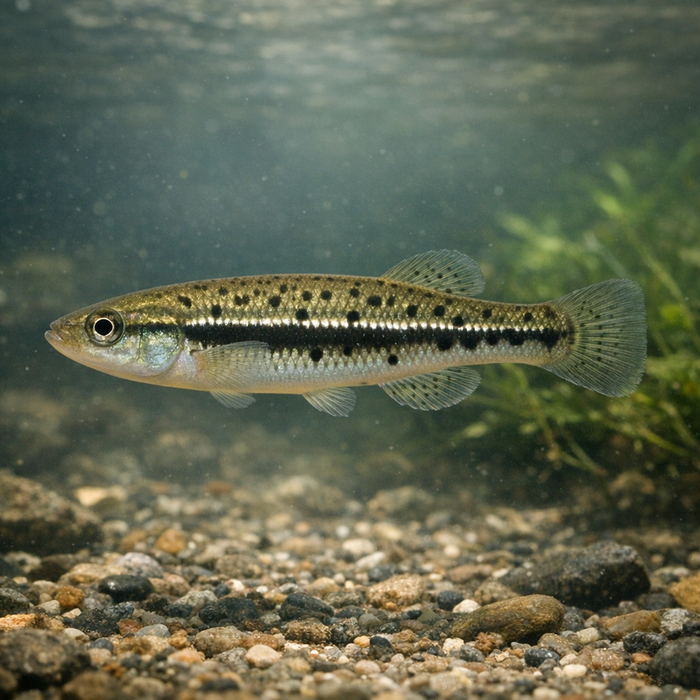
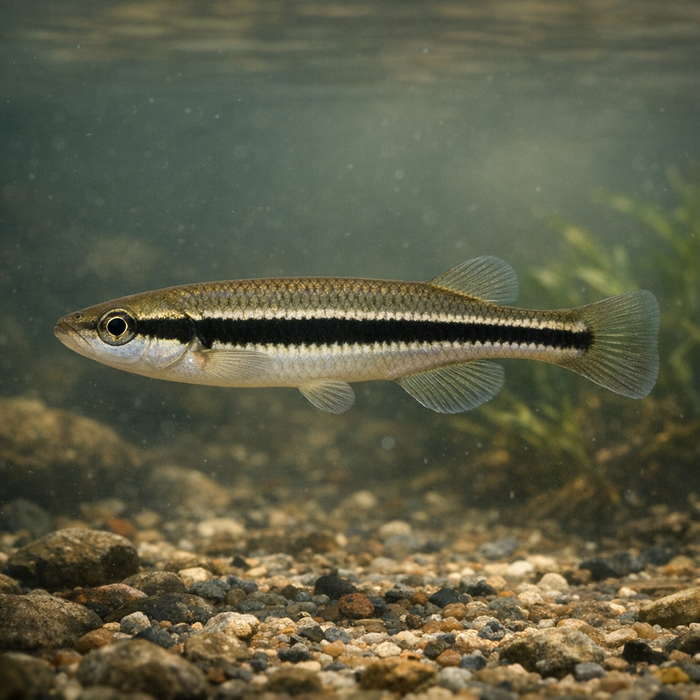
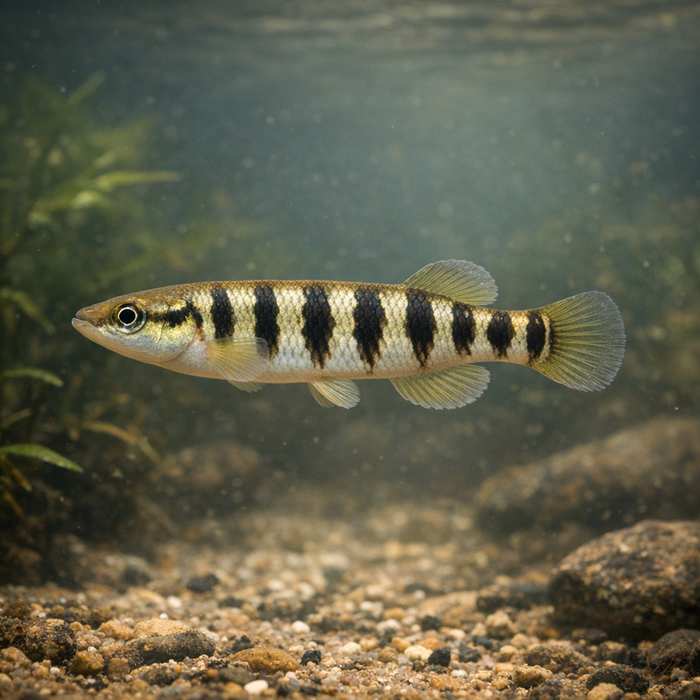
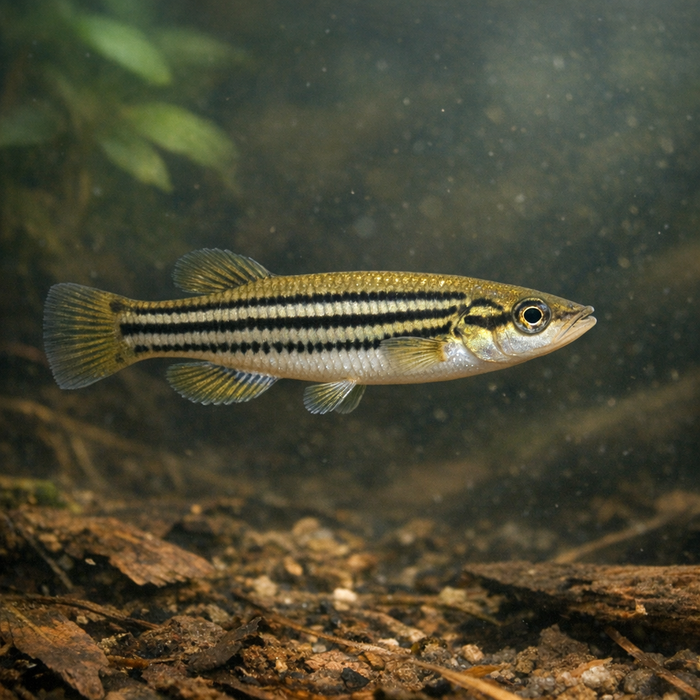
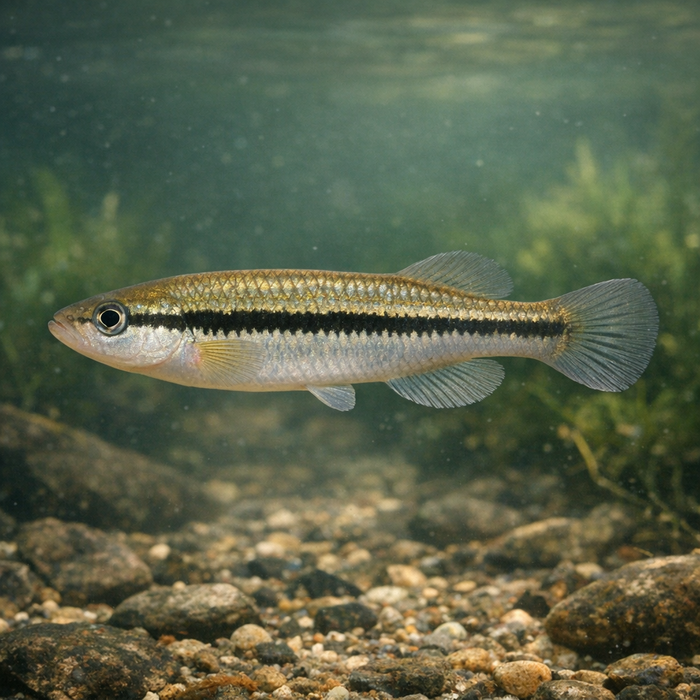
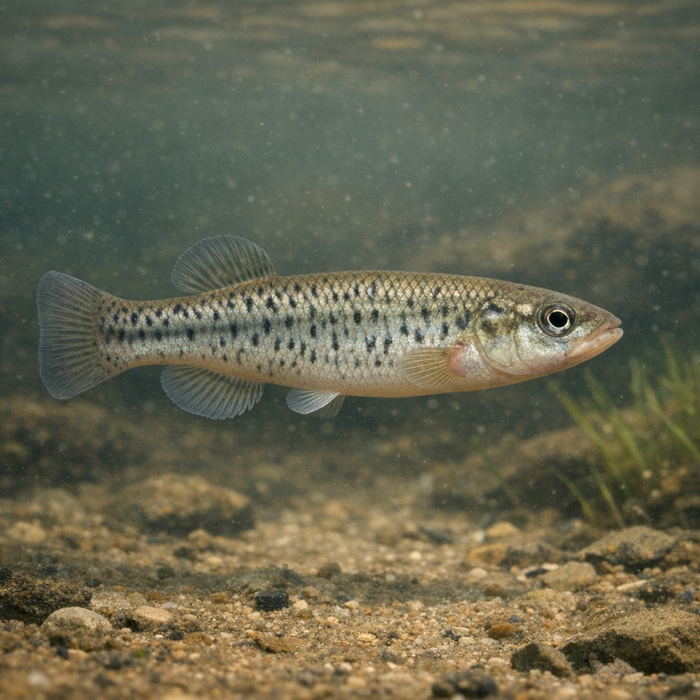
Plains Killifish (Fundulus zebrinus): Tough Little Striper of the PrairieIntroductionIf you think small fish equal small personality, the Plains killifish is here to heckle you. This hard-nosed topminnow is built for the boom-and-bust mood swings of the Great Plains: one week it is wading through chocolate milk runoff, the next it is patrolling sunlit shallows clear enough to read the bottom. Light tackle, quick takes, and a flashy paint job make the Plains killifish a gateway fish for micro-anglers and a favorite subject for anyone fascinated by how tough tiny can be.What Makes the Plains killifish Unique?Three things. First, the look: those barcode-like vertical bars give it a zebra vibe that inspired zebrinus. Second, the hardware: an upturned mouth and a dorsal fin set way back signal a surface cruiser designed to snipe bugs and drifted morsels. Third, the constitution: this little unit tolerates salinity, alkalinity, turbidity, and temperature swings that sideline more delicate minnows. If you are collecting Plains killifish facts, add this one: it is a micro-sized specialist that acts like a survivor.Habitat & Global RangeThe Plains killifish primarily works the Great Plains of the central United States, showing up in prairie streams, spring runs, irrigation ditches, backwaters, and the calmer margins of rivers. It is that fish you see hugging grassy edges, sand bars, and undercut banks, usually in knee-deep or shallower water. Think soft current, sun, and insect traffic. While not a saltwater fish, it tolerates brackish and alkaline conditions better than most freshwater minnows, which is why discussions of Plains killifish habitat often mention saline lakes and prairie potholes.Behavior & TemperamentThis is a topminnow with a plan. It cruises the surface film, then darts with a small-bore torpedo burst when food appears. The species schools loosely, pushes tight to cover when spooked, and responds to shade lines like a guideline for life. Takes are fast, often a flick-and-vanish. They are not brawlers on the line, but they make up for it with visibility and attitude, giving sight-fishing types a simple, satisfying target.Ecological ImportanceThe Plains killifish converts swarms of insects and invertebrates into calories the rest of the food web can use. It is grub for larger predators, which makes it a traffic cop for energy moving up the chain. Because it handles harsh water chemistry, its presence can also signal resilience in a system under stress. Biologists lean on it for saline-stream studies for exactly that reason: it does not flinch when conditions go sideways.Conservation & Environmental PressuresOverall, the Plains killifish is doing fine where flows still trickle and vegetation holds. But it lives in places that are great for agriculture and development, which means channelization, reduced baseflows, and silt can crowd out the shallow margins it prefers. Add seasonal drought and sudden runoff pulses and you get a fish constantly adapting. Fortunately, its tolerance and generalist behavior keep it listed as least concern in much of its range.The FishyAF TakeThe Plains killifish is the micro that punches above its weight in fun. You spot the bars, pitch a tiny bait or fly, watch the wake, and boom, fish on. It is not trophy hunting. It is better: an easy, fast lesson in how reading water, edges, and light leads to immediate feedback. If you want a quick win, a primer for kids, or a fresh angle on sight-fishing, this species delivers. Small gear, small fish, big grin. That is the Plains killifish experience, plain and simple.