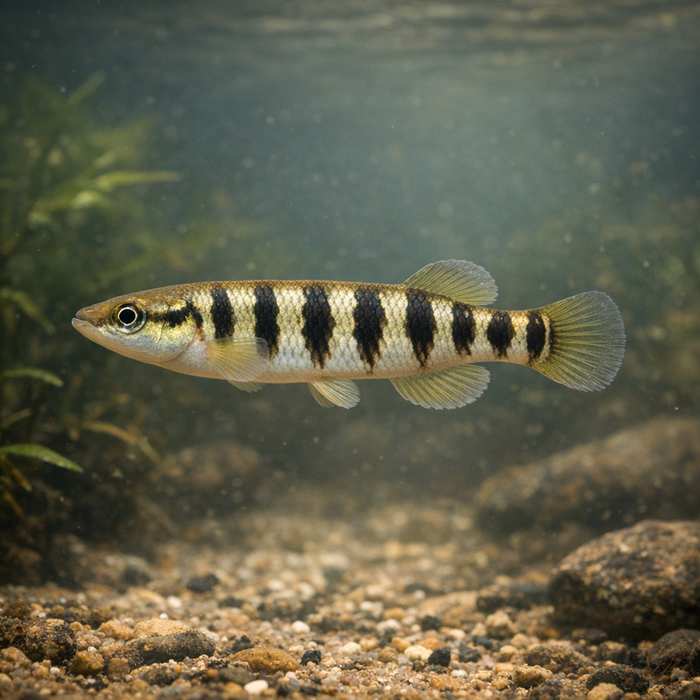
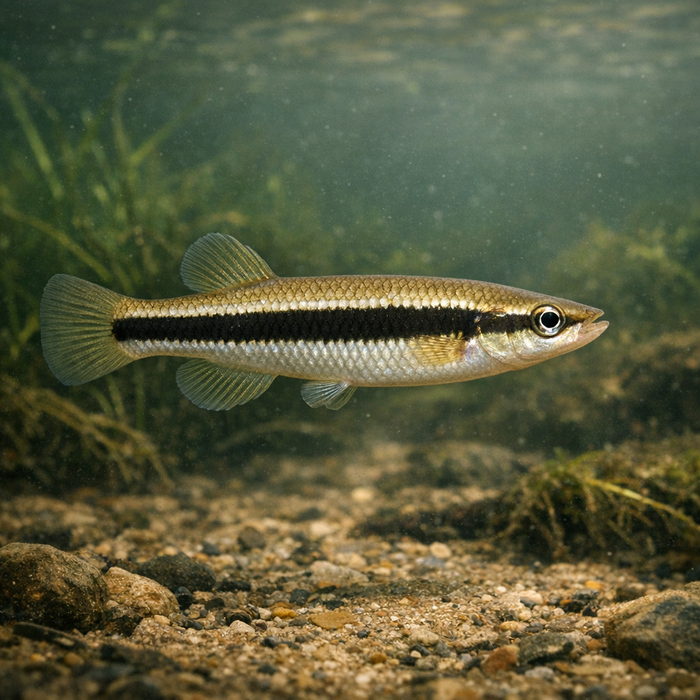
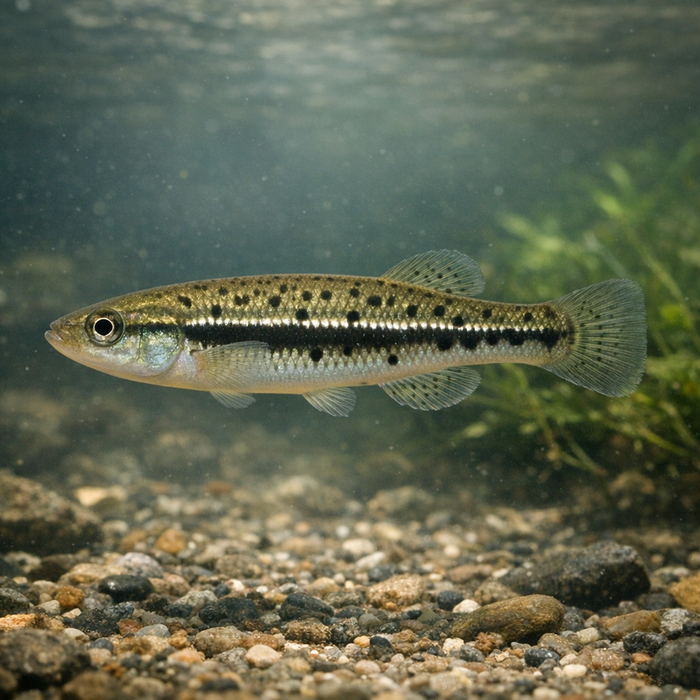
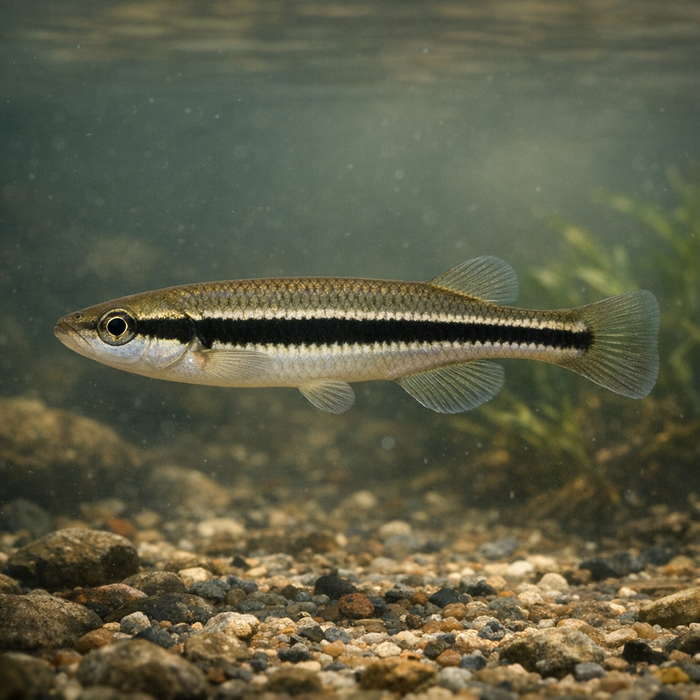
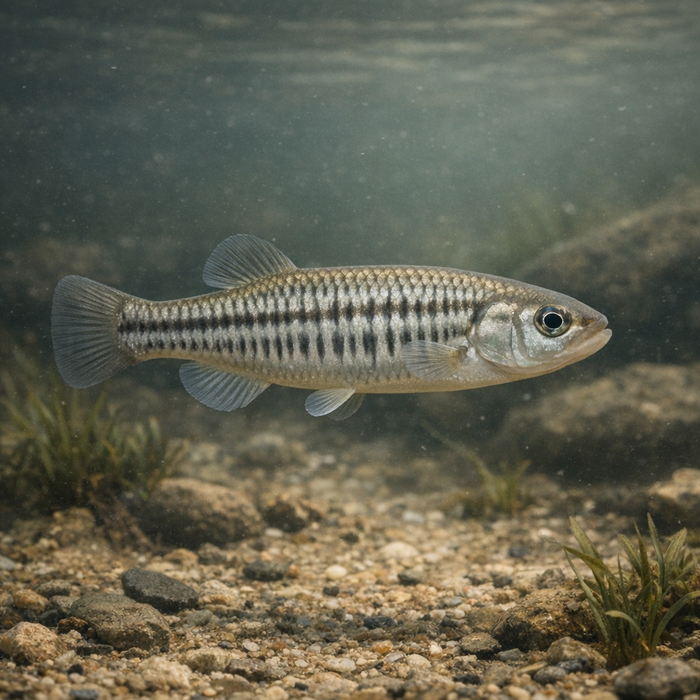
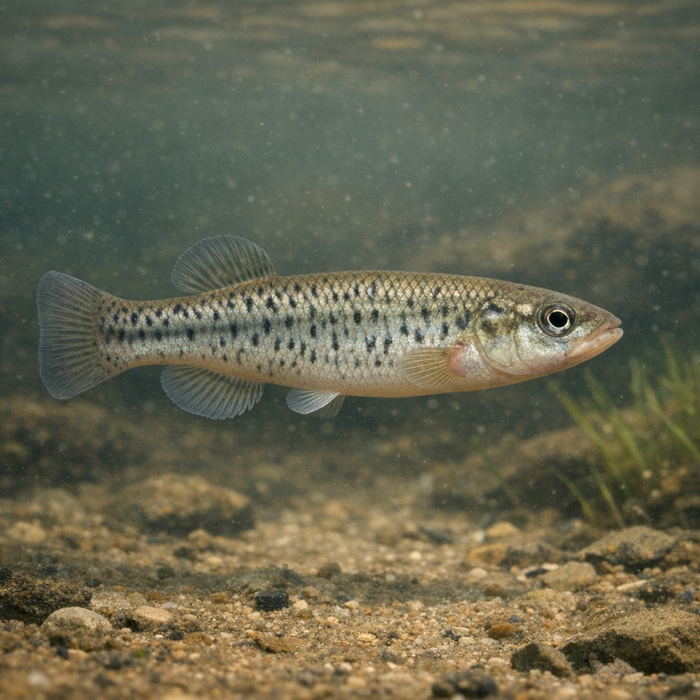
Lined Topminnow (Fundulus lineolatus): Striped mosquito-sniper ruling the surface filmIntroductionThe lined topminnow is proof that attitude scales just fine. It's tiny, flashy, and absolutely dialed to the top few inches of water where insects make mistakes. If you've ever watched the skin of a cypress slough dimple in quick, repeating taps, you've seen this fish work. It's the micro predator many anglers overlook until a bit of worm on a size 20 hook changes their mind.What Makes the Lined topminnow Unique?Two things: style and specialization. First, the look. Bold horizontal pinstripes give the lined topminnow a race-ready vibe, and breeding males sharpen that with yellow fins and a subtle iridescent cheek sheen. Second, the hardware. That upturned "superior" mouth is a purpose-built tool for surface feeding, letting the fish snipe insects, micro crustaceans, and anything trapped in the meniscus. It's a mosquito-control machine with fins. Add adhesive eggs laid on vegetation and you've got a species engineered for weedy, calm water where bigger fish struggle to breathe.Habitat & Global Range"Global" is generous; think Southeastern U.S. coastal plain. The lined topminnow thrives in blackwater creeks, cypress ponds, roadside ditches with surprising life, and quiet river margins. Tannin-stained water, plenty of emergent plants, and limited current form its ideal neighborhood. While some Fundulus cousins handle real brackish water, this one is mostly a freshwater specialist that tolerates only slight salinity. If you're building a mental map of lined topminnow habitat, think tea-colored shallows rimmed with grass and lily pads, not open lakes or rocky riffles. When water drops during dry spells, they retreat into pockets where shade and weeds hold humidity and micro-prey.Behavior & TemperamentThe lined topminnow is built for the surface and acts like it. Expect short dashes, fast starts, and a knack for feeding in tight quarters. They form loose groups more than tight schools, but there's plenty of posturing. Males guard tiny territories in the upper water column, flashing and shivering through quick courtship hops over fine-leaved plants. They aren't bruisers, but on true micro tackle they'll give honest wiggles and surprise you with their speed. Wariness is high; heavy footsteps or a sloppy splash put them on edge. Calm, sun-splashed afternoons with a light ripple are prime lined topminnow habitat moments.Ecological ImportanceThis fish is a bridge between insect hatches and everything higher up the food web. By vacuuming mosquitoes and emergent bugs, the lined topminnow fuels its own growth while toning down nuisance insects. It then becomes bite-sized protein for larger sunfish, juvenile bass, and wading birds. Because it tolerates low oxygen and warm, tannic water, it colonizes places many fish abandon, keeping energy moving in systems that would otherwise stall. Adhesive eggs cling to stems, protecting embryos from silt pulses after summer storms and anchoring future generations right where conditions are best.Conservation & Environmental PressuresOfficially, the lined topminnow sits in a good place: Least Concern. But that doesn't mean the ride is smooth. Its world is allergic to bulldozers and ditch dredges. Drain a swamp, harden a shoreline, or mow away emergent vegetation and you erase both spawning substrate and hunting grounds. Fertilizer and pesticide runoff knock down oxygen and insect diversity, which hits this species from two directions. The silver lining is resilience. Lined topminnow populations rebound quickly when cover returns, water clears, and shallow edges are left scruffy instead of sterilized.The FishyAF TakeIf you want drag-scorching runs, this isn't your hero. If you want to sharpen stealth, casting accuracy, and observation skills, the lined topminnow is perfect. It's a gateway fish to microfishing that rewards patience and precision-drop a midge larva gently, watch the meniscus twitch, lift slow. You'll start noticing shade seams, ant falls, and how a breeze stacks life along a weed edge. That awareness translates straight to bigger game later. Don't sleep on small fish with big lessons. The lined topminnow teaches them in under two feet of water, where every mistake is visible and every win is earned. For anyone hunting lined topminnow facts or dialing lined topminnow habitat, remember this: stripes, surface, and stealth. Nail those, and you'll see this little racer everywhere.