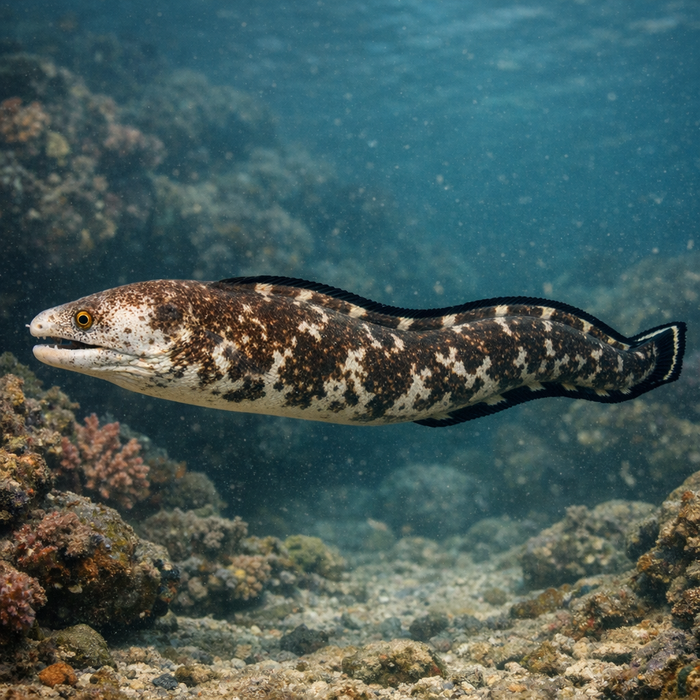
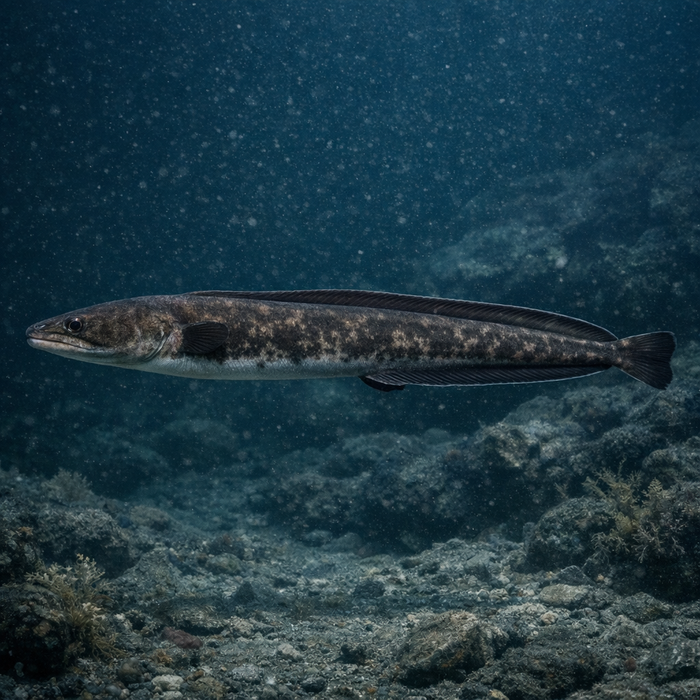
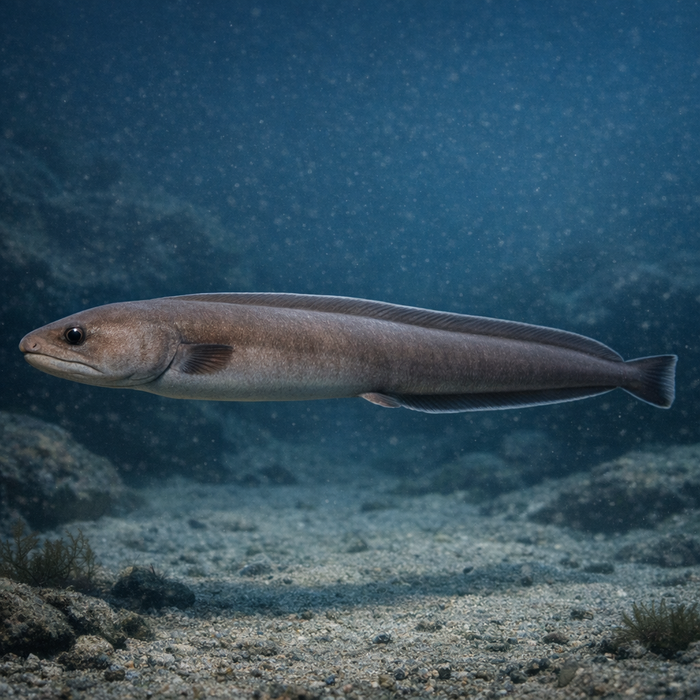
Blacktail moray (Gymnothorax kolpos): Ink-Tipped Attitude In A Rubble HoleIntroductionThe Blacktail moray is the quiet bruiser of warm, silty reef edges. It doesn't broadcast its presence with neon stripes or a bodybuilder frame. Instead, it flashes a jet-black tail cap as if dipped in ink, then melts into shadowy crevices where careless baitfish get ambushed. For anglers poking around breakwaters, harbor rocks, or low-visibility reefs, the Blacktail moray is that sudden, heavy throb on the end of your rig that turns your leader into confetti if you're not ready.What Makes the Blacktail moray Unique?First, that tail. The distinct black caudal tip is more than a name tag. Against dusty-bottom backdrops, the contrasting cap helps break up the body outline and stays visible even when the rest of the eel vanishes in gloom. Second, the species is built for heat and salt. The Blacktail moray thrives in warm, sometimes hypersaline conditions that would make more delicate reef fish grumpy. Third, it's a midsized moray, powerful but not a giant, which means smarter gear choices beat brute force. These traits wrap into a fish that's identifiable, tough, and surprisingly catchable if you understand Blacktail moray habitat and behavior.Habitat & Global RangeThink warm, semi-enclosed seas and the connected Indian Ocean margins. The Blacktail moray favors turbid reefs, rubble slopes, harbor rockwork, mooring blocks, and the shady undersides of ledges. Silty bottoms don't bother it a bit. Depth-wise, most encounters happen shallow to mid-depth, where surge and current funnel groceries along the structure. Add a little tidal push, and your odds improve. If you're skimming Blacktail moray habitat profiles for a quick tell, look for places with easy holes to back into and a constant trickle of small fish or crustaceans.Behavior & TemperamentThis isn't a roamer. The Blacktail moray is a structure lifer, staking out ambush stations and hunting from cover. It's crepuscular to nocturnal, switching gears at dusk and dawn when bait traffic peaks. Strikes can feel like a snag that suddenly shakes its head. Once hooked, expect a determined surge back to the nearest crack. Heavy abrasion, head-thrashing, and lethal teeth are part of the package, so robust leaders and calm hands matter. You rarely see it on the surface, and schooling isn't its thing. If multiple eels are present, they're usually spaced across the structure, each holed up with a preferred angle of attack.Ecological ImportanceMorays play cleanup crew and predator in one package. The Blacktail moray trims small, unwary fish and invertebrates that crowd structure, helping keep the micro-neighborhood balanced. By holding position in tight crevices, it influences where smaller species dare travel, changing traffic patterns across rubble and reef. That predator pressure, multiplied across many nooks and crannies, adds up to healthier, more dynamic reef systems.Conservation & Environmental PressuresWhile not flagged as threatened, the Blacktail moray's stronghold depends on coastal water quality and intact structure. Bulldozed breakwaters, sediment overloads, and reckless anchoring degrade its living space. In some areas, spearfishing around harbor infrastructure and unregulated take can pinch local pockets. Climate-driven heat waves aren't new to this heat-tolerant eel, but rapidly intensifying extremes and pollution certainly don't help. The best protection is healthy, clean structure and sensible local rules that keep reef edges from getting hammered.The FishyAF TakeThe Blacktail moray is not Instagram candy, and that's precisely why it's cool. It's a gritty, structure-bound predator that rewards anglers who read current, understand how bait funnels, and respect nasty teeth. Come prepared with abrasion-resistant leader, steady drag, and a plan for safe release. You're not beating a giant; you're outsmarting a specialist. If you want slick, flashy reefs, keep scrolling. If you want authentic Blacktail moray facts and a fish that lives where the water looks like tea, welcome to the ink-tail club.