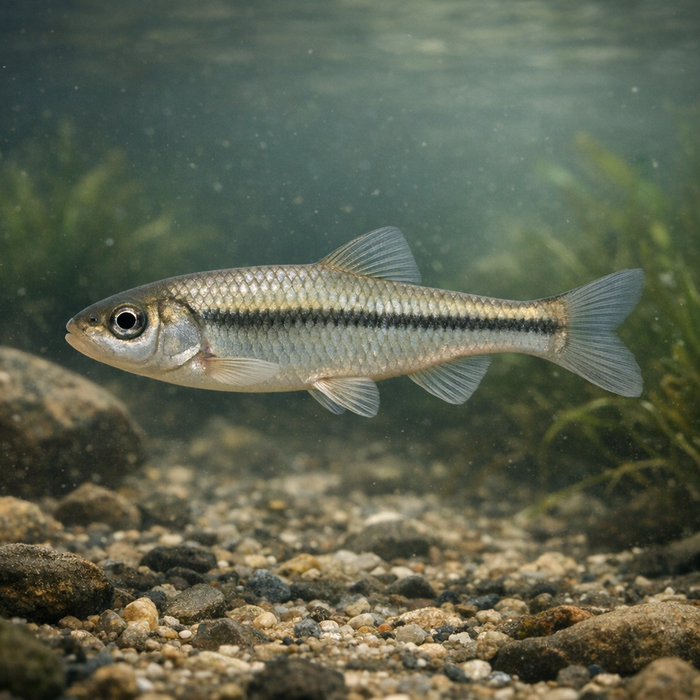
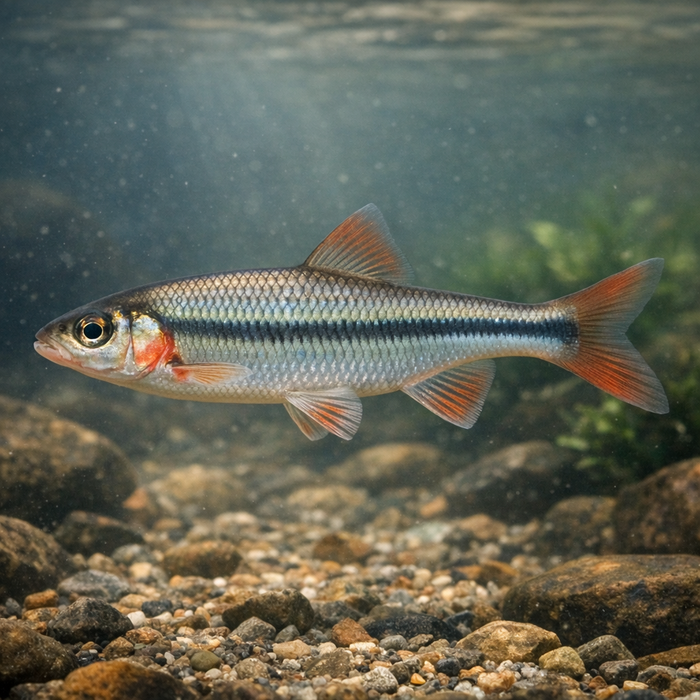
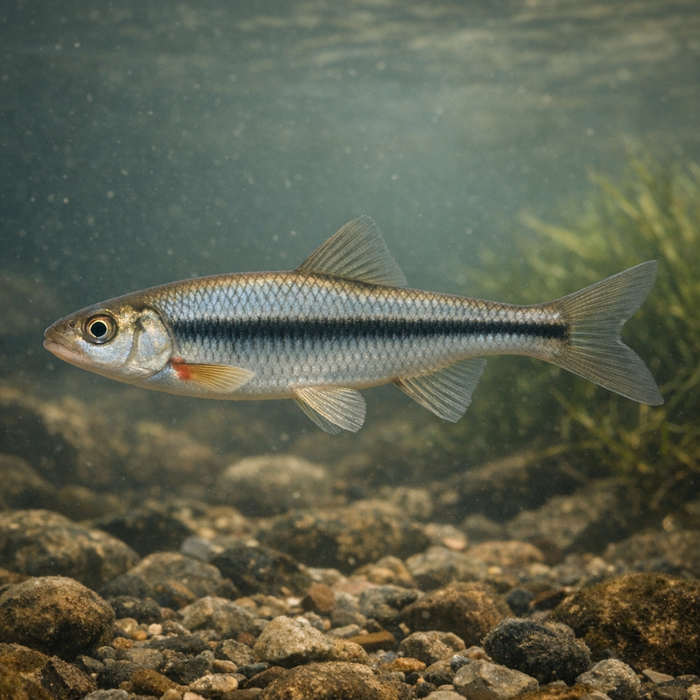
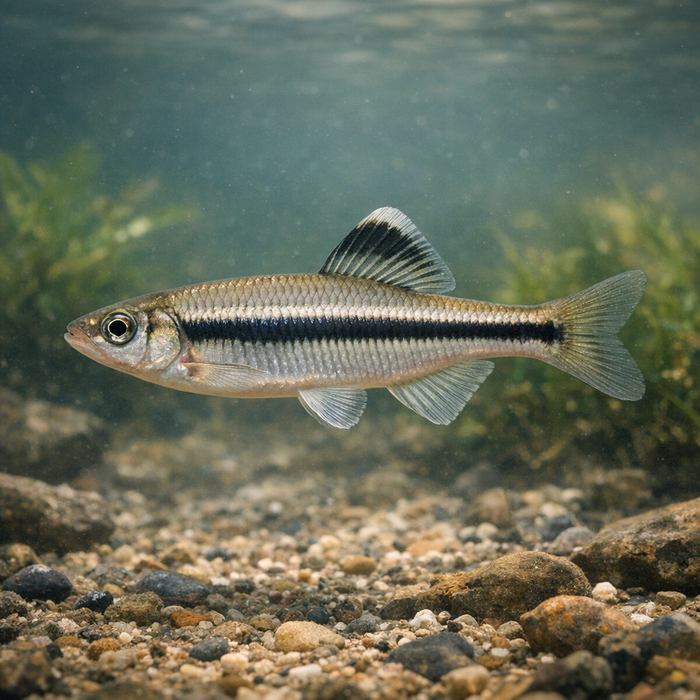
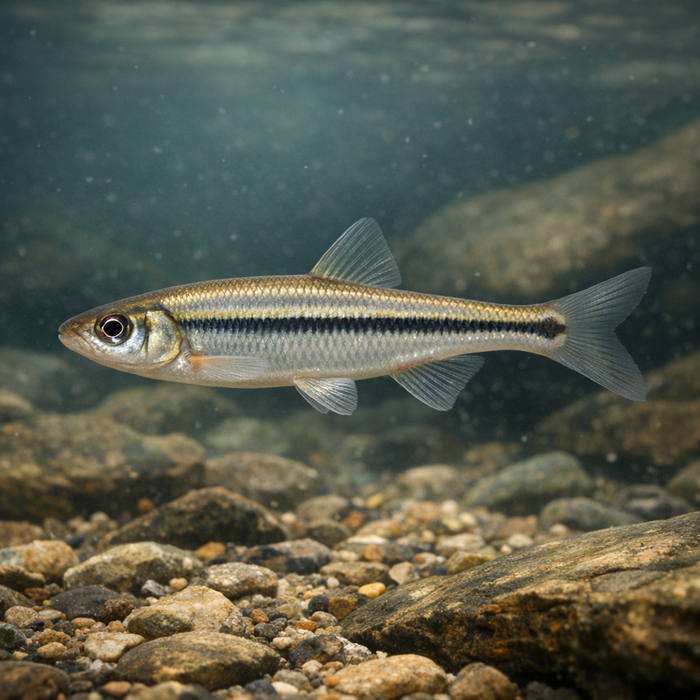
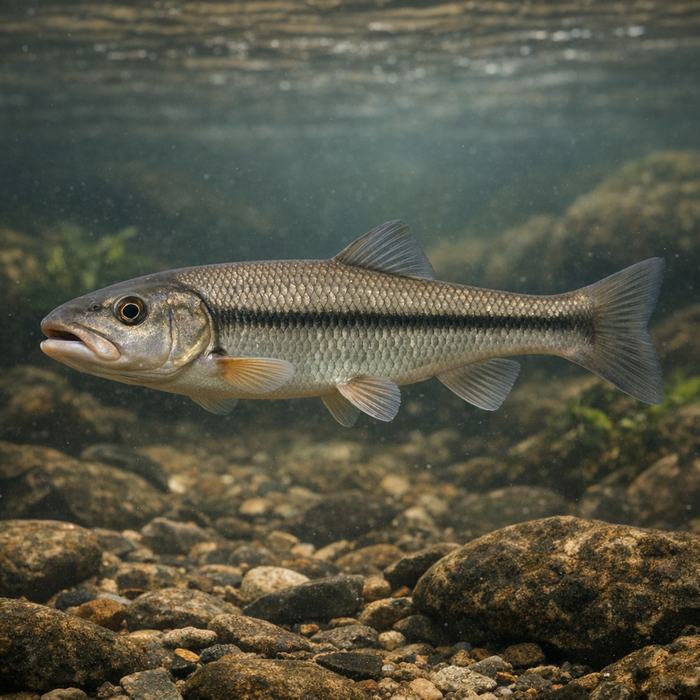
Burrhead Chub (Macrhybopsis marconis): A Bold, Memorable Hook LineIntroductionTiny fish, big attitude. The Burrhead chub is a riffle-hugging Hill Country specialist with a snout built like a mini plow and a knack for surviving in fast, spring-fed water. If you're a microfishing fan, this is a must-catch on your Texas list. If you've never thought about chasing a fish that fits in your palm, the Burrhead chub will change your mind about what counts as a trophy.What Makes the Burrhead chub Unique?First, that head. The Burrhead chub sports a projecting snout that overhangs a subterminal mouth, a shape tuned for life close to the bottom in moving water. During breeding season, males sprout rough tubercles across the head, literally earning the "burrhead" nickname. Second, it's a flow junkie. Everything about this fish screams current: streamlined body, quick fin beats to hover in place, and tight schooling where riffles pour into shallow runs. Third, it's the perfect gateway fish for ultralight nerds. Precision drifts, tiny hooks, and stealth pay off fast, making the Burrhead chub a confidence-building quarry.Habitat & Global RangeThis species is a Texas Hill Country original, thriving in spring-fed creeks and rivers with clean gravel and lively current. Think knee-deep riffles, bubbly tailouts, and runs where your shins feel the push. The Burrhead chub habitat often sits beneath low-head dams, at the heads and tails of pools, and in riffle seams where drifting invertebrates stack up. Clarity can be postcard-perfect, which rewards careful approaches and short casts. While its range is regional, its micro real estate is exacting: shallow, oxygen-rich flows over stable substrate.Behavior & TemperamentBurrhead chub schools are tight, twitchy, and decisive. They hold inches above the rocks, flashing and sliding to intercept anything edible fluttering past. Aggression is modest, but confidence builds the moment a drift looks right. They rarely cruise far into still water, preferring edges of energy: the crease where a riffle spills, the inside seam of a turn, or a submerged bar pushing flow upward. Dawn and dusk widen feeding windows, while bright midday sun can make them skittish in ultra-clear water. Hook one and you'll feel a flutter rather than a fight, but the game is all about making the perfect micro presentation.Ecological ImportanceDespite the small size, the Burrhead chub is a clean-water ambassador. It relies on stable flows, good groundwater inputs, and intact gravel beds. Because it filters energy straight from drifting insects and detritus, it helps cycle nutrients and feeds bigger predators. When Burrhead chub numbers stay solid, it's a quiet indicator that the river's plumbing is still working. Lose the riffles or silt the rocks and they're among the first to blink.Conservation & Environmental PressuresThe Burrhead chub is currently considered secure overall, but it's not bulletproof. Groundwater depletion, prolonged drought, and channelization can flatten riffles and degrade spawning areas. Fine sediment from poorly managed construction or floods can smother the gravel. Low, warm flows squeeze oxygen and favor competitors that don't belong. Because this fish tends to be local and picky, small habitat hits can matter a lot. Fortunately, many Hill Country streams benefit from spring inflows and growing stewardship. Keep the water clear, the flows honest, and the Burrhead chub usually handles the rest.The FishyAF TakeYou don't chase a Burrhead chub for glory; you chase it for purity of craft. It's the river reduced to essentials: sightlines, seams, and a drift that lasts three feet. Nail that, and the Burrhead chub says yes. Miss it, and they pivot like a single thought and vanish. If you want a quick shot of skill-building humility, this fish is a brutally fair teacher. Add it to your Texas micro circuit and you'll walk away with sharper eyes, quieter feet, and a new respect for the riffles you used to march past. Want more Burrhead chub facts or a deeper look at Burrhead chub habitat? Step into the current and read the river. The fish will fill in the rest.