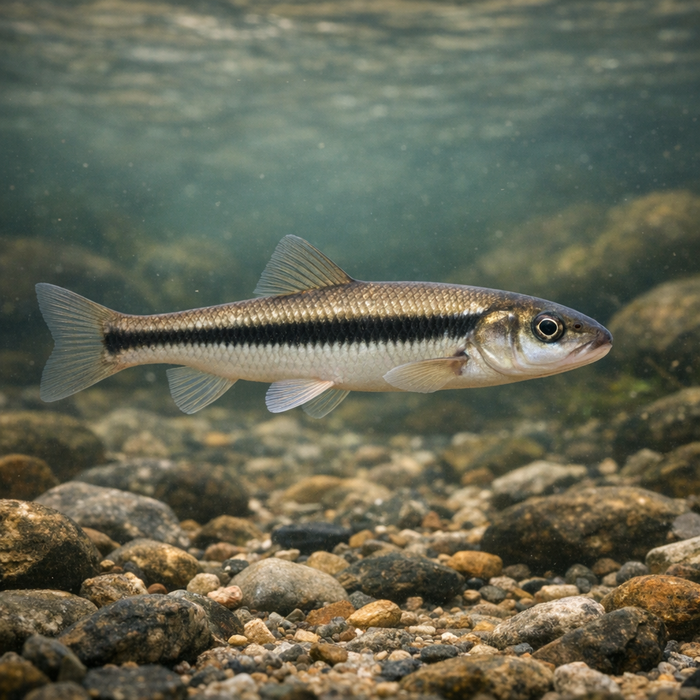
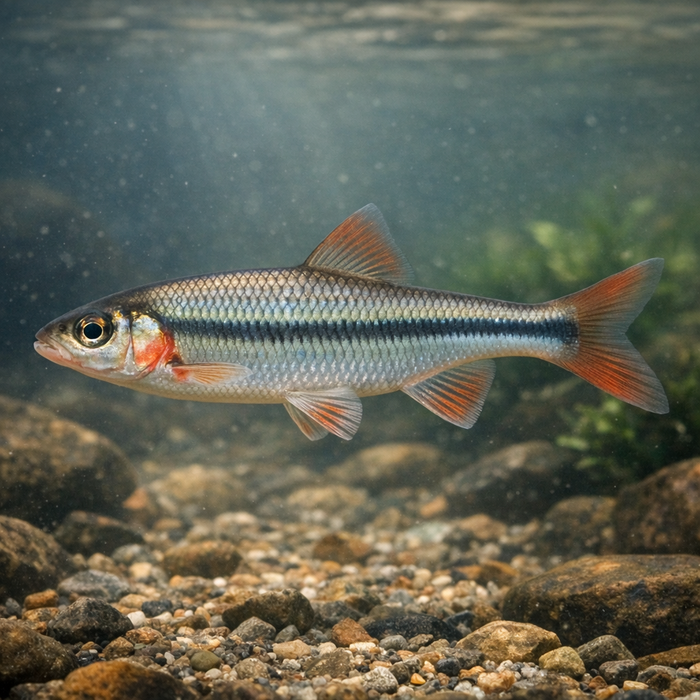
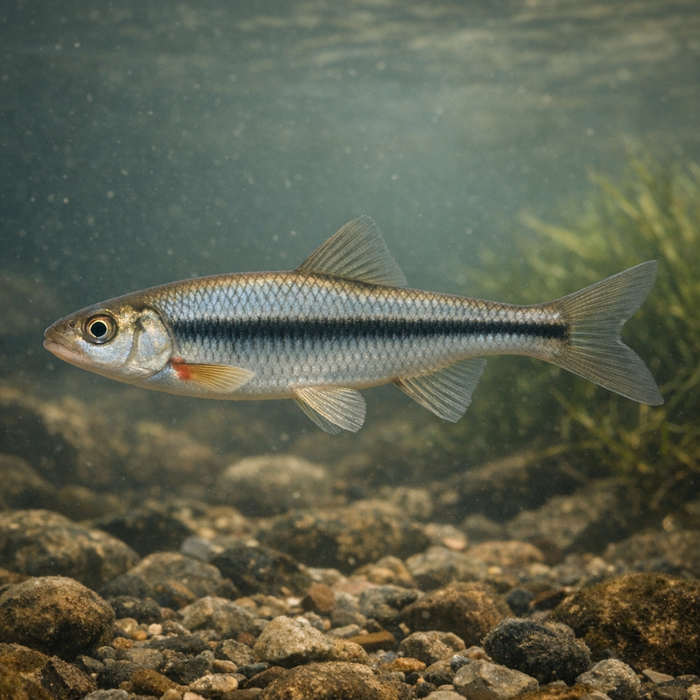
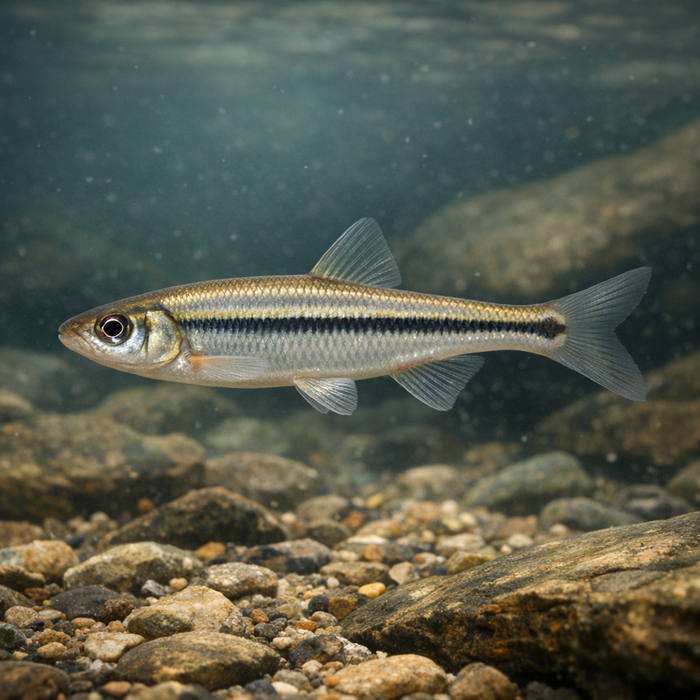
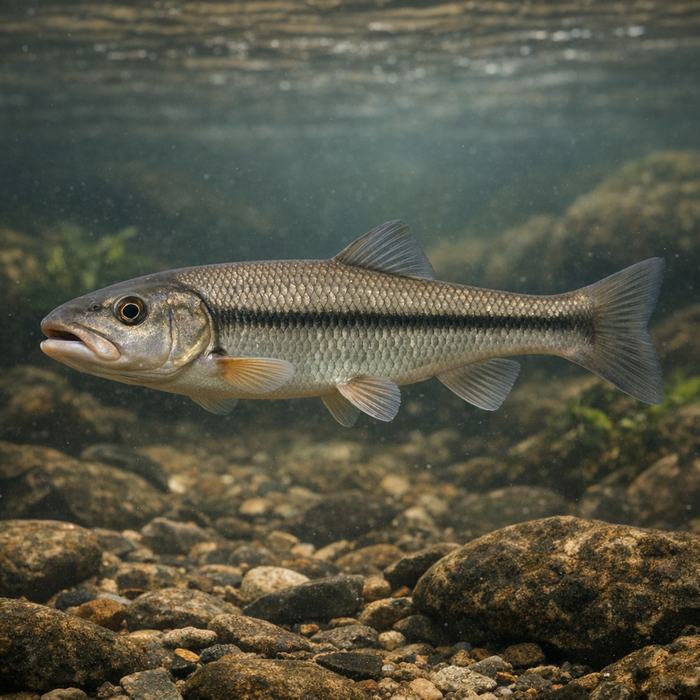
Apalachee Shiner (Pteronotropis grandipinnis): Big fins, tiny frame, Gulf Coast eye candyIntroductionThe Apalachee shiner is the fish that makes you stop mid-wade and say, wait, what is that glittering missile? Small, sleek, and dressed like it's headed to a formal, this minnow flashes serious style for such a pocket-sized package. For anglers into microfishing or anyone who appreciates native jewels, the Apalachee shiner delivers color and attitude far beyond its inches.What Makes the Apalachee shiner Unique?Start with the fins. The species name grandipinnis literally means big-finned, and breeding males back that up with elongated, sail-like dorsal and anal fins edged in black and tipped in white. When the current hits those membranes, they flutter like parade flags. Add a dark, razor-straight lateral stripe and a seasonal wash of amber or yellow in the fins, and you've got a freshwater fish that looks imported from an aquarium catalog. It's one of the cleanest pieces of Apalachee shiner eye-candy you can find, and it is remarkably photogenic. If you're collecting Apalachee shiner facts, put the fin drama at the top of the list.Habitat & Global RangeHere's the quick Apalachee shiner habitat snapshot: think clear to lightly tannic Gulf Coastal Plain creeks with sandy runs, patches of clean gravel, and swatches of aquatic vegetation. Current matters. They stack along seams where flow brushes plants or wood, often in knee-deep or shallower water. The species is naturally localized to the southeastern U.S., anchored to the Apalachicola basin and nearby systems that offer that specific cocktail of clarity, sand, and steady but not blasting current. It's not a pond generalist; this fish wants motion, oxygen, and tidy substrates.Behavior & TemperamentThe Apalachee shiner schools like it means it. Tight packs slide along edges, relaxing in the lee of grass beds, then darting forward to pick drifting invertebrates. During spring, males square off with fin-flaring displays rather than brawls, holding position and pulsing those oversized rays. They are alert, twitchy, and quick to sulk if you stomp the bank or throw shadows. Hook one and it's not about a bulldog fight; it's a quick, delicate dance to avoid pulling the hook or spooking the rest of the school.Ecological ImportanceThis shiner is a clean-water messenger. Where you see healthy Apalachee shiner schools, you usually see good flow, intact vegetation, and low silt. They turn drifting insects and micro-crustaceans into fuel for everything up the chain, from sunfish and juvenile bass to wading birds. Lose the sand and the plants to runoff or prolonged turbidity, and the shiners blink out. Keep the creeks clear, and they repay you with a living neon line you can practically set your watch by.Conservation & Environmental PressuresLocalized range cuts both ways. The Apalachee shiner benefits when its creeks run clean, but a single bad actor upstream, a poorly timed drawdown, or sediment slugs from development can rearrange the map. It is not a headline endangered species, but it hates chronic turbidity, habitat fragmentation, and dewatering. Spring-to-early-summer pulses are important for spawning; flatten those flows and recruitment suffers. Angling pressure is minimal, yet collection laws, water withdrawals, and land-use choices matter more than rods for this one.The FishyAF TakeThe Apalachee shiner is proof that small doesn't mean boring. It's a specialized little speedster wearing big-boy fins, and it rewards finesse over force. If you move softly, spot the seam, and scale down, you'll see the show: flags up, colors on, and a school tracing the creek's heartbeat. For anglers, it's a perfect micro milestone and a crash course in reading current. For everyone else, it's a reason to care about clear water and sand that stays put. Catch it, admire it, and let it rocket back to the parade.