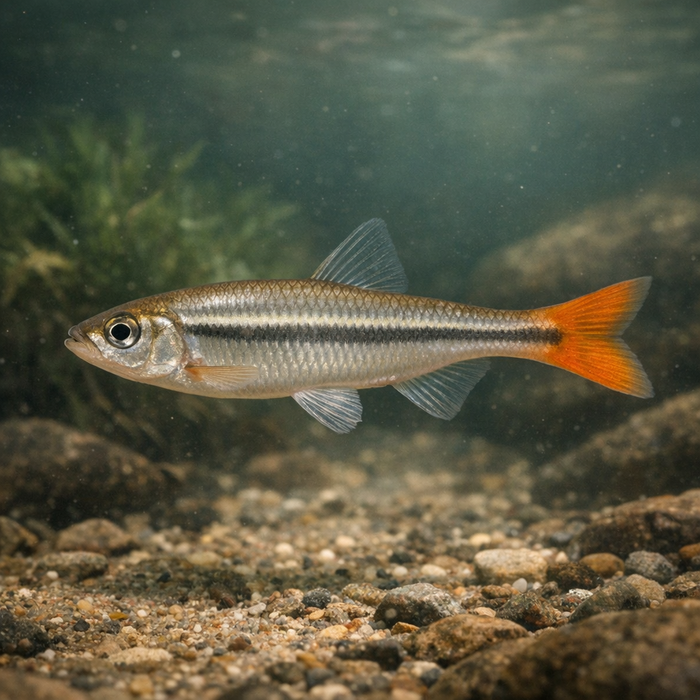
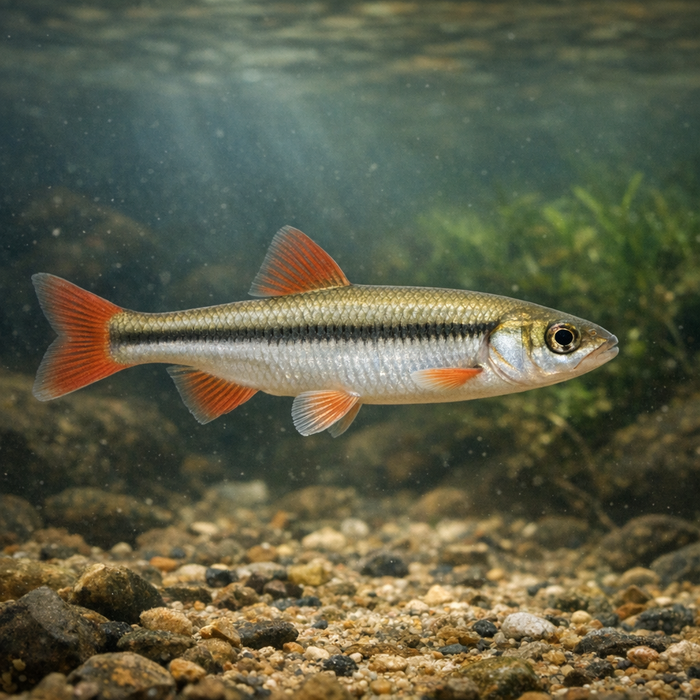
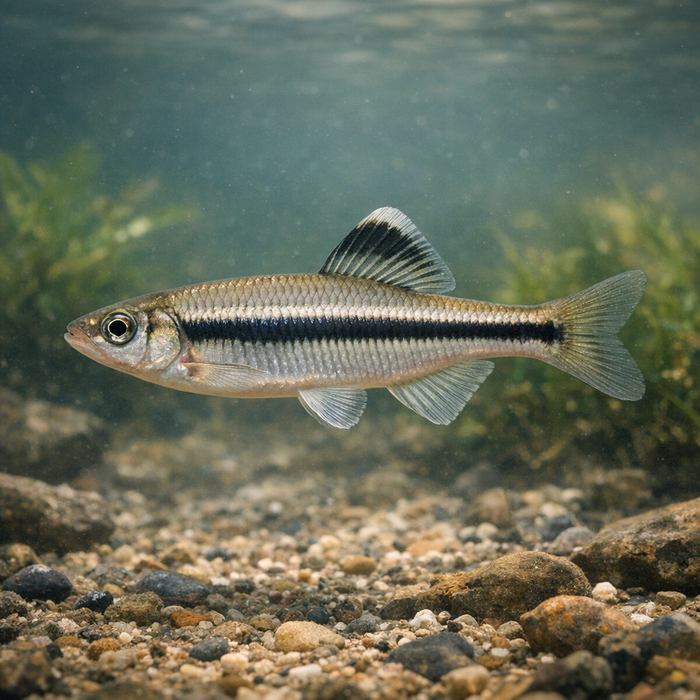
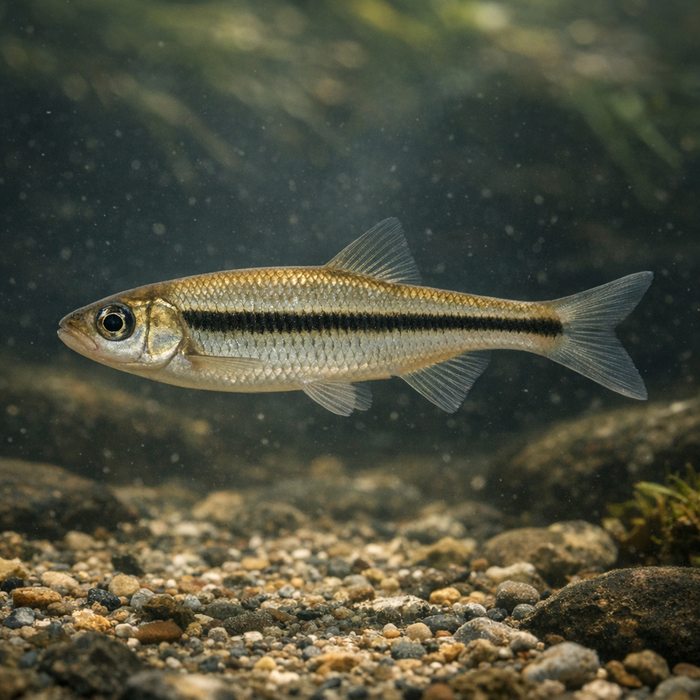
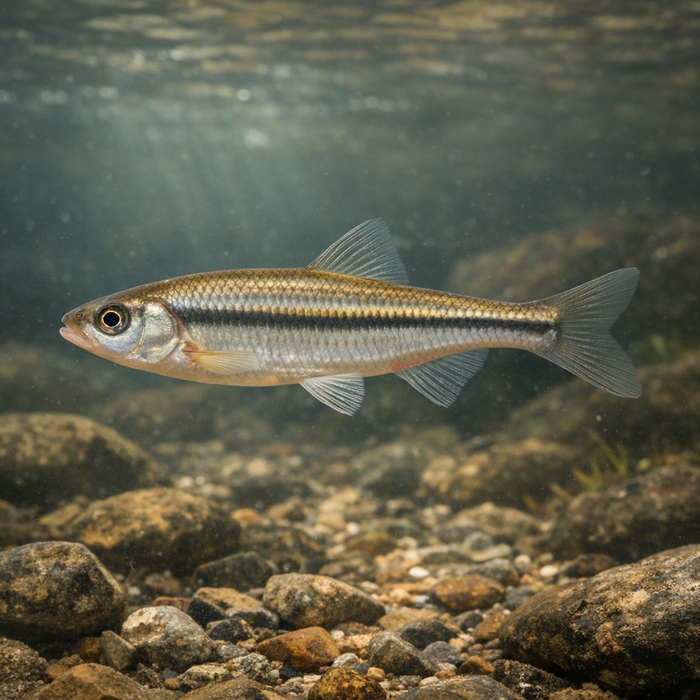
Bluestripe Shiner (Cyprinella callitaenia): A Bold, Memorable Hook LineIntroductionThe Bluestripe shiner is proof that small fish can have big swagger. In a rush of clear current, these little rockets flicker silver and then blast neon when spawning season hits. If you think minnows are background noise, the Bluestripe shiner begs to differ. It is a schooling speedster, a riffle specialist, and a microfishing favorite for anglers who like precision over power.What Makes the Bluestripe shiner Unique?Two things jump out: that electric lateral stripe and the rock-crevice nesting habit. Come spring, males light up with a metallic blue band and warm fin tints, turning riffles into a moving marquee. Then there is the spawning tactic. Instead of loose gravel broadcasting, pairs wedge into cracks and seams in rocks or woody cover, shimming eggs deep where egg thieves struggle to reach. Add the quick maturation and tight schooling, and the Bluestripe shiner delivers a highlight reel you can actually watch in knee-deep water.Habitat & Global RangeThe Bluestripe shiner is a Southeastern specialist linked to the Apalachicola River drainage and its tributaries. Think clear to tea-stained creeks and small rivers with sand, gravel, and occasional cobble. Moderate current, defined riffles, and stable banks make prime Bluestripe shiner habitat. They hold in seams, pool tails, and shallow riffle lips, often right where wading anglers step first. This is not a pond minnow; it is a current fish that thrives in clean, oxygen-rich water with enough structure to break flow and hide a nest. If you are searching online for Bluestripe shiner habitat, focus on creeks with visibility, gradient, and a mix of substrate sizes.Behavior & TemperamentThe Bluestripe shiner is a team player. Schools wheel and flash to dodge predators and to track drifting food. They feed midwater most of the time, nipping tiny invertebrates and the occasional filament of algae. In spring, males show off with bright colors, crowding rivals and rattling through short chases. Despite the fireworks, they are not bruisers on the line. Hook one on ultralight and you get darts and twitches, not drag-scorching runs. Presentation matters more than power: small hooks, tiny offerings, and a clean drift beat everything.Ecological ImportanceSmall, fast, and hungry, the Bluestripe shiner moves energy up the stream food web. It converts insect hatches into fish protein, then hands that energy to kingfishers, bass, and other predators. Nesting in crevices shelters eggs from silt and marauders, boosting survival in variable flows. Where this shiner persists, it signals intact riffles, steady oxygen, and a substrate that is not smothered by sludge. If you want a quick read on creek health, a school of Bluestripe shiners flashing in a run is a very good sign.Conservation & Environmental PressuresThe Bluestripe shiner's world is small, which makes it vulnerable to the usual culprits: sediment from bad land use, low flows, warm water, and chemical spikes after storms. Channelization, culverts that kill gradient, and woody debris removal erase hiding spots and break up spawning habitat. Because the species rides the midwater drift, silt and algae mats that follow nutrient pollution can hammer feeding efficiency and egg success. Local abundance can be strong, but the map does not stretch far. Stream-by-stream management matters more than sweeping programs.The FishyAF TakeIf you love a scalpel more than a sledgehammer, the Bluestripe shiner delivers. It is a perfect gateway fish for microfishing, a living pulse check for riffles, and a legit challenge when you scale down to 2-pound line and a hook you can barely see. Want fast action in a pretty creek with zero crowd noise and real Bluestripe shiner facts to brag about later? Slide into a clear run, watch for the flash, and make a drift the fish cannot refuse. When that neon stripe tilts and your float twitches, you will remember why small can be mighty.