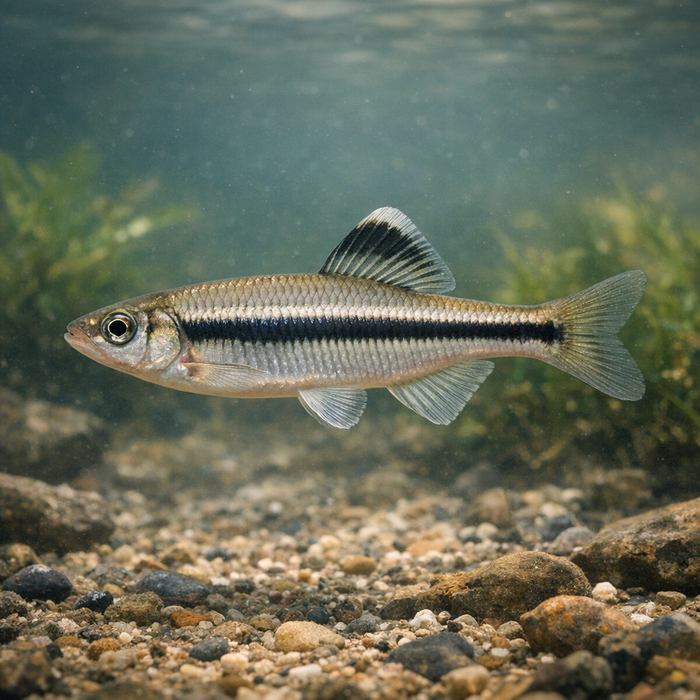
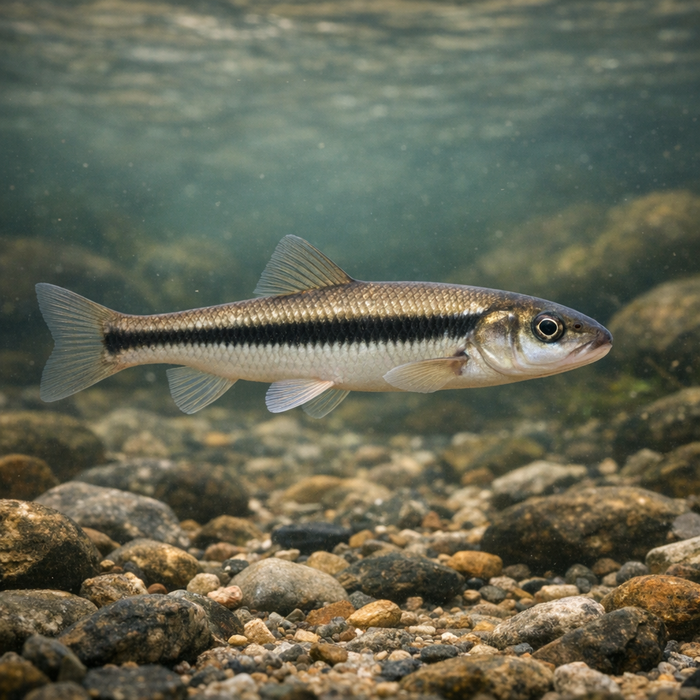
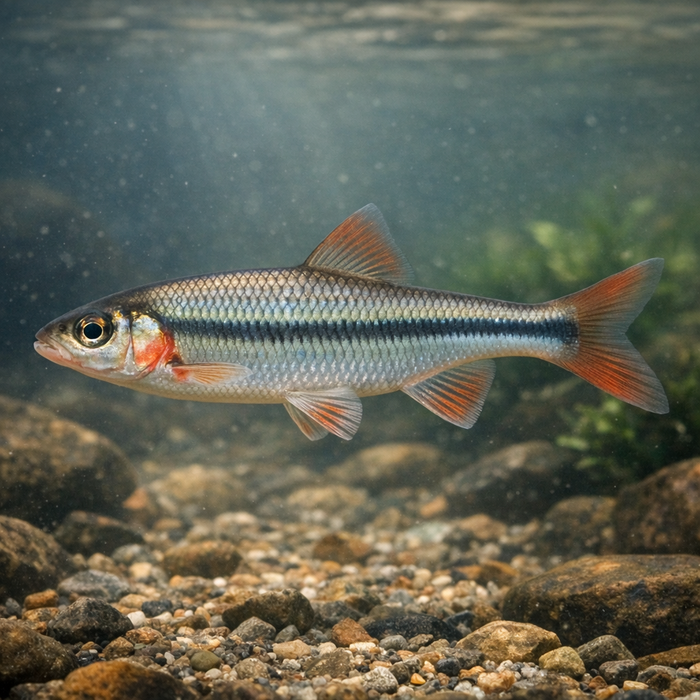
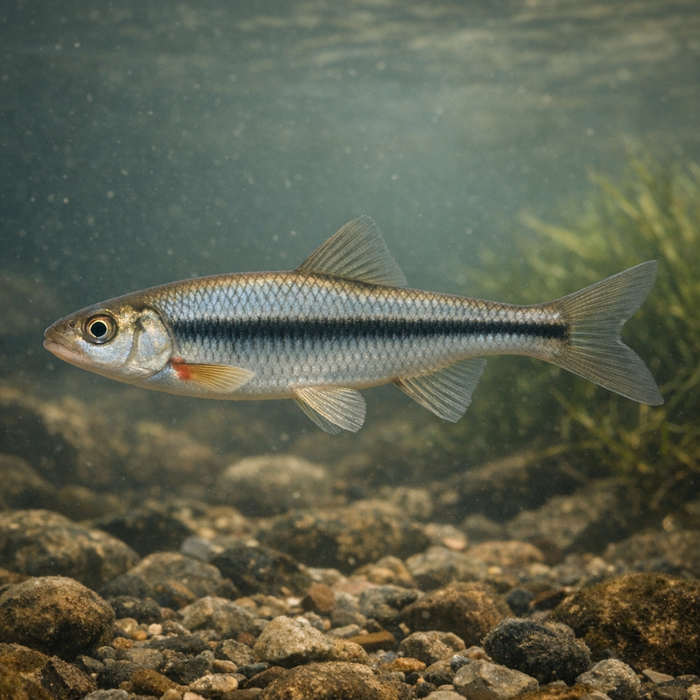
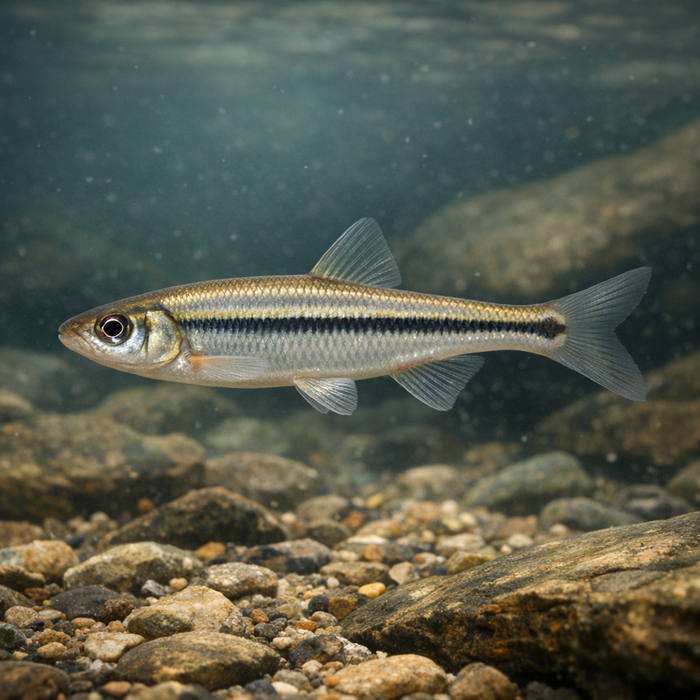
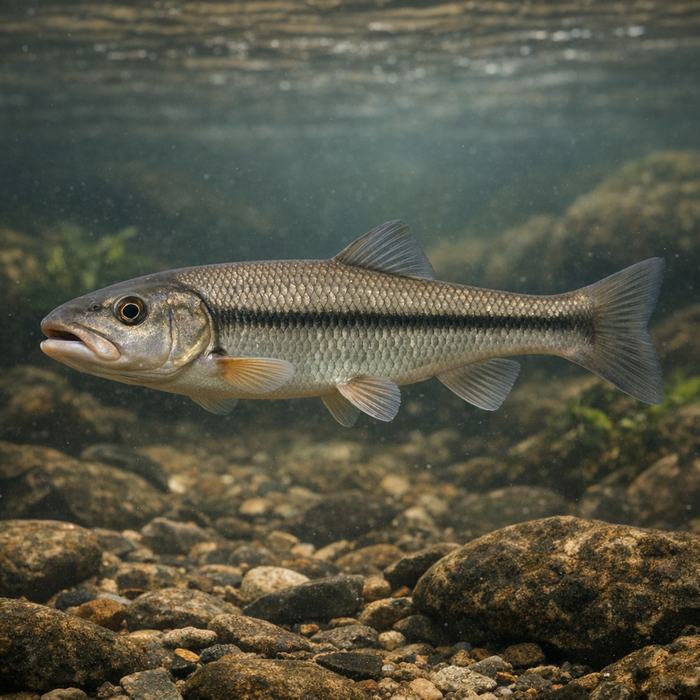
Fluvial Shiner (Alburnops edwardraneyi): Small Water Silver Rocket With Big River AttitudeIntroductionThe fluvial shiner is the little silver streak that makes riffles look alive. Blink and a dozen have already repositioned, flashing scales like strobe lights in the current. This is not a grip-and-grin fish. It's a lesson in flow, finesse, and how fast life can move in a shallow run. For anglers who like a challenge that fits in the palm of a hand, the fluvial shiner delivers.What Makes the Fluvial shiner Unique?First, precision engineering. The fluvial shiner is built like a micro torpedo with a perfectly terminal mouth that plucks drifting morsels from mid-column. Second, spring swagger. During spawning, males develop tiny sandpapery tubercles and sharpened lateral coloration, turning a subtle silver minnow into a flashy riffle brawler. Third, fast-lane schooling. The species coordinates in tight groups, using quick color flashes and body angles to stay locked into the hydraulic sweet spot. Everything about the fluvial shiner says speed, timing, and teamwork.Habitat & Global RangeThe phrase fluvial shiner habitat might as well be a recipe: clean gravel, oxygen-rich flow, and a riffle-to-run connection. They prefer water that moves with purpose, where seams and tongues of current deliver a constant buffet. Depth is usually shin to knee deep, with enough chop to scramble light and hide a delicate presentation. They also slide into nearby pools and glides when flows drop or temperatures rise. While their overall geographic footprint is modest compared to household sportfish, they thrive where rivers still breathe: cobble, current, and clarity.Behavior & TemperamentThink disciplined, not aggressive. The fluvial shiner times short feeding bursts with drifting invertebrate pulses, then resets. The school turns like a single fish. When discharge bumps after a storm, they shift upstream to fresher riffle lanes. When levels fall, they drift to softer edges, still oriented into the flow. They're spooky in glassy water, surprisingly approachable in chop, and rarely stray far from clean substrate. Expect quick pecks, lightning repositioning, and vanishing acts if your shadow crosses the seam. For anglers, the cue is rhythm: match the drift, and you get taps; miss it, and you get nothing.Ecological ImportanceCall them the courier service of energy transfer. Fluvial shiners convert insect drift and micro-crustaceans into protein packages for the rest of the food web. They prop up young-of-year predators, feed waders and kingfishers, and link riffles to everything downstream. Their fast life history means quick turnover, so good years stack biomass, and bad years bounce back faster if habitat remains intact. When fluvial shiners are pulsing in the runs, the system is usually humming.Conservation & Environmental PressuresHere's the not-so-fun part of Fluvial shiner facts: they don't negotiate with silt. Fine sediment that smothers gravel wipes out spawning microhabitats and chokes the invertebrate drift they rely on. Chronic turbidity, low oxygen, heat waves, and flow regulation can all push them off prime lanes. Urban stormwater spikes and poorly managed construction sites gunk up riffles. The bright side is that they also respond fast to habitat recovery. Clean the gravel, cool the water, improve baseflow, and they return.The FishyAF TakeThe fluvial shiner is proof that small fish can still punch above their weight in the fun department. You're not here for a tug-of-war; you're here to outsmart a school that speaks fluent hydraulics. Bring ultralight tackle, tiny hooks, and humility. If you like dialing in micro drifts, fishing knee-deep water, and reading seams like a map, the fluvial shiner is your jam. Treat riffles with respect, keep your boots off the redds, and enjoy the show. When those silver chips start flashing in unison, you're not just fishing. You're syncing up with the river's heartbeat.