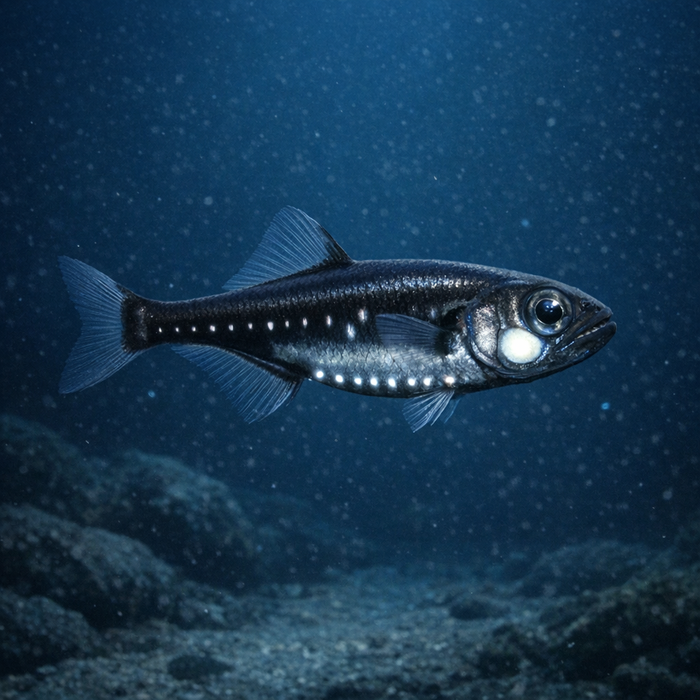
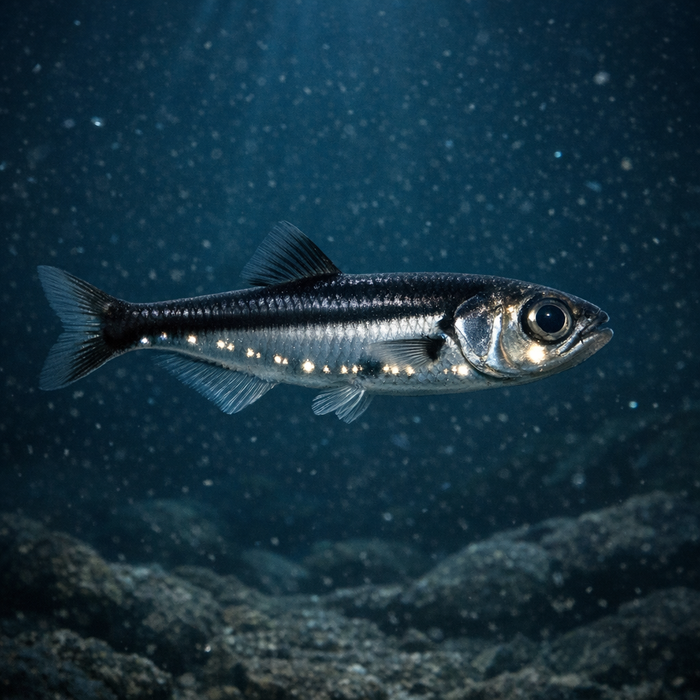
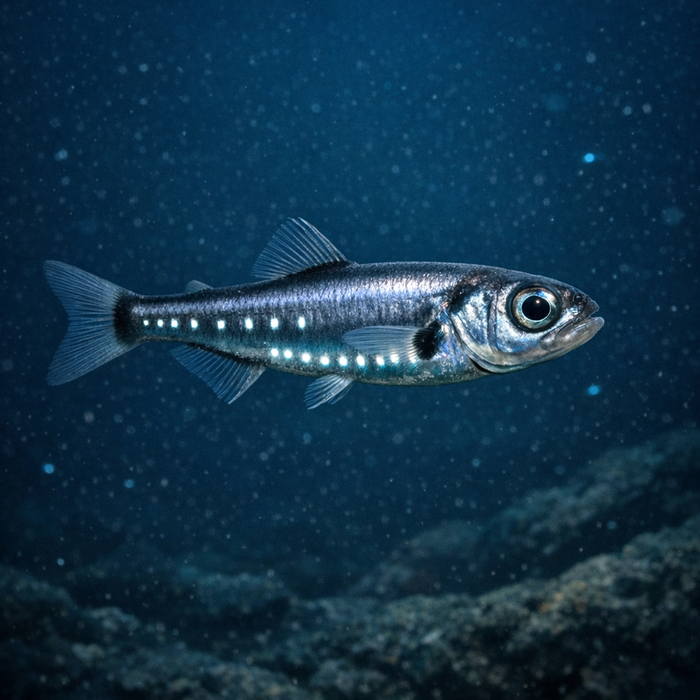
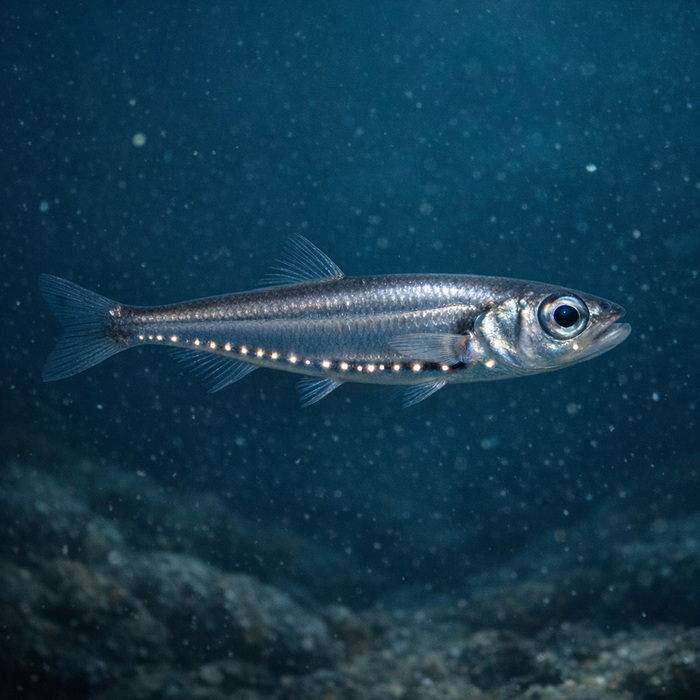
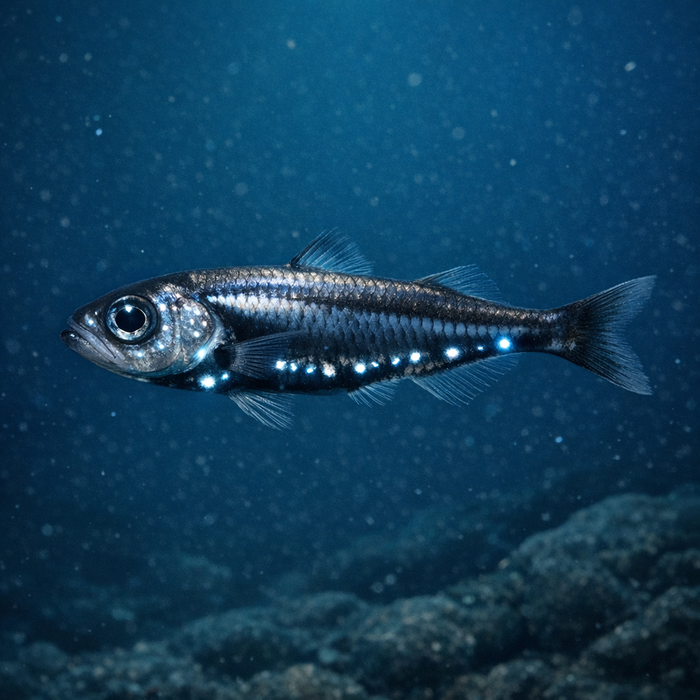
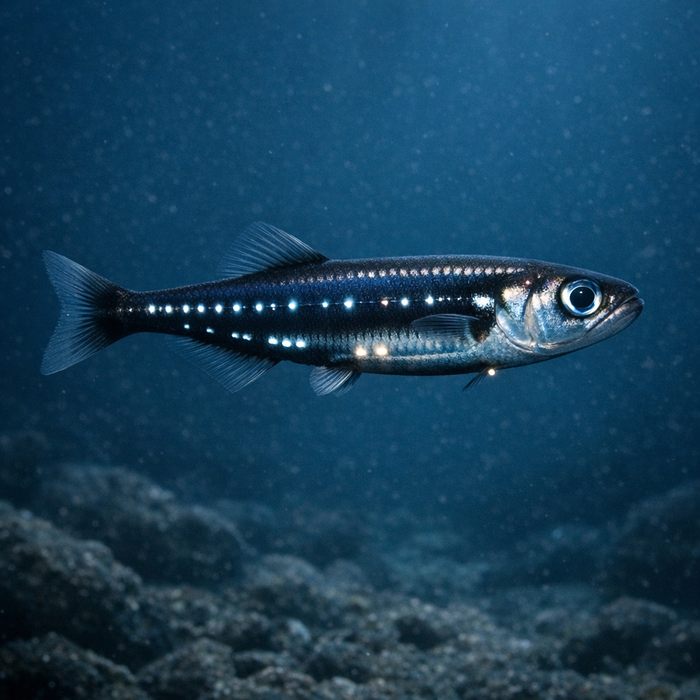
California flashlightfish (Protomyctophum crockeri): A glow-in-the-dark commuter that powers the ocean's nightly rush hourIntroductionThe California flashlightfish is the kind of fish you only notice when everything else wakes up because of it. Small, silver, and wired with bioluminescent hardware, this lanternfish fuels the ocean's after-dark feeding frenzy. It's not a classic sportfish, but it's a heavyweight in ecological drama. If you're here for California flashlightfish facts or a better read on California flashlightfish habitat, buckle up: this little commuter is why your sonar sometimes lies at night.What Makes the California flashlightfish Unique?Two things: its light show and its commute. The California flashlightfish wears constellations of photophores that glow blue-green, tuned to the twilight wavelengths where light barely exists. That glow isn't for selfies. It's camouflage, counter-illumination that erases its shadow from predators looking up. The commute is even wilder. Every evening, schools ride the elevator from deep, cold water to the near-surface, then drop back down at dawn. This daily migration moves biomass on a scale that makes tuna, squid, and salmon set their alarms.Habitat & Global RangeDespite the cozy name, the California flashlightfish is a pelagic drifter tied more to currents than coastlines. It thrives in the mesopelagic zone, usually hundreds to a couple thousand feet down by day, then surges into the upper hundred or so at night. Along the California Current, canyons and shelf breaks like Monterey Canyon and Cordell Bank act like buffet lines, corralling plankton and krill that these fish vacuum up. That's the practical California flashlightfish habitat story: open water, deep water, strong edges, and a nightly rise to feed under the stars.Behavior & TemperamentThese aren't lone wolves. The California flashlightfish rides in schools dense enough to register on sonar as the deep scattering layer. Individually, they're nervous, bite tiny, and won't win any tug-of-war. Collectively, they flip a switch on the whole food web. Photophores along the body flash and dim in patterns, likely for camouflage and communication. At night they drift higher, tracking krill swarms like tiny heat-seeking missiles. At first light, they drop, the ocean dims, and your sounder's phantom "bottom" evaporates.Ecological ImportanceIf the ocean is a stadium, the California flashlightfish is the crowd. Small, many, and always moving, it's premium protein for predators that pay the rent: salmon, albacore, billfish, and plenty of squid. It also shuttles carbon into deeper water with that daily commute, a living pump that helps lock atmospheric carbon away. Strip out lanternfish like this one and you don't just lose bait; you hobble the entire offshore production line.Conservation & Environmental PressuresThe California flashlightfish is listed as Least Concern, which sounds like a nap, but life in the midwater column still has hazards. Climate swings juggle currents, plankton communities shift, and the thermal structure that guides their commute can move or fragment. Nighttime light pollution from fleets can scramble behavior locally. Large-scale midwater trawling, where it happens, can also nick the system. The species is tough by numbers and life history, but the machine it depends on isn't bulletproof.The FishyAF TakeThe California flashlightfish won't peel line or photobomb your grip-and-grin. It's too small, too deep, too sneaky. But if you run deck lights offshore and drop a micro rig into the night, you're playing in its lane whether you know it or not. Respect the commute. Those shimmering marks on your sounder aren't noise; they're dinner bells for everything you actually want to catch. Learn the California flashlightfish, and you understand the offshore night shift a whole lot better.