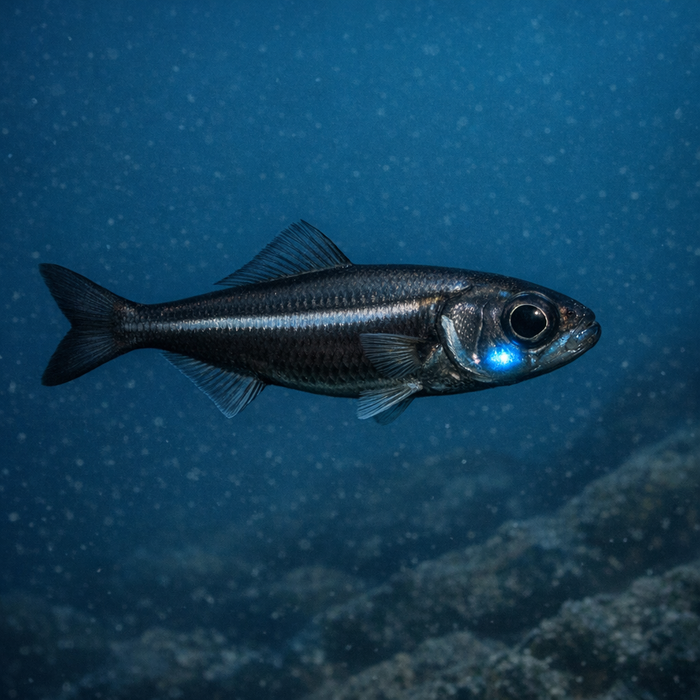
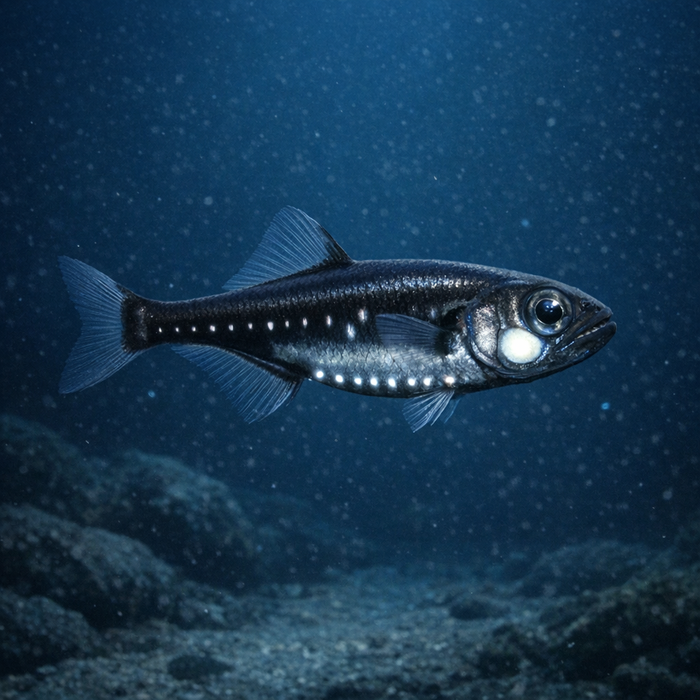
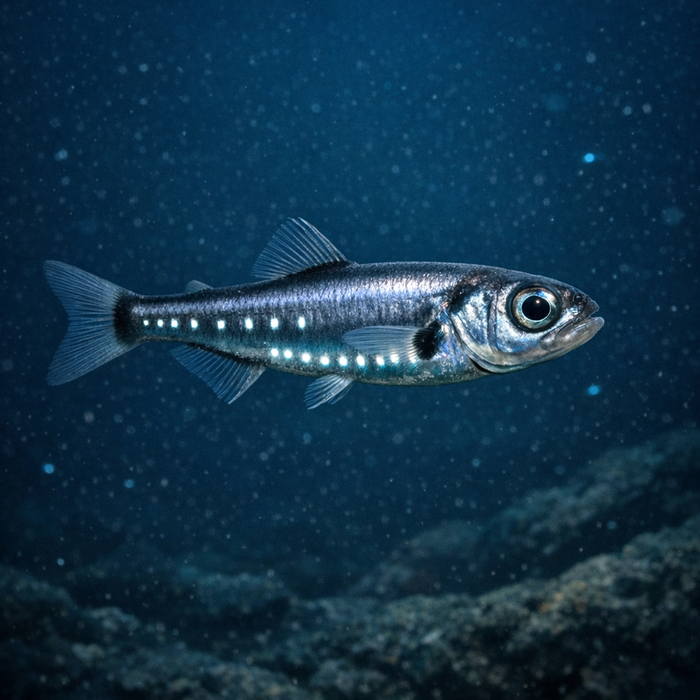
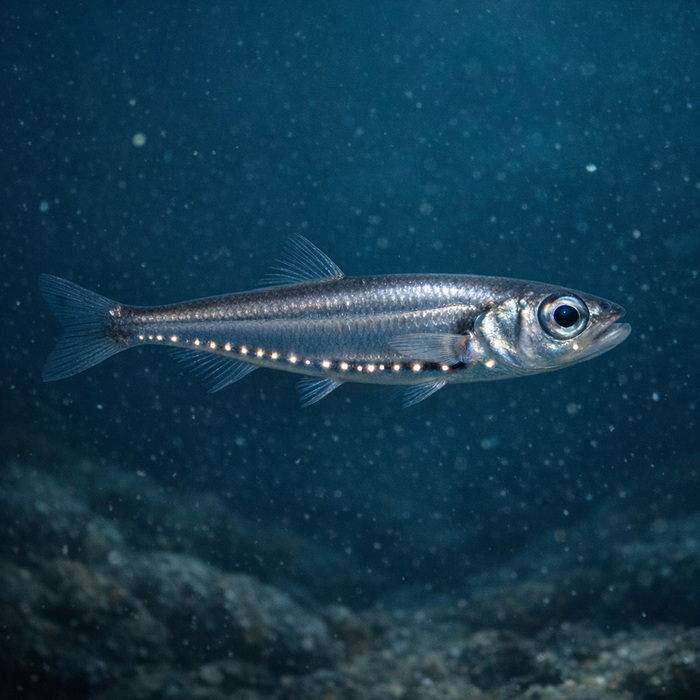
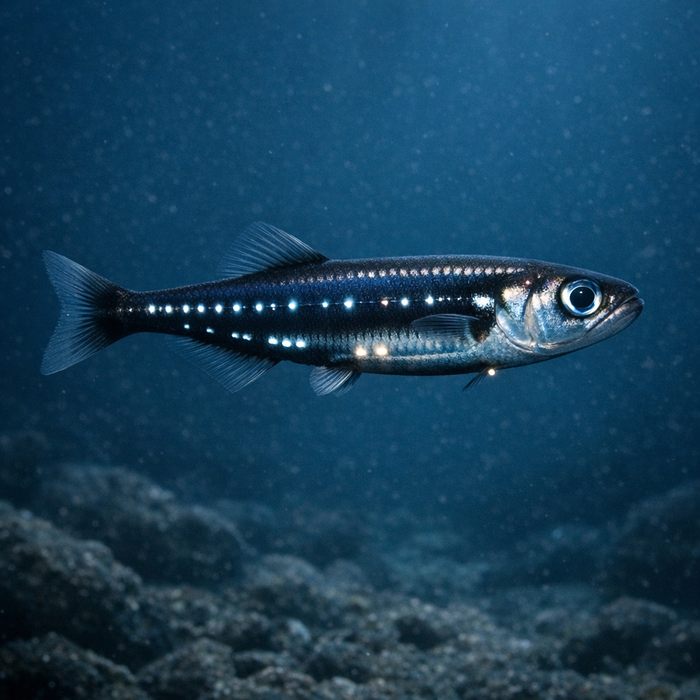
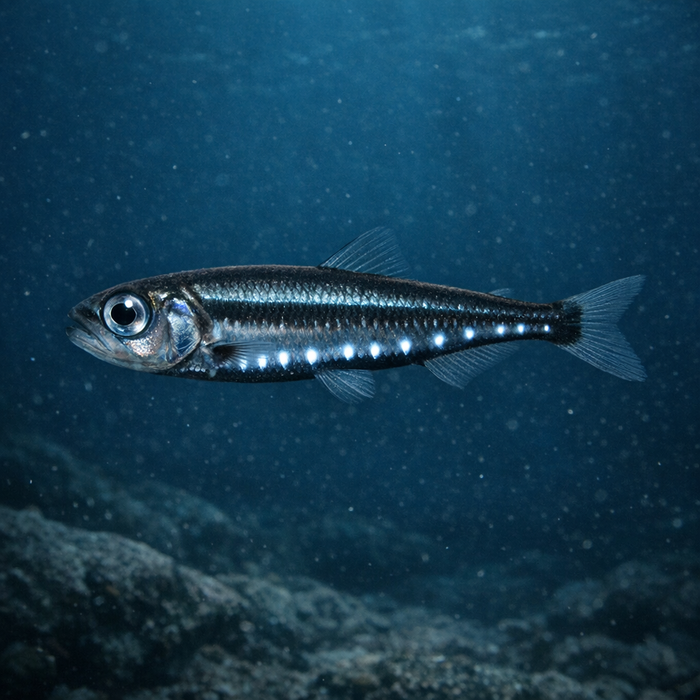
Thickhead Lanternfish (Hygophum atratum): A Bold, Memorable Hook LineIntroductionThe thickhead lanternfish is the ocean's tiny night-shift commuter: unassuming by day, glowing and on the move after dark. It's finger-length, fragile, and absolutely foundational to the blue-water food chain. You won't brag about a blistering run or a photo with one, but if you're into legit deep-sea nerdery, this little headlamp-wearing drifter is pure gold for understanding how the open ocean actually works. File this under Thickhead lanternfish facts you didn't know you needed.What Makes the Thickhead lanternfish Unique?Start with the head. The "thickhead" nickname nods to a stout, big-eyed dome relative to its small, torpedo body. That oversized optics package is no fashion choice; it's tuned for the dim blue light far below the sunlit surface. Then there's the signature gear: photophores, arranged in species-specific constellations, let the thickhead lanternfish light up with precise blue-green glow. It's not decoration. It's camouflage, using counter-illumination to erase its shadow from predators waiting underneath. Finally, it's a long-distance commuter. Every night, the thickhead lanternfish rides the planet's largest animal migration, rocketing hundreds of meters upward to feed before sinking back by daytime.Habitat & Global RangeThink "Thickhead lanternfish habitat" and picture the twilight zone: midwater, offshore, and wildly deep. By day they stay down in the mesopelagic, where sunlight dies and sound carries. After sunset, they rise toward the surface layers, often collecting under bright offshore lights, rigs, or research vessels. The species is globally widespread in blue water, tracking productive edges like canyons, seamount slopes, and convergence lines. You won't see them patrolling reefs or coasts like inshore predators; this is pelagic living, suspended between the surface and the abyss with nothing but water in every direction.Behavior & TemperamentThe thickhead lanternfish is not aggressive in the sportfish sense. It feeds with efficiency, not fury, nabbing zooplankton, larval fishes, and tiny crustaceans during tight nocturnal windows. Schooling is the move, and it's dense enough to register as the deep-scattering layer on sonar. The bite can be on or off like a switch, synced to darkness and the vertical shuffle. Everything about its body plan screams energy savings: waxy buoyancy control, streamlined shape, and lights set to the exact brightness of the starlit sea. Hook one, and there's no tug-of-war. This is delicate, midwater micromuscle.Ecological ImportanceIf you eat tuna, marlin, or squid, you owe a thank-you to the thickhead lanternfish. It's a conveyor belt of calories moving from deep to shallow every night, ferrying energy to predators that define blue-water fisheries. Its sheer biomass helps stitch together ocean ecosystems, cycling carbon downward and fueling the most important commute on Earth. From a single lanternfish to a roaring swordfish bite, there's a direct line of energy transfer. That's why Thickhead lanternfish facts matter: they explain why the upper ocean doesn't run out of gas.Conservation & Environmental PressuresCommercial fleets don't chase thickhead lanternfish directly, but the species isn't bulletproof. Changing ocean temperatures can push the nightly commute, shuffle prey fields, and alter timing. Light pollution offshore can regroup schools in odd ways. Expanding midwater trawls for forage species can snag them as bycatch, and deep-sea mining noise may reshape soundscapes they use to navigate. Data is patchy, because sampling the midwater is expensive and finicky, but "Data Deficient" does not mean "don't care." Keeping the twilight zone intact keeps the surface bite alive.The FishyAF TakeNobody charters a trip to boat a thickhead lanternfish. But if you flip on a deck light over deep water and a sabiki accidentally snags one, you've just touched the base layer of pelagic power. Respect it. This little glowstick keeps your favorite predators fueled. The thickhead lanternfish doesn't wow on the rod, yet it's the reason so many headliners do. If you chase offshore legends, you're already fishing on the back of this tiny night commuter. Treat the midwater like a bank account: the thickhead lanternfish is the deposit that makes your withdrawals possible.