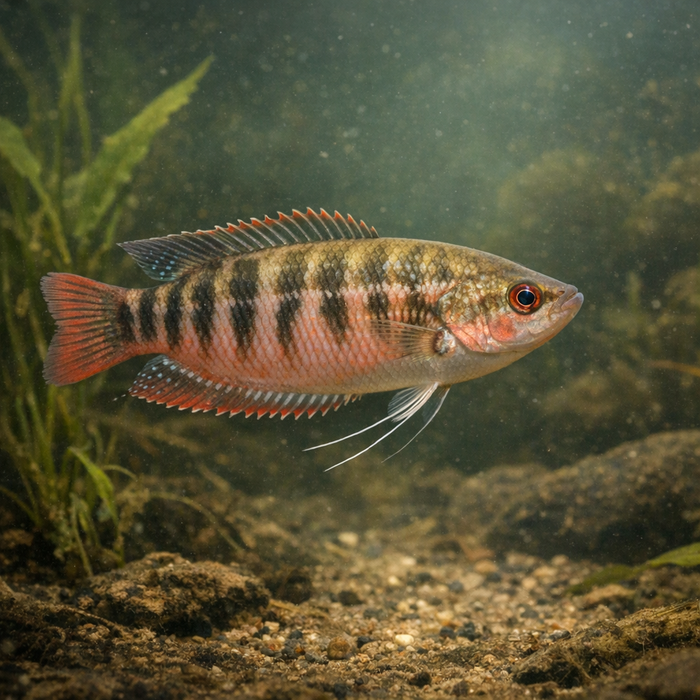
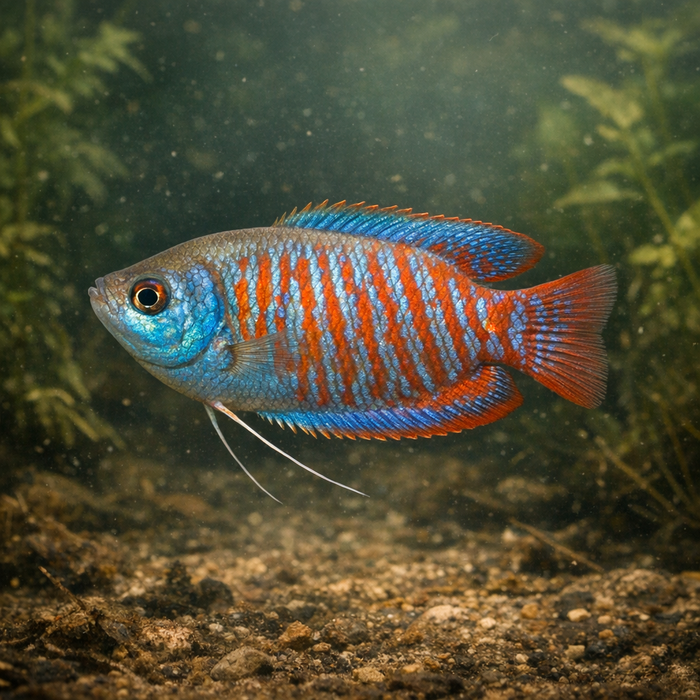
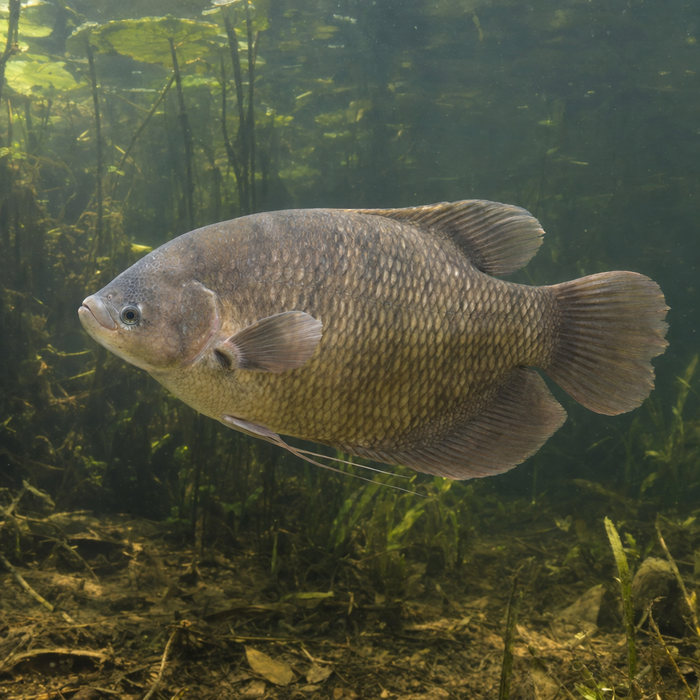
Croaking Gourami (Trichopsis vittata): Small fish, big voice, and a built-in percussion kit.IntroductionThe croaking gourami is proof that freshwater doesn't need giants to be interesting. This pocket-size labyrinth fish can belt out audible croaks, hold its ground under floating weeds, and keep breathing when the water goes flat and stale. For anglers who like micro challenges, stealth, and quirky behavior, the croaking gourami offers a surprisingly addictive hunt. If you came here for Croaking gourami facts, buckle up-this little talker punches well above its weight.What Makes the Croaking gourami Unique?Start with the headline act: sound. Croaking gourami produce clicks, grunts, and croaks using specialized pectoral tendons that snap like mini drumsticks. During courtship or territorial face-offs, they "duet," trading bursts of sound in rhythmic back-and-forths you can hear topside. Then there's the labyrinth organ, a highly vascularized air-breathing chamber that lets them gulp atmospheric oxygen. Translation: they function in ditches and ricefields where other fish suffocate. Finally, males craft bubble nests and guard the eggs under floating leaves, a level of parental investment that's rare and fun to watch.Habitat & Global RangeIf you're scanning Croaking gourami habitat, think slow, shallow, and plant-choked. They inhabit canals, floodplain pools, rice paddies, and backwaters across Southeast Asia, plus pockets of South Asia. They favor leaf-littered, tea-stained water with minimal current where floating vegetation provides shade and tiny ambush lanes. During wet seasons, they spread into newly flooded margins; as water recedes, they retreat to ditches and permanent ponds. Depth isn't dramatic-often calf-deep to just a couple feet-but cover is everything.Behavior & TemperamentDespite the tough-guy croaks, this is a cautious, structure-tied fish. Croaking gourami hold tight to surface mats, dangling roots, and plant stems, slipping out to nab micro-prey, then vanishing back into cover. They surface to gulp air every few minutes, which doubles as a visual tell for patient anglers. Males get territorial, flaring fins and leaning sideways to flash iridescence. Pairs or small loose groups are common, but this is not a big schooler. Bite windows often align with low light, warm stable weather, and bug activity.Ecological ImportanceCroaking gourami are mosquito-control specialists, translating insect swarms into fish biomass. They occupy a mid-level niche, recycling nutrients in floodplain systems and feeding wading birds, snakes, and larger predatory fish. Their labyrinth organ gives them a survival edge in hypoxic waters, helping sustain fish presence through dry spells when other species crash. In human-shaped landscapes-rice agriculture, drainage canals, roadside ponds-they're often the resilient constant.Conservation & Environmental PressuresOfficially, the croaking gourami sits at Least Concern, and it's common across much of its range. The pressures it faces are more local: pollution in urban canals, pesticide pulses in agriculture, and hard infrastructure that chops up wetlands. On the flip side, its air-breathing physiology makes it tougher than most small fish when oxygen tanks. Habitat simplification is the real enemy-rip out the weeds and shade, and you erase the ambush lanes, bubble-nest cover, and oxygen refuge that keep croaking gourami thriving.The FishyAF TakeThe croaking gourami is the poster child for microfishing finesse: tiny hooks, quiet feet, and monk-like patience. It's not about drag-scorching runs; it's about out-sneaking a fish that lives in ankle-deep jungle salad and announces its mood with croaks. If you like tidy, obvious water, skip it. If you like weird, intimate games in the margins, the croaking gourami is your fish. Call it small, but never call it boring. The best Croaking gourami facts are the ones you hear: that little click from under the weeds telling you you're not alone.