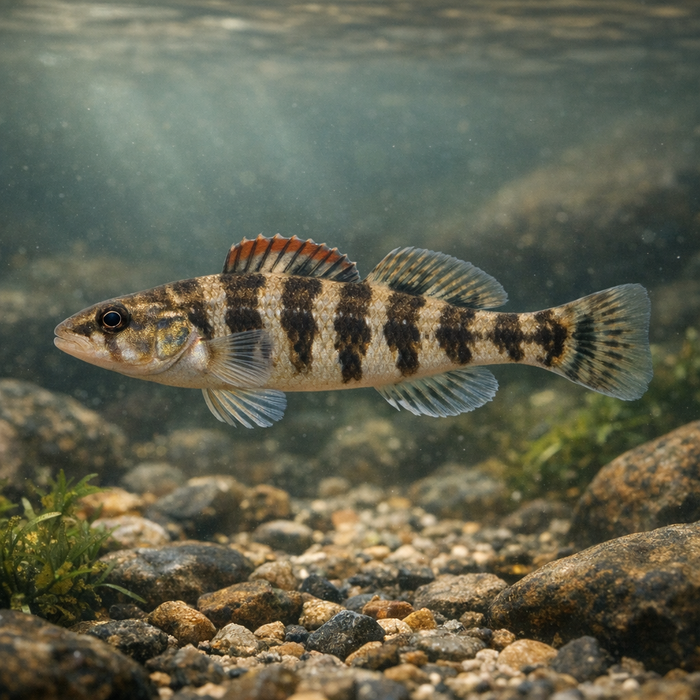
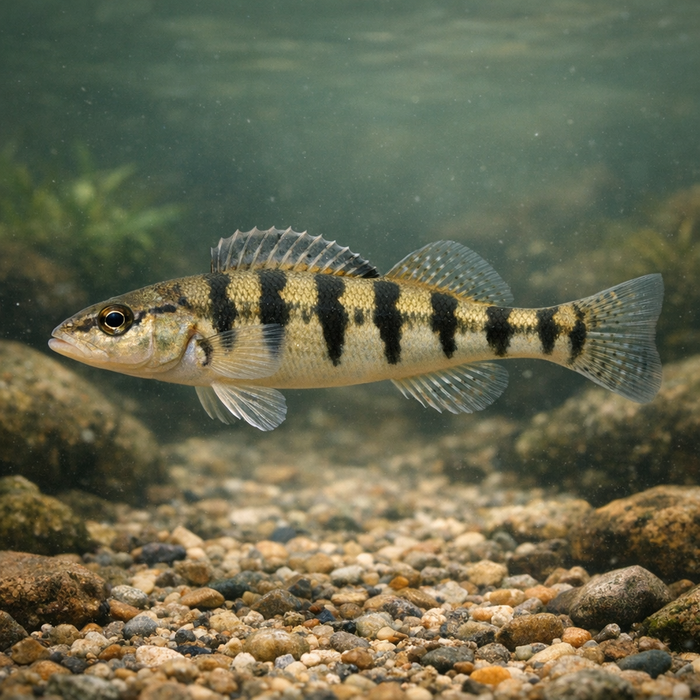
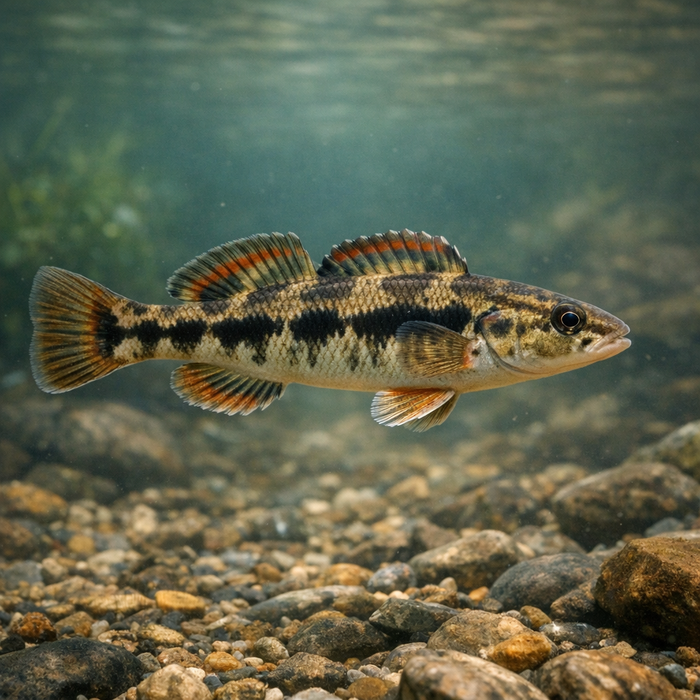
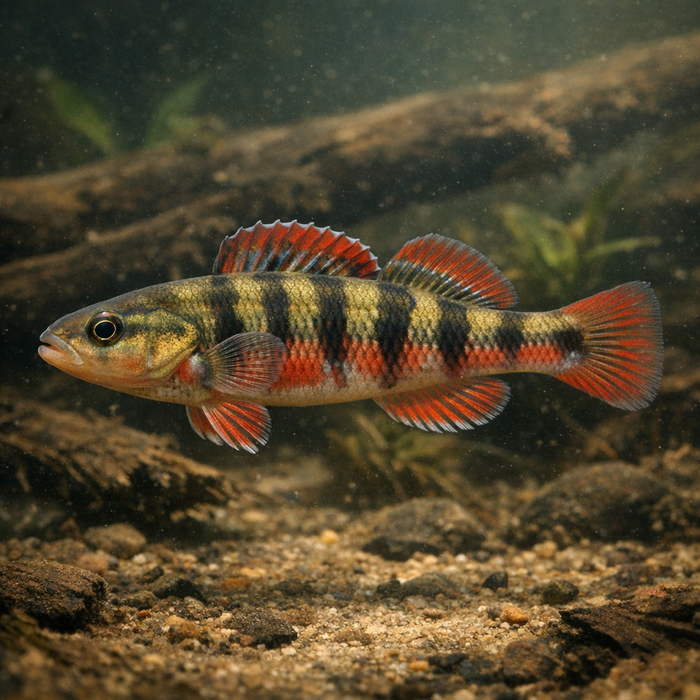
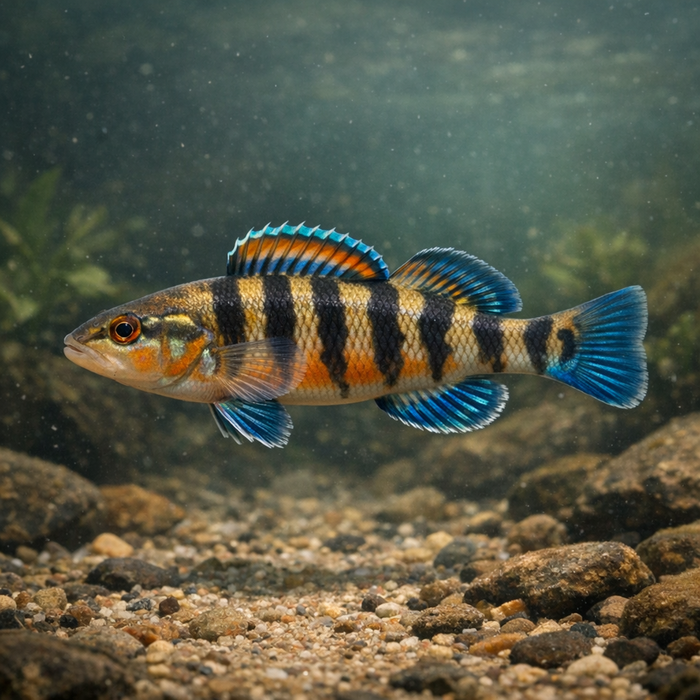
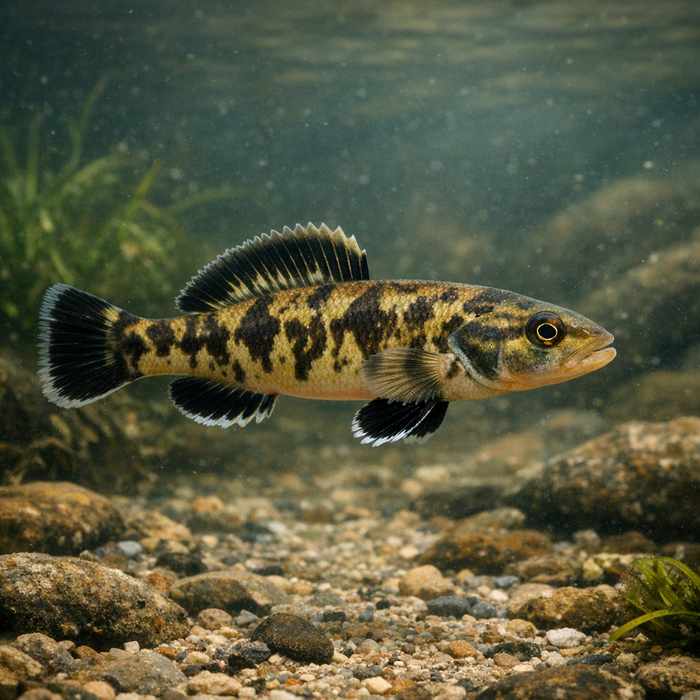
Crown darter (etheostoma corona): A Bold, Memorable Hook LineIntroductionThe crown darter is the aquatic equivalent of a sports car that lives in a driveway of gravel and current. It is tiny, flashy when it needs to be, and absolutely glued to fast water. If you are chasing Crown darter facts for microfishing or just because riffle life is fascinating, this species delivers a surprising amount of personality in a two-inch package.What Makes the Crown darter Unique?First, that name is not fluff. Males raise a spiky dorsal fin during breeding that looks like a miniature crown, and the patterning is memorable enough to inspire both common and scientific names. Second, the crown darter lives the benthic life to the fullest. With a reduced swim bladder and wide pectorals it crawls and scoots more than it swims, slipping between stones like a gecko in a rock garden. Third, it is a master of micro terrain. Move a cobble, shift the flow by an inch, and this fish will reposition with surgical precision.Habitat & Global RangeCrown darter habitat is textbook riffle country. Think clear, cool streams with firm gravel or small cobble and brisk, oxygenated flow. They park in knee deep or shallower water, especially along the heads and tails of riffles, behind hand sized stones, and on the edges where current softens just enough to ambush drifting invertebrates. Distribution is limited to select Southeastern drainages, and local abundance often hinges on clean substrate and stable flows. Even within one creek they are patchy, clustering in the best micro lanes rather than spreading evenly downstream.Behavior & TemperamentThe crown darter is not a cruiser. It is a sitter, a micro sprinter, and a tactical shifter. Individuals hold position inches off the bottom, then burst a foot or two to smack a drifting insect larva before settling again. During the spawn, males stake out tiny pebbled zones, posture with raised fins, and fan eggs under the undersides of rocks. Wariness is real. A heavy footfall or a shadow that falls wrong can push these fish under the next stone in an instant. Yet they feed often in daylight because riffles deliver a buffet of nymphs all day.Ecological ImportanceFor something so small, the crown darter is a terrific indicator of stream health. It needs clean, well oxygenated water, and it needs a substrate that is not cemented with silt. Lose that, and the species fades fast. Invertebrate control is its job description. By vacuuming up midge and mayfly larvae, it converts bug energy into fish energy that then ladders up to larger predators. It is also part of the riffle guild that keeps the benthos lively, moving fine sediments around and providing early warnings when conditions slip.Conservation & Environmental PressuresThe crown darter does not do well with dirty water or bulldozed streambeds. Sedimentation, channelization, and dewatering cut out its living room. Because its range is not global and it keys into specific substrates, local problems can have outsize effects. Anglers and naturalists can help by staying out of prime spawning pebbles, minimizing rock flipping, and supporting watershed groups that tackle erosion and stormwater issues. Every riffle that stays clean is a bank account for future fish.The FishyAF TakeIf you want numbers and drag peeling runs, look elsewhere. If you want precision, stealth, and a fish that makes inches feel like miles, the crown darter is your jam. It is proof that awesome fishing is not always about size. Microfishing this species is a master class in reading current, moving softly, and putting a bait exactly where the water says yes. Learn one riffle well and you will suddenly see a dozen more. That is the real win baked into the crown darter story.