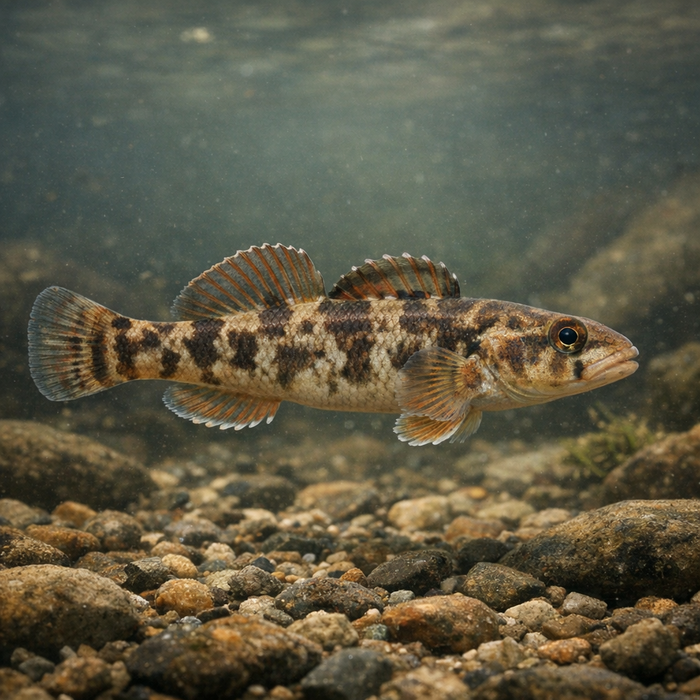
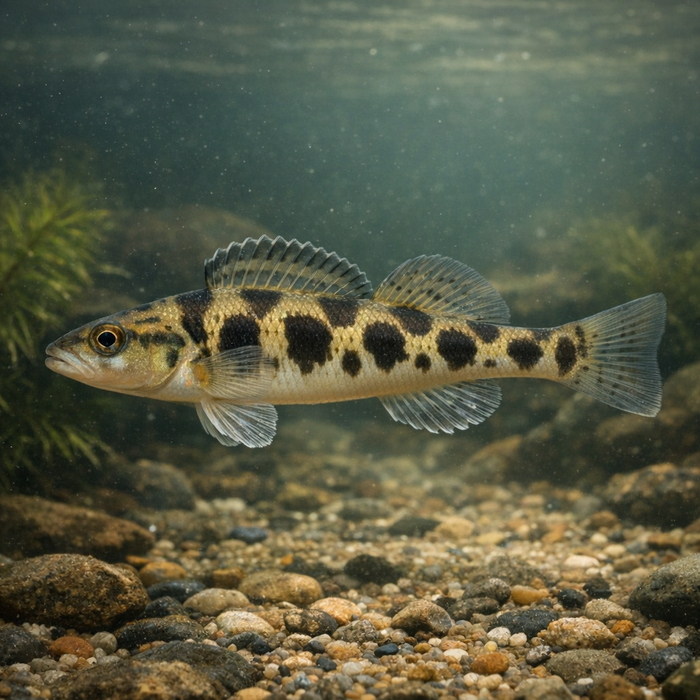
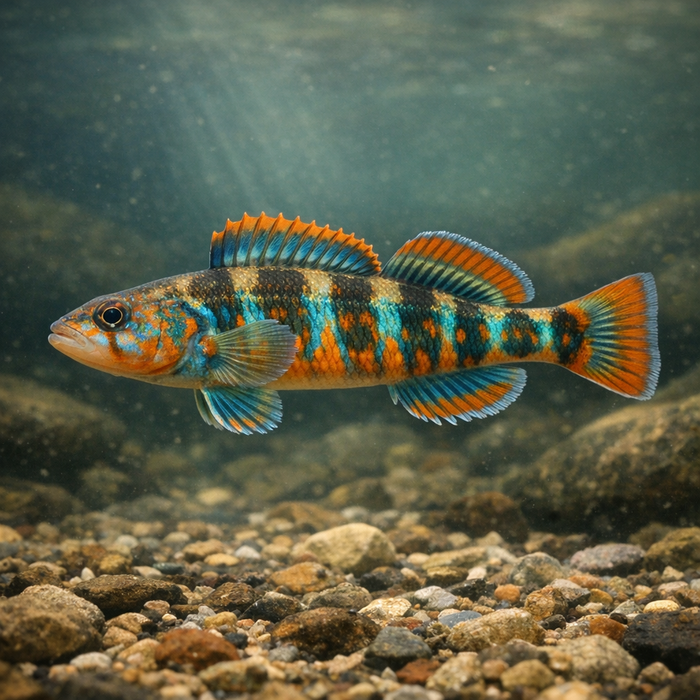
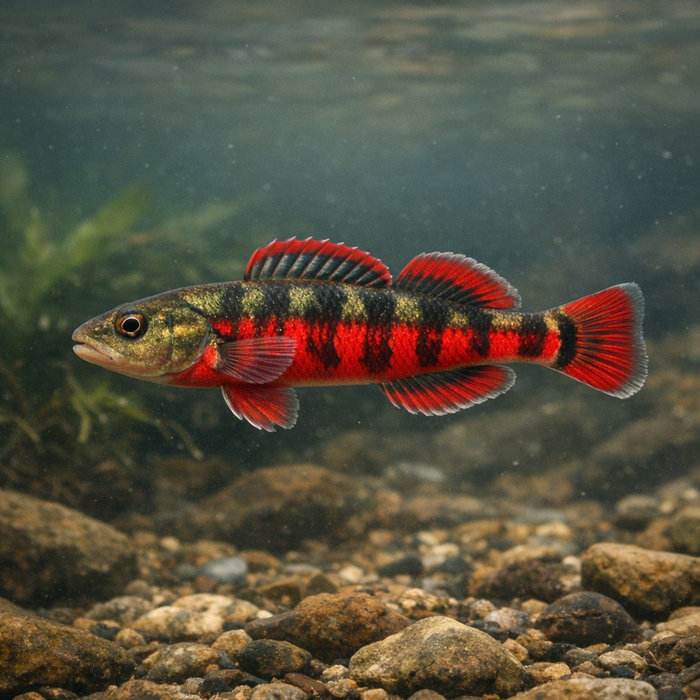
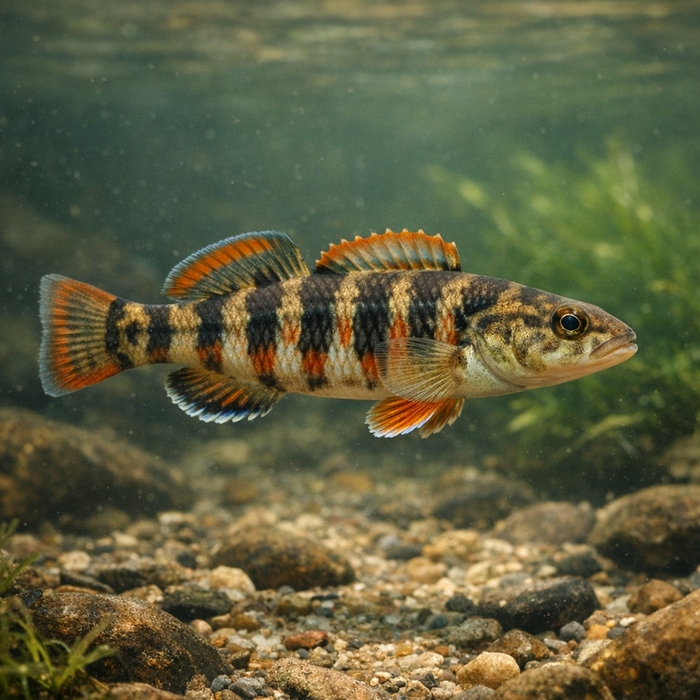
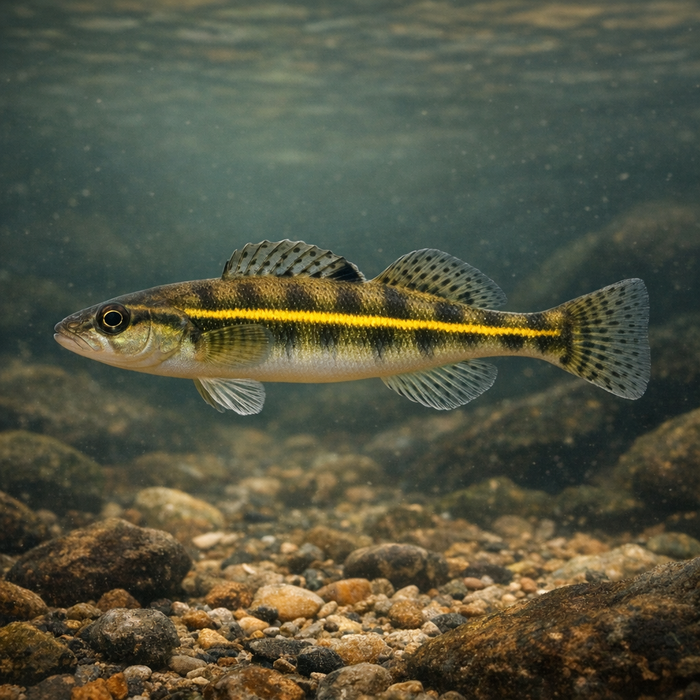
Blackfin Darter (Etheostoma nigripinne): Small Fish, Loud Fins, Serious Current SwaggerIntroductionThe blackfin darter is tiny, fast, and way more dramatic than a fish this size has any right to be. Think stealth fighter shrunk for shallow riffles: low profile, bold accents, and tuned for current. If you're the kind of angler who geeks out over precision, this fish rewards patience and micro skills. If you prefer brute force, keep walking. Blackfin darter facts rarely make the headlines, but in the clear shallows they put on a show.What Makes the Blackfin darter Unique?Start with the name. Mature males brandish stark, inky-black fins that pop against the rock-brown body, a signature look that isn't just sharp-it's species-defining. That slick paint job ramps up during spawning, when males quiver in fast water and flash those fins to convince females to drop eggs into small gravel pockets. Unlike many stream fish that cruise around, the blackfin darter hugs the bottom and scoots, using wide pectorals like anchors to hold in racing flow. For a fish measured in inches, it handles current like a champ.Habitat & Global RangeThis is a fish of clarity and texture. Picture knee-deep or shallower water, quick riffles, and cobble or gravel substrate with clean gaps between stones. That's prime blackfin darter habitat. You'll encounter them in cool-to-warm streams with steady flow, especially where riffles break into runs with a touch of depth and cover. Silt and muck are the enemy; they prefer crisp, oxygenated water where insects are thick and the rockwork offers shelter from flash floods. Geographically, they are a Southeastern specialty tied to tributaries within the Tennessee River drainage and nearby systems. You won't need a boat-shoreline rocks, knee boots, and stealth get you into the game.Behavior & TemperamentThe blackfin darter doesn't waste energy. It perches, bursts forward, and locks down again, using tiny fin flicks to hover inches from the substrate. Schooling is loose at best; you'll see a few fish peppered across the right riffle lane rather than true balls. They're visual feeders in daylight but not surface players-everything happens at ankle depth on the rocks. In spring, males carve out micro-territories and trash-talk with color and posture. The fish is curious but skittish; clumsy wades send it vanishing under the nearest cobble.Ecological ImportanceDarters like the blackfin are bioindicators with fins. Their presence screams healthy stream: oxygen, clean gravel, intact flow. They vacuum up aquatic insects and, in turn, feed bigger predators like smallmouth and rock bass. Because they're picky about silt and chemistry, blackfin darter habitat tells a story about watershed health. When these fish thrive, the macroinvertebrates are usually humming, and the whole riffle-run complex is doing its job.Conservation & Environmental PressuresEven where the species is considered stable, it lives close to the edge-literally inches from rolling stones. Sedimentation from poor land use can gum up gravel, wiping out spawning pockets and suffocating eggs. Low flows and high temperatures squeeze oxygen and push fish out of prime lanes. Chemical spills and nutrient spikes hit fast in small streams. The good news: protect riparian buffers, manage stormwater, and the blackfin darter bounces back quickly thanks to short generation times.The FishyAF TakeIf you're into finesse and fieldcraft, the blackfin darter is your tiny teacher. Miss your drift by three inches and it's a ghost. Nail it, and you'll watch a miniature predator dart, pin, and inhale with ridiculous confidence for its size. Learn one riffle lane and suddenly you're reading current like a seasoned trout angler. Blackfin darter habitat forces precision, patience, and a respect for small water. This fish won't rip drag. It will sharpen your game.