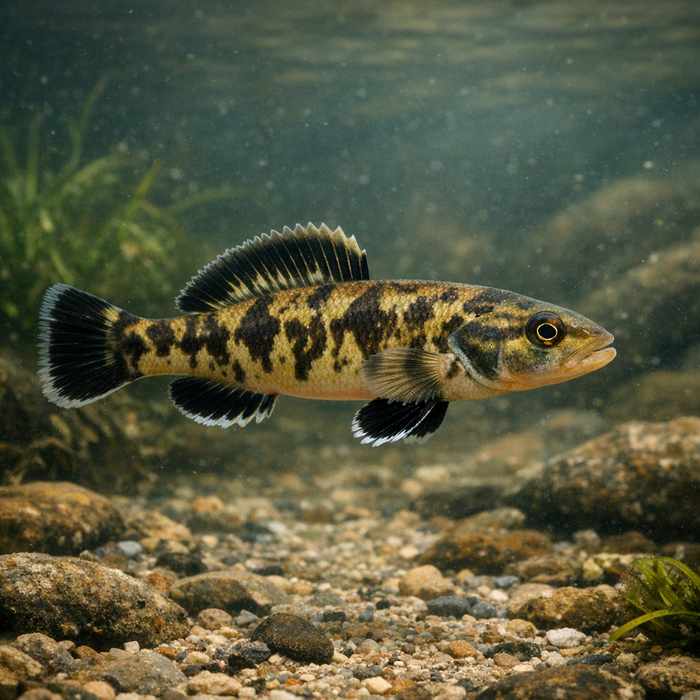
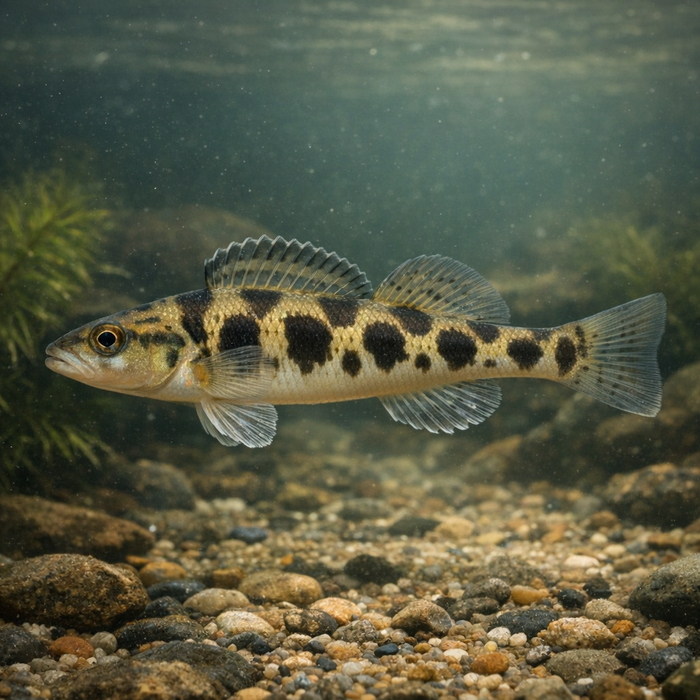
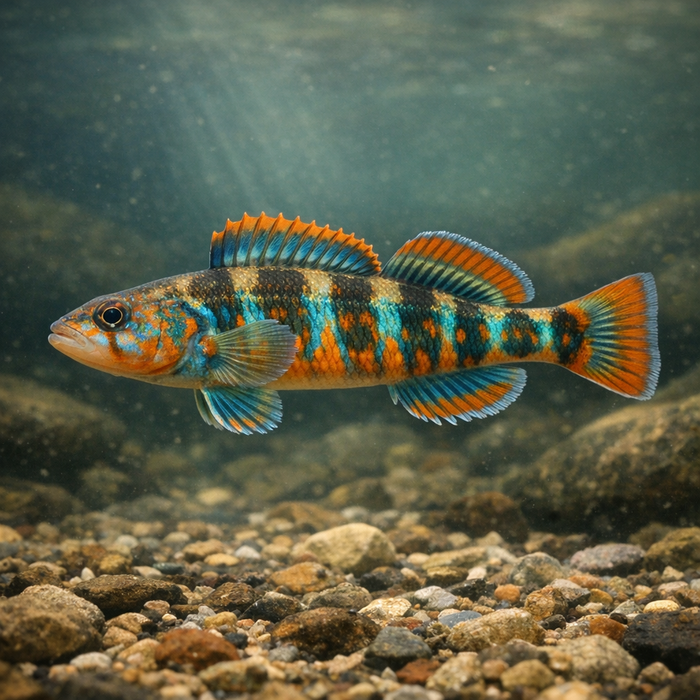
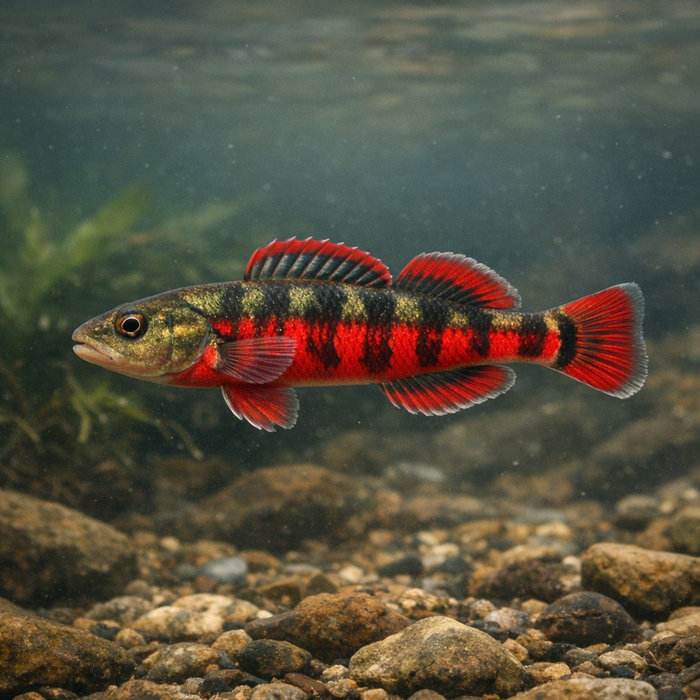
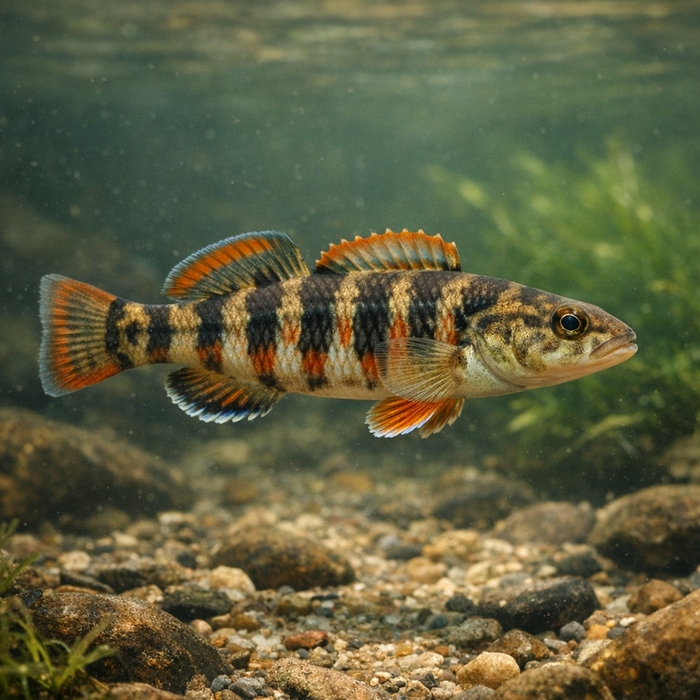
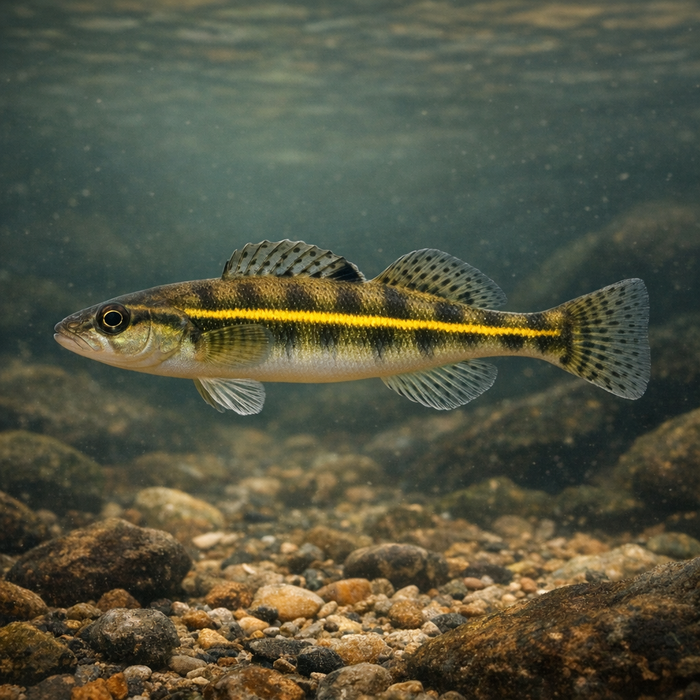
Blenny darter (Etheostoma blennius): A pint-sized stream ninja built for fast water and micro movesIntroductionThe blenny darter is proof that fish don't need length to deliver attitude. This tiny riffle specialist lives where current chews on cobble and gravel, hugging bottom like a suction cup with fins. If you're into microfishing or just obsessed with stream life, the blenny darter is a charismatic target in miniature. It's all about precision: precise habitat, precise presentation, precise timing. Learn those, and this little gremlin becomes one of the most rewarding "firsts" in freshwater.What Makes the Blenny darter Unique?Start with the build. The blenny darter has a reduced swim bladder, which is like an anti-balloon feature that keeps it pinned to the substrate in high flow. Its broad pectorals function like kickstands, bracing the body as it darts from stone to stone. The species name blennius isn't random either; its blunt head and bottom-crawling vibe echo marine blennies, hence the nod. For anglers, the standout trait is how it feeds: lightning-fast vacuum gulps that inhale anything convincingly edible within an inch of its snout. Miss the strike window and you'll think the pool is empty.Habitat & Global RangeBlenny darter habitat is all about fast, clean water. Picture knee-deep or shallower runs with pea gravel to hand-sized cobble, brisk current, and high oxygen. Undercut rocks, micro-eddies behind stones, and the tails of riffles are prime. The species occurs in select Southeastern drainages, typically upland tributaries where silt hasn't smothered the substrate. These are waters you wade, not waters you troll. Depth is often measured in inches, not feet, and the best water looks almost too skinny to hold fish until you crouch low and really watch the bottom.Behavior & TemperamentThe blenny darter is a stay-low, stay-local operator. It won't cruise far or suspend mid-column unless forced. Instead, it slips, starts, and freezes in dizzying quick bursts, then vanishes into the gravel pattern. It feeds by ambush and short dashes, slurping nymphs, tiny crustaceans, and micro-invertebrates. During the spawn, males stake tight territories and guard eggs placed on the undersides of flat rocks in swift current. Compared to sunfish or minnows, it isn't much of a brawler when hooked, but that's not the point. The challenge is the stalk, not the slugfest.Ecological ImportanceSmall fish, big job. The blenny darter converts stream-bottom invertebrates into protein packages for larger predators, plugging the gap between bugs and bass. It's a canary for riffle health: when sediment, algae, or low oxygen creep in, darters are often first to fade. Healthy populations quietly signal intact flows, stable banks, and a substrate that hasn't been choked by runoff. If you care about cold, clear creeks, you're already on Team Blenny whether you know it or not.Conservation & Environmental PressuresThe main threats aren't nets or angler pressure. It's habitat. Fine sediment from poor land use seals the cracks where this fish hides and spawns. Low summer flows pinch oxygen. Warm pulses and nutrient spikes favor algae mats that smother rock surfaces. Fragmented waters block recolonization after floods or droughts. The blenny darter doesn't need a pristine wilderness, but it does need honest riffles with moving water, clean rock, and just enough stability to get a generation or two raised before the next big blowout.The FishyAF TakeThe blenny darter is a masterclass in small-target fishing. Want a dopamine hit without a hundred-mile drive? Hike a clear tributary, crouch by a riffle, and try to out-precision a fish that weighs less than a paperclip. You'll learn more about current seams, micro-drift, and stealth in one hour with a blenny darter than a weekend throwing big plugs. Looking for Blenny darter facts you can use? Think tiny, think bottom, think fast. Spot the dark head wedge near cobble, drop a speck of life right in its lane, and be ready. When the inhale happens, it's fast enough to make you laugh out loud. That's the blenny darter experience: not epic length, but ridiculously satisfying accuracy. And once you lock onto that rhythm, every other fish feels easier.