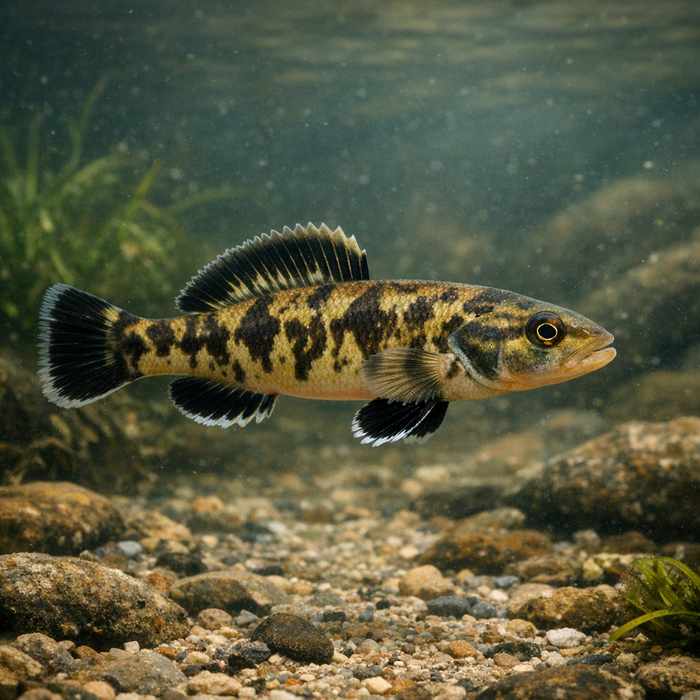
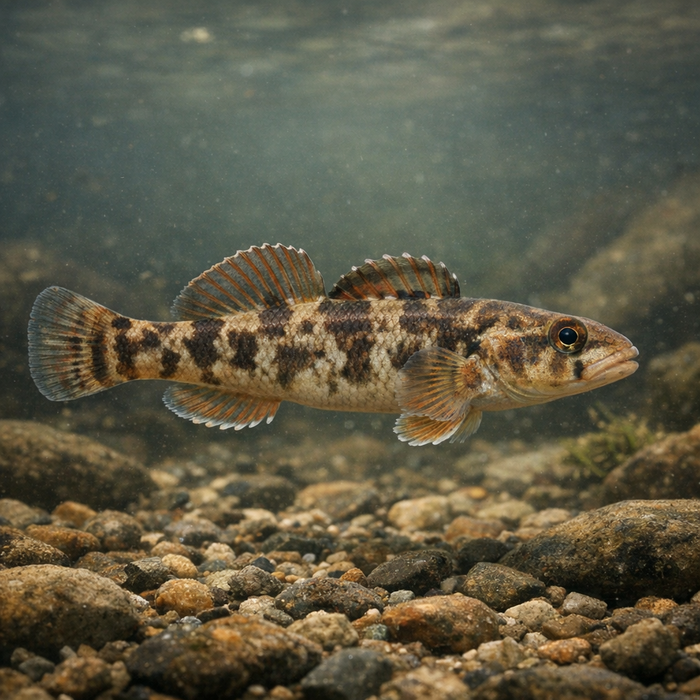
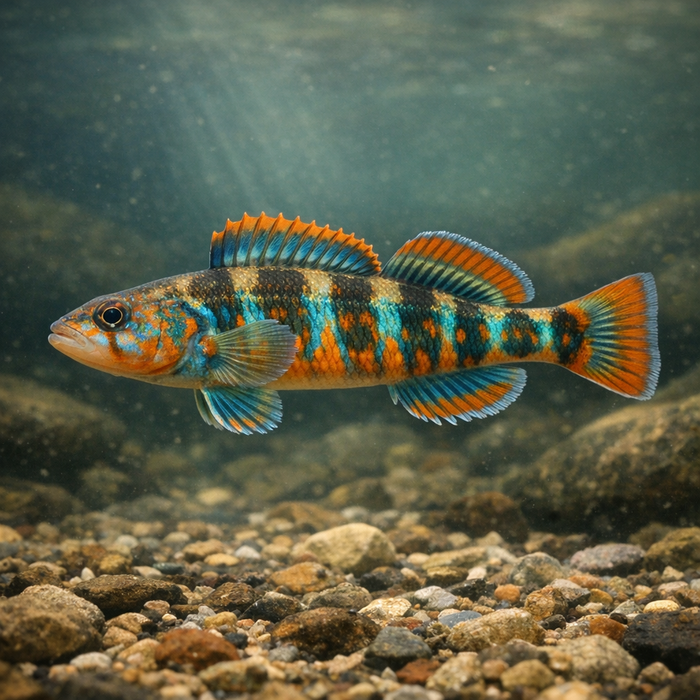
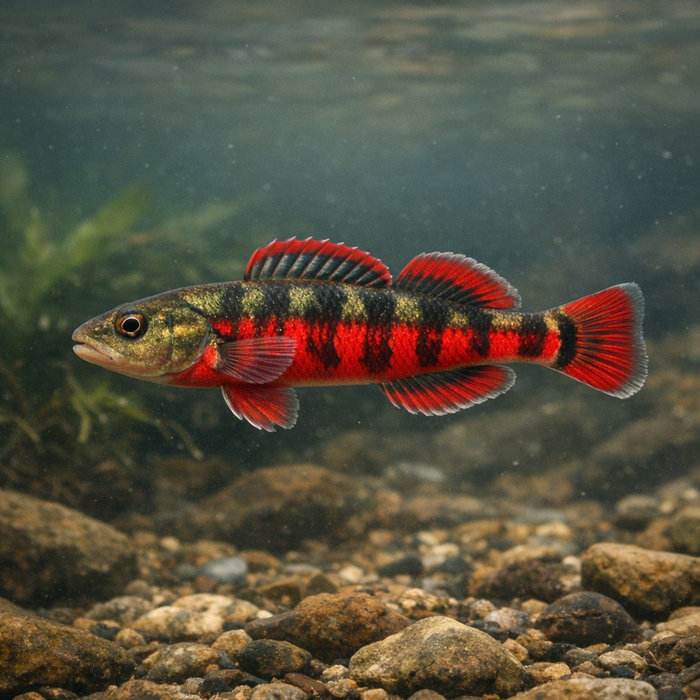
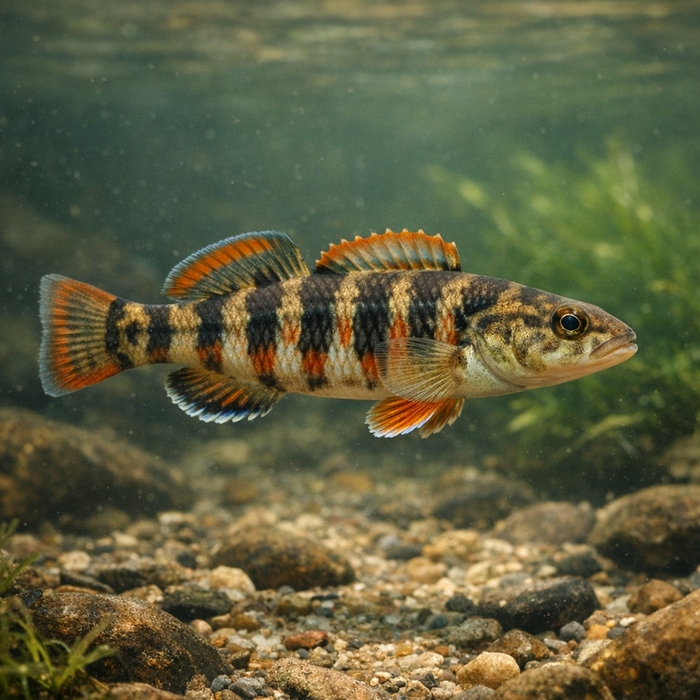
Blotchside darter (percina burtoni): Small Fish, Loud StyleIntroductionThe blotchside darter is the river riffle's little graffiti artist. Those big, inky rectangles splashed down its sides look like someone stamped a pattern on fast water. It's tiny, yes, but it's no background extra. This fish lives where currents talk, clinging to cobble and sniping drift like a pocket-sized ambush predator. If you're into microfishing or just dig cool native species, the blotchside darter belongs on your radar. Blotchside darter facts get even better when you learn how specialized it is and how much clean, moving water it demands.What Makes the Blotchside darter Unique?Start with the paint job. Many darters have bars or speckles; the blotchside wears unmistakable dark rectangles that sharpen during spring. It's a Percina, kin to walleye and perch, but scaled down for life in jet-fueled riffles. It practically lacks a swim bladder, which is exactly what you want when you live glued to the substrate. Instead of floating, it perches on big pectoral fins, darts a body length to nail food, then vanishes against gravel. The species is also a great indicator. If blotchside darter numbers are healthy, you're probably looking at cold, clear, well-oxygenated water with tight gravel that isn't clogged by silt.Habitat & Global RangeThis is a Southeastern specialist that favors clear, moderate-to-fast streams and small rivers with clean gravel, cobble, and scattered boulders. Picture riffles that chatter into knee-deep runs and shallow pockets where current fans your bootlaces. That's blotchside darter habitat in a nutshell. They hold close to bottom, often tucked behind small stones where drag drops just enough to rest. Because they lean so hard on high-quality substrate and flow, they're naturally patchy, flourishing in some reaches and vanishing from stretches just a few miles away when silt or pollution creeps in. If you want to understand a watershed's health quickly, finding a blotchside darter does the talking.Behavior & TemperamentThe blotchside darter is built for quick violence in miniature. It watches the drift with high-set eyes, then explodes forward to grab insect larvae or tiny invertebrates before snapping back to a perch. They're not long-distance roamers; think precise, tactical movements tied to micro-structure. In spring, males darken up and claim small territories over prime gravel. Spawning involves the classic darter move: press into clean substrate and get those eggs tucked out of traffic. They don't school like shiners, but small loose groups will work the same riffle if the groceries are good. In bright, clear water they can be spooky; stealth and small presentations win the day.Ecological ImportanceThe blotchside darter is a flow-and-gravel quality-check in fins. It needs cold-to-cool, oxygen-rich water, stable flows, and unclogged substrate. That combo supports more than just this fish: mayflies, stoneflies, caddisflies, and a cast of clean-water macroinvertebrates thrive under the same conditions. When you protect blotchside darter habitat, you're also safeguarding native mussels, other riffle fishes, and the entire aquatic food web that builds sportfish upstream and downstream. Simply put, a healthy blotchside population is a thumbs-up for the whole river.Conservation & Environmental PressuresHere's the hard bit: the blotchside darter has been hammered by siltation, impoundments, chemical spills, and general watershed abuse. The species is conservation-priority in much of its range, and some states restrict take outright. Because it's so habitat-specific, a little bit of sediment goes a long way toward wrecking spawning beds and choking the interstitial spaces larvae need. Dams flatten flows, wipe out riffles, and slice populations into isolated pockets. The silver lining is that targeted restoration works. Clean up inputs, release more natural flows, rebuild riffle complexes, and the fish responds.The FishyAF TakeLook, the blotchside darter is not your new PB bass. It's a riffle jewel, a tiny trophy for anglers who appreciate precision and wild places. If you're after Blotchside darter facts, here's our favorite: finding one is proof you're standing in a river that's still doing things right. Pack an ultralight stick, a micro hook, and a healthy respect for regulations. Work small. Wade quietly. Treat every fish like it's priceless, because in a lot of waters, it basically is. Protect the riffle and you protect the fish. Protect the fish and, surprise, the whole river fishes better for everything else you chase.